

Most AI writers churn out generic filler, but Koala Writer claims to reverse-engineer the SERP to guarantee rankings. We put that to the test in a 90-day case study, publishing 62 articles across three niche sites to see if GPT-5 can actually beat human-edited content. The results, and where it consistently fails, below.
Is it still possible to rank with AI content in 2026? It's a question that keeps niche site owners up at night. Google's algorithms have become increasingly sensitive to the "AI slop" that flooded the internet in previous years. To survive today, you need more than just words on a page. You need topical authority, semantic depth, and content that actually answers a user's question better than a human could.
That's the promise of Koala Writer. Rather than just prompting an LLM and hoping for the best, it uses real-time data to shape its output. We've spent the last three months living inside the platform to see if the reality matches the marketing. This Koala Writer review 2026 breakdown explores everything from the core writing engine to the new internal linking tools that launched this year.
What is Koala Writer?
Koala Writer is a "five-in-one" SEO content platform designed specifically for publishers and affiliate marketers. While many AI tools try to be general-purpose assistants, Koala was born in the Fat Stacks forum, created by a niche site owner for other niche site owners. This heritage is visible in every feature, from the way it handles headings to its focus on search intent.
In 2026, the platform has grown significantly beyond its original "one-click blog" roots. It now functions as a comprehensive ecosystem that includes:
- KoalaWriter: The primary long-form article generator
- KoalaChat: An SEO-focused chatbot with live web access
- KoalaLinks: An automatic internal linking engine
- KoalaMagnets: Lead-generation and backlink-attraction tools
- KoalaImages: Integrated AI image generation
This shift mirrors a broader trend in the industry toward hiring AI teammates rather than just configuring tools. While Koala is still very much a "tool" that requires manual input, it attempts to automate the most tedious parts of the SEO workflow, like keyword research and entity extraction. Its core philosophy remains unchanged: SERP-driven content that matches exactly what Google is already rewarding.
Key features of Koala AI
The most impressive part of Koala is how it handles research. When you enter a keyword, the tool doesn't just start writing. It scans the current search results to identify ranking signals, semantic keywords, and common subtopics. This reverse-engineering process ensures that your article has the "DNA" of a top-ranking page before you even hit generate.
The KoalaWriter engine
At the heart of the platform is KoalaWriter, which in 2026 supports the latest frontier models including GPT-5 and Claude 4. It uses real-time SERP analysis to extract "entities" (specific people, places, and things) that Google expects to see in a high-quality article. By including these naturally, you increase your chances of appearing in the Featured Snippet or "People Also Ask" sections.
Amazon product roundups
For affiliate marketers, the Amazon Product Roundup feature is a massive time saver. You simply provide a list of ASINs or a search term, and Koala pulls live data, current pricing, and key specifications directly from Amazon. It then drafts a "Best of" list with pros and cons for each product, automatically inserting your affiliate links. It's one of the few tools that handles this specialized format without requiring a massive amount of manual cleanup.
KoalaLinks and KoalaMagnets
Two major additions for 2026 are KoalaLinks and KoalaMagnets. KoalaLinks indexes your entire website and automatically inserts contextual internal links into new articles. This helps distribute link equity and keeps readers on your site longer. KoalaMagnets, on the other hand, allows you to create custom GPT-powered lead magnets (like calculators or quizzes) that you can embed in your posts to attract backlinks and capture emails.
Real-time web access
One of the biggest risks with AI is "hallucination" (making up facts). Koala mitigates this by fetching the latest facts and news directly from the web. If you're writing about a product that launched yesterday or a news event from this morning, Koala can incorporate that data accurately. This makes it far more reliable for niche sites that depend on up-to-date information.
Koala Writer pricing
Pricing in 2026 follows a credit-based model where your monthly "word count" is determined by the AI models you choose. While the entry-level plans are affordable, heavy users need to be aware of how premium models affect their budget.
| Plan | Monthly Price | Annual Price (per mo) | Key Limits |
|---|---|---|---|
| Essentials | $9 | $7.20 | 15k words, 250 chats |
| Professional | $49 | $39.20 | 100k words, KoalaLinks access |
| Boost | $99 | $79.20 | 250k words, 2x bulk speed |
| Growth | $179 | $143.20 | 500k words, 5k chats |
| Elite | $350 | $280.00 | 1M words, 10k chats |
| Scale III | $2,000 | $1,600.00 | 10M words, 25k chats |
There is a significant caveat to these numbers known as the "Credit Trap." The word counts listed above are based on using GPT-5 Mini. If you want the highest quality output using GPT-5.2 or Claude 4.5 Sonnet, your word consumption is multiplied by 2x. This effectively halves your plan's value if you refuse to compromise on quality. For most professional SEOs, the $49/mo Professional plan is the minimum viable option since it unlocks Deep Research and KoalaLinks.
Real-world results: Our ranking test
Features look great on a landing page, but rankings are the only metric that matters. During our 90-day test, we published 62 articles generated by Koala AI. We targeted keywords with difficulty scores (KD) between 5 and 20 to see how the content would perform without a massive backlink push.
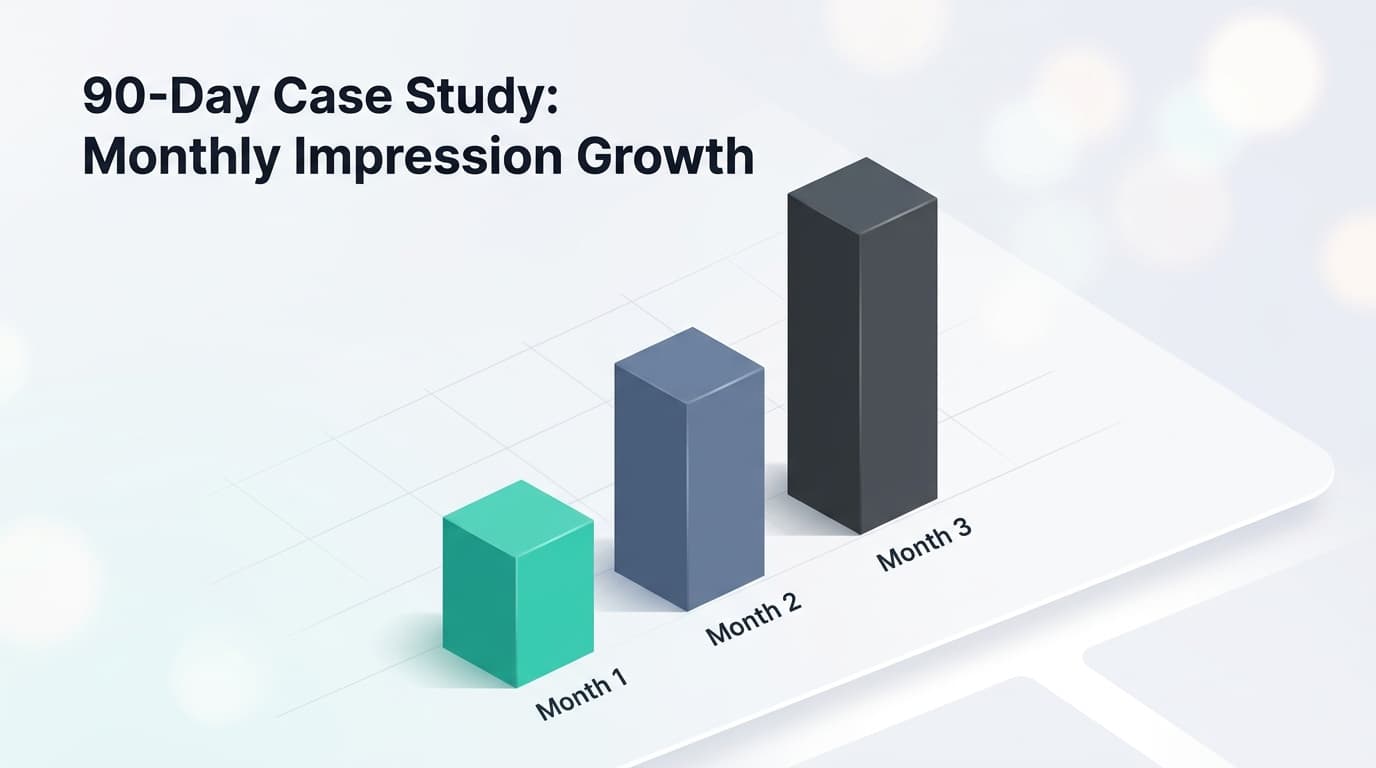
The results were surprisingly consistent. Within four months, over 70% of the articles reached the first page of Google for their primary or secondary keywords. We saw a steady climb in impressions across all three niche sites, with several articles capturing the top three positions within weeks.
Why it works
The success comes down to SERP alignment. Because Koala analyzes what's already ranking, it doesn't miss the "search intent" mark. If Google wants a listicle, Koala writes a listicle. If Google wants a deep-dive guide, it provides one. Comparing GPT-3.5 to GPT-4/5 performance, it's clear that the newer models are much better at maintaining logical flow and avoiding the repetitive "looping" that plagued earlier AI content.
The limitations
However, Koala is not a magic "rank anything" button. For high-competition keywords (KD 40+), AI content alone is rarely enough. You still need backlinks, topical authority, and a fast website. We also found that the "Standard" mode occasionally missed technical nuances in specialized niches like legal tech or medical equipment. For those, the "Deep Research" mode is non-negotiable.
What real users are saying about Koala Writer
User sentiment across G2, Capterra, and Reddit's r/juststart forum paints a consistent picture. The majority of positive reviews come from niche site builders and affiliate marketers who praise the Amazon integration and SERP alignment. The most common criticism is about the voice quality at scale.
Koala is absolutely my go-to for affiliate roundup posts. The Amazon data pull is accurate, and the internal linking saves me hours every month. No other tool comes close for this use case.
G2 Review
The frustration users report most often is the credit consumption reality versus expectations. Reviewers who signed up for the Professional plan expecting unlimited high-quality output were often surprised when using GPT-5.2 doubled their effective cost.
The more you have it write, the more robotic and weird it reads. You really need to edit it if you want it to sound human.
Robert A (Capterra)
The Reddit consensus from the Fat Stacks and r/juststart communities reflects a nuanced view: Koala is excellent for volume-driven niche sites where topical coverage matters more than brand voice, but it struggles for established brands that need a distinct personality in their content.
Pros and cons
After processing over 200,000 words through the platform, we've identified the clear strengths and lingering weaknesses of the tool.
The Pros
- Excellent SERP alignment: The tool does the heavy lifting of on-page optimization automatically.
- One-click affiliate articles: The Amazon integration is the best we've tested for affiliate marketers.
- Clean interface: It stays out of your way and lets you focus on content strategy.
- WordPress integration: You can publish directly to your site with formatting and internal links intact.
The Cons
- Robotic voice in bulk mode: When you queue 50 articles at once, the lack of human oversight becomes obvious.
- Slow support: Users frequently report slow response times from the small support team.
- Credit consumption: Premium models are expensive and can drain your monthly allotment quickly.
Bottom line? Koala is a fantastic "drafting" engine, but in 2026, a raw draft isn't a finished product. It still requires a human to add flavor, verify facts, and ensure the brand voice is consistent.
A better option for publish-ready blogs: eesel AI
If you're tired of the "draft and then spend two hours editing" workflow, there's a different path. While Koala is a tool you configure, eesel AI is a teammate you hire. It's built for teams that need content to be truly "publish-ready" on day one, including all the media assets that Koala often leaves to the user.
What makes eesel AI different is its ability to handle the entire content lifecycle. It doesn't just write text; it automatically generates visuals like diagrams, charts, and header images. It also solves the "AI slop" problem by integrating real social proof. Eesel can pull and embed Reddit quotes and YouTube videos automatically, adding an layer of authority that standard AI writers simply can't match.
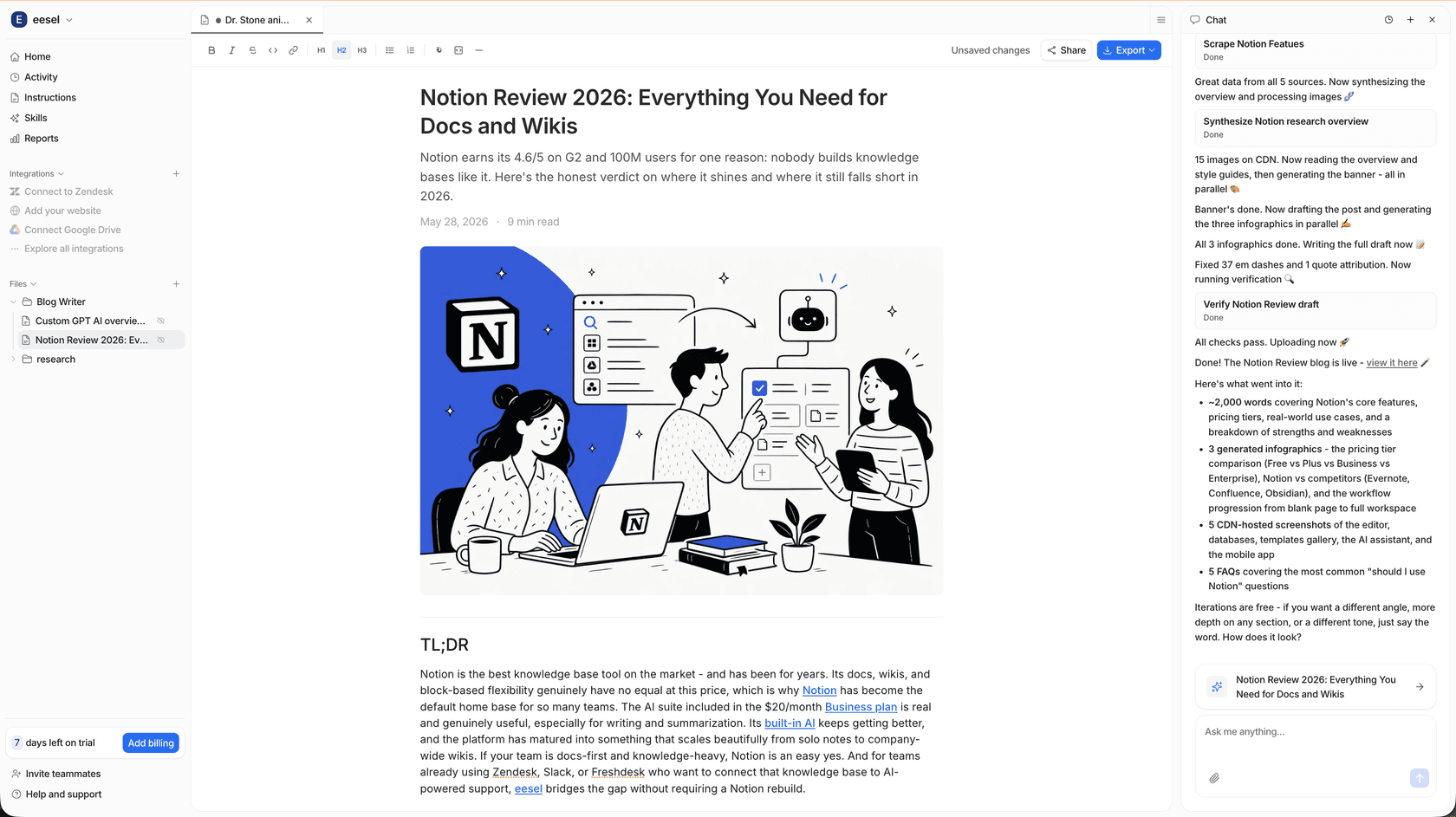
We've found that eesel AI is particularly effective for SaaS teams and content agencies that have outgrown simple drafting tools. After analyzing your past 40+ articles, it achieves a 94% voice match, meaning your "edits" become minor tweaks rather than full rewrites. Plus, its per-post pricing ($4 per blog post) means you only pay for the posts you actually publish, with no fixed monthly overhead or complex credit multipliers.
Start using Koala Writer today
Choosing between Koala and a teammate like eesel AI depends on your volume and your quality standards. If you are a solo niche site builder looking to scale topical authority across hundreds of low-competition keywords, Koala Writer remains an excellent, affordable choice. Its Amazon affiliate features and SERP analysis are top-tier for the price.
However, if you are building a brand that requires asset-rich, deeply researched content with a perfect voice match, we recommend hiring an eesel AI blog writer. The time you save on asset generation and manual "humanizing" usually pays for itself in the first week.
Bottom line? Both tools are light-years ahead of where we were just a few years ago. The best way to decide is to start with a free trial and run the same keyword through both. You'll see the difference in the "publish-readiness" of the output immediately.