
Choosing the right IT service management platform can feel overwhelming. Two names consistently rise to the top: Freshservice and Jira Service Management. Both offer capable ITSM features, AI-powered automation, and extensive integrations but they serve different types of teams.
This comparison breaks down what each platform does best, where they differ, and how to decide which fits your organization. Whether you're a small IT team looking for quick deployment or an enterprise needing deep customization, understanding these differences will help you make the right choice.
What is Freshservice?
Freshservice is the ITSM solution from Freshworks, a cloud software company founded in 2010. Built with simplicity in mind, Freshservice targets organizations that want modern IT service management without the complexity traditionally associated with enterprise tools.
The platform serves over 74,000 businesses worldwide and has earned a reputation for intuitive design. According to Forrester's Total Economic Impact study, organizations using Freshservice see a 356% ROI in under six months. The platform is particularly popular among small to mid-sized businesses and teams that prioritize ease of use over extensive customization.
Freshservice operates as part of the broader Freshworks ecosystem, which includes customer support (Freshdesk), CRM (Freshsales), and HR management (Freshteam) tools. This integration allows organizations to unify their business operations on a single platform.
Key differentiators include its consumer-grade interface, quick time-to-value (most teams deploy within 2-4 weeks), and Freddy AI Freshworks' purpose-built AI for service management that handles everything from autonomous ticket resolution to predictive analytics.
What is Jira Service Management?
Jira Service Management is Atlassian's ITSM solution, built on the same platform that powers software development for over 83% of Fortune 500 companies. Launched in 2013, it has become the fastest-growing product in Atlassian's core portfolio.
The platform serves 50,000+ customers and excels at connecting IT operations with software development teams. For organizations already using Jira Software, Confluence, or Bitbucket, Jira Service Management offers native integration that simplifies workflows between developers and IT support.
Atlassian positions Jira Service Management as an enterprise-grade solution with extensive customization capabilities. While this power comes with a steeper learning curve, it enables complex workflows that scale to 100,000+ users.
Key differentiators include deep DevOps integration, the massive Atlassian Marketplace (800+ apps), and Atlassian Intelligence AI capabilities that include virtual service agents, AIOps for incident management, and specialized Rovo agents for service management tasks.
Feature comparison: Freshservice vs Jira Service Management
Incident and problem management
Both platforms handle incident management well, but with different approaches.
Freshservice focuses on speed and simplicity. When incidents occur, the platform automatically creates tickets, applies prioritization rules, and escalates based on SLA policies. The Freddy AI Agent can resolve common incidents autonomously, while the AI Copilot suggests solutions to human agents. Problem management links related incidents, tracks root cause analysis, and maintains a known error database.
Jira Service Management offers more control and depth. The platform includes Opsgenie integration for on-call management and alert routing. AI-powered alert grouping reduces noise during major incidents, while war room capabilities bring together responders with relevant context. Post-incident reviews generate automatically, capturing timeline, impact, and lessons learned.
Bottom line: Choose Freshservice for straightforward incident handling with AI assistance. Choose Jira Service Management if you need sophisticated on-call management and deep incident analysis.
Asset and configuration management
Asset management capabilities vary significantly between pricing tiers.
Freshservice includes asset management starting at the Pro plan ($99/agent/month). The module offers auto-discovery of hardware and software, mobile barcode scanning, software license tracking, and a visual CMDB for mapping relationships between assets. Organizations can track purchase orders, contracts, and asset lifecycles from procurement to retirement.
Jira Service Management includes Assets (formerly Insight) starting at the Standard plan, with 5,000 objects included. Premium increases this to 50,000 objects, while Enterprise supports 500,000. The CMDB offers dependency mapping, which helps assess change impact and reduce service risks.
Pricing consideration: Freshservice charges separately for asset management at lower tiers, while Jira Service Management bundles it but limits object counts. For asset-heavy organizations, calculate total cost based on your actual asset volume.
AI capabilities
Both platforms have invested heavily in AI, but with different philosophies.
Freshservice's Freddy AI focuses on practical automation. The AI Agent handles frontline support autonomously, the AI Copilot drafts responses for human agents, and AI Insights provides predictive analytics. Freddy understands natural language queries, allowing managers to ask questions like "What were our top incident categories last month?" and receive instant answers. Enterprise plans include 1,200 AI sessions per license annually.
Jira Service Management's Atlassian Intelligence takes a broader approach. The virtual service agent provides 24/7 self-service, drawing on knowledge bases and past resolutions. AIOps capabilities group related alerts, automatically create incidents, and generate post-incident reviews. Rovo agents offer specialized assistance for tasks like ticket triage and service requests. Premium plans include 1,000 assisted conversations monthly.
Bottom line: Both platforms offer capable AI. Freshservice emphasizes ease of use and quick wins, while Jira Service Management provides deeper AI integration across the IT operations lifecycle.
Knowledge management and self-service
Self-service capabilities differ in their approach to knowledge.
Freshservice includes a built-in knowledge base with a "solutions" approach articles that directly address common issues. The self-service portal is customizable and mobile-responsive. Freddy AI suggests relevant articles as customers type their requests, deflecting tickets before they reach agents.
Jira Service Management leverages native Confluence integration for enterprise knowledge management. Organizations already using Confluence can extend their existing documentation to the service portal. The virtual service agent can access this knowledge to answer questions conversationally.
Bottom line: Freshservice offers a simpler, integrated knowledge solution. Jira Service Management excels when you need enterprise-grade documentation with Confluence's advanced features.
Pricing comparison
Understanding total cost requires looking beyond per-agent pricing.
Freshservice pricing (per agent/month, annual):
| Plan | Price | Key Features |
|---|---|---|
| Starter | $19 | Basic ITSM, incident management |
| Growth | $49 | + Automation, service catalog |
| Pro | $99 | + Asset management, project management |
| Enterprise | Custom | + Freddy AI, sandbox, advanced security |
Add-ons: Asset Pack ($75-$1,500/month based on asset count)
Jira Service Management pricing (per agent/month, annual):
Standalone:
| Plan | Price | Key Features |
|---|---|---|
| Free | $0 | Up to 3 agents, basic features |
| Standard | $17.65 | Unlimited agents, basic ITSM |
| Premium | $44.27 | + Opsgenie, Assets, advanced automation |
| Enterprise | Custom | Enterprise security, unlimited sites |
Service Collection (includes Confluence, Jira Work Management): Standard $20, Premium $51.42
Cost at scale (25 agents, annual billing):
- Freshservice Growth: $1,225/month ($14,700/year)
- Freshservice Pro: $2,475/month ($29,700/year)
- Jira Service Management Standard: $441/month ($5,295/year)
- Jira Service Management Premium: $1,107/month ($13,284/year)
Important considerations:
- Freshservice requires Pro ($99) for asset management; Jira includes it at Standard ($17.65)
- Jira's Premium tier includes Opsgenie and AI features that Freshservice reserves for Enterprise
- Both platforms charge for additional AI usage beyond included limits
Integration ecosystem
Your existing tech stack should influence your decision.
Freshservice integrations
Freshservice offers 1,000+ marketplace apps with particular strength in:
- Freshworks suite (Freshdesk, Freshsales, Freshteam)
- Communication: Slack, Microsoft Teams
- Development: GitHub, GitLab, Bitbucket
- Cloud services: AWS, Azure, Google Cloud
The REST API and webhook support enable custom integrations, while the Integration Hub provides pre-built connectors for common tools.
Jira Service Management integrations
Jira Service Management connects with 800+ Atlassian Marketplace apps:
- Native ecosystem: Jira Software, Confluence, Bitbucket, Opsgenie, Trello, Statuspage
- DevOps tools: Jenkins, CircleCI, Azure DevOps, GitHub, GitLab
- Communication: Slack, Microsoft Teams
- Enterprise: Salesforce, SAP, Workday
The Forge platform allows developers to build custom apps, while extensive APIs support deep integrations.
Which wins? Choose Freshservice for broader business app integration and customer service alignment. Choose Jira Service Management for development workflow integration and DevOps toolchain connectivity.
Ease of use and implementation
The implementation experience differs significantly.
Setup complexity
Freshservice emphasizes quick deployment. Most organizations go live within 2-4 weeks using guided setup wizards and pre-built templates. The low-code configuration allows non-technical administrators to customize workflows, forms, and automations without developer assistance.
Jira Service Management requires more planning. Implementation typically takes 2 weeks to 2 months depending on customization needs. The platform's power comes from extensive configuration options, but this flexibility requires expertise. Organizations benefit from having a dedicated Jira administrator or working with an implementation partner.
User experience
Freshservice consistently earns high marks for usability, with a 9.5/10 score on TrustRadius. The modern, consumer-grade interface requires minimal training. Agents can start resolving tickets within hours of onboarding.
Jira Service Management has a steeper learning curve. New users often feel overwhelmed by the density of options and Jira-specific terminology. However, once mastered, the interface provides powerful capabilities that scale with organizational needs.
Support and training
Freshservice provides 24/5 chat support for administrators, comprehensive documentation, video tutorials, and a community forum. Enterprise customers receive dedicated account management.
Jira Service Management offers tiered support: 9/5 for Standard, 24/7 for Premium and Enterprise. Atlassian University provides certification programs, while extensive documentation and a massive community support self-service learning.
Use case recommendations
Choose Freshservice if:
- You're a small to mid-sized business (10-1,000 employees)
- You need quick deployment without dedicated technical resources
- Your team prioritizes ease of use over deep customization
- You want built-in asset management without complex setup
- You use other Freshworks products
- You have limited IT administration resources
Choose Jira Service Management if:
- You're a larger enterprise or rapidly growing organization
- Your team already uses Atlassian products
- You need extensive customization and workflow flexibility
- You want tight integration between development and IT operations
- You have technical resources for implementation and administration
- You require enterprise-scale deployment (1,000+ agents)
Industry fit
Freshservice excels in: Education, healthcare, non-profits, professional services, and SMBs across industries. Organizations that value quick wins and minimal training requirements.
Jira Service Management excels in: Software and technology companies, financial services, large enterprises, and any organization with mature DevOps practices. Teams that need to connect IT support with software development workflows.
Enhancing your ITSM with AI teammates
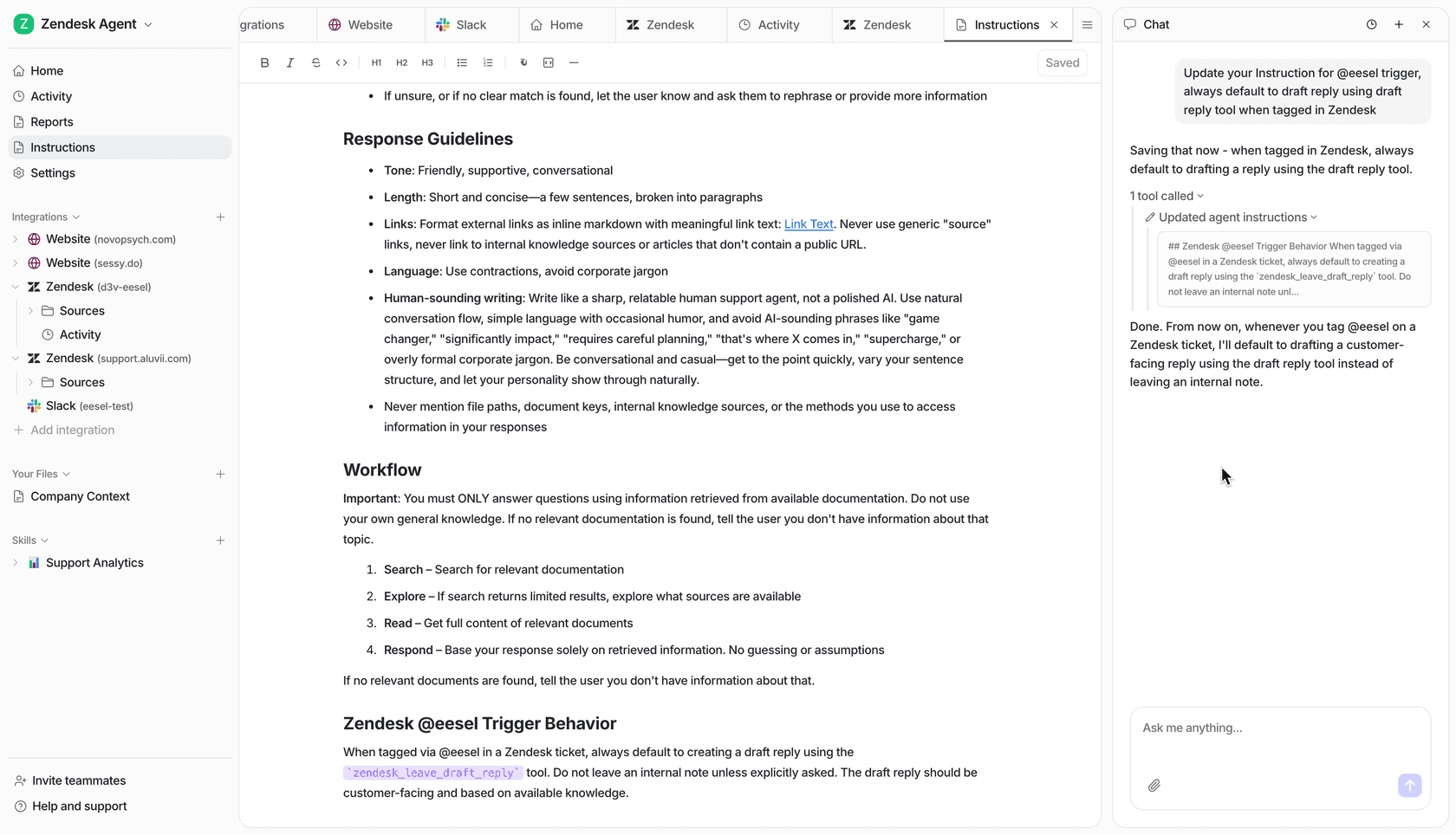
Regardless of which platform you choose, modern AI tools can extend your capabilities. Solutions like eesel AI integrate with both Freshservice and Jira Service Management to provide autonomous ticket resolution, AI-powered agent assistance, and intelligent triage.
These AI teammates learn from your existing tickets and knowledge bases, handling frontline support while escalating complex issues to human agents. Organizations using AI enhancement report up to 81% autonomous resolution rates and payback periods under two months.
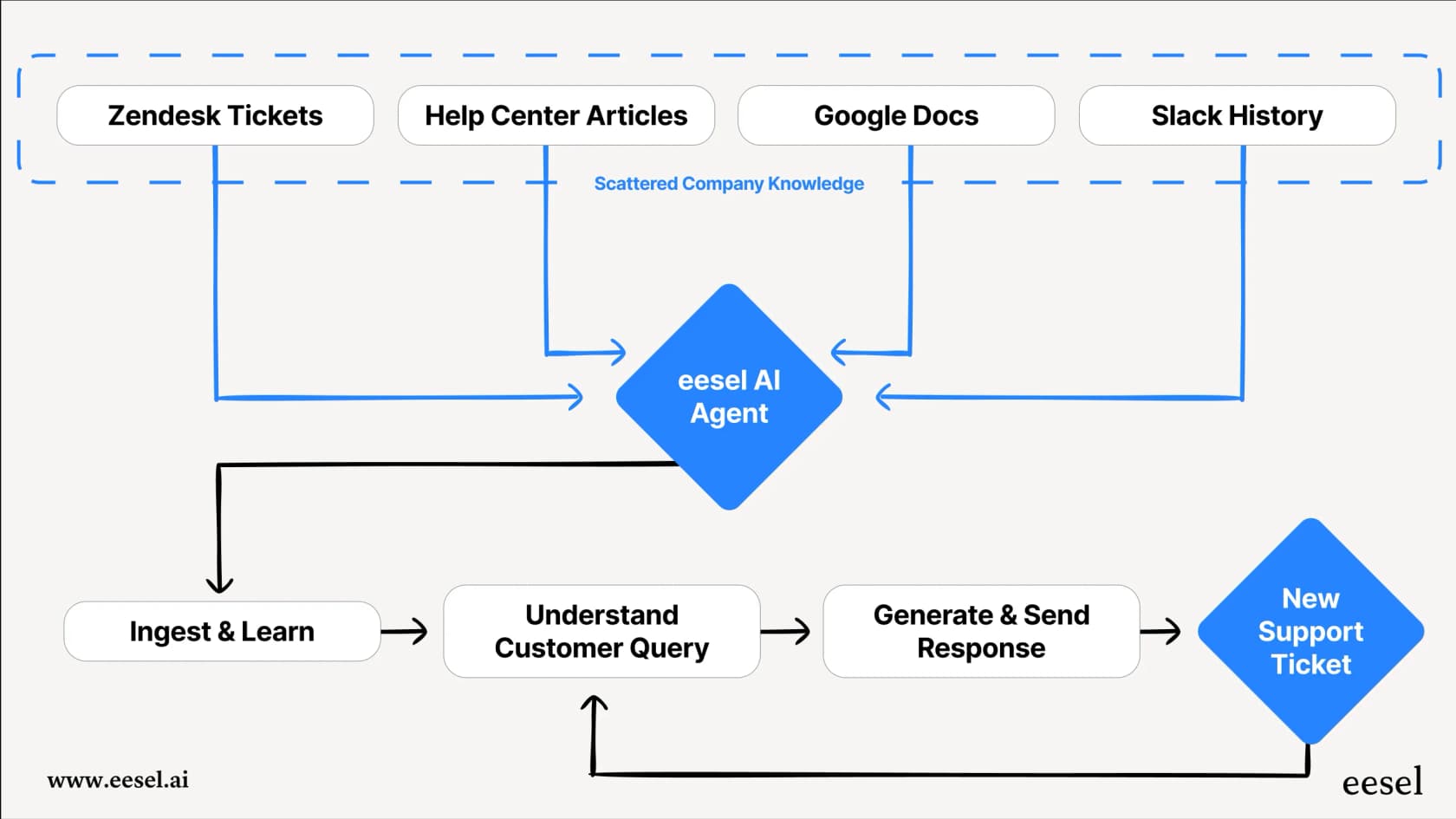
When evaluating ITSM platforms, consider not just their native capabilities but how they integrate with modern AI tools that can amplify your team's effectiveness.
Final thoughts
Both Freshservice and Jira Service Management are capable ITSM platforms that serve different needs.
Freshservice stands out for simplicity and speed to value. It's the right choice for organizations that want capable ITSM without complexity, especially those without dedicated technical resources. The intuitive interface and quick deployment make it ideal for teams that need to start delivering better service fast.
Jira Service Management stands out for power and customization. It's the right choice for enterprises, development-heavy organizations, and teams that need to connect IT operations with software delivery. The steeper learning curve pays off for organizations that can use its extensive capabilities.
Your choice ultimately depends on your team's technical maturity, existing tools, and how much customization you need. Either way, you're choosing a platform that can grow with your organization and adapt to changing IT service demands.