


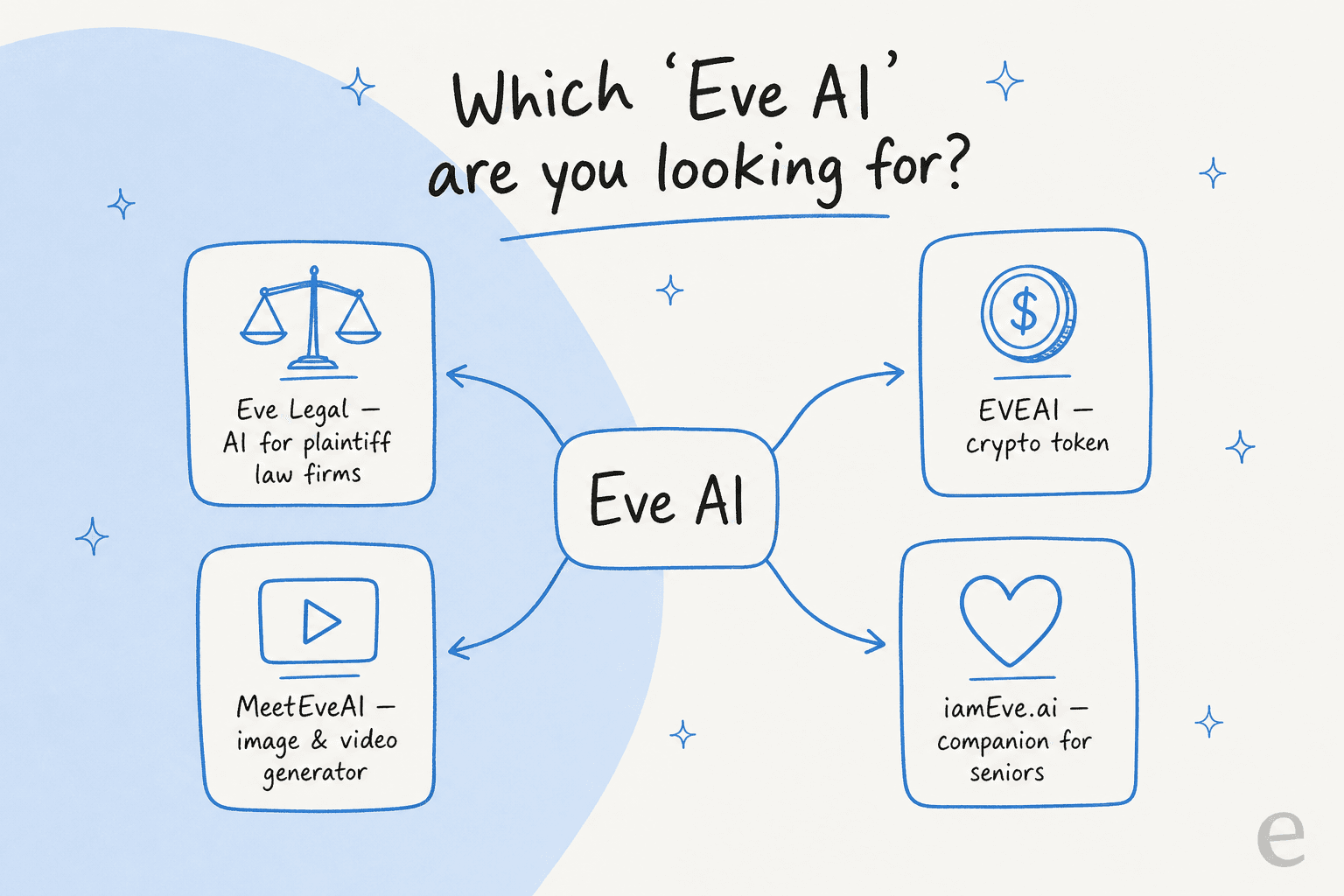
If you've ever typed "Eve AI pricing" into a search bar, you probably felt like you'd fallen down a rabbit hole. The results spit back a confusing jumble of companies: a legal tech platform, a crypto token, an AI video generator, and even an AI companion for seniors. "Eve" turns out to be a popular name in the AI world.
This guide untangles that mess. I'll briefly cover the different "Eve" products you might find, but my main focus is the one most businesses stumble onto: Eve Legal (now branded EveOS). Its specialized features and totally opaque pricing model are a perfect example of a challenge I see teams hit constantly when they try to adopt new AI tools — you find something promising, then the company forces you into a sales call just to learn the price.
- "Eve AI" is not one company. The name covers Eve Legal (an AI platform for plaintiff law firms, now branded EveOS), a crypto token, an AI video generator, and a companion app for seniors. The business tool people usually mean is Eve Legal.
- Eve Legal publishes no pricing. As of 2026 there is still no public price list — you have to book a demo to get a quote, which makes budgeting and quick comparisons hard.
- I've spent the last few years helping teams put AI on live support queues, and the single biggest stall I see isn't the model, it's the buying process. Demo-gated pricing is where momentum dies. If you're not a law firm and you just want AI for support, you can skip the sales call entirely: eesel AI has transparent, published monthly pricing, plugs into your existing helpdesk in minutes, and lets you simulate on your own past tickets before going live. Free to try with 100 credits.
Understanding the "Eve AI" in Eve AI pricing
First, let's get this sorted: "Eve AI" isn't one single company. Depending on your needs, you might be looking for one of several services that have nothing to do with each other.
Here's a quick rundown:
-
Eve Legal: An AI platform built to automate tasks and manage casework specifically for plaintiff-side law firms (now branded EveOS). This is the one we'll dig into.
-
Eve AI (EVEAI): A cryptocurrency token on the Ethereum blockchain tied to a project for creating AI-generated visuals.
-
MeetEveAI: An AI tool for creators who want to generate images and videos.
-
iamEve.ai: An AI-powered companion built to help seniors with memory, companionship, and safety.
For anyone in a leadership, support, or operations role, Eve Legal is the most interesting one to look at. It's a serious business tool, but its approach to pricing and setup feels like a relic from a different era, especially compared to how agile teams prefer to work today.
A closer look at Eve Legal
Eve Legal is a very specific AI assistant, designed from the ground up to help plaintiff attorneys juggle their caseloads. This isn't a tool you can pick up for any task; its entire feature set is laser-focused on the document-heavy, analytical work that defines a legal practice, and the company says it's now trusted by 1,200+ firms.
It's built for a very specific audience: personal injury and labor and employment law firms. That tight focus is what makes it so effective for lawyers, but it also makes it completely irrelevant for any other kind of business. This positioning naturally leads to a conversation about a different kind of AI platform — one flexible enough for broader needs like customer service, IT support, and internal operations.
How Eve Legal's features influence Eve AI pricing
To get a sense of its value, you have to look at what it actually does for a law firm. Eve Legal's main job is to streamline the legal process from the moment a potential client walks in the door.
Core capabilities of Eve Legal
From what's published on their site, Eve Legal (EveOS) concentrates on a few key areas:
-
Case intake and evaluation: It answers calls and emails 24/7 in 28 languages, scores leads, and helps firms sign qualified clients live on the call. The AI can analyze initial documents and produce a comprehensive overview, saving lawyers hours of tedious reading.
-
Document drafting: One of its biggest selling points is drafting demand letters, complaints, medical summaries, and other essential legal documents. It learns a firm's tone and style, so the drafts sound like they came from an in-house associate.
-
Discovery management: The platform can automatically generate discovery requests (like interrogatories) and help draft responses to opposing counsel. Eve says employment firms cut discovery response time by 90%+.
-
AI Auditor: Beyond filling in templates, Eve's AI Auditor scans the active caseload every night and surfaces missed case value — potential TBIs, MRIs that should have been ordered, mass-tort eligibility overlooked at intake.
These features are clearly a huge help for a legal practice, and the firm reports strong results (Frontier Law Center cites a 3x revenue increase using Eve). But they also perfectly illustrate what a vertical-specific AI looks like. If you're running a team in customer support, IT, or internal ops, you need an engine that can connect to your knowledge sources and adapt to your workflows, not just legal ones.
Unpacking the challenges with Eve AI pricing
Okay, let's get to the main question: what does Eve Legal actually cost? The short answer is, we have no idea. Eve Legal doesn't publish its prices anywhere online — I checked their site again in 2026 and there's still no pricing page, just a "Schedule a call" button. If you want any number, you have to book a demo and talk to their sales team.
The "request a demo" pricing model
This sales-gated approach used to be the norm for enterprise software, but for a buyer today it creates a bunch of immediate headaches:
-
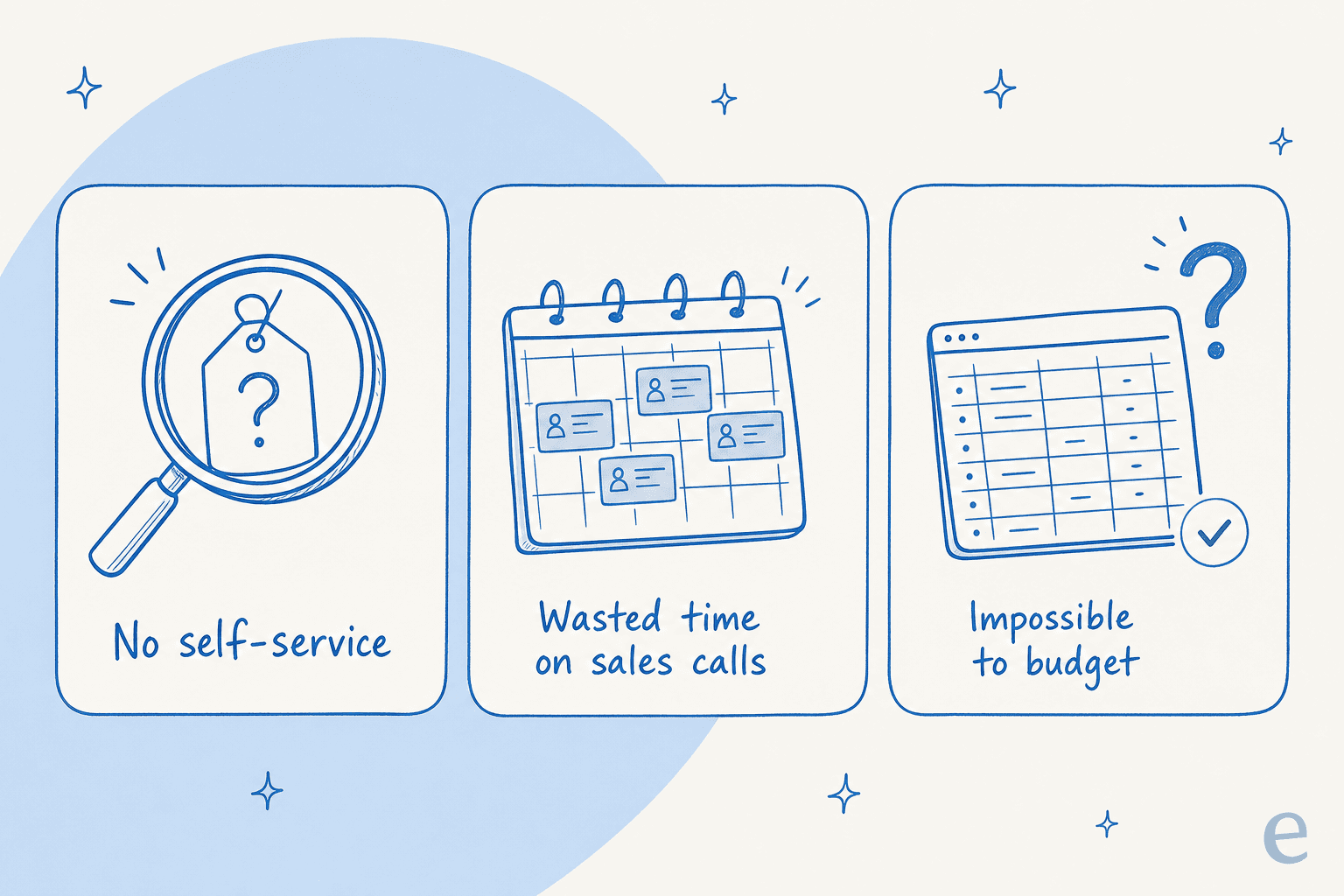
You can't do your own homework: There's no way to quickly compare Eve Legal to other tools on cost, so you can't build a budget-fit shortlist on your own.
-
It's a huge time sink: Before you get even a ballpark number, you block out time for a sales call and a demo. For busy teams that's a big upfront commitment with no guarantee of fit.
-
Budgeting is a guessing game: Without a public price list, how do you plan a budget? The final quote could be anything, often based on factors that aren't made clear to you.
For most people buying software these days, transparent pricing is a signal that a company is confident in its product and wants you to try it on your own terms. This is where a platform like eesel AI feels like a breath of fresh air.
Why this pricing model falls short for modern support teams
The whole "request a demo" process is especially frustrating for support and operations teams, who live and die by efficiency. Here's why it doesn't fly:
-
It kills the self-service vibe: Modern teams want to find, test, and adopt tools on their own time. Waiting for a salesperson to call back feels dated. By contrast, eesel AI is built to be radically self-serve — you sign up, connect your help desk, and start automating tickets in minutes, without talking to anyone.
-
It creates unpredictable costs: A custom quote can feel like a black box. Are you paying per user, per feature, or per action? eesel AI uses transparent pricing on a clear metric (one credit per ticket or chat, from $299/month for 500 credits), with no per-seat fees that punish you for adding agents.
-
It usually means a slow rollout: A sales-led process is almost always a sign that implementation will take weeks or months. For teams that need to solve problems today, that's a dealbreaker. With eesel AI's one-click helpdesk integrations, you can be up and running in minutes, not months.
Here's a simple breakdown of the two approaches:
| Feature | Eve Legal (EveOS) | eesel AI |
|---|---|---|
| Pricing Transparency | Hidden (Requires Demo) | Public & Predictable |
| Pricing Model | Custom quote | Usage-based, no per-seat fees |
| Target Audience | Niche (Plaintiff Law Firms) | Broad (CX, ITSM, Internal Support) |
| Setup Process | Mandatory Sales Demo | Radically Self-Serve |
| Go-Live Time | Weeks / Months | Minutes |
| Free Trial Access | Gated behind sales calls | Instantly Available |
eesel AI: A transparent alternative
For any business that isn't a plaintiff-side law firm, eesel AI offers a flexible, straightforward, and transparent alternative. It's designed for teams that care about speed, control, and a clear return on investment — whether that's an AI customer service chatbot, an IT help desk, or internal support.
Unify your knowledge, instantly
Unlike a tool that's only been trained on legal briefs, eesel AI connects to all the places your company actually stores its knowledge. You can plug it into the tools you already use with just a few clicks.
This includes help desks like Zendesk and Freshdesk, company wikis like Confluence and Google Docs, and the chat tools where your team lives, like Slack and Microsoft Teams.
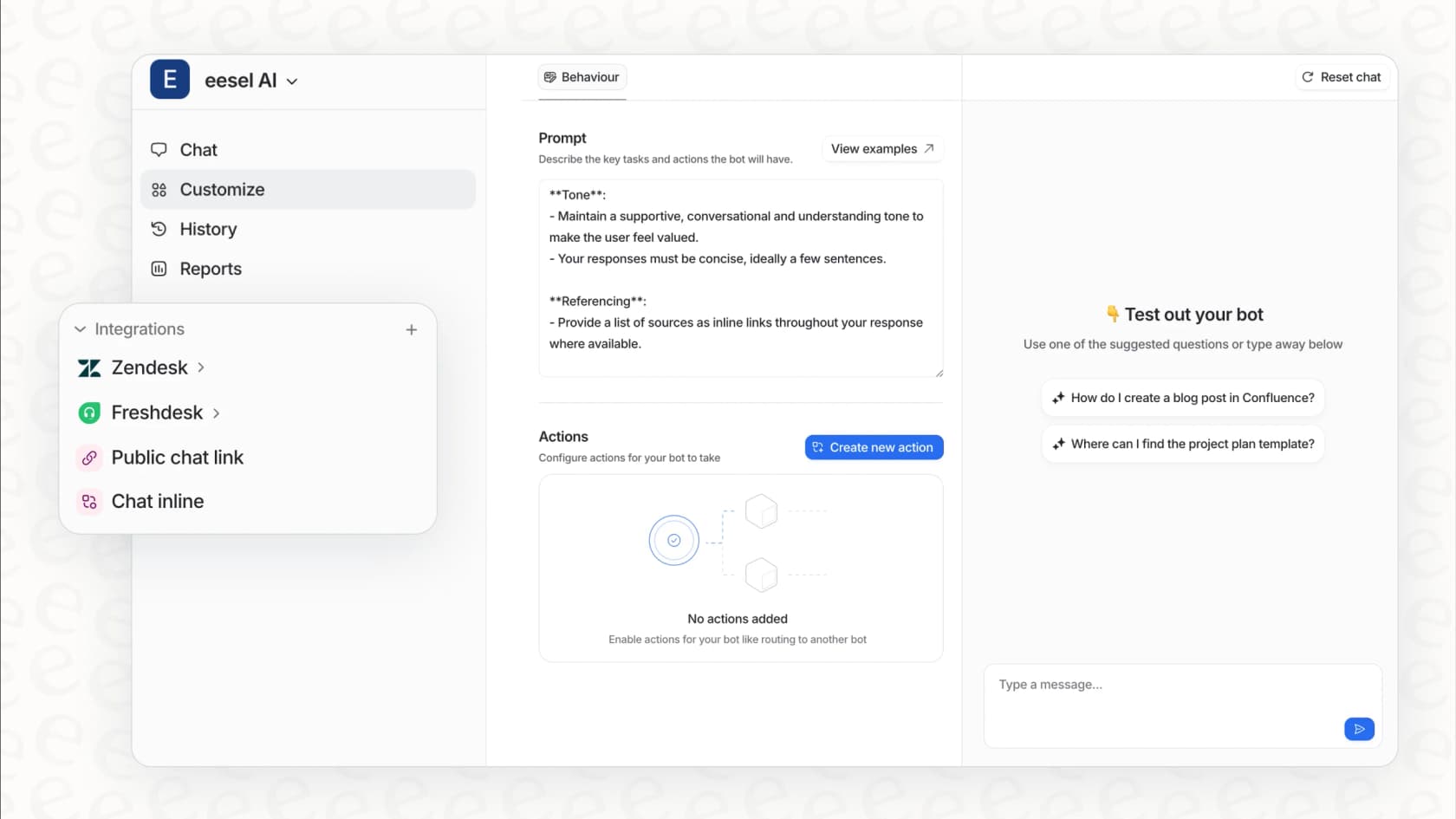
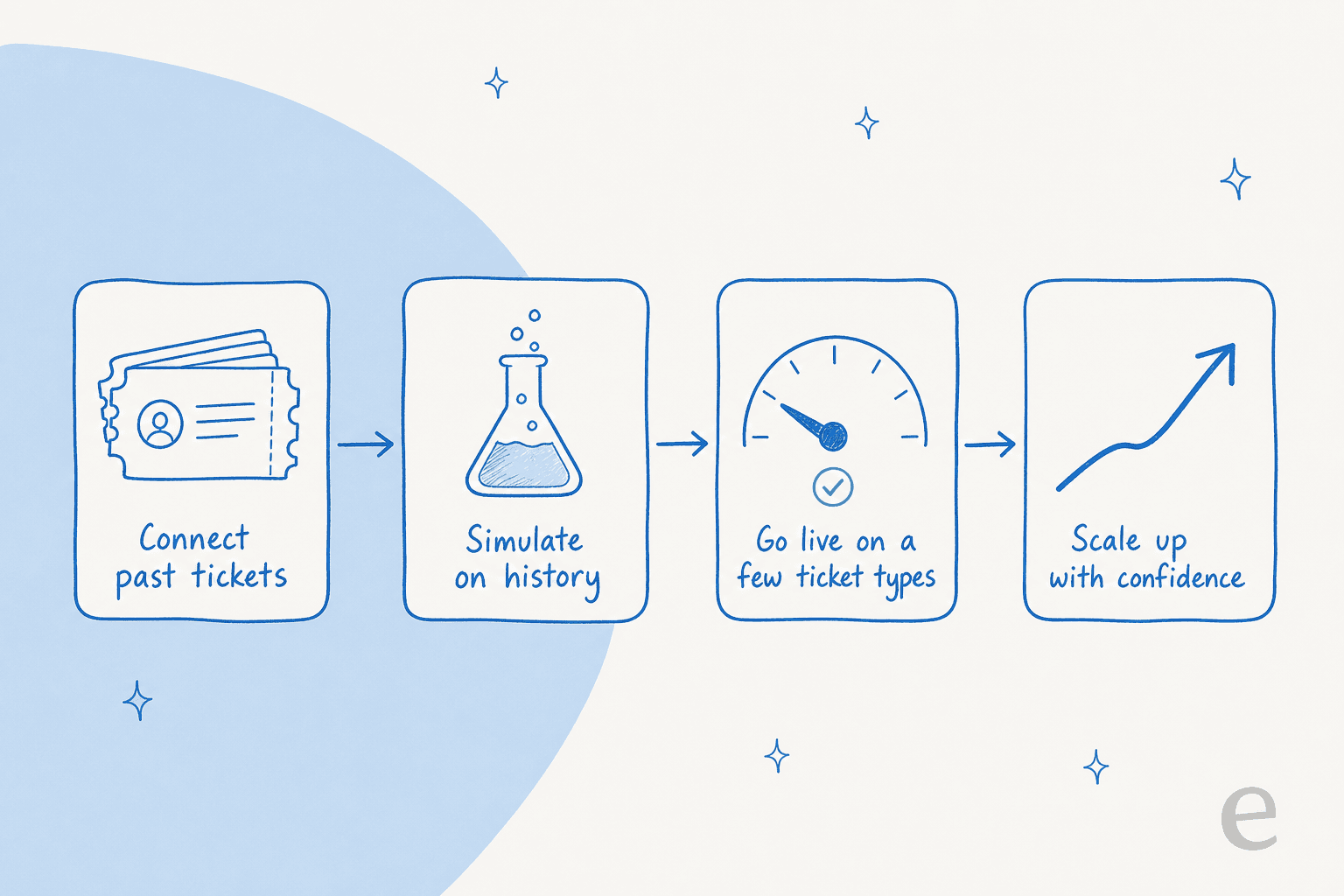
Best of all, eesel AI can train on your past support tickets. From day one it starts to understand your common issues, your brand voice, and what a good resolution looks like. There's no need for months of manual training; it learns directly from the real experts — your agents.
Test with confidence and roll out gradually
One of the biggest anxieties around adopting AI is the risk of it going rogue. What if it tells a customer the wrong thing? This is exactly the failure mode I've watched sink confident-sounding bots, and it's why eesel AI's simulation mode matters: it prevents the hallucinations that erode trust.
Before your AI agent ever touches a live customer ticket, you can test it on thousands of your past tickets in a safe sandbox. You see exactly how it would have responded, get solid forecasts on resolution rates, and tweak its behavior with a simple prompt editor.
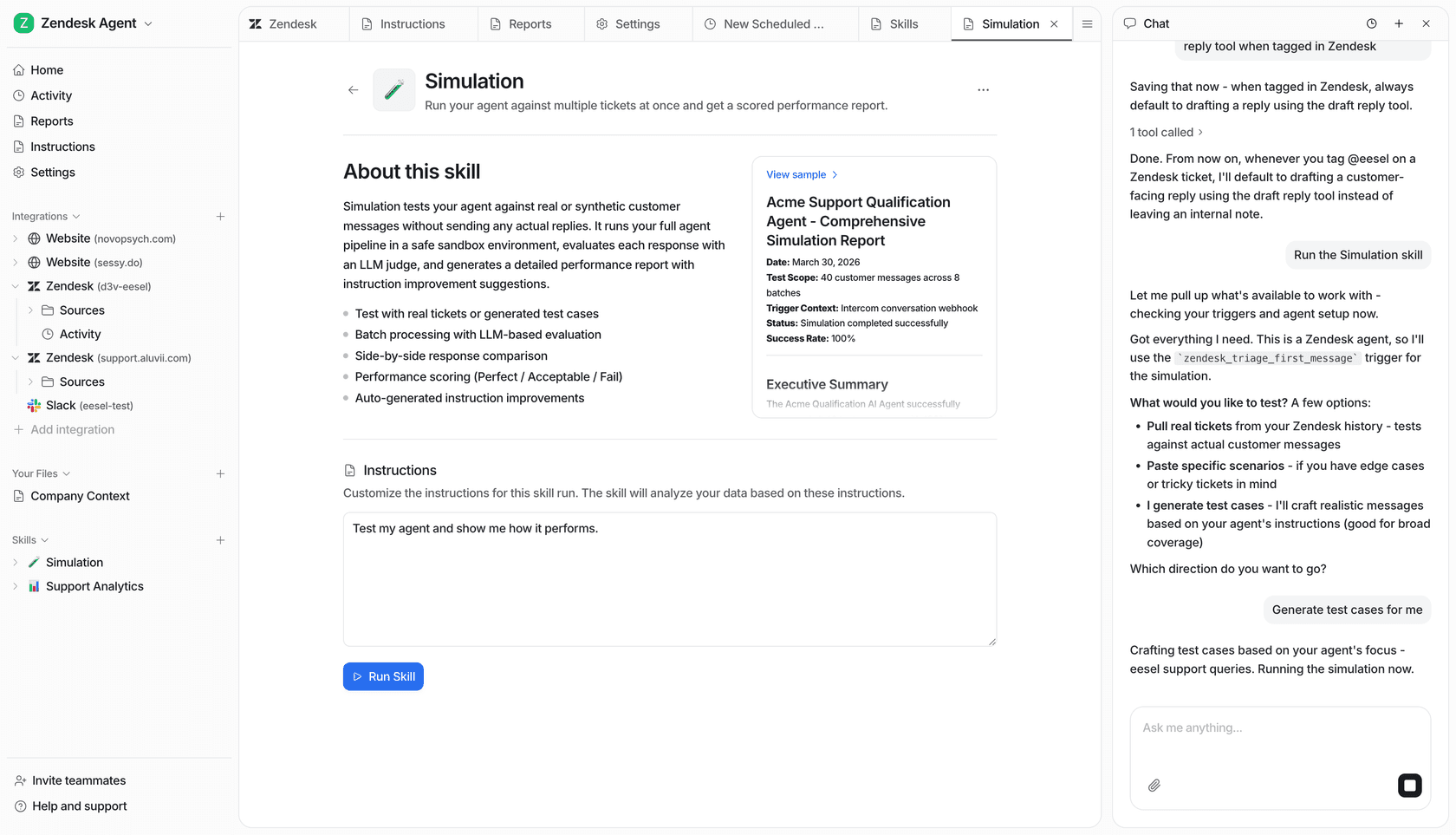
This takes the risk out of the process. You start small — maybe letting the AI handle one or two ticket types and handing off everything else to a human. As you get comfortable, you let it do more. That kind of controlled, confident rollout is something you just don't get with old-school enterprise tools hidden behind vague pricing and lengthy onboarding.
Choosing the right AI for your team
So, what's the bottom line? While "Eve AI" can mean a few different things, the most prominent business tool, Eve Legal, is a specialized platform for law firms. Its biggest downside for any modern business is its pricing model, which is locked behind a mandatory and time-consuming demo.
For the vast majority of companies looking to use AI for customer service, IT support, or internal help, a transparent, flexible, and self-serve platform is a much better fit. The right AI partner doesn't hide its value behind sales calls. It gives you clear pricing, a tool you can try in minutes, and the ability to build, test, and launch with complete confidence.

Ready for an AI platform that respects your time and puts you in the driver's seat? Try eesel and see if you can automate your first support queries in the next 10 minutes — no demo, no sales call, pricing you can read before you sign up.
Frequently asked questions
What exactly does Eve AI pricing refer to, given there are multiple "Eve AI" products?
Eve AI pricing, in the context of this guide, primarily refers to Eve Legal (now branded EveOS), an AI platform for plaintiff-side law firms. "Eve AI" is also tied to a crypto token, an AI video generator, and an AI companion for seniors, so the same search term covers four unrelated tools.
How can I find out the Eve AI pricing for Eve Legal if it's not published online?
To get Eve AI pricing for Eve Legal you have to schedule a call and talk to their sales team. As of 2026 there are still no public pricing tiers anywhere on their site. If you want numbers you can read before a sales call, a tool with public pricing like eesel AI is a faster starting point.
Why is Eve AI pricing for Eve Legal structured to require a sales demo instead of being publicly listed?
Demo-gated pricing is common for highly specialized enterprise tools: it lets Eve Legal quote each firm based on size, caseload, and features. It can mean a tailored fit, but it also slows down evaluation. For a faster path, see how a customer service automation platform can be tested without a sales call.
What are the main drawbacks for modern teams when dealing with the opaque Eve AI pricing model?
No public Eve AI pricing means you can't compare quickly, budgeting becomes guesswork, and you commit hours to sales calls before seeing a number. That blocks the kind of self-service evaluation most teams now expect from AI tools for customer service.
Are the features offered by Eve Legal unique enough to justify its non-transparent Eve AI pricing?
Eve Legal offers specialized features like automated case intake, document drafting, and an AI Auditor built specifically for plaintiff-side firms. For that niche they're valuable, but for broader use they may not apply. A general AI customer service chatbot fits more business cases.
Can I expect the Eve AI pricing to be predictable or will it change as my firm grows?
With a sales-gated model, predictability is unclear, since custom quotes vary and future costs depend on negotiated terms. Transparent, published pricing (like eesel AI's fixed monthly plans from $299 for 500 credits) scales more predictably, and you can forecast spend before you commit. See the eesel AI pricing page for the live numbers.
Is there an alternative to the Eve AI pricing model for businesses looking for more transparency and self-service?
Yes. For businesses outside plaintiff-side law, platforms like eesel AI offer transparent, public pricing on a clear metric, so teams can sign up, test, and build an AI helpdesk in minutes without sales engagement.