
The short answer, and why the model was never the variable
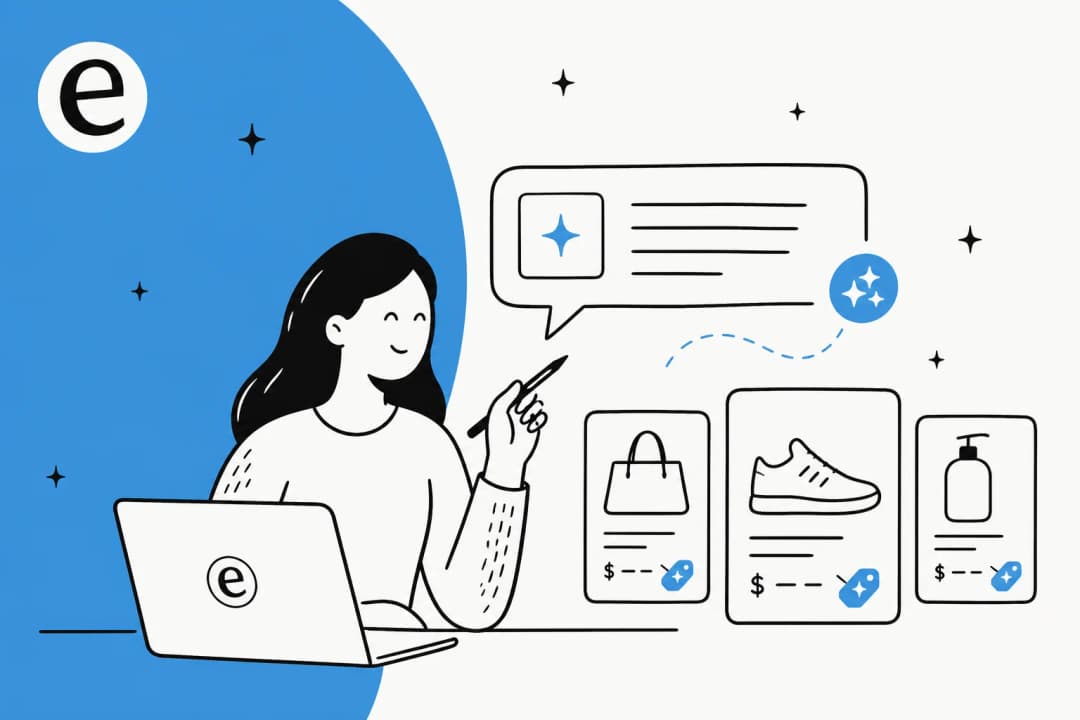
Type a product name into almost any AI copywriting tool and you get a tidy listing back: a title, a hook, some feature bullets, a button. It reads fine. Shopify Magic bakes this right into the admin and it's free, bundled into your Shopify plan rather than sold as an add-on. So "can the AI produce a description" stopped being the interesting question a while ago. The answer is obviously yes.
The question worth asking is whether that description converts, and there the model barely matters. Two tools running the same underlying model can hand you wildly different copy, and the only thing that changed is what each one knew about your product before it wrote a word.
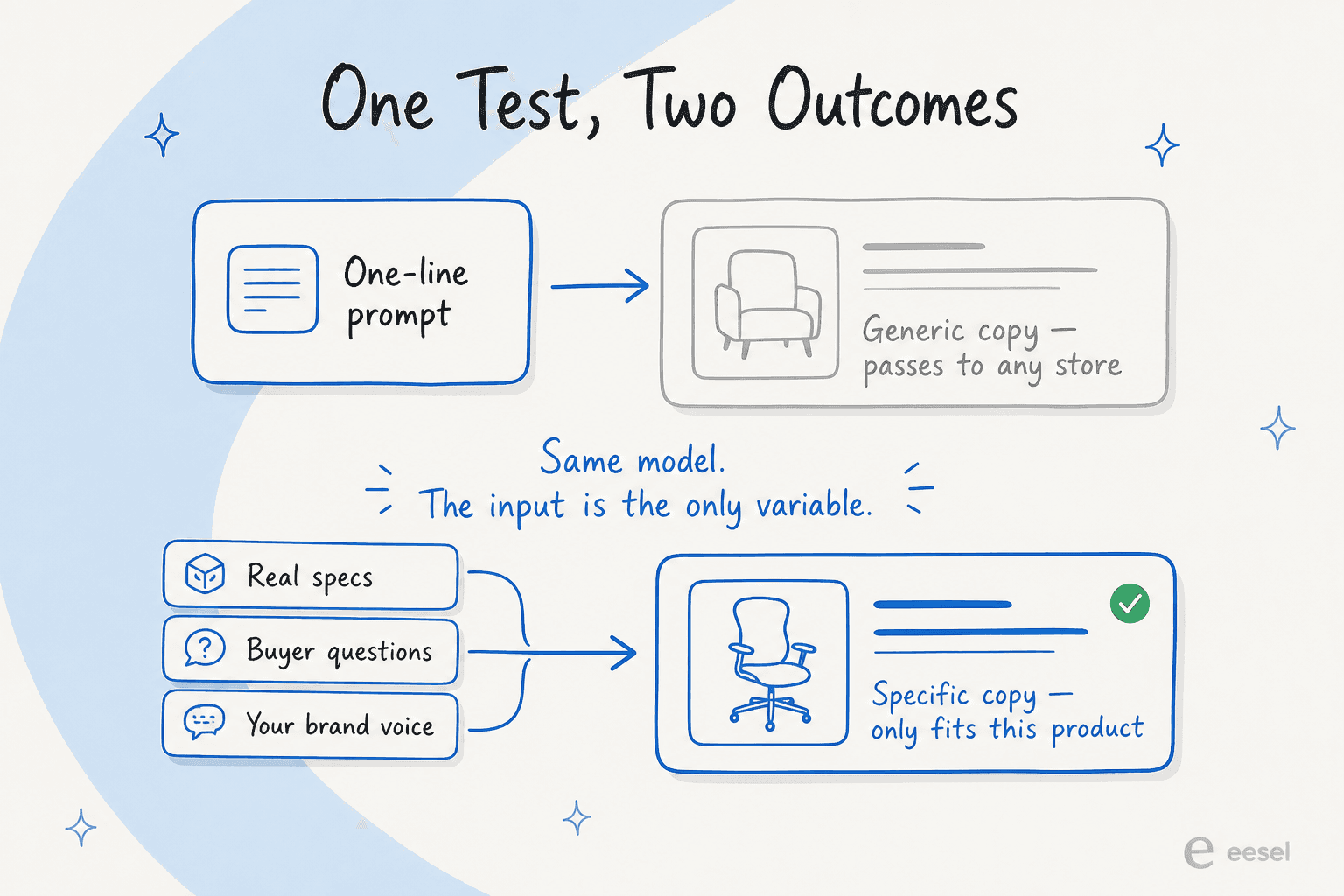
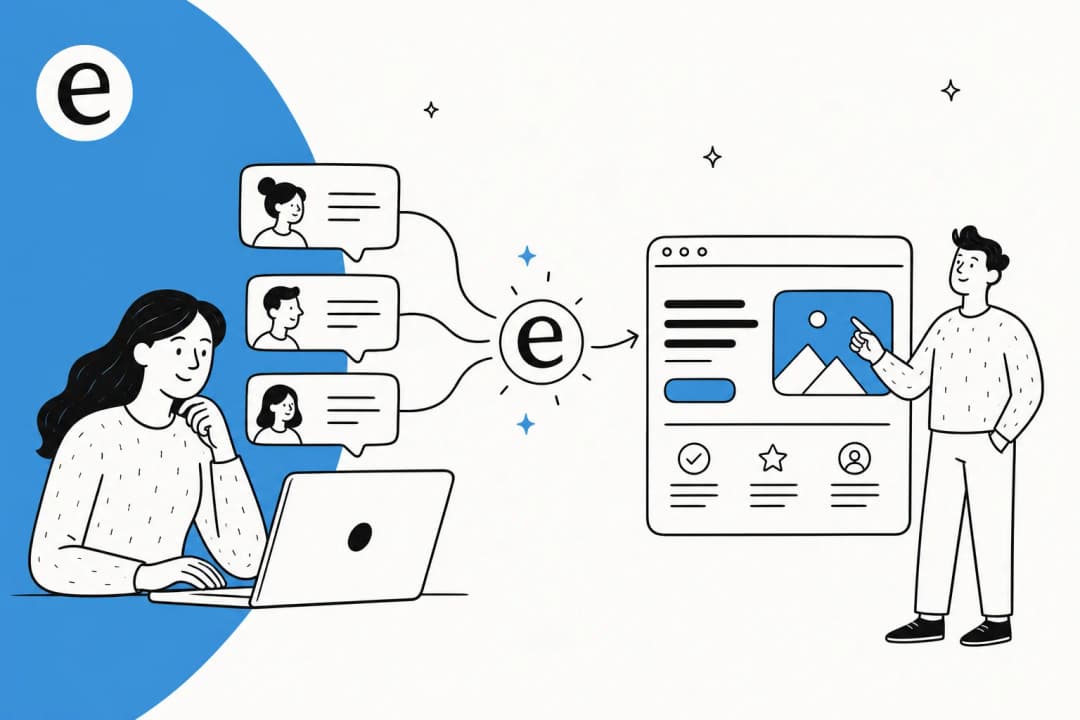
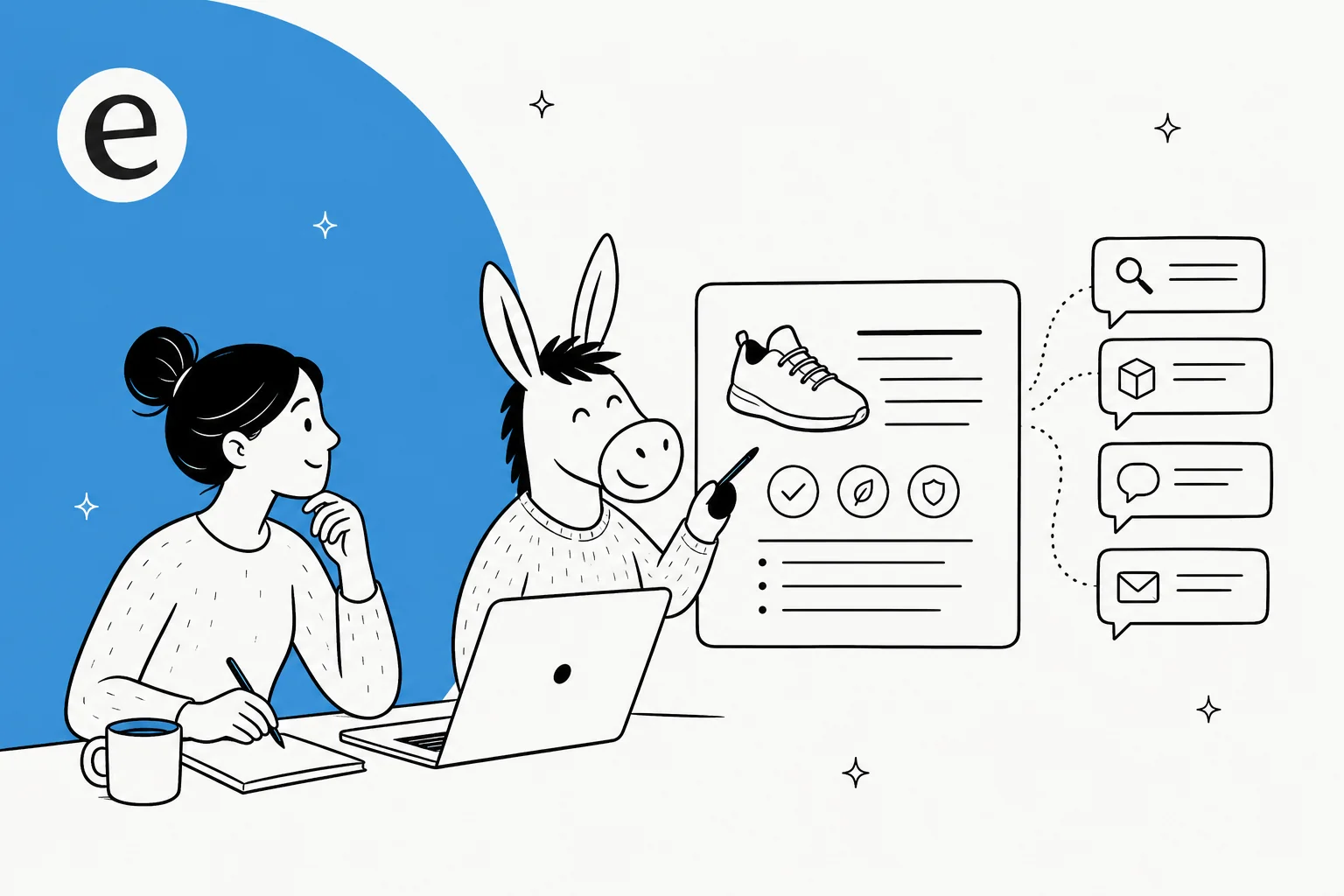
Look at the two paths. On the top, a prompt-only generator: a product name in, a confident paragraph out, the kind you've skimmed past a hundred times. On the bottom, a grounded one: your real specs, your buyers' actual questions, and your brand voice go in, and what comes out is specific enough that a competitor couldn't run it. Same model, completely different output, and the input is the only variable.
That's the reframe that should change how you shop. You're not buying a writer. You're buying a research process with a writer attached, which is how the better AI content generation tools already work: they treat the prompt as the last step, not the only one.
What "converts" even means for a product description
Worth being precise here, because "converts" is doing a lot of quiet work. A product description has three jobs, and only one of them is the bottleneck.
It has to be findable (the keywords a shopper searches), readable (clean structure, scannable bullets), and persuasive (it removes the specific doubt standing between this shopper and the button). AI nails the first two on the first try. The third is the one that moves the conversion rate, and it's the one that needs something the model doesn't have by default: knowledge of your buyer's specific hesitation.
Here's the failure mode in one line. You ask a generator for a description and it gives you "Elevate your everyday with this premium, versatile essential." It's clean. It's also meaningless, because it could sit on top of a water bottle, a tote bag, or a desk lamp. If you could paste your product description onto a competitor's listing and it still made sense, it isn't selling anything. Call it the swap test. Most AI copy fails it, and most sellers feel it immediately.
Why most AI product descriptions read the same
One ecommerce seller laid it out on r/ecommerce while shopping for exactly this kind of tool:
I've been testing a bunch of AI tools for writing product descriptions, but I keep hitting the same brick wall that they all sound the same. Even when I tell it to stop repeating phrases or structures, they all just end up copy-paste style and I have to manually tweak.
- u/zennaxxarion, r/ecommerce
That swappability is the default state of AI copy, because the model is trained to produce the most probable next word. The most probable description for a product is the average of every product page it was trained on. Average input, average output. It's the same tell that makes AI blog content easy to spot, which is why generic copy hurts twice.
The second hit is trust. Shoppers read generic copy as a signal about the whole store. As one marketer put it bluntly:
If you know a store owner wrote all their descriptions by hand, you can be reasonably sure they actually care. If it's just templated AI slop, how confident would you be about the quality of the store?
- u/RedCreator02, r/AskMarketing
Another seller in the same thread was blunter: templated copy "sends the message that the wording is not important to you. It's a good way to get lost in the crowd." That instinct maps directly onto how Google's E-E-A-T reviewers read a page, and it's why generic copy quietly signals "nobody really wrote this" to the shopper and the search engine at once. If you want the full taxonomy of those giveaways, my notes on why AI content stops ranking carry straight over to product copy, and the same instincts shape any E-E-A-T content. The cure isn't a fancier model. It's giving the model something specific to say.
The stuff that converts is sitting in your support inbox
I'm on eesel's support side, so let me tell you where I think the real material is hiding, because almost nobody mines it. eesel's other half is an AI that lives in real support inboxes, and I spend my days watching what actually comes through an ecommerce queue. Across the fleet that's an aggregate of 183,000+ interactions of customers describing their problems in their own words, and the pattern never goes away: a huge share of those tickets are questions a product description should have answered first.
It's concrete enough to measure. When we ran a trial on a German jewelry brand's live queue (around 1,000 tickets a month on Zendesk and Shopify), the single highest-accuracy ticket category for the AI was product inquiries, sitting at the top of the pack above returns and warranty. Read that the other way around and it's a verdict on the product pages: the questions the AI answered best in the inbox were the ones the listing left a buyer to ask in the first place. "Will this fit a UK 10?" "Is the strap real leather?" "Does it work with the older model?" Every one of those is a sale paused, a DM sent, or a return waiting to happen.
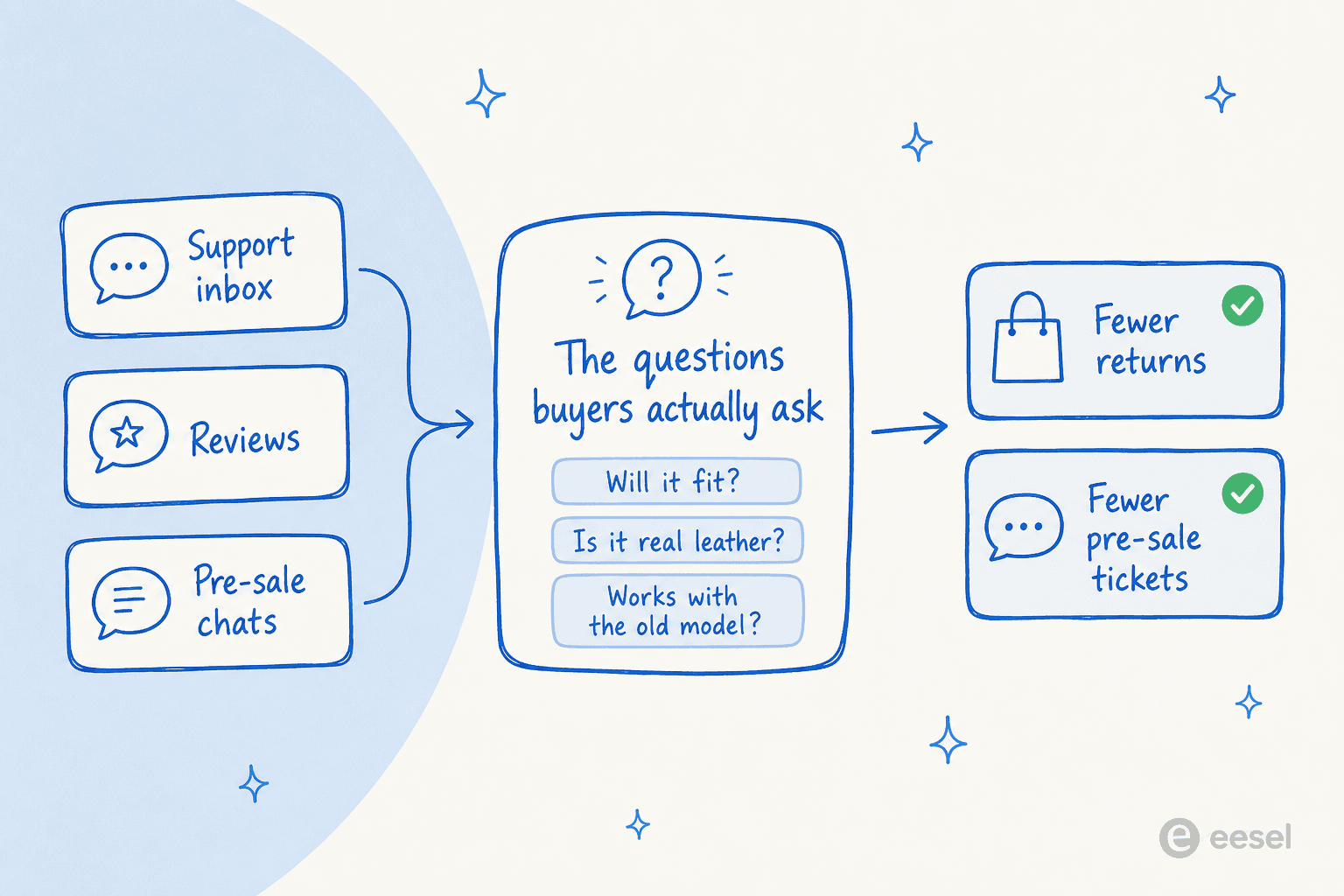
Buyers will tell you this directly if you let them. In a long thread on what makes someone not buy, one shopper put missing measurements at the top of the list:
If you don't accept returns, answer questions or put measurements in your descriptions.
- A buyer on r/BehindTheClosetDoor
And the cost of leaving an attribute out shows up as returns. In a discussion on Vinted, sellers worked out that listing the wrong material is a valid return reason, but not listing it at all leaves the buyer guessing and the parcel coming back anyway. Retail teams have long treated the description as a returns lever, not just a conversion one.
So the practical move is: don't ask the AI to invent your value prop. Hand it the actual questions your buyers ask and have it answer them on the page. The objections your generator imagines are generic; the ones in your inbox are the actual reasons people don't buy. That's the same product-and-order context an ecommerce AI is already sitting on top of.
How to make AI write product descriptions that convert
You don't need ten tools. You need one workflow that puts research before drafting and keeps you at the two points that matter. Here's the shape I'd use.
1. Gather the real product data and buyer questions first
Before you touch a generator, pull your inputs: the hard specs from your catalog (dimensions, materials, compatibility), your recent reviews, and the last batch of support tickets for that product line. Don't summarise them, keep the verbatim phrasing. This is the step that separates a real conversion copywriting workflow from a prompt-and-pray one. If your tool connects to your store and your helpdesk directly, it does this gathering for you; if not, paste the raw text in.
2. Write a brief, not a prompt
"Write a description for my candle" is not a brief. Who is this for, what's the one objection that stalls the sale, and what makes it different from the three cheaper versions on the same search page? Ten minutes on a good brief saves an hour of editing later, and it's the difference between a generator that guesses and one that aims.
3. Let the AI research, not just write
This is the stage that decides whether copy sells or gets scrolled past. The model shouldn't write from its training data; it should write from your sources. A strong AI content writer reads your real material and pulls the specific spec, the specific number, the specific objection, then writes around them. Ground it well and the "average product page" problem disappears, because the model now has something better than average to work with.
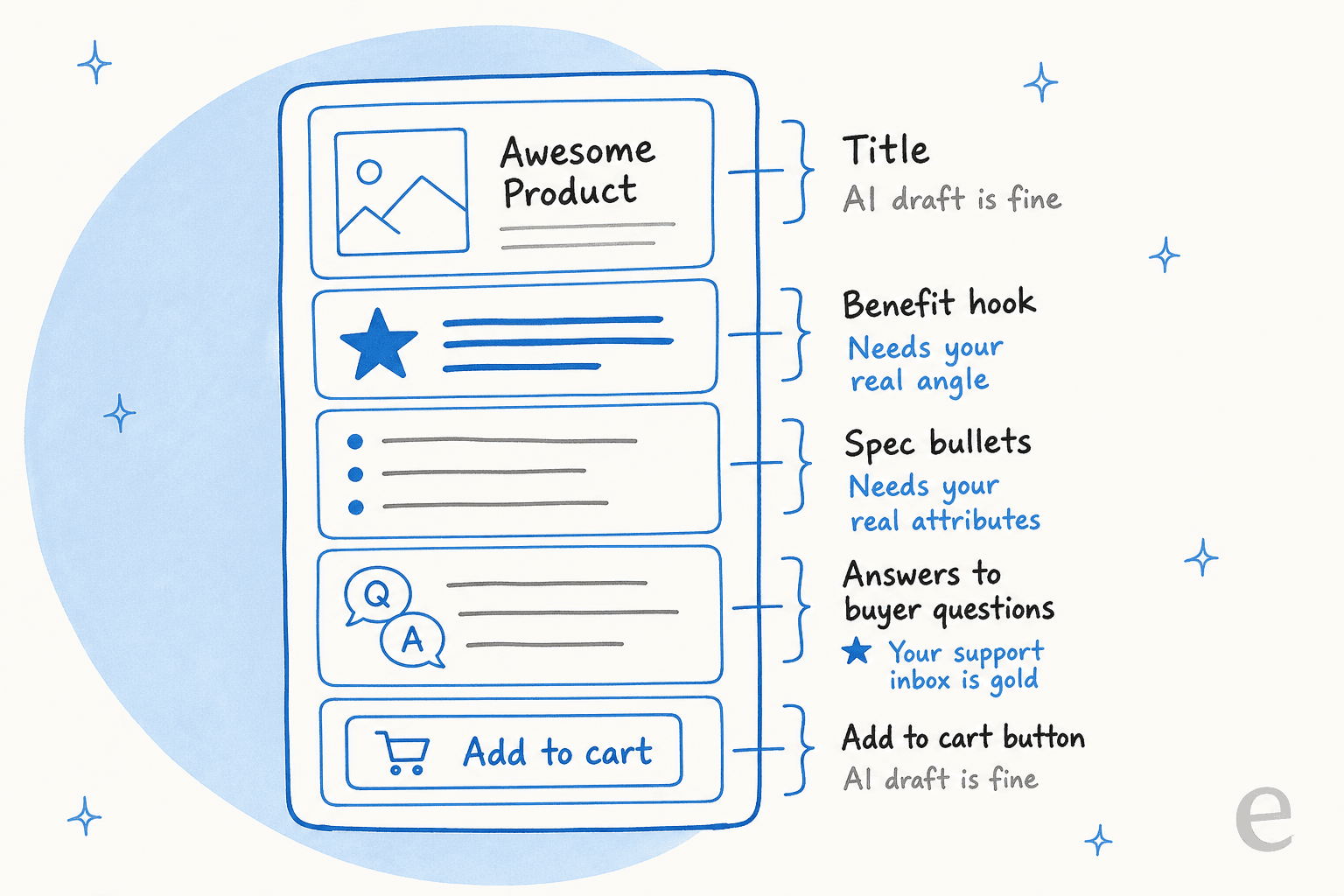
Not every block on a product page deserves the same attention. The title and the call to action are structural, and an AI draft is honestly fine there. The benefit hook needs your real angle, the spec bullets need your actual attributes, and the answers to buyer questions are where your support inbox is pure gold. Spend your editing budget where it moves the needle.
4. Lock the brand voice
Volume without voice is how you end up sounding like every other listing on the marketplace. Skip the generic "professional and friendly" slider and train the model on how you actually write. Tools with real brand voice training ingest your existing pages and match your cadence and vocabulary, which is the only way to keep that voice consistent across a thousand SKUs without each one drifting. If you want the mechanics, here's how to train AI on your style.
5. Edit the hook and the proof by hand
Here's the human bit I'd never automate. The hook and the objection-answering details are the two highest-leverage parts of the page, so read them last and read them mean. Does the hook pass the swap test? Do the specs answer the question a real buyer would ask? Everything between, the AI draft is genuinely fine. This is the discipline that keeps a whole catalog honest as you scale it, the same idea behind any serious SaaS conversion copy approach.
Where AI product descriptions still go wrong
This is the part vendor pages skip. I won't.
The swap-test failure. The most common mistake is shipping the first generated draft because it reads well, so it feels done. But "reads well" and "converts" are different bars, and copy that could belong to anyone clears the first and fails the second. If you're staring at a wall of competent-but-samey drafts, the problem is upstream in your inputs, the same root cause behind repetitive AI content everywhere.
Features instead of answers. AI loves listing features because your catalog lists features. But buyers don't pause over a spec sheet, they pause over an unanswered worry. The fix is the voice-of-customer step above: let the real questions from your inbox write your bullets.
Bulk that breaks. The whole promise of a generator is doing hundreds of SKUs at once, and that's exactly where weak tools fall over. As one seller vented:
Every AI copy tool claims it can "write product descriptions" but most of them break the moment you try to do it at scale. I'm talking hundreds or thousands, pulled from a spreadsheet, with different specs, tones, and categories.
- u/MovieTheatrePoopcorn, r/automation
A dedicated ecommerce tool like Hypotenuse AI is built for catalog scale, though it meters you by words: its entry plan resets at 20,000 words a month with no rollover on monthly billing, so a big catalog burns through it fast. Worth checking the unit before you commit, the same way you would with any AI bulk content generator.
The publishing gap. Beautiful copy stuck in a doc helps no one. If your generator can't push the description back into your store cleanly, you'll lose half the time you saved to copy-paste. Native CMS integration and a clean sync matter more than another editing view, the same way auto-publishing is what makes a blog pipeline actually save time. One thing to watch while you shop: some tools, like Writesonic, have repositioned around AI-search articles rather than a dedicated description workflow, so check the tool still does the job you came for.
Get those right (real inputs, real voice, real proof, and a clean path back to your store) and the generator becomes the multiplier it's sold as. Get them wrong and you've just produced average copy faster.
Try eesel for product descriptions that convert
If you've read this far, you know my bias: AI can write product descriptions that convert, but only as well as the product data and customer language you can feed it. That grounding is the half eesel was built around.
eesel is an AI teammate that plugs into your stack (your store, your docs, your helpdesk) and writes from what's actually there instead of from a generic prompt. For product copy, that means it can reach the one thing most generators can't: the real questions your buyers ask, sitting in your support inbox right next to your order data. It writes in your brand voice, grounds each line in your sources, and hands you a draft specific enough to pass the swap test. It's the same engine behind eesel's own content pipeline and its ecommerce agent, and it's free to try, with first drafts coming out fast enough that you'll know within a session whether it fits.
If you'd rather compare the field first, the sibling guide on using an AI product description generator and the wider content marketing tools roundup lay it out, then come back and run a real product through it.
The generator was never your problem. Knowing what your buyer needs to hear was. That's the part worth grounding in something real.
Frequently Asked Questions
Can AI write product descriptions that convert?
Yes, but only if you ground it. Copy converts when it answers the buyer's real question about fit, materials, or compatibility, so a tool that never sees your reviews or support tickets gives you generic copy no matter how good the model is. Feeding any AI content writer your real product data matters far more than a cleverer prompt.
Why do AI product descriptions all sound the same?
Because the model writes the most probable description for a product, which is the average of every product page it was trained on. Generic input gives generic output. The fix is upstream: feed it your real attributes and the exact words customers use, the same root cause behind repetitive AI content everywhere.
How do I make AI product descriptions actually sell?
Hand the AI the questions your buyers actually ask, then have it answer them on the page. Pull your specs, recent reviews, and the last batch of support tickets for that product, write a real brief rather than a one-line prompt, and train it on your brand voice instead of a tone slider.
Is AI good enough to write product descriptions for a big catalog?
Yes, and bulk is where the time savings land, but it's also where weak tools break. Look for one that ingests a spreadsheet or syncs your catalog instead of making you paste products one by one, the same idea behind any AI bulk content generator. A tool wired into a full content pipeline scales without losing your voice.
How much does it cost to write product descriptions with AI?
Anywhere from free to a few hundred dollars a month. Shopify Magic is bundled into your Shopify plan at no extra cost, a dedicated tool like Hypotenuse AI meters you by words per month, and a free AI copywriting tool is fine for a first draft. The real cost is what generic copy does to your conversion rate.


Article by
Riellvriany Indriawan
Riell is a designer and writer at eesel AI with about two years of experience researching CX platforms, AI chatbots, and helpdesk software. She combines her design background with a sharp eye for how these tools actually look and feel in practice — making her comparisons unusually visual and user-focused.