Blog writing vs technical writing: What’s the difference?

Katelin Teen
Last edited January 20, 2026
Blog writing and technical writing might seem like two sides of the same coin at first. I mean, they're both about writing, right? But when you look closer, you'll see they have completely different jobs. It's kind of like the difference between a tour guide and a car manual. One is there to get you excited and tell a story, while the other is there to give you clear instructions so you can get from point A to point B.
The real distinction is this: blog writing is about connecting with people, and technical writing is about explaining how things work. Naturally, the tools you'd use for each are different. AI tools, for instance, are getting incredibly good at specific writing styles. Tools like the eesel AI blog writer are built specifically to help you create a lot of high-quality, engaging blog content that people will actually enjoy reading.
What is blog writing?
Blog writing is all about the reader. The main idea is to engage, entertain, and teach people about topics they're already curious about. It’s meant to feel like a conversation, not a lecture from a podium.
The tone is usually pretty personal and conversational. You'll see writers use "I" and "you" to create a direct connection with their audience. It's all about building relationships and a community around a topic. Because of that, SEO (Search Engine Optimization) is a huge deal. The whole idea is to bring in new readers from search engines and build a following for your brand or your ideas.
This focus on engagement means bloggers have a lot of freedom. You can write listicles, how-to guides, personal anecdotes, or opinion pieces. The structure is there to serve the story, not the other way around.
What is technical writing?
Technical writing, on the other hand, is completely focused on a product or process. Its only job is to take complicated information and make it simple and clear, and easy to follow so someone can get a task done.
The tone here is objective, formal, and extremely precise. There's no space for vague descriptions or colorful language because accuracy is king. You're not trying to be witty; you're trying to be instructional, almost like a manual. It’s all about usability and making sure the information is so logically laid out that anyone can understand it.
You run into technical writing all the time, even if you don't notice it. Think user manuals, API documentation, technical reports, internal guides, and those IKEA instruction sheets that somehow always have a screw left over.
Core differences in purpose and goals
The simplest way to separate these two styles is to look at what they're trying to accomplish. One wants to build a relationship and influence the reader, while the other is zeroed in on helping a user and making sure they can use a product without pulling their hair out. This dilemma is common for writers choosing a career path.
Guys, I have spent the last two years working as a web content writer for digital marketing agencies. Wringing blogs has become frustrating, and I am unable to focus on my work. Now I am considering a career change to full-time copywriting or technical writing. While copywriting allows me to express my creativity, open positions as a technical writer in MNCs provide me with another option. Please help me decide where I should move in terms of career growth, salary, opportunities, and the future.

To make it clearer, here's a visual breakdown of their main objectives:
Blog writing: Building a connection and driving traffic
With blog writing, the main goal is to get a reader to do something. That could be signing up for a newsletter, sharing the post, or maybe even trying a product you mentioned.
Success isn't just about being clear; it's measured by how much people interact with your content. You're tracking things like page views, how long people stick around, and if they click your links. SEO is your best pal here because it helps you find a bigger audience, establish yourself as an expert, and become the go-to source for your readers.
Technical writing: Enabling users and ensuring accuracy
For technical writing, the goal is to build trust by providing perfectly clear information that helps people succeed. It's less about persuasion and more about empowerment.
Success is measured by whether the reader can use the information effectively to complete their task without getting confused. Good technical writing is practically invisible; the user just gets their job done smoothly. Great technical documentation is all about precision and a logical, step-by-step flow that helps users and, as a bonus, cuts down on the number of support tickets a company receives.
Tone and structure: A comparison
The voice and format of any piece of writing come directly from its purpose. Here’s a quick breakdown of how blog writing and technical writing differ in tone and structure.
The conversational flow of a blog
Blog writing is known for its friendly, informal, and relatable tone. It should feel like you're getting advice from a smart friend.
Writers often use personal pronouns like "I," "we," and "you" to speak directly to the reader. For instance, a blogger might say, "I'd suggest using this feature to get that result." This approach feels more personal and trustworthy. The structure is also really flexible, which allows for storytelling, images, and creative layouts to keep things from getting boring.
The structured precision of technical documents
Technical documents have a formal, objective, and almost clinical tone that values clarity above all else. Personality gets checked at the door in favor of precision.
You won't find many personal pronouns here. Instead, a technical writer would likely phrase it as, "The company recommends using this feature to get that result." The writing follows a strict structure, usually set by a company style guide, and uses industry-specific language. The entire document is organized for easy scanning so users can find exactly what they need in a flash.
| Feature | Blog Writing | Technical Writing |
|---|---|---|
| Tone | Conversational, informal, personal | Formal, objective, precise |
| Focus | Audience-focused (engagement) | Product-focused (usability) |
| Goal | Influence, educate, build community | Instruct, explain, enable |
| Voice | Personal ("I," "you") | Impersonal, company voice |
| Structure | Flexible (listicles, guides, stories) | Rigid, follows a strict style guide |
| SEO | Essential for driving traffic | Not a primary concern |
How AI is shaping the future of writing
Artificial intelligence is definitely changing how content gets made in both areas, but it's not having the same effect everywhere. Its role really depends on the style of writing.
Automating blog creation with the eesel AI blog writer
AI is a perfect match for the main tasks involved in modern blog writing. It's fantastic at doing in-depth research, creating outlines, and drafting SEO-friendly content designed to pull in an audience.
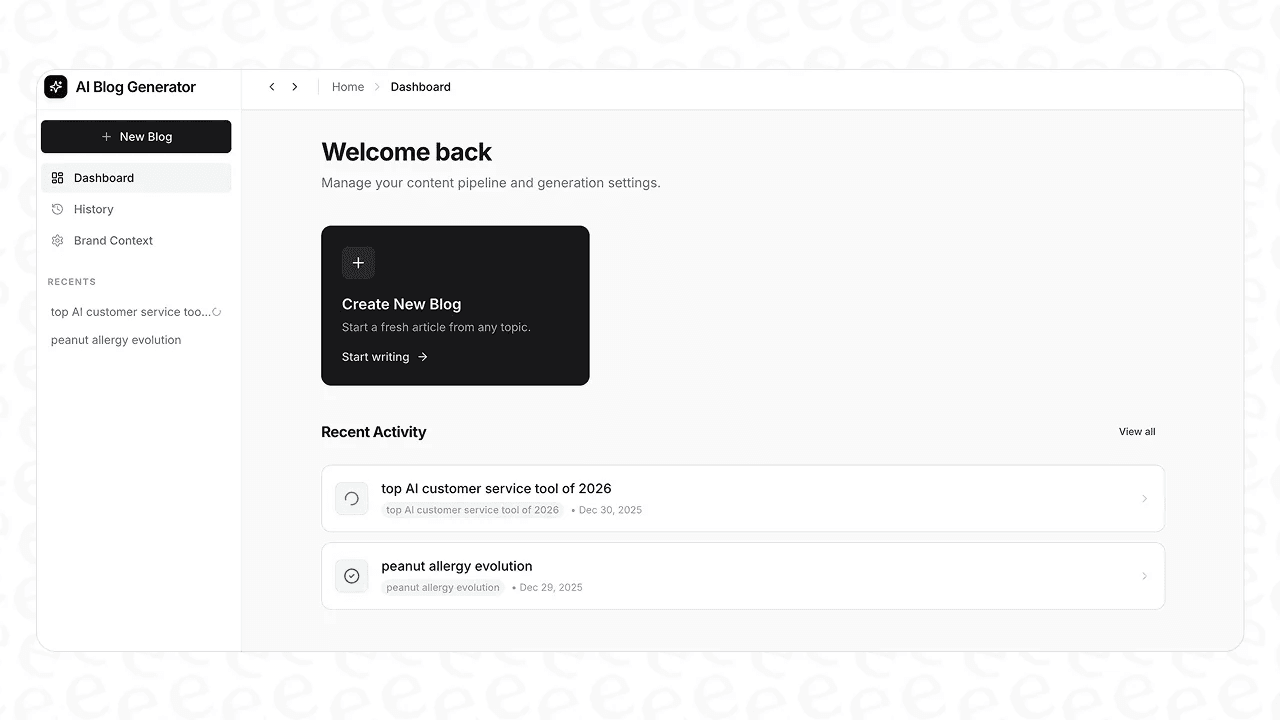
This is where a tool like the eesel AI blog writer really makes a difference. It doesn't just generate generic, robotic text. It creates publish-ready posts that help teams produce more content without letting quality slip. It's designed to create human-sounding, high-ranking content by focusing on a few important things:
- Deep research and nuance: The AI goes beyond surface-level info to create drafts that are ready for both traditional search engines and the newer AI answer engines.
- Automatic asset creation: It can generate relevant images, tables, and infographics as it writes, which makes the posts easier to read and more visually engaging.
- Authentic social proof: It automatically finds and includes relevant YouTube videos and real quotes from Reddit forums to add credibility and a human element.
This is the very tool we used at eesel to grow our organic impressions from 700 to over 750,000 per day in just three months. When your goal is engagement, AI can be a huge help.
Why AI is still a copilot for technical writing
When it comes to technical writing, AI's role is a bit more limited. It’s a great assistant, but it’s not quite ready to run the show. While it can help with checking grammar, suggesting better structures, and even writing first drafts, it often can't deliver the level of precision that's needed.
In technical writing, accuracy is non-negotiable. A small error or an AI "hallucination" can confuse a user, cause a lot of frustration, and damage trust in a product. AI models can also write text that is bland, repetitive, and lacks the bigger picture context that's so important for clear instructions.
For now, AI is a fantastic copilot for technical writers. It can take care of some of the more tedious tasks, but it can't replace a human expert who truly understands the product and the people using it.
Choosing the right writing style
So, what's the bottom line on blog writing vs technical writing? The key thing to remember is that one is designed for connection, while the other is designed for clarity.
Neither style is inherently better; they just have different jobs to do. The right one for you depends entirely on what you want to accomplish with your content.
To see these differences in action and get a better feel for which path might suit you, check out this helpful video breakdown.
If you're trying to grow your brand, connect with an audience, and bring in organic traffic, then blog writing is what you need. And for teams that are serious about their content marketing, having the right tools is a must. Consistently publishing high-quality, SEO-optimized blogs is how you grow. Try the eesel AI blog writer for free and see for yourself how easy it is to get your first complete post published in minutes.

Frequently Asked Questions
Share this article

Article by
Katelin Teen
Katelin is an operations specialist at eesel where she uses her psychology training and education experience to optimize B2B SaaS processes. Outside of work, she unwinds with story-driven games, writing, and keeping up with latest tech innovations.
