
You've probably heard it a dozen times: blogs are dead. In a world of quick-hit TikToks and perfectly curated Instagram feeds, the idea of sitting down to read (or write) a long-form personal blog can feel a bit old-fashioned. But here's the thing: people are getting tired of the endless scroll. We're starting to crave something more genuine, a space where you can build real connections and actually own what you create.
That's what this guide is all about. We'll get into what personal blog writing really is, why it’s more relevant than ever, and how you can get started. And don't worry about staring at a blank page. Modern tools can help you structure your thoughts and get your voice out there, making it easier than ever to share your unique story.
What is personal blog writing?
A personal journal, not a sales pitch
Simply put, a personal blog is your corner of the internet to share your thoughts, experiences, and whatever life throws at you. It’s a place to document your journey and clear your head without a commercial agenda. That’s a world away from a business blog, which lives and dies by a specific niche, a rigid SEO strategy, and turning readers into customers.
I have a personal blog but get too busy to keep up with it. I started it on my journey to simplify my life, to lessen the chaos. I think personal blogs are insightful as not everything works for everyone. Sometimes you find a real person with a relatable story and your motivation clicks.

It’s about the process of writing and self-discovery, not just the final product.
Focus on your story, not a topic
One of the biggest hurdles for new bloggers is picking a "niche." With personal blog writing, you can toss that worry out the window. The theme is you: your life, your perspective, your growth. You don't have to be an expert in anything other than your own experiences.
Think about the blogs you love to read. They often cover a mix of topics because life itself is messy and varied. One week you might write about a trip you took, the next you might share a new hobby you’re trying, and the week after you might reflect on a big life change. The common thread is your unique perspective, and that's what keeps readers coming back.
Authenticity over algorithms
Trying to please the algorithm gods is exhausting. The beauty of a personal blog is that its value comes from its genuine, human voice. The goal isn't to rank #1 for a competitive keyword; it's to connect with other humans through shared stories and experiences. It’s about being a person first and a writer second.
When you stop worrying about keyword density and start focusing on telling a good story, something great happens. You build a community of people who are there for you, not just for a quick answer to a search query.
Why personal blogs are making a comeback
You own your platform and content
Building your audience on social media is like building a house on rented land. The platform's algorithm can change overnight, your account could get suspended for a reason you don't understand, or the entire platform could just fade away. All that hard work? Gone in a flash.
With a personal blog, you're the landlord. You control the design, content, and rules. You have a permanent, searchable archive of your work that belongs to you and only you. No one can take it away. This ownership gives you the freedom to express yourself without fear of censorship or a sudden change in the terms of service.
Foster a genuine connection
Sure, polished corporate content has its place, but it doesn't build real loyalty. Sharing personal stories, the messy, the funny, the vulnerable, is how you build trust and relatability. It’s how you go from being a nameless writer to a person someone feels like they actually know.
When you share a personal struggle and a reader comments, "I've been through that too," you've created a connection that a 15-second video just can't replicate. Over time, these small interactions build a loyal community that's invested in your journey, not just your content.
A tool for self-reflection
You can think of personal blogging as online journaling, but with the added benefit of potential feedback and connection. The act of sitting down and putting your thoughts and experiences into words is incredibly clarifying. It forces you to make sense of your own life, find the lessons in your challenges, and celebrate your wins.
Many long-time bloggers say they started writing just to clear their heads or document a period of their life. Looking back on those old posts becomes a digital time capsule of your personal growth, showing you just how far you've come.
Develop invaluable skills
You don't have to be a professional writer to start a personal blog, but you might just become a better one along the way. Consistently writing, even if it's just once a month, sharpens your communication, storytelling, and critical thinking skills. These are skills that are incredibly valuable in any profession.
Plus, it's a low-pressure way to build a writing habit and create a portfolio of your work. You're not writing for a client or a boss; you're writing for yourself. This freedom allows you to experiment with your style and find what feels right.
How to start a personal blog: A practical guide
Ready to give it a shot? Getting started is the hardest part. The key is to forget about perfection and just take the first step. Here’s a simple, practical guide to getting your story out there.
Find your voice (not a niche)
First thing: stop worrying about a niche. Your unique perspective is the niche. The best way to find your voice is to write like you talk. Imagine you're telling a story to a close friend over coffee. How would you explain it? What details would you include? That's your voice.
If you’re stuck on what to write about first, pick something you're passionate about or an experience that changed you. As one Redditor wisely put it, the best stories come from your own life.
The best topic for a blog is what you've gone through... Stick with this topic and you'll do great. You can take this topic in many directions to eventually podcasts, video interviews etc.
Your first post doesn't have to be a masterpiece; it just has to be written.
Choosing the right platform
The "best" platform really depends on what you want to achieve. Are you looking for total control, a low-cost start, or a built-in audience? Let’s break down the most popular options.
Pro tip
Don't get stuck in analysis paralysis here. Start with a free or cheap option to see if you even enjoy blogging. You can always move your content to a different platform later on.
| Feature | WordPress.com | Self-Hosted (WordPress.org) | Medium |
|---|---|---|---|
| Cost | Free plan available (with ads and subdomain). Paid plans start around $4/month to remove ads and use a custom domain. | Software is free, but requires hosting (~$3-$10/month) and a domain (~$10-$20/year). | Free to publish. |
| Control | Limited on free/low-tier plans. Plugins are only available on the Business plan and up. | Full control over design, plugins, and monetization. You truly own your site. | No control over design, layout, or platform changes. Subject to Medium's rules and algorithms. |
| Setup | Quick and easy, no technical skill needed. | Requires buying hosting and a one-click or manual WordPress installation. More technical. | Instant. Just create an account and start writing. |
| Best for | Beginners who want a simple, maintenance-free start. | Serious bloggers who want full ownership and future monetization options. | Writers who want to tap into a built-in audience without managing a website. |
Get a head start with writing tools
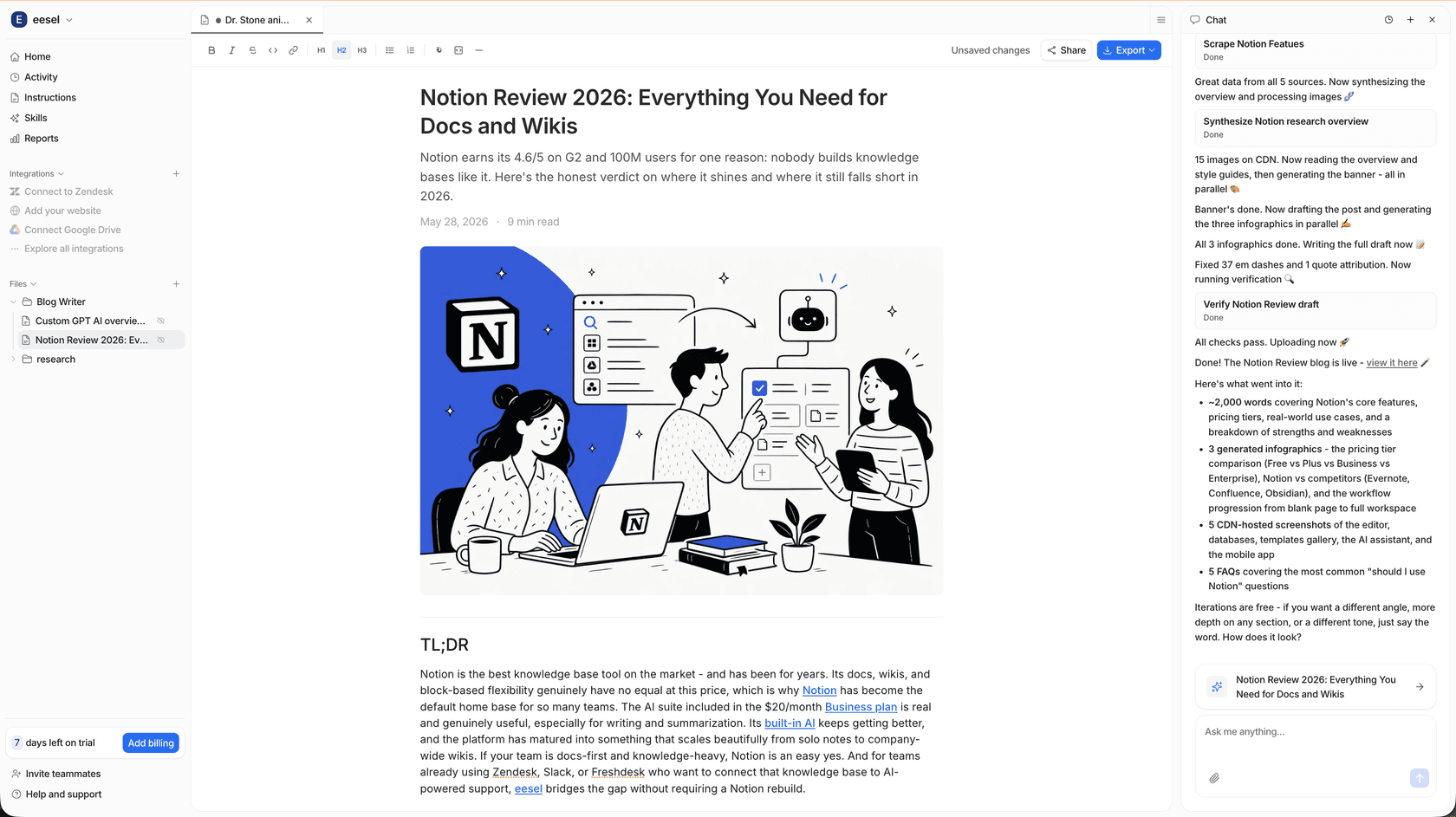
It’s not about letting AI write your story for you. It's about giving you a starting point. You can plug in a simple idea, a memory, or a lesson, like "lessons learned from moving to a new city," and it will help you create a logical outline with headings and talking points. It takes the jumbled thoughts in your head and gives them structure.
One of its helpful features for personal stories is its ability to find relevant Reddit quotes. This adds a layer of social proof and relatability, showing that other people have gone through similar experiences. It's a great way to make your personal narrative feel universal. It's completely free to try, so it’s a no-risk way to kickstart your first few posts and build momentum.
Commit to a realistic schedule
The road to a forgotten blog is paved with unrealistic ambitions. Don't commit to posting three times a week if you know you don't have the time. It's far better to post once a month consistently than to post every day for two weeks and then burn out completely.
Choose a schedule that feels sustainable for your life. Consistency is what builds a readership and hones your craft, but it has to work for you. Give yourself grace, especially in the beginning.
Navigating common challenges
Starting a personal blog is an incredibly rewarding journey, but it's not always easy. Knowing the common bumps in the road can help you prepare for them and keep writing when things get tough.
Setting boundaries
When your life is your content, you have to decide where to draw the line between personal and private. The internet is forever, and your words can easily be taken out of context. Before you hit publish, think about what you are and aren't comfortable sharing with the world.
Pro tip
A good rule of thumb is this: Don't write anything you wouldn't be comfortable with a future boss, a new partner, or your grandma reading. It’s also wise to avoid sharing overly specific details about your location or other people's private lives without their explicit permission.
Overcoming writer’s block
It happens to the best of us. Some days, the words just aren't there. The key is not to force it. Instead of staring at a blinking cursor, go for a walk, read a book, or do something completely unrelated to writing. Keep a running list of ideas, interesting observations, and random thoughts in a notebook or phone app so you always have a well to draw from.
This is also another area where a tool like the eesel AI blog writer can be a brainstorming partner. If you feel stuck, feed it a single idea and see what kind of angles or outlines it suggests. It can be just the spark you need to get the engine running again, turning a tiny seed of an idea into a fully structured post.
Managing expectations
Your blog probably won't go viral overnight. And that's okay. In fact, that's normal. Personal blog writing is a marathon, not a sprint. The real reward isn't in the page views; it's in the process of creating something that is uniquely yours, the skills you develop, and the small, meaningful connections you make with readers along the way.
Try not to get caught up in vanity metrics like follower counts or traffic, especially when you're just starting out. Focus on the joy of writing and sharing your story. If you do that, you've already won.
Hearing from experienced bloggers can provide both inspiration and practical advice. The video below offers a great perspective on how to approach your first blog post, reminding you that the journey is more important than a perfect start.
Your story is worth sharing
In a digital world that often feels noisy and superficial, personal blog writing offers a space for quiet reflection and genuine connection. It's a powerful way to own your narrative, build a community, and develop skills that will serve you for a lifetime. It’s proof that your voice matters in a landscape of rented digital space.
So, try not to overthink it. Just start small, be yourself, and see where the journey takes you. Your perspective is valuable, and your story doesn't have to be perfect to be shared.
If you’re ready to start but that blank page is still giving you pause, give the eesel AI blog writer a try. Think of it as a co-pilot to help you outline your first post, find related stories from others, and turn your scattered thoughts into a coherent draft. You can generate your first blog for free, so it is a good way to start sharing your story today.




