Blog writing vs content writing: Understanding the key distinctions

Amogh Sarda
Last edited January 20, 2026
The terms "blog writing" and "content writing" are often used as if they mean the same thing. Although they are related, they describe different methods for creating online material, each with a unique purpose, tone, and function. Knowing these differences helps in building a content strategy that aligns with specific business goals.
This article defines each practice, explains their differences and similarities, and provides guidance on when to use them. It's important to note that while all blogging is a type of content writing, content writing is a much broader category. Tools are available to help create this wide range of content. For example, the eesel AI blog writer can automate the content creation process, producing articles that can be adjusted for either a conversational blog style or more formal content objectives.
<quote text="Well, blogging would usually mean writing short articles on your own site (if it's on others, it's a form of content writing. Some people call writing blogs for other people 'ghost blogging', but that's non-standard terminology).
Content writing usually refers to creating content marketing collateral for third parties. This means blogs, longer articles, white papers, case studies and so forth. Content marketing could be SEO-related, or not, depending on the client and where they see it fitting into their sales funnel.
Copywriting usually refers to persuasive material aimed at selling things. Can be sales emails, landing pages, ads and product descriptions. " sourceIcon="https://www.iconpacks.net/icons/2/free-reddit-logo-icon-2436-thumb.png" sourceName="Reddit" sourceLink="https://www.reddit.com/r/freelanceWriters/comments/qwkayf/comment/hl3iet3/">
What is blog writing?
Blog writing involves creating articles, often called "posts," for a blog. These posts are usually published on a set schedule and shown in reverse chronological order, with the newest content at the top. This regular stream of new information is a defining feature of a blog.
The main characteristics of blog writing are:
- Tone and style: Blog posts tend to be conversational, informal, and personal. They often use a first-person perspective ("I" or "we") to create a connection. The aim is to be approachable and relatable.
- Purpose: The main goal of blog writing is to engage an audience and build a community around a brand or topic. Through frequent posts, blogs work to attract a loyal readership, drive organic traffic, and define a brand's personality.
- Format and interactivity: Post length can vary, but many fall between 500 and 1500 words. A common feature is a comments section, which encourages audience interaction and helps build a community.
- Frequency: A consistent publishing schedule is important. Regular updates help maintain audience engagement and show search engines that the site is active, which can improve search rankings.
What is content writing?
Content writing is a broad practice that includes the planning, writing, and editing of web-based material, mainly for marketing. It is an umbrella term that covers many formats, and blog writing is just one of them.
To show its scope, here are other common forms of content writing:
- Website pages (homepages, service pages, about us)
- Product descriptions
- White papers and eBooks
- Case studies and reports
- Social media posts
- Newsletters and email campaigns
The core characteristics of content writing are:
- Tone and style: The tone is generally more formal, professional, and objective than in blog writing. It needs to follow a company's brand guidelines to maintain a consistent tone and voice across all materials.
- Purpose: Content writing is linked directly to business objectives. Its goal could be to inform customers about a product, convince a prospect to buy something, or position the company as an authority in its field. The focus is on prompting a specific action.
Key differences between blog writing and content writing
To better understand how these two practices work, it helps to compare them side-by-side. The main differences are in their goals, their relationship with the audience, and the ownership of the final product.
Purpose and goals
Blog Writing: The focus here is on building relationships, creating a community, and showing a brand's personality. The main goal is to engage an audience and bring in consistent, top-of-funnel traffic with fresh, relatable content.
Content Writing: This practice is about achieving specific business results, like generating leads or making sales, or teaching users about a product. The end goal is often conversion and establishing brand authority in a formal way.
Tone and audience relationship
Blog Writing: This style works to build a personal, two-way relationship. The conversational tone and interactive features like comments sections promote dialogue, making the brand seem more human and accessible.
Content Writing: This creates a one-to-many relationship where the brand is the expert providing information. The communication is more direct and usually points the user toward a specific call to action (CTA).
Format and ownership
Blog Writing: For personal or creator-led blogs, the author often keeps ownership of their content. Money can be made through different channels, like advertising, sponsorships, or affiliate marketing.
Content Writing: In a business setting, the content is almost always work-for-hire. This means ownership belongs to the company that ordered and paid for it.
| Feature | Blog Writing | Content Writing |
|---|---|---|
| Primary Goal | Engage and build community | Inform, persuade, and convert |
| Tone of Voice | Conversational, personal, informal | Professional, authoritative, branded |
| Perspective | Often first-person ("I," "we") | Typically third-person (objective) |
| Audience Interaction | High (encourages comments, dialogue) | Low (guides toward a specific CTA) |
| Typical Formats | Posts, listicles, interviews, guides | Website pages, white papers, case studies |
| Ownership | Often retained by the author/blogger | Belongs to the commissioning company |
Where blog writing and content writing overlap
While blog writing and content writing have clear differences, the line between them is becoming less distinct, especially since business blogs are now a key part of many content marketing strategies.
A shared SEO foundation
Both practices rely on Search Engine Optimization (SEO) to succeed. Keyword research, on-page optimization, and creating content that matches search intent are essential for both. Whether it's a blog post or a service page, being visible on search engines is necessary to reach the right audience.
Providing value: A shared goal
At their heart, all good content must provide value. Whether it's a casual blog post that solves a common issue or a formal white paper with industry research, the content has to be useful. If it doesn't answer a question or offer helpful information, it won't work.
The rise of hybrid content
Most business blogs today are a mix of both practices. They use the engaging, conversational style of blog writing to meet the authority-building, lead-generating goals of content writing. This combined approach lets companies build a community and establish expertise at the same time, forming a content strategy that serves multiple purposes.
When to use blog writing vs content writing
Knowing which approach to take depends on your specific goal. Here are some scenarios to help you decide.
When to use blog writing
- To build and grow an online community around your brand or industry.
- To share company news, updates on your culture, and behind-the-scenes stories.
- To develop and show off your brand's unique personality and voice.
- To drive regular, top-of-funnel organic traffic with a constant flow of new content.
When to use content writing
- To create the static, core pages of your website (e.g., service, product, or about pages).
- To develop detailed, gated resources like eBooks or white papers to collect leads.
- To write persuasive copy for landing pages meant to drive conversions.
- To build authority with formal case studies, industry reports, and data-focused articles.
For a deeper visual explanation of these concepts, the following video breaks down the key distinctions and explains why understanding the difference matters for your content strategy.
How eesel AI streamlines the writing process
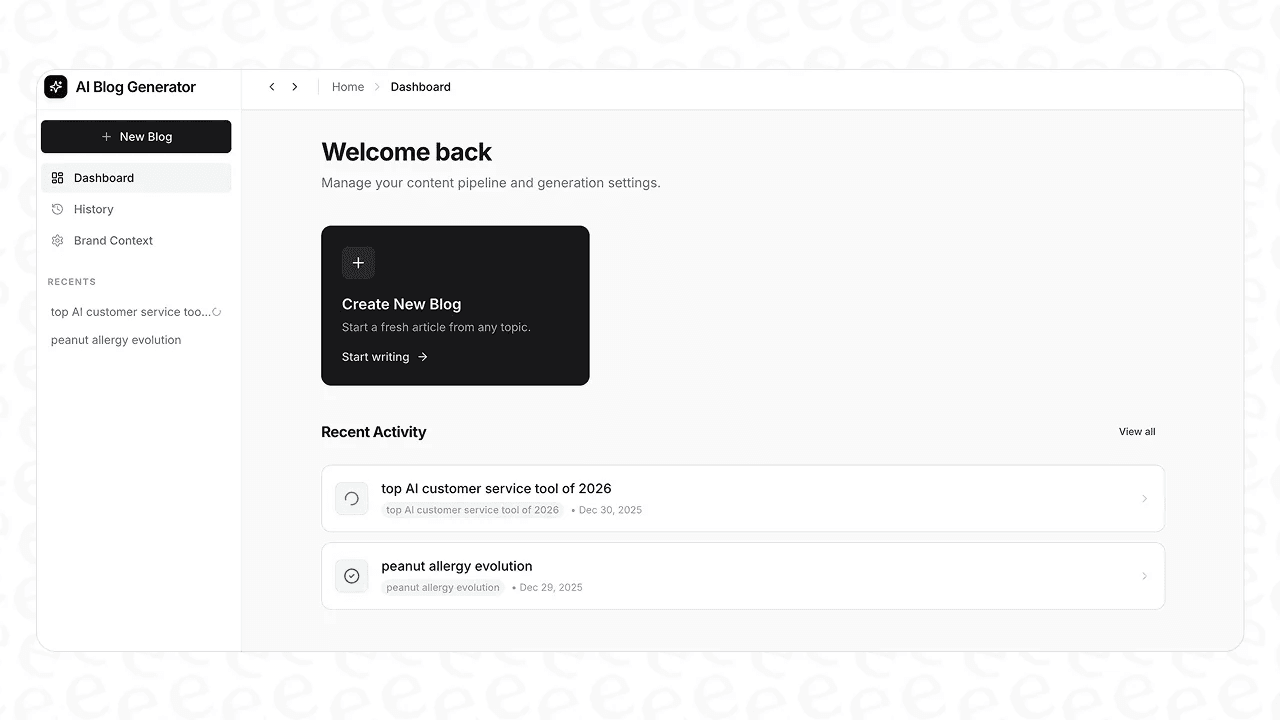
The eesel AI blog writer is built to manage the specific needs of both writing styles. It can take a single keyword and generate a complete, publish-ready article suited for different goals.
Adapting to your strategic goal
The platform is flexible enough to align with different content goals. By providing context, like your website URL, the AI learns your brand's voice and can generate either a conversational blog post or a more structured, formal guide. This ensures the output matches your objective, whether you want to engage or inform.
Creating assets for both writing styles
The tool includes several features that work for both writing styles, going beyond simple text generation to create a full piece of content.
- Context-Aware Research: The AI understands the intent behind a topic. It can find real-world Reddit quotes to add authenticity to a blog post or pull relevant data to create tables for a formal article.
- Automatic Assets: It generates visuals that fit the content type. This could be custom infographics and charts for formal content or relevant YouTube video embeds for a conversational blog post.
- Brand Consistency: By adding your website URL, you can make sure all generated content has a consistent voice. This was a key part of how our own blog scaled from 70k to over 750k impressions in just three months.
A screenshot of the eesel AI blog writer dashboard, which can be used to manage both blog writing vs content writing tasks.
The tool's ability to adjust its research and output allows users to generate articles tailored to their needs.
Summary: Blog writing vs content writing
In the blog writing vs content writing discussion, the main point is that they aren't mutually exclusive. Blog writing is a specific kind of content writing, set apart by its personal tone and community-building goal. Content writing is a wider field focused on reaching business objectives through various formats.
A good content strategy usually doesn't depend on just one. It uses both forms of writing to engage audiences at different points in their journey, building an online presence that connects with people and delivers results.
Tools can assist in scaling a company's blog or creating authoritative web content. The eesel AI platform, for example, offers a free trial to generate an initial article.

Frequently Asked Questions
Share this article

Article by
Amogh Sarda
CEO of eesel AI. Amogh Sarda is obsessed with making the ultimate AI for customer service teams. He lives in Sydney, Australia and has previously worked at Atlassian and Intercom. Outside of work he’s usually surfing or on stage doing improv.