The definitive guide to corporate blog writing

Amogh Sarda

Katelin Teen
Last edited January 20, 2026
Corporate blogs aren't just a nice-to-have anymore; they're a core part of any smart marketing strategy. They help build brand awareness, establish authority, and bring in a steady stream of organic traffic. But the real challenge isn't just having a blog. It's consistently creating high-quality, SEO-optimized content that people actually want to read. For most companies, that’s a huge drain on time and resources.
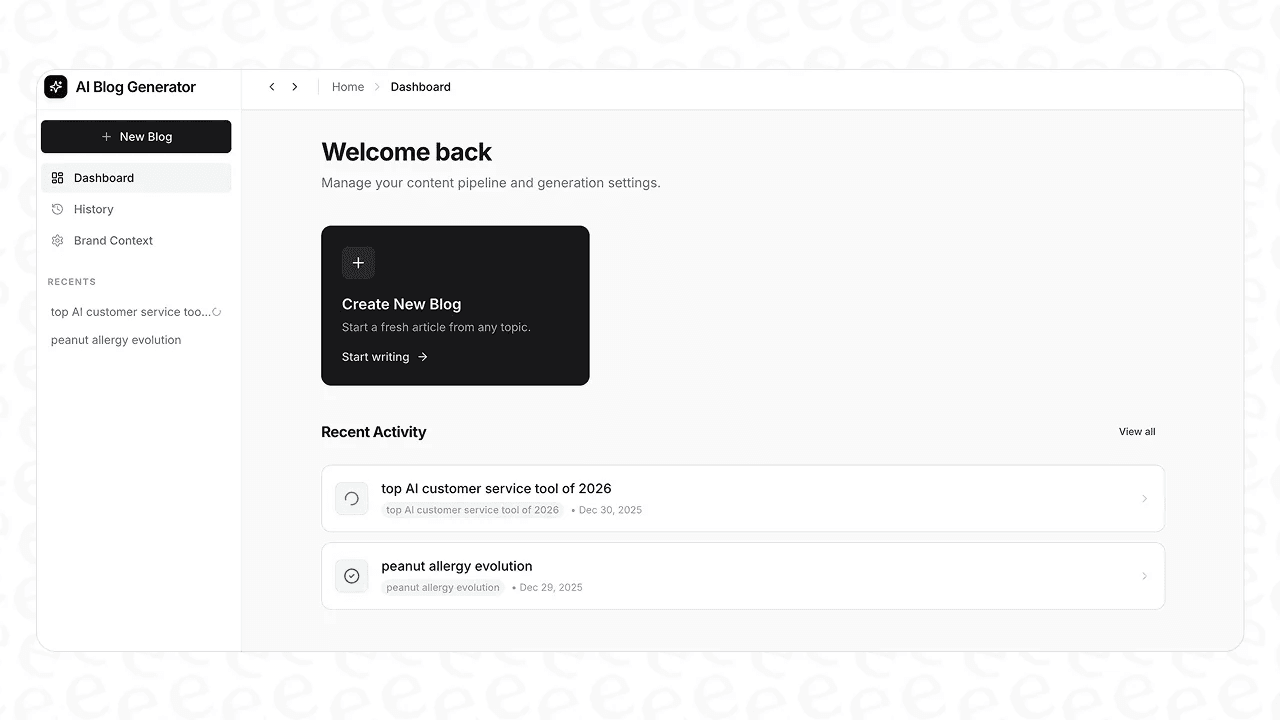
In this guide, we’ll walk you through everything you need to know to build a successful corporate blog from the ground up, from strategy and best practices to the tools that can make it happen without burning out your team.
What is corporate blog writing?
At its heart, corporate blog writing means using a blog as a strategic marketing tool. A company publishes content not just to talk about its products, but to share industry insights, solve real problems for customers, and build a reputation as a go-to expert.
The main difference from a personal blog is the intent behind it. A personal blog might be for self-expression or sharing a hobby. A corporate blog has a job to do. Every post should connect to a business goal, whether that's boosting brand awareness, generating leads, or educating current customers.
A corporate blog is meant to:
- Pull in your target audience by answering the questions they’re already searching for online.
- Position your company as a thought leader and a trusted source of information in your field.
- Guide potential customers through their buying journey with helpful, non-salesy content.
- Shape your brand's narrative and communicate your message directly, in your own voice.
An infographic showing the four key goals of corporate blog writing: attracting an audience, building thought leadership, guiding customers, and shaping the brand narrative.
Think of it as the central hub of your content marketing. It's a place where you consistently offer value long before you ever ask for a sale.
The strategic benefits of strong corporate blog writing
So, why should companies put so much effort into a blog? Because the payoff is huge, and it builds on itself over time. A well-run blog becomes a valuable asset that works for you 24/7.
Improved search engine ranking and organic traffic
This is the big one. Every time you publish a quality blog post, you give Google another reason to see your site as an authority. Consistent, valuable content shows that you know your stuff. Blogs also allow you to target a wide range of long-tail keywords that you could never fit onto your main product pages.
Building credibility and thought leadership
People buy from brands they trust. A corporate blog is one of the best ways to build that trust. By consistently offering genuinely helpful advice and unique insights, you show potential customers that you’re more than just a seller, you’re a partner.
This ties directly into Google's E-E-A-T (Experience, Expertise, Authoritativeness, and Trustworthiness) guidelines. A blog is your stage to showcase your expertise and prove you’re a credible voice in your industry. When you solve someone's problem for free, they'll remember you when it's time to make a purchase.
Enhanced lead generation
A blog isn't just about getting traffic; it's about turning that traffic into potential customers. Each blog post is a chance to capture leads in a natural, non-pushy way.
You can embed calls-to-action (CTAs) in your content that invite readers to subscribe to a a newsletter, download a free guide, or sign up for a product trial. Since they’re already getting value from your post, they’re much more likely to take that next step.
Humanizing your brand
Let's be honest, most corporate websites can feel a bit cold. A blog is where your brand’s personality can come through. You can use a more conversational tone, share behind-the-scenes stories, or feature interviews with your team.
When you show the people and passion behind the logo, your brand becomes more relatable. Customer success stories, employee spotlights, and even posts about company culture can help build a genuine connection with your audience.
Best practices for effective corporate blog writing
Define your goals and target audience
Before you write anything, start with "why." What's the main goal of your blog? Is it to drive awareness? Generate qualified leads? Or support existing customers? Your goal will shape your entire content strategy.
Just as important is knowing who you're writing for. Create detailed buyer personas to get a clear picture of your ideal reader. What are their biggest struggles? What questions are they asking? What kind of content do they find most helpful? When you write for a specific person, your content becomes much more relevant and effective.
Prioritize content quality and keyword research
In the world of corporate blogging, one deeply researched, helpful post is worth more than ten shallow, generic ones. Your content needs to solve a real problem for your audience.
This all starts with keyword research. Use tools to find out what your audience is actually searching for. Focus on topics where you can offer a unique and valuable perspective. Your goal isn't just to rank on Google; it's to create the best possible answer on the internet for that specific query.
Develop a consistent content calendar
Consistency is key. A regular posting schedule tells both your readers and search engines that your blog is active and reliable. A blog that hasn't been updated in months just looks bad.
A content calendar is your best friend for this. Plan your topics weeks or even months in advance. This helps you keep a steady publishing rhythm, ensures you cover a good mix of topics, and removes the stress of scrambling for content ideas at the last minute.
Incorporate visuals and interactive elements
Nobody wants to read a giant wall of text. Visuals like images, infographics, charts, and embedded videos are essential for breaking up your content and keeping readers engaged. They also make complex information much easier to digest quickly.
A well-structured post with clear headings, short paragraphs, bullet points, and relevant visuals is far more likely to be read and shared.
Focus on readability and AEO (Answer Engine Optimization)
Write for people first, but keep AI in mind. Use a conversational tone that’s easy to follow. Short paragraphs, clear headings (H2s and H3s), and bullet points make your content easy to scan.
This structure also happens to be perfect for AEO, or Answer Engine Optimization. As AI tools like Google AI Overviews and Perplexity start delivering direct answers instead of just links, structuring your content to be easily digestible and quotable is crucial. Write clear, concise answers to common questions, and you’ll have a better chance of being the featured source.
How to scale your corporate blog writing with AI
The best practices are simple enough, but actually doing them consistently and at scale is where most teams get bogged down. Creating one high-quality blog post can take days of research, writing, and editing. Trying to do that every week is a huge undertaking.
Key features include:
- Deep, context-aware research: The eesel AI blog writer conducts deep research on your topic and automatically adds external citations and internal links to your existing content, which helps build your site's authority.
- Automatic assets: It generates a fully structured article with AI-generated images, infographics, and tables. This feature alone saves hours of manual work on every post.
- Authentic social proof: To add credibility and a human element, it automatically finds and embeds relevant Reddit quotes and YouTube videos directly into the content. This brings real-world context and experience into your posts.
- Built-in AEO optimization: The content is structured to perform well in AI Answer Engines. It’s optimized for the future of search, helping you get featured in places like Google AI Overviews and Perplexity, which is essential for visibility in 2026.
- Genuinely human tone: The platform learns from your website to understand your brand's unique voice. This lets it make natural, contextual mentions of your products and services without ever sounding forced or robotic.
Best of all, it's completely free to try. You can see the quality of the content for yourself with no strings attached.
Common corporate blog writing mistakes to avoid
As you get started, it’s just as important to know what not to do. Here are a few common mistakes that can derail an otherwise solid corporate blog.
Excessive self-promotion
Your blog is not a sales brochure. The quickest way to lose a reader's trust is to constantly push your product.
Pro tip
A good rule of thumb is the 80/20 rule: 80% of your content should be purely educational and helpful, while only 20% can be promotional.
Inconsistent posting
An abandoned blog with a last post dated six months ago looks unprofessional and shows a lack of commitment. A regular schedule helps build an audience and tells search engines your site is a reliable source of fresh content.
Ignoring SEO and AEO
Writing fantastic content that nobody ever finds is a huge waste of time and effort. You don't need to be an SEO expert, but understanding the basics of on-page SEO and AEO is a must. It ensures your hard work actually gets seen.
Producing generic, low-value content
A potential pitfall with AI-generated content is producing generic articles that lack unique value. This can damage a brand's authority. It's also important to be aware that AI models can sometimes generate inaccuracies, or "hallucinate," making fact-checking essential. Your content has to be original, insightful, and accurate.
An 'AI' writers will simply take a search query you specify. Download the text of the top 10 results. Text mine the results and find common words. Use the most popular semantic linking profile. Write the first iteration of text and then paraphrase. There is one major flaw with all 'AI' writers however. The semantic linking profile that it uses is the same across most 'AI' articles. Google can determine this by looking at the top results for your search query and look at how each article is written.

To see how a well-maintained corporate blog can drive results, it's helpful to watch experts break down their process. This video offers a complete tutorial on how to start a corporate blog from scratch, covering the essential steps for success.
Ready to build your content engine?
A successful corporate blog is a powerful, strategic asset. It requires clear goals, a commitment to quality, and a consistent publishing schedule. For a long time, the biggest barrier has been the sheer amount of manual work required to do it right.
But that's no longer the case. Scaling this effort is now easier than ever.
Stop struggling to produce content at scale. Generate your first blog post for free with the eesel AI blog writer and see how easy it is to build a content engine that drives real growth.

Frequently Asked Questions
Share this article

Article by
Amogh Sarda
CEO of eesel AI. Amogh Sarda is obsessed with making the ultimate AI for customer service teams. He lives in Sydney, Australia and has previously worked at Atlassian and Intercom. Outside of work he’s usually surfing or on stage doing improv.