Voice support isn't dead. Despite the rise of chatbots and self-service portals, over half of consumers still prefer picking up the phone when they need help fast. For businesses already using Zendesk, Zendesk Talk offers a way to handle those calls without leaving the platform you're already working in.
But is it the right choice for your team? The pricing can be tricky to figure out, and the feature set varies significantly across plans. This guide breaks down everything you need to know about Zendesk Talk in 2026: what it does, how much it actually costs, and whether modern AI alternatives like eesel's AI agent for Zendesk might serve you better.
Zendesk Talk pricing explained
Let's talk numbers, because this is where things get complicated. Zendesk Talk pricing has two layers: the Suite subscription you need first, plus the usage costs that pile up based on how much you actually use the phone.
Suite subscription costs
You cannot use Talk without a Zendesk Suite plan. Here are the current annual prices (per agent per month):
| Plan | Annual Price | Monthly Price | Voice Features Included |
|---|---|---|---|
| Suite Team | $55 | $69 | Phone support, call routing, voicemail, call recording |
| Suite Professional | $115 | $149 | + IVR phone trees, conference calling, call monitoring |
| Suite Enterprise | $169 | $219 | + 99.95% uptime SLA, advanced controls, multiple business hours |
Source: Zendesk Pricing
A few things to note. IVR (those "Press 1 for Sales" menus) only starts at the Professional level. If you need guaranteed uptime with financial backing, that's Enterprise-only. And these prices assume annual billing. Pay monthly and you're looking at roughly 25% more per agent.
Usage costs
On top of the per-agent Suite fees, you pay for actual phone usage:
| Cost Type | Price | Notes |
|---|---|---|
| Local phone number | ~$1/month | Per number, varies by country |
| Toll-free number | ~$2-3/month | Per number |
| Inbound calls (US/Canada) | $0.012/minute | Browser-based answering |
| Outbound calls (US/Canada) | $0.022/minute | From browser to customer |
| Voicemail transcription | $0.01-0.027/minute | AI-generated text of messages |
Source: Zendesk Talk Number Pricing
These per-minute rates might look small, but they add up fast. A team handling 1,000 minutes of inbound calls monthly pays an extra $12. Not huge, but scale that to 10,000 minutes and you're looking at $120+ on top of your Suite subscription.
If you pay by invoice (not credit card), Zendesk offers prepaid credit packages with discounts ranging from 3% to 20% depending on how much you commit upfront.
When Talk makes financial sense
Talk is cost-effective for teams that:
- Already use Zendesk Suite for other channels
- Handle moderate call volumes (not high-volume call centers)
- Need omnichannel integration more than advanced telephony features
It's less attractive if you're a voice-first operation or a small team that just needs simple phone support without the full Zendesk ecosystem.
Key features and capabilities
Call management basics
Talk covers the fundamentals well. Calls automatically generate tickets with customer context attached. You get call recording on all plans, which is useful for training and dispute resolution. Agents can place customers on hold, transfer calls warm (with context) or cold, and set their availability status.
Routing options depend on your plan. Team plans get basic group routing. Professional and Enterprise add overflow routing (send calls elsewhere when everyone's busy) and after-hours routing (voicemail or external numbers when your team is offline).
IVR and phone trees
IVR (Interactive Voice Response) lets you build multi-level phone menus. Think "Press 1 for Support, Press 2 for Sales." You can route callers to specific agent groups, send them to voicemail, or even forward to external numbers.
The catch? IVR only starts at Professional ($115/agent/month). Team plan users are stuck with basic routing.
AI-powered voice features
Zendesk has been investing heavily in AI for voice. Their current offering includes:
- AI agents for voice: Autonomous AI that can handle entire call interactions. Zendesk claims a 50% resolution rate for these AI voice agents.
- Voice copilot: Live suggestions that appear during calls, helping agents with responses and next steps.
- Automatic summarization: AI generates post-call summaries, saving agents from manual note-taking.
- Quality assurance: AI analyzes 100% of conversations to identify coaching opportunities and compliance issues.
These features sound impressive, though the 50% resolution claim should be taken with the usual skepticism applied to vendor benchmarks. Your actual results will depend heavily on call complexity and how well you've trained the AI on your knowledge base.
Omnichannel integration
This is where Talk shines if you're already in the Zendesk ecosystem. Agents work from a single interface. A customer might email, then call, then chat, and the agent sees the entire thread without switching tools. Conversation history, customer data, and ticket context all flow seamlessly between channels.
Reporting and analytics
You get real-time dashboards showing call volume, wait times, abandonment rates, and agent availability. Cross-channel reporting lets you see how voice compares to your other support channels. Professional and Enterprise plans add customizable dashboards and deeper analytics.
Setting up Zendesk Talk
Technical requirements
Before you start, make sure your setup can handle Talk:
- Network: 50-80 kbps bandwidth per concurrent call minimum. Zendesk recommends 500 kbps for reliable quality.
- Browser: Chrome or Firefox with WebRTC support. Safari and Edge aren't officially supported for agent calls.
- Headsets: Analog (3.5mm) headsets are recommended. USB and Bluetooth work but may have compatibility issues.
- VPN/MPLS: Talk is not compatible with VPNs or MPLS networks. Agents need direct internet access.
Source: Zendesk Talk Requirements
Getting started
- Enable Talk in your Zendesk Admin Center under Channels
- Get a number either choose a new one from Zendesk or port an existing number (takes 1-6 weeks)
- Configure routing set up business hours, IVR menus (if on Pro/Ent), and agent groups
- Set permissions decide which agents can make/receive calls
- Test everything make test calls, check recording quality, verify routing logic
Best practices
Start simple. Begin with basic routing and add complexity (IVR menus, overflow rules) only after your team is comfortable. Train agents on the interface before going live. And monitor your metrics from day one. Those per-minute costs can surprise you if you're not watching usage.
Who should use Zendesk Talk?
Good fit for
- Existing Zendesk users: If you're already paying for Suite, adding Talk is a natural extension.
- Omnichannel teams: Organizations that need voice, email, chat, and social in one place.
- Complex routing needs: Companies with multiple departments, time zones, or escalation paths.
- Integrated ticketing: Teams that want every call automatically logged and tracked.
Not ideal for
- High-volume call centers: Per-minute pricing gets expensive when you're handling thousands of calls daily.
- Voice-only operations: If you just need a phone system without the full Zendesk ecosystem, you're overpaying.
- Budget-conscious small businesses: The Suite subscription floor ($55/agent/month) is steep for small teams.
- Non-Zendesk shops: If you're not already using Zendesk, adopting Talk means adopting the entire platform.
Modern alternatives to consider
eesel AI for autonomous support
While Zendesk Talk focuses on giving human agents better voice tools, eesel AI takes a different approach: let AI handle the tickets so your team focuses on what matters.
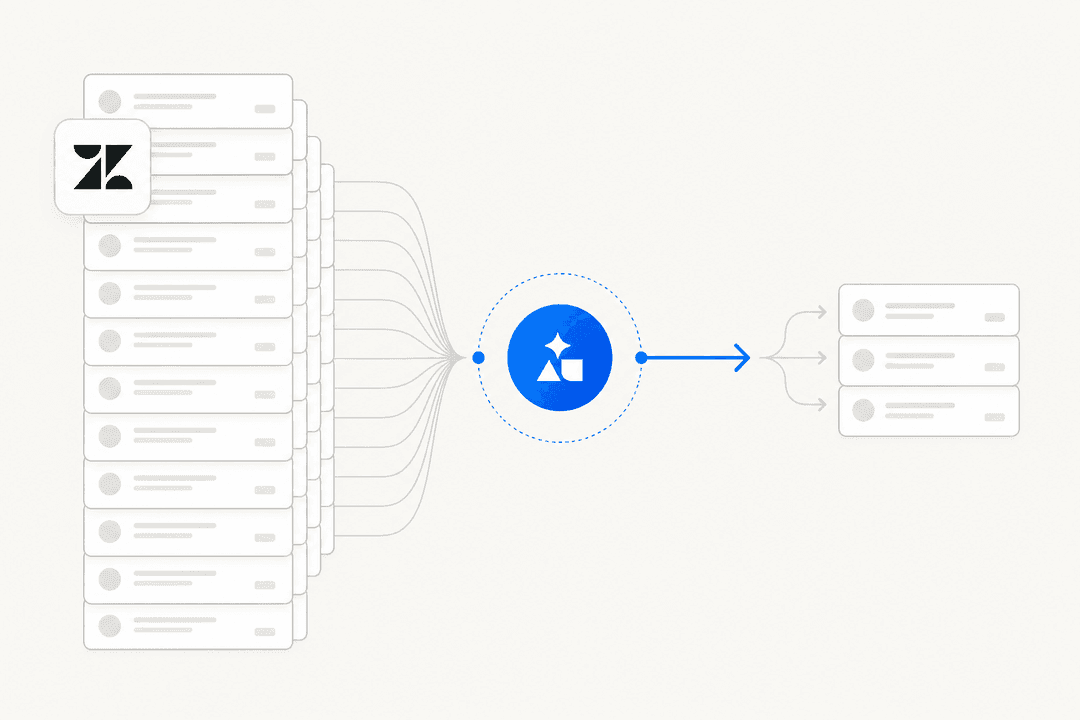
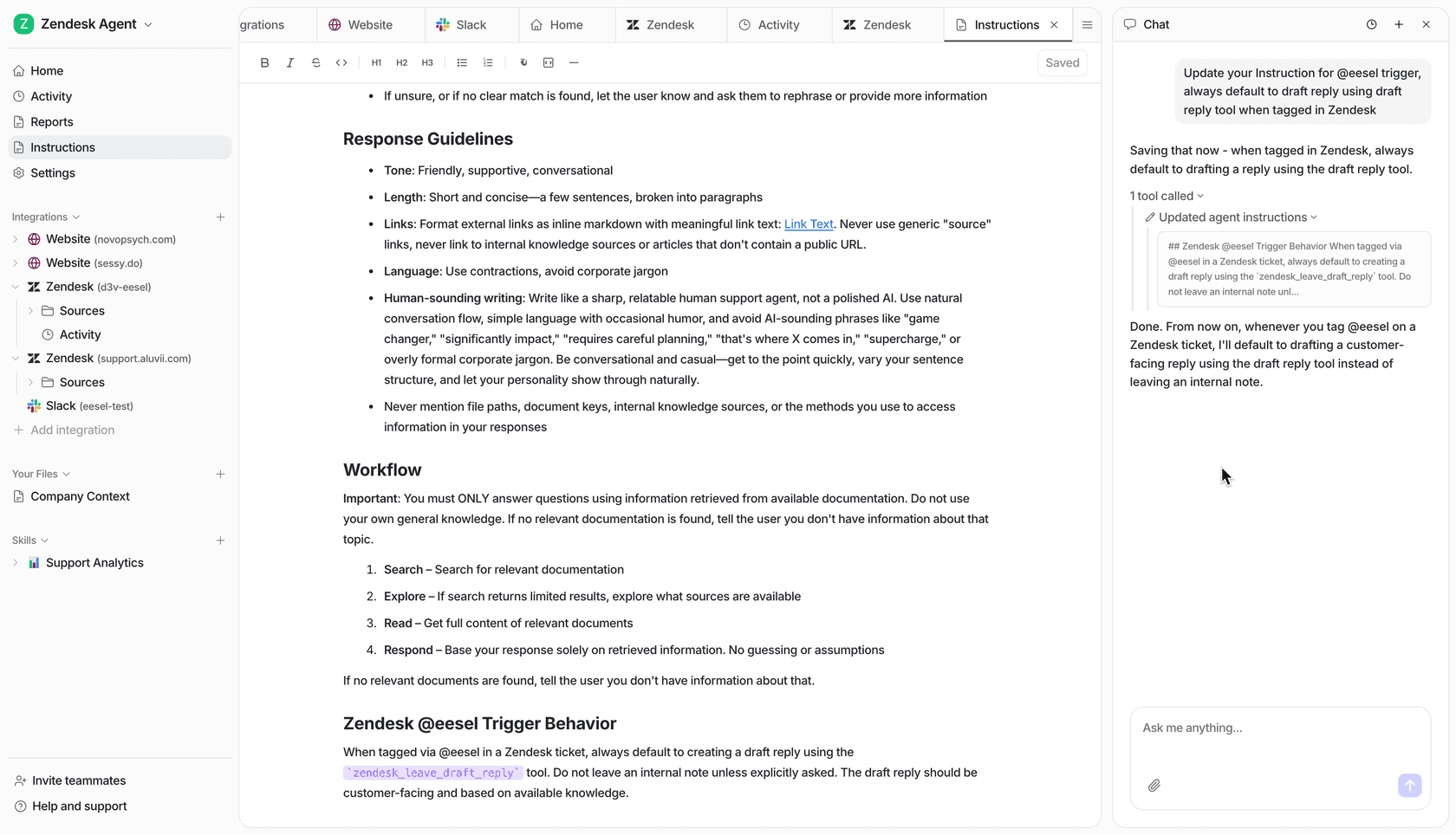
eesel AI is an AI teammate that plugs into your existing help desk (including Zendesk) and learns from your past tickets, help center articles, and macros. It can draft replies for agents to review, or handle entire conversations autonomously.
Here's what makes it different:
- Progressive rollout: Start with AI Copilot drafting replies for human review. Once you're confident, let the AI Agent respond directly. You're always in control.
- Learns your voice: eesel AI studies how your team actually writes and mirrors that tone. No generic ChatGPT responses.
- Up to 81% autonomous resolution: Mature deployments resolve the majority of tickets without human intervention.
- Flat pricing: Pay per interaction, not per agent. Our Team plan starts at $239/month with up to 1,000 interactions.
When to choose what
Choose Zendesk Talk if:
- You're already invested in Zendesk Suite
- Voice is a critical channel requiring complex routing
- You need traditional telephony features (IVR, call recording, monitoring)
Choose eesel AI if:
- You want to reduce agent workload through automation
- You're open to an AI-first approach to support
- You prefer simpler setup and flat, predictable pricing
Many teams actually use both: Zendesk Talk for voice interactions that need the human touch, and eesel AI handling the repetitive tickets across email and chat.
Making the right choice for your voice support
Zendesk Talk is a solid voice solution if you're already in the Zendesk ecosystem. The omnichannel integration is genuinely useful, and the AI features are getting better. But the pricing structure (per agent plus per minute) can sting if you're not careful, and the Suite requirement means you're buying a lot more than just phone support.
For teams considering their options, it's worth asking: do you need better phone tools for your agents, or do you need fewer tickets reaching your agents in the first place? If it's the latter, modern AI alternatives like eesel AI offer a fundamentally different approach that might serve you better.
Bottom line? Evaluate your actual needs, run the numbers on total cost of ownership, and don't be afraid to test alternatives. The right tool is the one that fits your workflow and budget, not just the one that comes bundled with software you're already using.
Ready to see how AI can transform your support? Invite eesel to your team and start with a free trial.