A complete guide to transactional blog writing

Katelin Teen
Last edited January 20, 2026
For any business, content can't just be decoration. It has to pull its weight. Every blog post, email, and landing page should do more than just inform or entertain; it needs to spark some kind of action.
This is exactly where transactional writing steps in. Think of it as the bridge between sharing information and convincing someone to act on it, whether that means signing up for a trial, downloading an ebook, or hitting that "buy now" button. It’s what turns passive readers into active customers.
What is transactional blog writing?
So what do we actually mean by "transactional blog writing"? Simply put, it's writing that's designed to get something done. The name comes from the Latin word transigere, which means "to drive through, accomplish." This isn't the place for flowery prose or long-winded stories. It's writing with a clear purpose, where every single word is chosen to nudge the reader toward a specific goal.
Think of it as writing that has a job to do. That job usually falls into one of four categories, as outlined by skillsworkshop.org:
- To instruct: This is all about telling someone how to do something, like in a user manual or a step-by-step tutorial.
- To persuade: The goal here is to convince the reader to agree with a point of view or take an action, like buying a product.
- To inform: This involves giving the reader facts and information, like in a news report or an order confirmation email.
- To describe: This is about painting a picture with words, often used in product descriptions to make an item seem more appealing.
An infographic showing the four purposes of transactional blog writing: to instruct, persuade, inform, and describe.
To make sure your writing is always on point, the "FLAP" acronym is a useful framework: Format, Language, Audience, and Purpose. Thinking through these four elements before you start writing helps you plan your content and make sure it’s tailored to get the job done. It’s a simple checklist that keeps your writing focused.
The key types of transactional writing in business
This isn't some dusty academic concept; you run into transactional writing all the time. It's the foundation of how businesses communicate with pretty much everyone. Here are a few of the most common places you'll see it in action.
Emails and proposals
Your inbox is practically overflowing with transactional writing. Just think about the last time you bought something online. You got an order confirmation, a shipping notification, and a delivery update. Each one was a short, direct piece of communication meant to inform you and move the transaction along.
On a bigger scale, you have things like sales proposals. When a company wants to persuade a potential customer to sign a major deal, they don't just send a quick note. They put together a detailed proposal that outlines the problem, their solution, and all the benefits, all structured to get that deal one step closer to being signed.
Reports and instructions
Business reports, like a quarterly market analysis or a deep dive on a competitor, might seem like they're just for information, but they're transactional, too. They present facts and data in a structured way to convince stakeholders to do something, like invest in a new market or adjust a product strategy.
Instructions are an even clearer example. A user manual for a new phone or an IKEA assembly guide has one simple goal: to help you get to a successful outcome. The writing is clear, concise, and all about action because its only job is to help you get something done.
Blog posts and articles
For a business, blog posts are one of the most powerful and flexible transactional tools available. A post comparing the top five project management tools isn't just for light reading. It's written to help someone who is actively searching for a solution, guiding them through the different options to help them make a smart purchase. Every review, listicle, or how-to guide is a piece of content created to drive an action, whether it's clicking an affiliate link or starting a free trial.
Web copy and calls to action (CTAs)
Website copy is probably the most direct form of transactional writing out there. From the headline on a landing page to the description on a product page, every word is carefully chosen to persuade a visitor to take the next step. The buttons themselves, like "Add to Cart," "Request a Demo," or "Get Started for Free," are tiny but powerful bits of transactional copy.
Even the exact wording makes a huge difference. As one expert notes, a CTA that says "Click me!" has a totally different tone and register than one that says "Yes, I want to grow my business." The right choice depends entirely on your brand and the audience you're speaking to.
Here’s a quick breakdown of how these different types compare:
| Type | Primary Purpose | Common Format | Example |
|---|---|---|---|
| Emails | Inform / Confirm | Short-form, direct | Order confirmation, password reset |
| Proposals | Persuade | Formal document | Sales proposal, project bid |
| Blog Posts | Advise / Persuade | Article, long-form | "Best Tools for Startups," Product Review |
| Web Copy | Persuade | Landing page, product page | "Sign up for our free trial" |
The core principles of effective transactional blog writing
Alright, we've covered what transactional writing is and where it shows up. But how do you actually do it well? It boils down to a few core ideas that help guide a reader from "just browsing" to taking that next step.
Start with audience empathy
This is the most important one. You can't persuade someone if you don't understand them. Before you write anything, you need to get inside your reader's head. What problem are they trying to fix? What are their biggest frustrations? What do they already know, and what are they hoping you'll teach them?
When you write from a place of real empathy, your content feels less like a sales pitch and more like a helpful conversation. You're not just pushing a product; you're showing them you get their world and have something that can actually make it better.
Structure your message with the inverted pyramid
Once you know your audience, you have to structure your message in a way that respects their time. The best way to do this online is with the Inverted Pyramid. It's a classic journalism technique where you put the most important information right at the top.
According to the Nielsen Norman Group, this structure is perfectly suited for the web because people tend to scan online content. By giving them the main point first, you make it easy for them to get the gist immediately. If they're interested, they'll stick around for the supporting details. If not, they can still leave with the key takeaway.
Here's how it works:
- The Conclusion First: Start with the most critical information: the who, what, when, where, and why.
- Important Supporting Details: Next, provide the key evidence, quotes, and context that support your main point.
- General Background Info: Finally, you can offer any less critical details or related information that might be interesting but isn't essential to the main point.
An infographic explaining the inverted pyramid structure for effective transactional blog writing, showing the most important information at the top.
Use a clear and concise tone
Transactional writing is no place for corporate buzzwords or overly complex language. Your goal is to be understood, quickly and easily. Use simple words, short sentences, and an active voice. Get rid of any fluff that doesn't directly support your main message.
Pro tip
In any piece of transactional writing, try to state your purpose in the very first sentence. This immediately tells the reader why you're reaching out and what to expect, which helps build trust and keeps them reading.
Craft a compelling call to action (CTA)
Every single piece of transactional content needs a clear, specific, and obvious next step. The call to action is your final instruction to the reader. Don't just end a blog post with "Thanks for reading!" Tell them exactly what you want them to do next.
A good CTA is:
- Action-oriented: Start with a verb (e.g., "Get," "Download," "Start").
- Specific: Instead of "Click Here," try "Download Your Free Ebook."
- Visible: Use a button, a different color, or bold text to make it pop.
Without a strong CTA, even the most convincing blog post will fall flat, leaving the reader to wonder, "Okay, so what now?"
Scaling your transactional blog writing with AI
Creating this kind of well-researched, persuasive content is tough. Doing it over and over again at the scale most businesses need is a huge headache for content teams. It's slow, costs a lot, and takes a ton of manual work.
Many teams use general-purpose AI tools like ChatGPT for assistance, but this can introduce new challenges. These tools may produce text that requires significant fact-checking for accuracy and may not align with a specific brand voice. The output sometimes needs considerable editing to have the persuasive quality required for transactional content and can occasionally be flagged by AI detectors, which can pose challenges for some SEO strategies.
I tested it once by asking it to clean up an essay I wrote and it removed all of my personality, quirks, asides, and aneddotes to just leave the bare facts. It took something engaging and quirky and 'me' and made it bland.

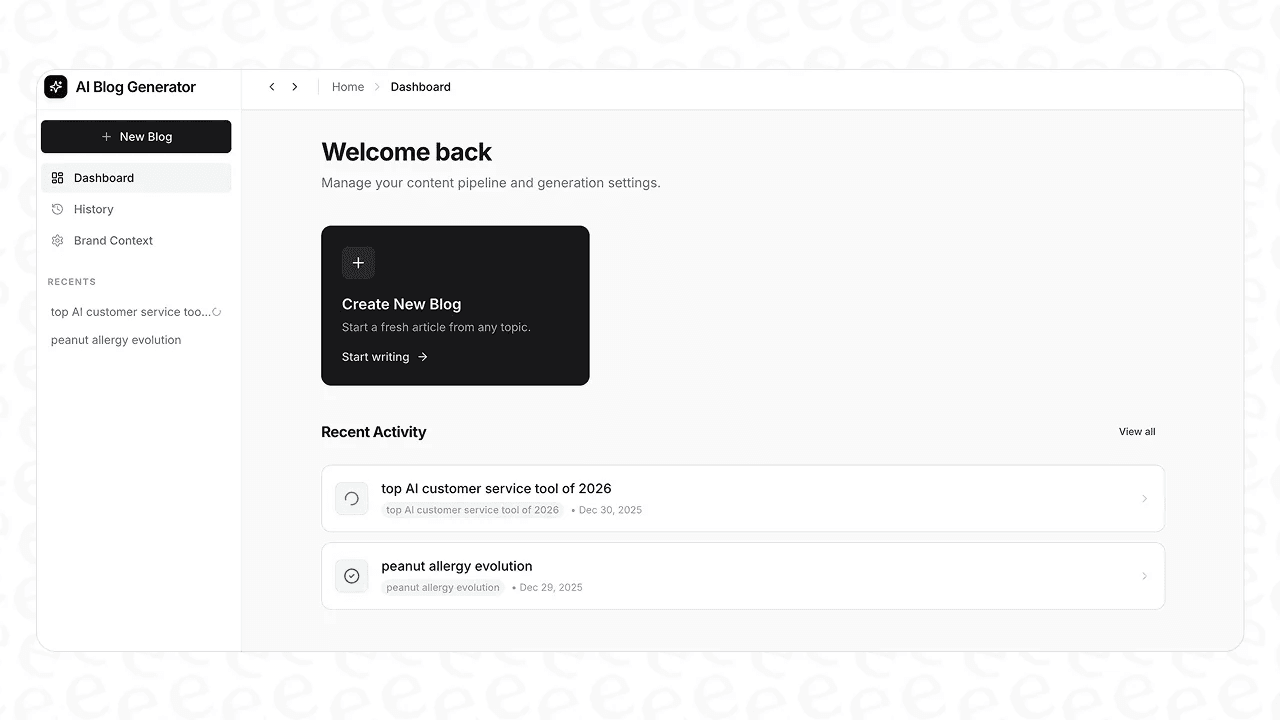
Using the eesel AI blog writer for transactional content
Here’s how it's different:
- Context-Aware Research: eesel AI is designed to figure out the search intent behind a keyword. If you give it a transactional keyword like "best CRM for startups," it knows to automatically find relevant product features, user reviews, and pricing to build a helpful and convincing comparison.
- Automatic Asset Generation: Visuals are a big part of keeping readers engaged. eesel AI automatically creates and adds assets like comparison tables, infographics, and relevant screenshots, which helps improve readability and keeps people on your page longer.
- Natural Product Integration: One of the trickiest parts of transactional content is mentioning your own product without sounding like a pushy salesperson. eesel AI looks at your website to understand your brand and what you offer, then weaves it into the content where it feels like a natural, helpful suggestion.
- Authentic Social Proof: Nothing builds trust like hearing from real people. eesel AI can find and embed actual quotes from Reddit and other forums right into your post. This adds a layer of human credibility that generic AI content can't touch.
Instead of spending days on research and writing, you can generate a deeply researched, well-structured, and persuasive article in minutes.
For those who prefer a visual breakdown, understanding the structure and tone of transactional blog posts can be easier with a guided example. This video provides a helpful walkthrough of the key elements that make a blog post effective in a transactional context, covering structure, voice, and purpose.
Making every word count with transactional blog writing
At the end of the day, transactional blog writing isn't about tricking anyone. It's about being so genuinely helpful that the reader's next step feels like the most natural thing in the world. It’s content with a purpose, built on understanding your audience and making things clear and actionable.
While the principles themselves are pretty simple, executing this kind of content strategy at scale has always been a major bottleneck for marketing teams. It often feels like a choice between quality and quantity.
With specialized tools, it's possible to scale a content strategy and turn a blog into a reliable growth engine without sacrificing the quality and persuasiveness that drive results.
Ready to turn your blog into a growth engine that drives consistent action? Generate your first post for free with the eesel AI blog writer and see the results in minutes.

Frequently Asked Questions
Share this article

Article by
Katelin Teen
Katelin is an operations specialist at eesel where she uses her psychology training and education experience to optimize B2B SaaS processes. Outside of work, she unwinds with story-driven games, writing, and keeping up with latest tech innovations.