

If you run a Shopify store, you’ve probably seen the term “Shopify Magic” popping up. It’s the platform's collection of free, built-in AI tools that are meant to help with everything from writing product descriptions to marketing. One of the most interesting features for busy support teams is Shopify Magic AI Suggested Replies, which aims to help you answer customer questions faster, right from your Shopify Inbox.
The promise of free, instant AI support is pretty tempting. But what does it actually mean for your business day-to-day? This guide gives you a straight-up look at the features, real-world limits, and the hidden costs of relying only on Shopify's native AI. We’ll get into what it does well, where it stumbles, and how you can build an AI support system that actually grows with your store.
What exactly are Shopify Magic AI Suggested Replies?
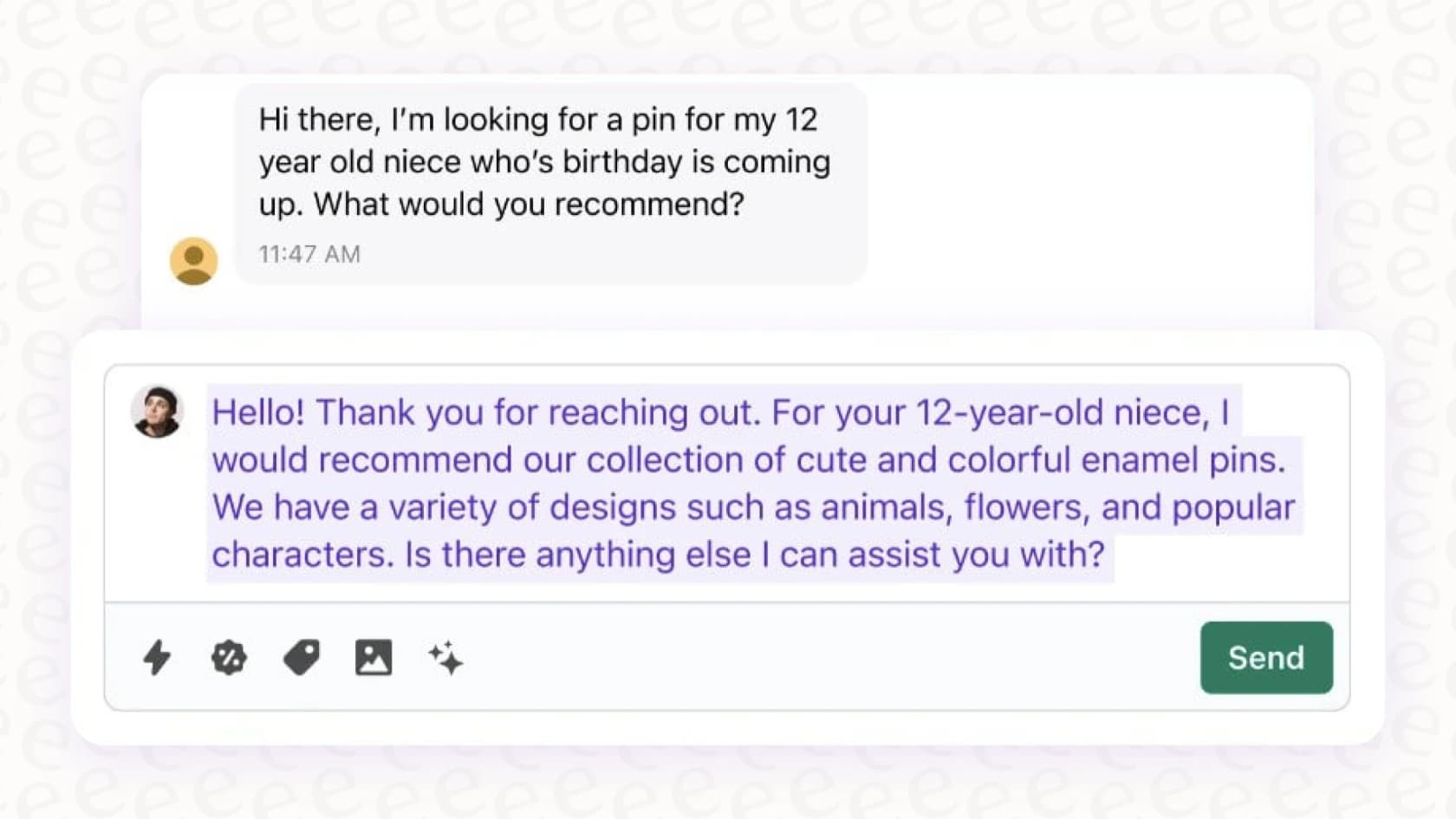
Shopify Magic AI Suggested Replies is a feature baked into Shopify Inbox, the platform’s own tool for chat and messaging. Its job is to automatically cook up responses to customer questions while you’re in a live chat.
It works by scanning your public store information, like:
-
Your product details and descriptions
-
All your store policies (shipping, returns, you name it)
-
Content from your store’s pages, such as your FAQ or About Us page
When a customer asks a question, Shopify Magic skims this info and pops a suggested reply into the chat composer for your agent to look over and send. The main goal is to cut down on the time your team spends typing out the same answers over and over. It comes with a default answer for "Track my order," but how well it handles other questions really depends on how clear and thorough your store's content is.
Breaking down the capabilities and limitations
While it’s free and easy to turn on, Shopify Magic’s support features come with some big trade-offs that you’ll want to know about as your brand grows.
What you can do
Getting started is a breeze, since suggested replies are usually active by default if you have Shopify Inbox installed. You can also set up custom "instant answers" for common questions, and the AI will use those to base its suggestions on. This works pretty well for simple, static questions, such as:
-
"What's your return policy?"
-
"Do you ship internationally?"
-
"When are you open?"
For new stores that don’t have a huge number of support tickets, this can be a handy way to speed things up without having to add another tool to your setup.
Where the magic runs out: The limitations
As your business scales, the cracks in a basic, built-in tool start to show. Shopify Magic acts more like a simple search function for your website than an intelligent support agent.
Here are the main challenges you’ll run into:
-
It only learns from public content. The AI can’t learn from your team's most valuable asset: thousands of past support conversations. It has no idea how your best agent handles tricky problems or the specific tone your brand uses. It's missing all that hard-won context.
-
It can't actually do anything. The system is all talk, no action. It can’t look up a specific order in Shopify, check inventory, process a return, or update a ticket. All it does is offer up text, leaving your agents to do all the manual legwork.
-
You don't have much control. There’s no way to shape the AI's personality, tell it which tickets to handle, or test how it will perform before it’s live with customers. This lack of a "simulation mode" means you’re essentially testing on real customers, which can lead to some inconsistent or off-brand experiences.
-
It’s not a true automation tool. At the end of the day, it only suggests what to say. It doesn’t sort incoming tickets, apply tags for reporting, or send complex issues over to the right person on your team.
These kinds of limitations are pretty common with free, bundled tools. For real automation, you need a platform that can learn from all of your data and actually perform tasks. More advanced solutions like eesel AI tackle this by training on your past tickets and connecting to your other systems to get things done, turning simple suggestions into full resolutions.
How Shopify Magic AI Suggested Replies fits into the broader Shopify AI ecosystem
To be fair, suggested replies are just one slice of the Shopify Magic pie. The platform has other tools to help merchants, but they tend to work in their own little bubbles instead of as a cohesive support system.
Sidekick: Your AI admin assistant
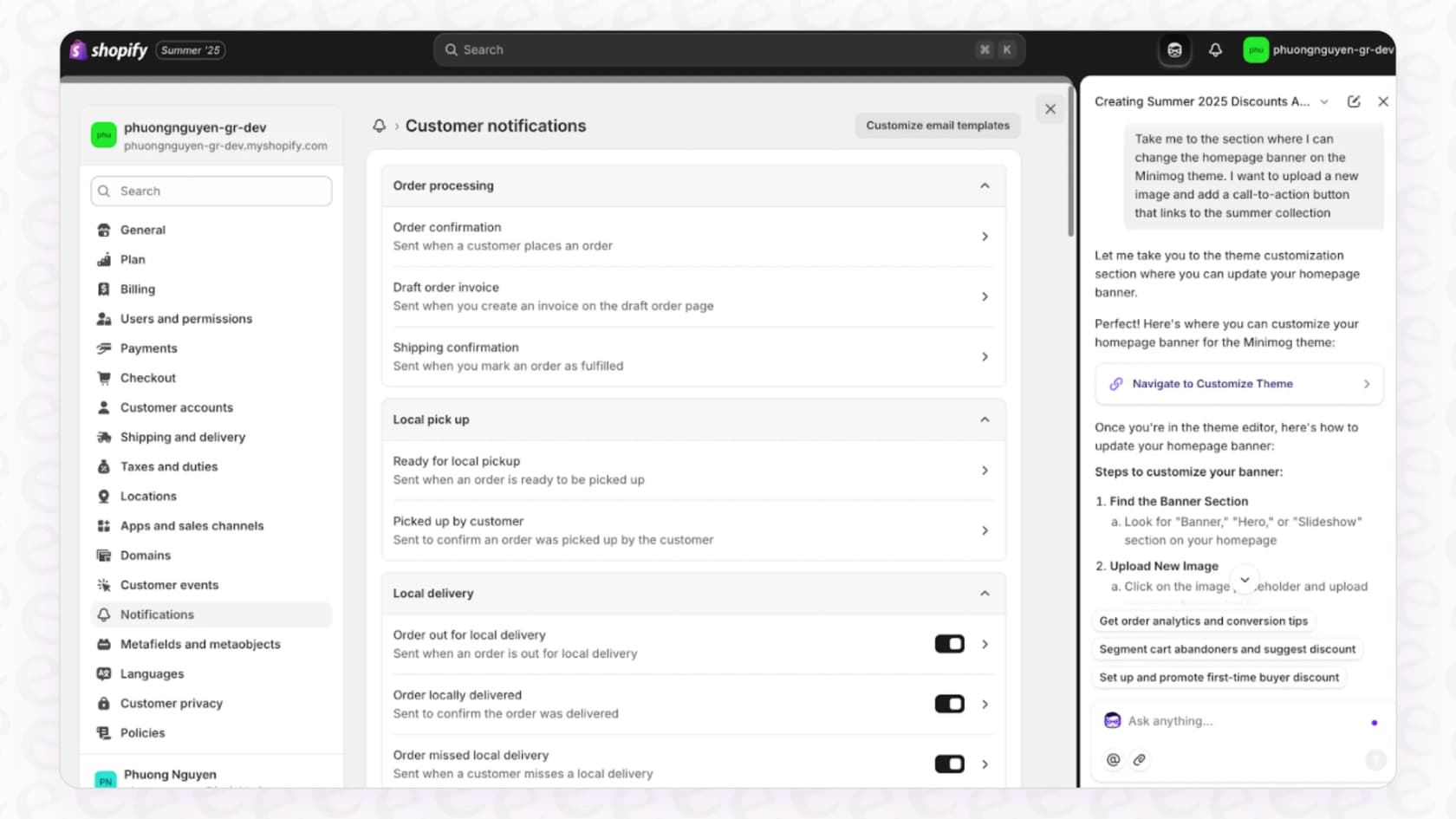
Sidekick is an AI assistant that lives in your Shopify admin dashboard. You can ask it to do back-office tasks like "create a 10% discount code for our summer sale" or "show me my best-selling products from last month." It's definitely useful for managing your store, but it's designed for you, the merchant, and isn't connected to the customer support flow.
AI for content and marketing
Shopify Magic is also pretty well known for its text generation. It can help you write product descriptions, blog posts, and email marketing copy. These tools are great for getting content done faster, but they're totally separate from the fast-paced, action-oriented world of customer support. The AI writing your product copy has no link to the AI answering support chats.
The missing piece: A single brain for support
What Shopify offers is a collection of handy but separate AI features, not a unified AI system for customer support. The content tool doesn't talk to the support bot, and the support bot can't tap into Sidekick to take action.
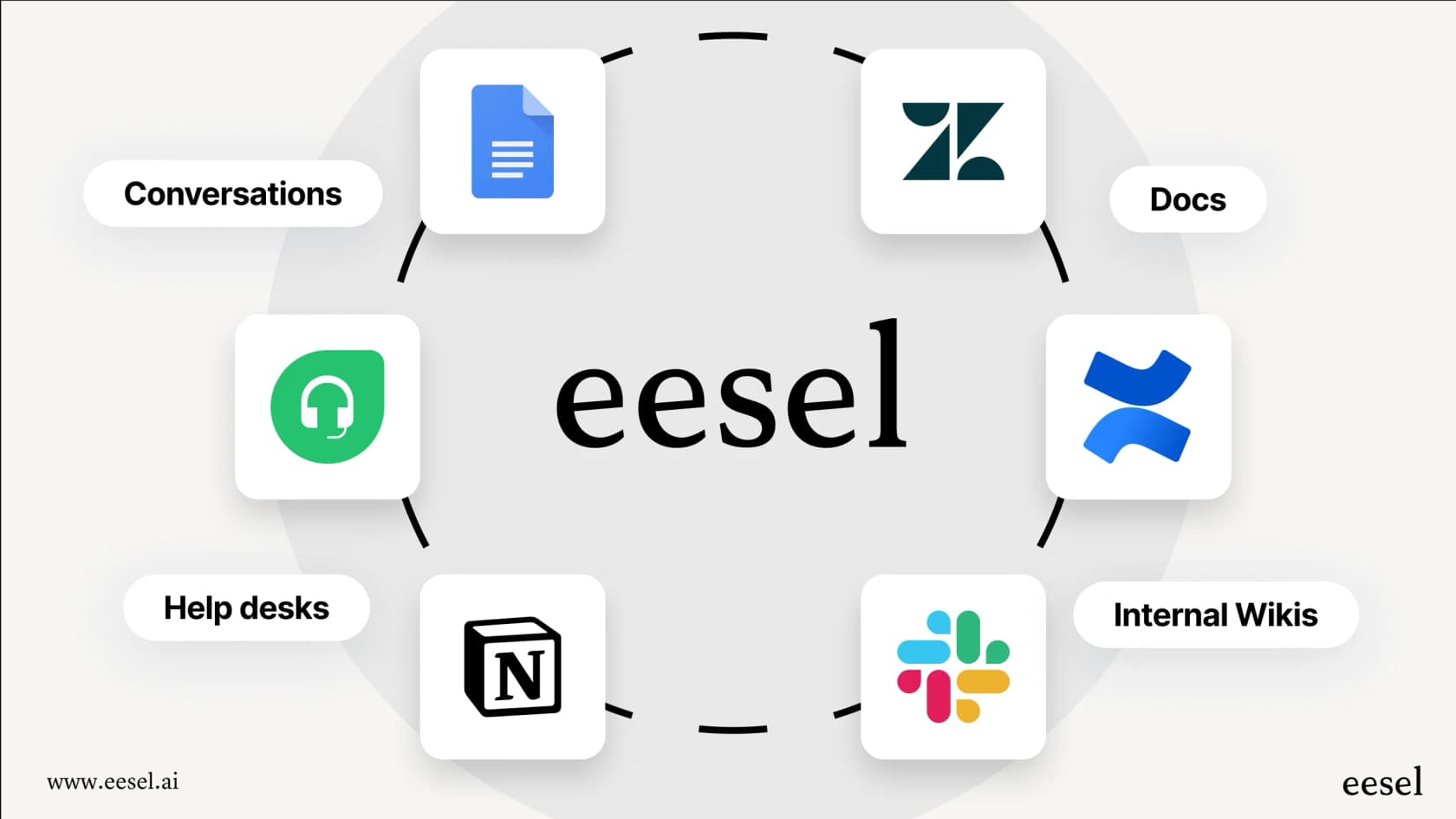
To really automate your support, you need one system that brings all your knowledge together, from help center articles and past tickets to real-time order data. This is where dedicated AI platforms like eesel AI for customer service step in, acting as a central hub for your whole support operation.
Pricing: Is ‘free’ really free?
Shopify Magic features, including Suggested Replies, come free with all Shopify subscription plans. You won't see any extra fees or usage limits, which is a huge plus for merchants who are just starting out.
Here’s a quick look at the Shopify plans that include Magic:
| Plan | Monthly Price (Billed Monthly) | Key Features |
|---|---|---|
| Basic | $39 USD/mo | For solo entrepreneurs |
| Grow | $105 USD/mo | For small teams |
| Advanced | $399 USD/mo | For scaling businesses |
| Plus | Starting at $2,300 USD/mo | For more complex businesses |
Source: Shopify Pricing. Prices reflect monthly billing and are subject to change.
The hidden costs
Even though you won't see a line item for Shopify Magic on your bill, "free" can have some hidden operational costs:
-
Your team's time: Your agents still have to handle any question that requires specific data or an action, which is often most of them. They also spend time reviewing, editing, and sometimes completely rewriting the generic suggestions to sound like your brand.
-
A clunky customer experience: When a customer asks a direct question like, "Where is my order?" and gets a link to a generic shipping policy, it’s frustrating. That leads to more follow-up questions and can chip away at how they see your brand.
-
It doesn't scale with you: As your store grows, these limitations create bottlenecks. You end up having to hire more people to keep up with the volume instead of scaling efficiently with smart automation.
The next step: Upgrading to a true AI support agent
Once you’ve outgrown basic suggestions, the next logical move is to bring in a dedicated AI platform that works with your Shopify store without making you overhaul your entire workflow.
This is where eesel AI comes in. Instead of just reading your public website, it connects to all your knowledge sources and business tools to deliver complete, automated resolutions.
How eesel AI works with your Shopify store
-
It connects all your knowledge: You can connect eesel AI not just to Shopify, but also to your helpdesk (like Zendesk or Gorgias), internal chat tools like Slack, and knowledge bases like Google Docs. It learns from everything to give accurate answers that have all the right context.
-
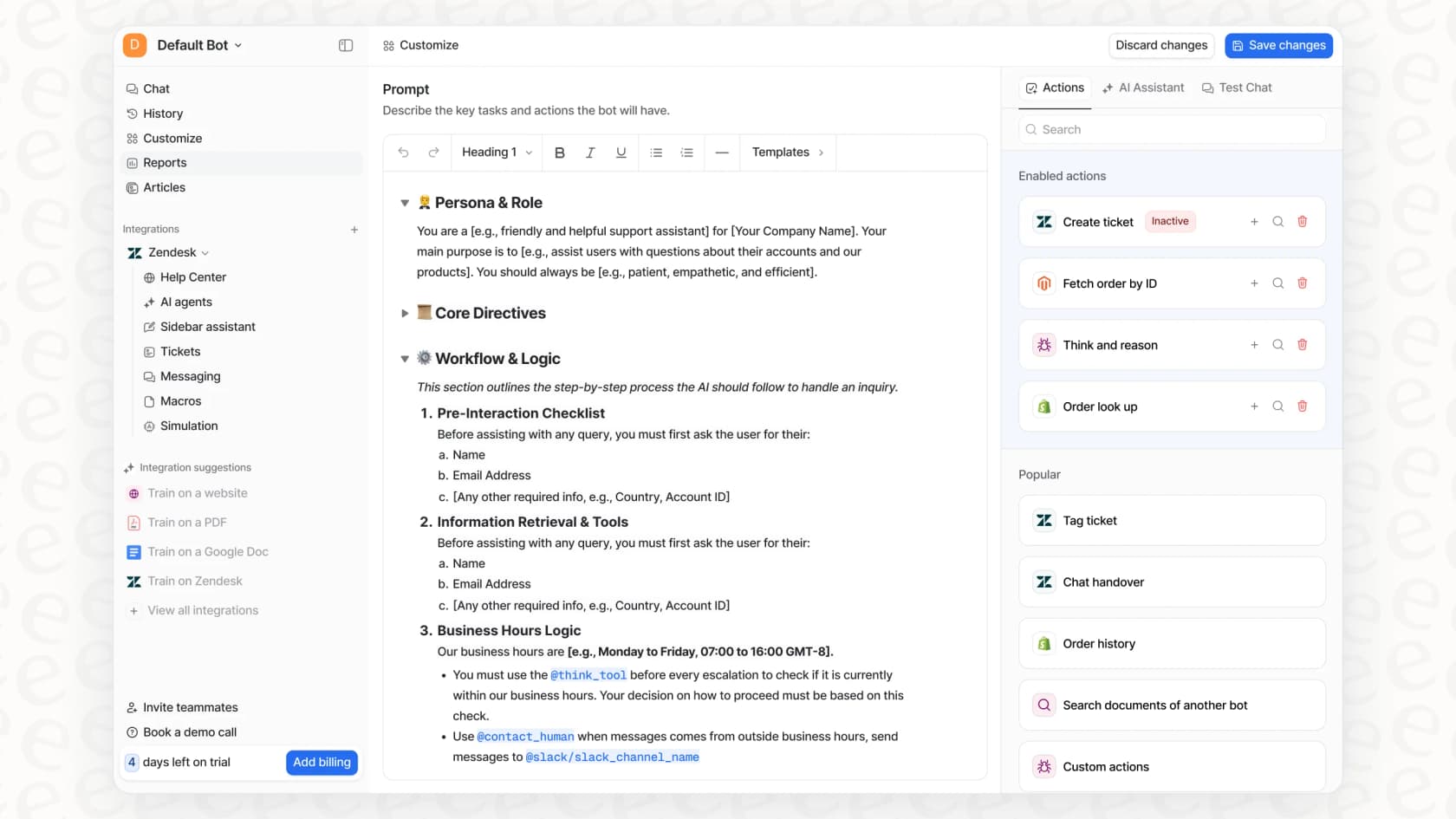
It takes action, not just notes: With eesel AI’s AI Agent, you can do more than just talk. It can look up live order details from Shopify, tag and route tickets, and even process returns or cancellations on its own.
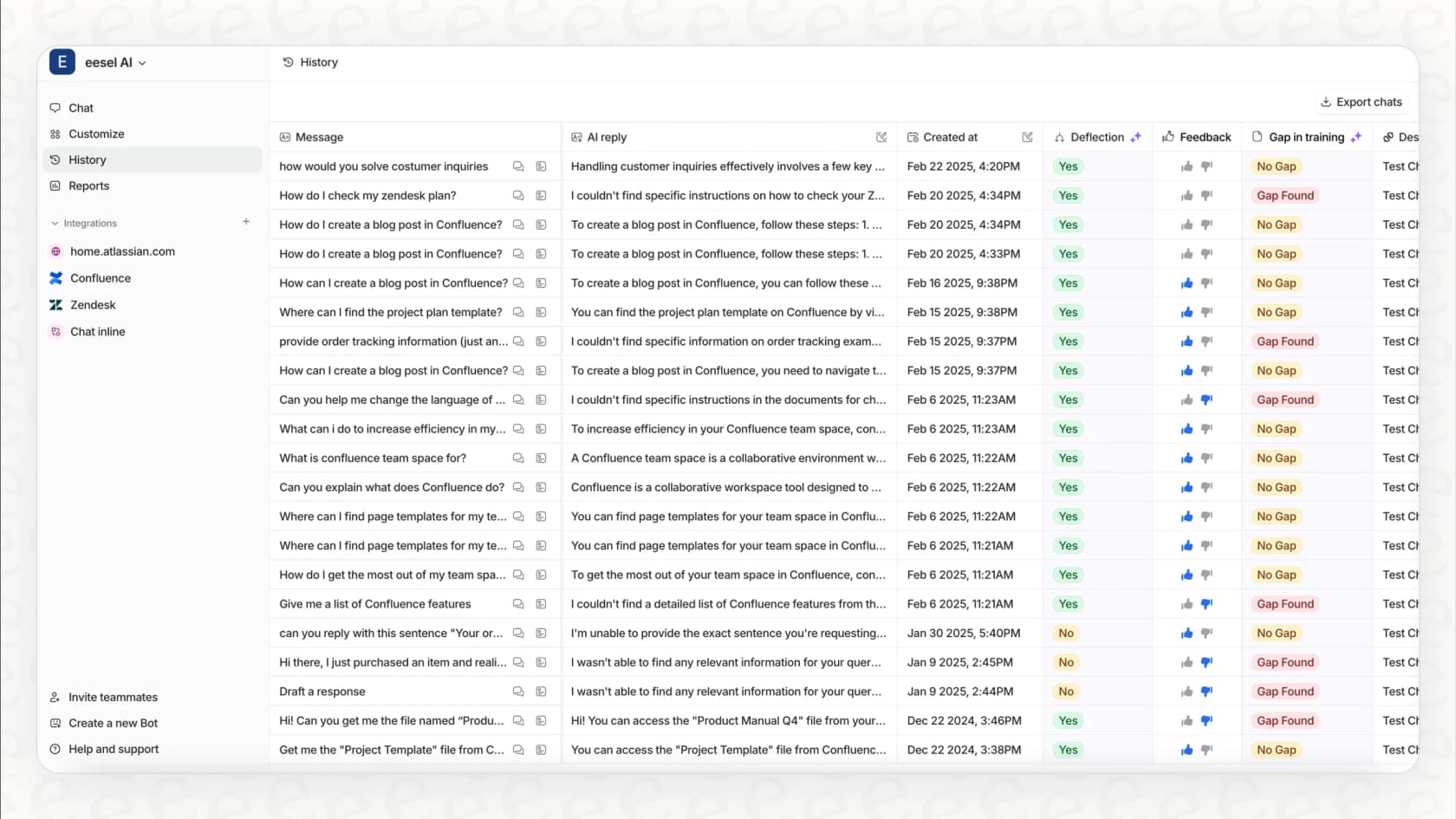
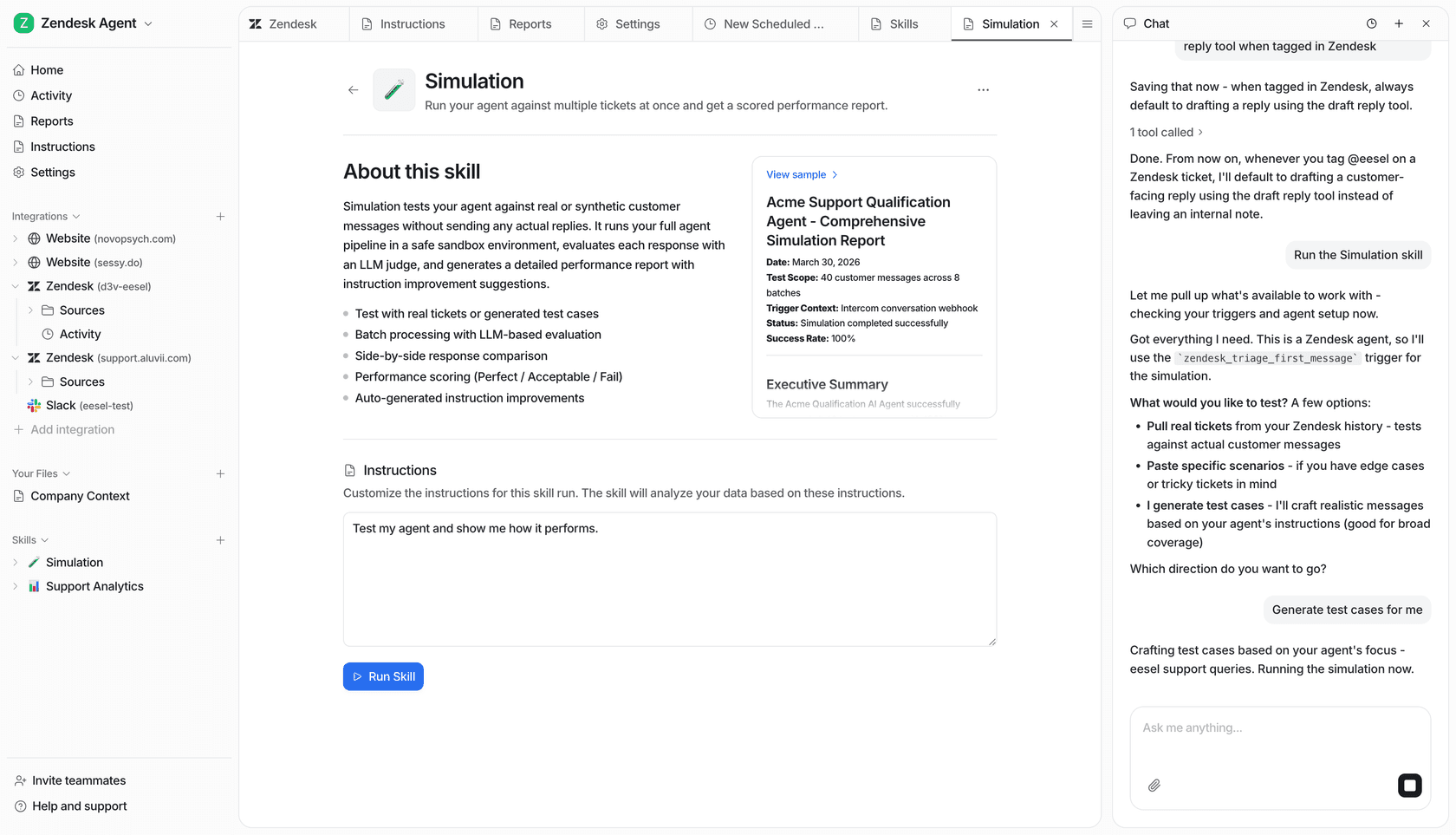
- You're in the driver's seat: eesel AI has a powerful simulation mode, so you can test your AI on thousands of your past tickets. You get to see exactly how it will perform before it ever talks to a customer. You can start small by automating just one type of ticket and expand from there as you get more comfortable.
- Get set up in minutes, not months: eesel AI is designed to be super easy to use. You can connect your helpdesk and start building your AI agent in minutes, without needing a developer or sitting through a mandatory sales demo.
Move from simple suggestions to smart automation
Shopify Magic AI Suggested Replies is a decent, free starting point for new stores just getting a feel for customer support. It’s a good introduction to AI assistance without any financial risk.
But for ambitious brands that are growing fast, its limitations can quickly become a roadblock to offering a great customer experience at scale. To actually lower your costs and free up your team for more important work, you'll need to move beyond simple suggestions to intelligent, action-based automation.
Ready to see what a true AI agent can do for your Shopify store?
Turn your support from a cost center into a growth engine. Start your free trial with eesel AI to go live in minutes, or book a demo to see how you can automate over 70% of your support queries.
Frequently asked questions
How does Shopify Magic AI Suggested Replies actually work to help my support team?
Shopify Magic AI Suggested Replies scans your public store information like product details, policies, and FAQ pages. It then generates a suggested response in the chat composer for your agent to review and send, aiming to save typing time.
Can Shopify Magic AI Suggested Replies learn from my past customer conversations or only public content?
No, Shopify Magic AI Suggested Replies only learns from your public store content. It does not learn from your team's past support conversations or specific brand tone, limiting its ability to handle complex or nuanced issues.
Does Shopify Magic AI Suggested Replies take action on customer requests, like checking an order status, or does it just suggest text?
Shopify Magic AI Suggested Replies only suggests text responses; it cannot perform actions. It can't look up specific order details, check inventory, process returns, or update tickets directly. Agents still need to handle all manual tasks.
When would a growing store typically need to move beyond Shopify Magic AI Suggested Replies to a more advanced AI solution?
A growing store typically needs to move beyond Shopify Magic AI Suggested Replies when it requires true automation, wants to connect all knowledge sources, perform actions directly, or needs more control and testing capabilities for its AI support.
How much control do I have over customizing the responses or personality of Shopify Magic AI Suggested Replies?
You have limited control over Shopify Magic AI Suggested Replies. There's no way to shape its personality, dictate which tickets it handles, or test its performance in a simulation mode before it interacts with customers.