


Trying to get professional-looking product photos without a fancy studio setup can be a real headache. Whether you're trying to stop the scroll on Instagram or make your products pop on a crowded marketplace, good images matter. That's where AI tools have swooped in, and PhotoRoom is one of the most popular names in the game, promising studio-quality visuals with just a few taps.
But here's the thing a lot of users run into: figuring out its pricing is surprisingly tricky. Between the different plans, billing cycles, a new AI-credit system, and recent price changes, it's easy to feel lost about what you're actually paying for.
This guide is here to clear things up. I'll walk through PhotoRoom's pricing for 2026, piece by piece. I'll look at what each plan gives you, where the limits bite, and help you decide if it's the right tool for your needs.
What is PhotoRoom?
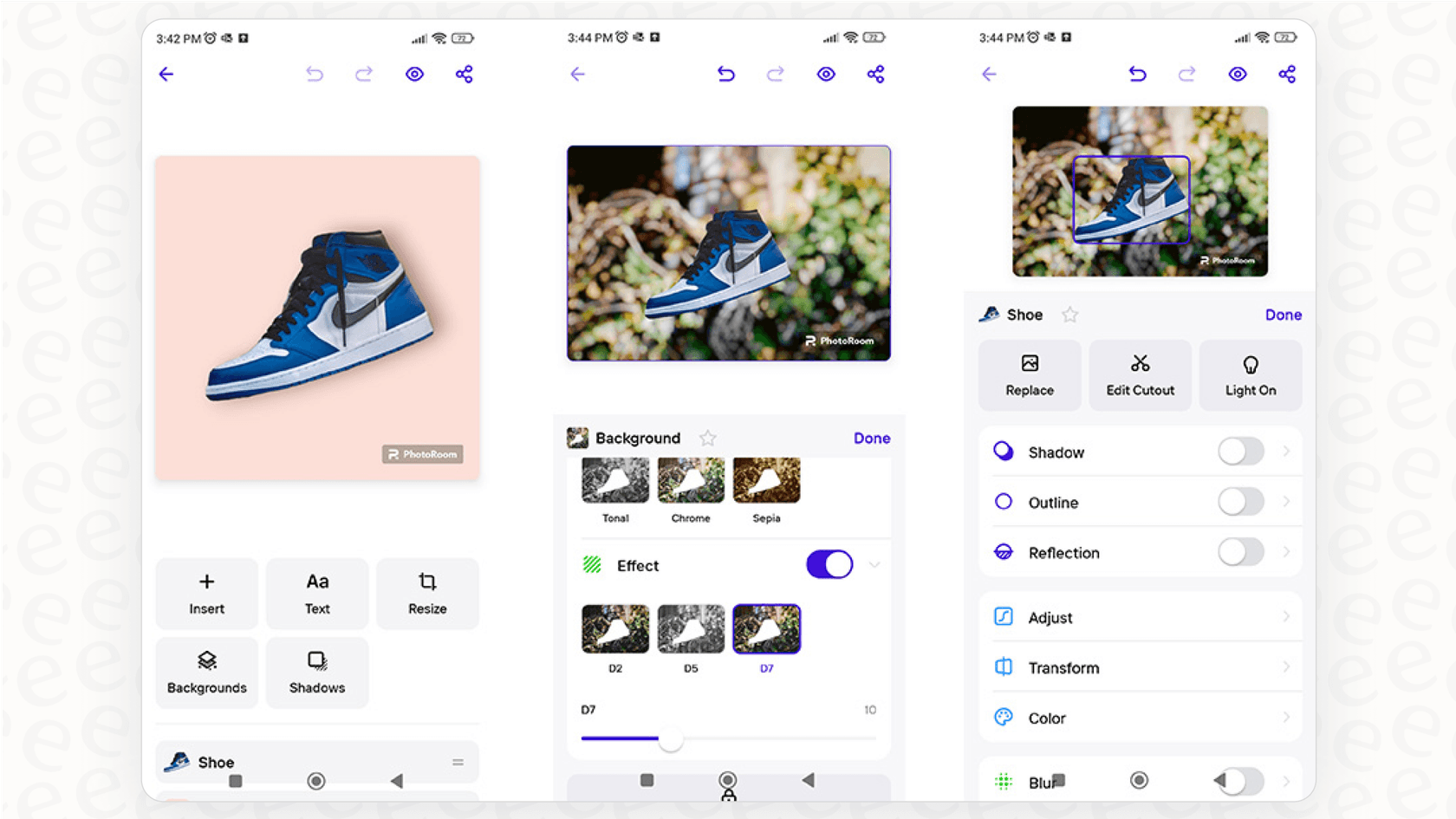
At its heart, PhotoRoom is an AI-powered photo editing app built for sellers, creators, and small businesses. The whole idea is to make it dead simple to create professional product shots, social media posts, and marketing images without needing a graphic design degree.
It's particularly good at a few key things:
-
One-tap background removal: It can instantly zap the background from any photo. This is perfect for getting those clean, white-background shots you need for marketplaces like eBay, Poshmark, or Shopify.
-
AI background and scene generation: Instead of settling for a plain background, you can use AI to create a whole custom scene. Want to place your skincare product on a marble countertop with some soft, morning light? You can do that.
-
Virtual models: If you sell apparel, this is a cool one. You can display your clothing on AI-generated models, saving you the time and money it takes to hire real people for a photoshoot.
-
Batch editing: This is a huge time-saver for anyone in e-commerce. It lets you apply the same edits to a whole bunch of photos at once.
-
Retouching tools: Got an annoying object, bit of text, or a blemish in your shot? You can remove it with a quick swipe.
One thing to set expectations on: PhotoRoom is an image tool. If you need video, that's a different category, closer to CapCut.
The app works on iOS, Android, and on the web, so you can edit from your computer or on the fly from your phone.
A full breakdown of PhotoRoom pricing plans
PhotoRoom uses a freemium model. You can get started with a free plan, but the really powerful features are tucked away in the paid tiers. The pricing can feel confusing because they offer weekly, monthly, and annual billing. Like most subscriptions, paying annually gives you the best deal, often cutting the monthly cost close to half.
Let's dig into what each plan actually offers.
The free plan
-
Who it's for: This is your test drive. It's perfect for individuals, people with a hobby, or anyone who just wants to poke around and see what the basic features can do.
-
Cost: $0
-
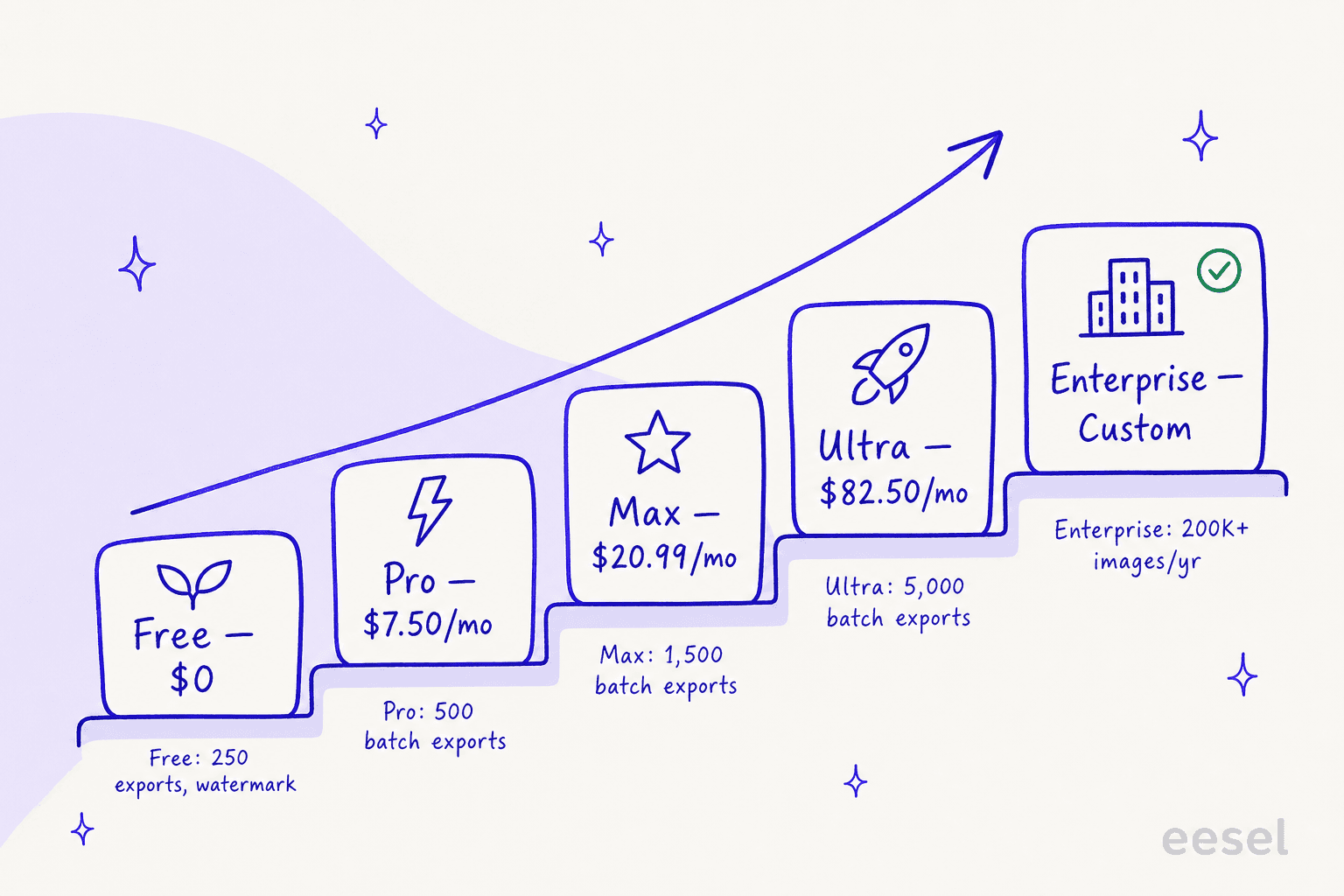
Key features & limitations: You get limited access to some AI features and standard templates. The biggest catch? You can only export 250 images a month, and they'll carry a PhotoRoom watermark. According to their help center, you also can't use free-plan images for commercial purposes, which is a dealbreaker for any business.
The pro plan
-
Who it's for: The Pro plan is aimed at resellers, solopreneurs, and small businesses that need consistently high-quality visuals for their listings and marketing.
-
Cost: Starts at $7.50 per month when you pay for a full year.
-
Key features & limitations: This is where you unlock most of the good stuff. You get unlimited manual exports, advanced AI features like Virtual Models and Product Staging, 5× the free AI-credit allowance, high-resolution downloads, and up to 500 batch exports a month.
The max plan
-
Who it's for: This plan is designed for growing e-commerce businesses processing more images who want better performance.
-
Cost: Starts at $20.99 per month when billed annually.
-
Key features & limitations: You get everything in Pro, plus access to better AI models and 3× the Pro AI-credit allowance. The batch limit jumps to 1,500 exports a month, you can create and publish Shopify listings directly, and you get faster processing and priority support.
The ultra plan
-
Who it's for: Newer to the lineup, the Ultra plan targets high-volume sellers managing large catalogs who need to automate image production at scale.
-
Cost: Starts at $82.50 per month when billed annually, and scales up through higher Ultra tiers (x1, x2, x5, x10).
-
Key features & limitations: Everything in Max, plus access to PhotoRoom's best AI models, the most generous AI-credit allowance, 5,000 batch exports a month, advanced AI workflows, and the fastest processing times.
The enterprise plan
-
Who it's for: This is for large organizations, marketplaces, and big businesses that need to plug photo editing right into their existing systems.
-
Cost: Custom, so you'll have to get in touch with their sales team for a quote.
-
Key features: Enterprise is all about the PhotoRoom API. It comes with a SOC 2 Type 2 certified API, dedicated onboarding, flexible credits with predictable billing and rollover, and tailored plans that start at 200,000+ images a year.
Here's a table to compare the plans at a glance.
| Feature | Free | Pro | Max | Ultra |
|---|---|---|---|---|
| White-background exports | 250/month | Unlimited* | Unlimited* | Unlimited* |
| AI credit allowance | Limited | 5× Free | 3× Pro | 2× Max |
| Advanced AI (Virtual Model, Staging) | — | ✔️ | ✔️ | ✔️ |
| Better / best AI models | — | — | Better models | Best models |
| Batch exports | — | 500/month | 1,500/month | 5,000/month |
| High-resolution export | — | ✔️ | ✔️ | ✔️ |
| Team seats | up to 50 | up to 50 | up to 50 | up to 50 |
| Commercial use | No | ✔️ | ✔️ | ✔️ |
| Price (billed annually) | $0/mo | $7.50/mo | $20.99/mo | from $82.50/mo |
Unlimited manual exports; fair-use limits apply.
Key features you get with each PhotoRoom pricing plan
Jumping from the free to a paid plan isn't just about removing watermarks. It's about unlocking tools that can genuinely save you time and money. Here's a look at what they do in practice.
Batch mode for efficiency
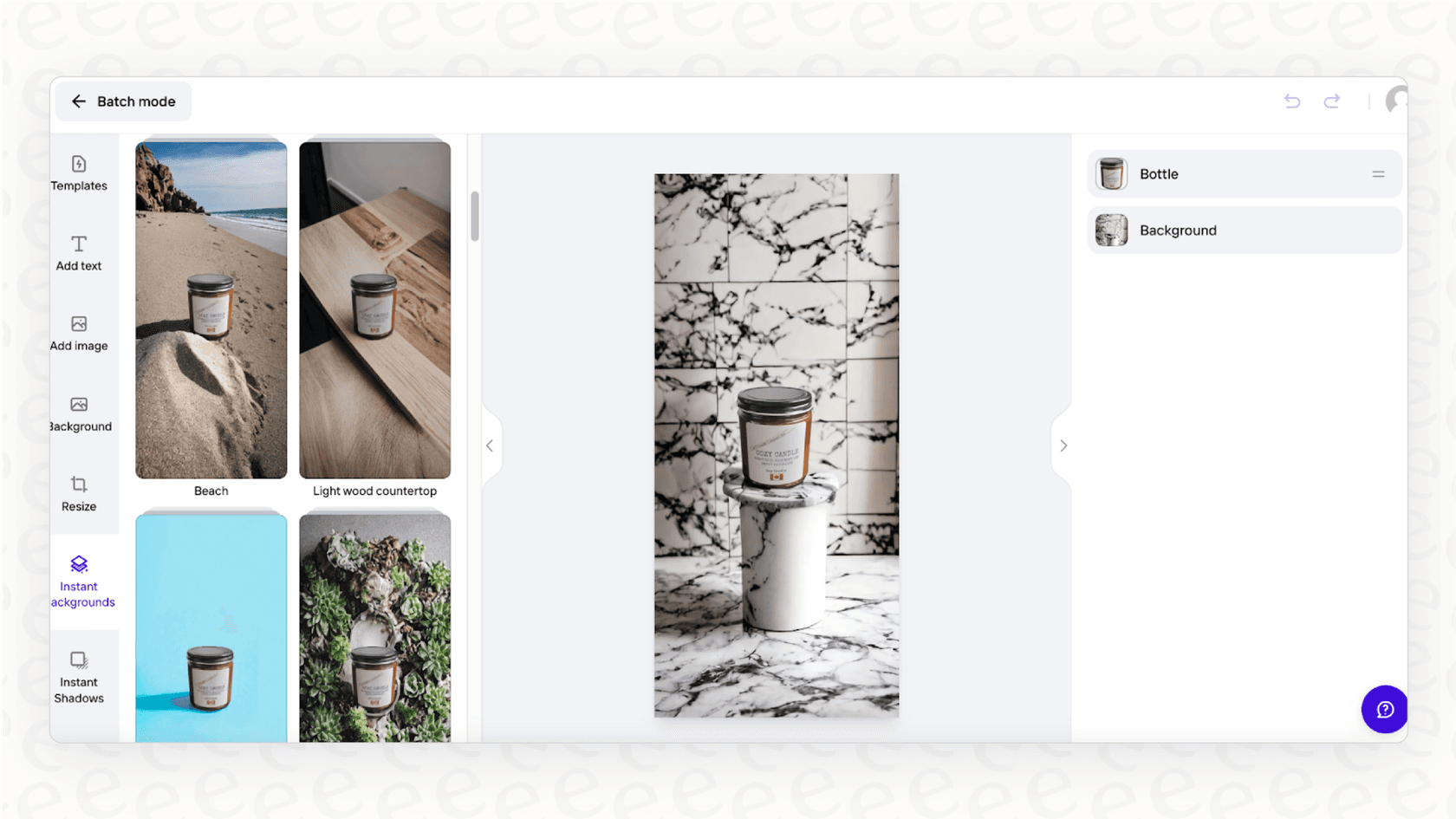
If you run an online store, Batch Mode is a life-saver. Instead of editing product photos one by one, you upload a whole folder, apply the same background removal and touch-ups to all of them, and let it run. Pro handles up to 500 batch exports a month, Max bumps that to 1,500, and Ultra goes all the way to 5,000. This can turn hours of mind-numbing work into a few minutes.
AI-generated backgrounds and virtual models
These features are all about a professional look without the professional price tag. No space or budget for a lifestyle photoshoot? Drop your product into a realistic AI-generated scene. Selling clothes? Use an AI virtual model to show off your items without hiring a model and photographer. It's a smart way to elevate your brand's style on a tight budget, and a big reason people compare PhotoRoom against Canva AI pricing and image generators like Midjourney or Ideogram.

API access for automation
For more tech-savvy businesses, PhotoRoom offers an API. This lets developers build its background removal and AI editing tools directly into their own websites or apps. For example, a marketplace could use the API to automatically clean up every photo a seller uploads before it goes live.
But, and this is a big one, API usage is billed completely separately from the Pro, Max, and Ultra subscriptions. It's a pay-as-you-go cost, which brings us to some of the trickier parts of the pricing model. Plenty of newer image models, like GPT Image 1 Mini, expose a similar pay-per-image API.
The limitations and hidden costs of the PhotoRoom pricing model
While PhotoRoom is a great tool, its pricing model has a few quirks you should know about before you sign up.
How the AI-credit model actually works
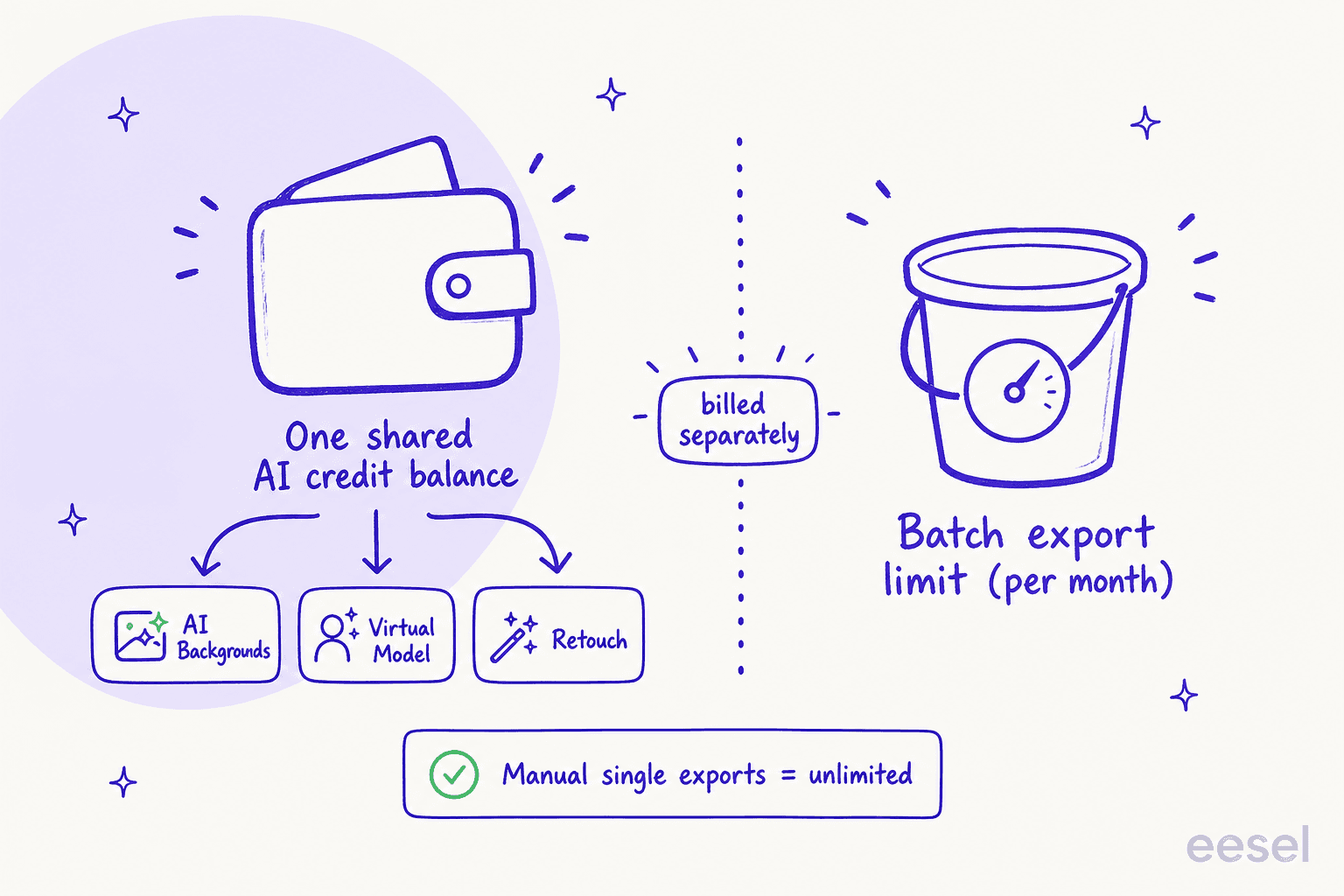
PhotoRoom's plans now run on two separate meters, and mixing them up is the easiest way to get a surprise. AI features (AI Backgrounds, Virtual Model, Retouch, and so on) all draw from a single shared AI-credit balance. Exporting through the Batch tool draws from a separate batch-export limit. Manual single edits and exports stay unlimited on paid plans. So you can burn through AI credits while still having batch exports left, or vice versa.
Complexity and unexpected changes
As some users on Reddit have mentioned, the pricing can be confusing. With weekly, monthly, and annual options floating around, plus occasional price hikes, it can be tough to track what you're actually paying. If you're a small business trying to keep your budget in check, that lack of predictability is a problem. It's easy to sign up for what you think is a monthly plan, only to get billed weekly without realizing it. If sticker shock is the issue, it helps to keep a shortlist of cheap AI tools on hand.
So mad right now. I went to my photoroom app to FINALLY go pro, and their pricing structure changed. $4.99 a week and 89.99 a year!! It was $9.99 a month and $68.99 a year.

Usage-based costs for the API
The separate, pay-per-image pricing for the API is a significant "hidden" cost if you're looking to automate. Your Pro subscription gets you into the app, but integrating PhotoRoom into your own systems costs more on top. This means your bill could spike during a busy sales season, making it hard to plan expenses, a real difference from platforms with more predictable, all-in-one pricing. If predictability matters, it's worth comparing the AI agent vs human cost math before you commit.
A specialized tool for image editing
At the end of the day, PhotoRoom is an excellent tool for one specific job: editing images. But it doesn't solve the bigger challenges e-commerce businesses run into. It can make your products look amazing, but it can't answer a customer's question about their order, handle a return ticket, or help your team find the right product info. For that, you need something that connects your product visuals to the entire customer experience.
Beyond image editing: Automating workflows with AI
Getting amazing product photos is just step one. The real growth happens when you streamline the entire customer journey that comes after. That's where a platform like eesel AI makes a difference. It's built to handle the whole customer support workflow, not just one piece of it.
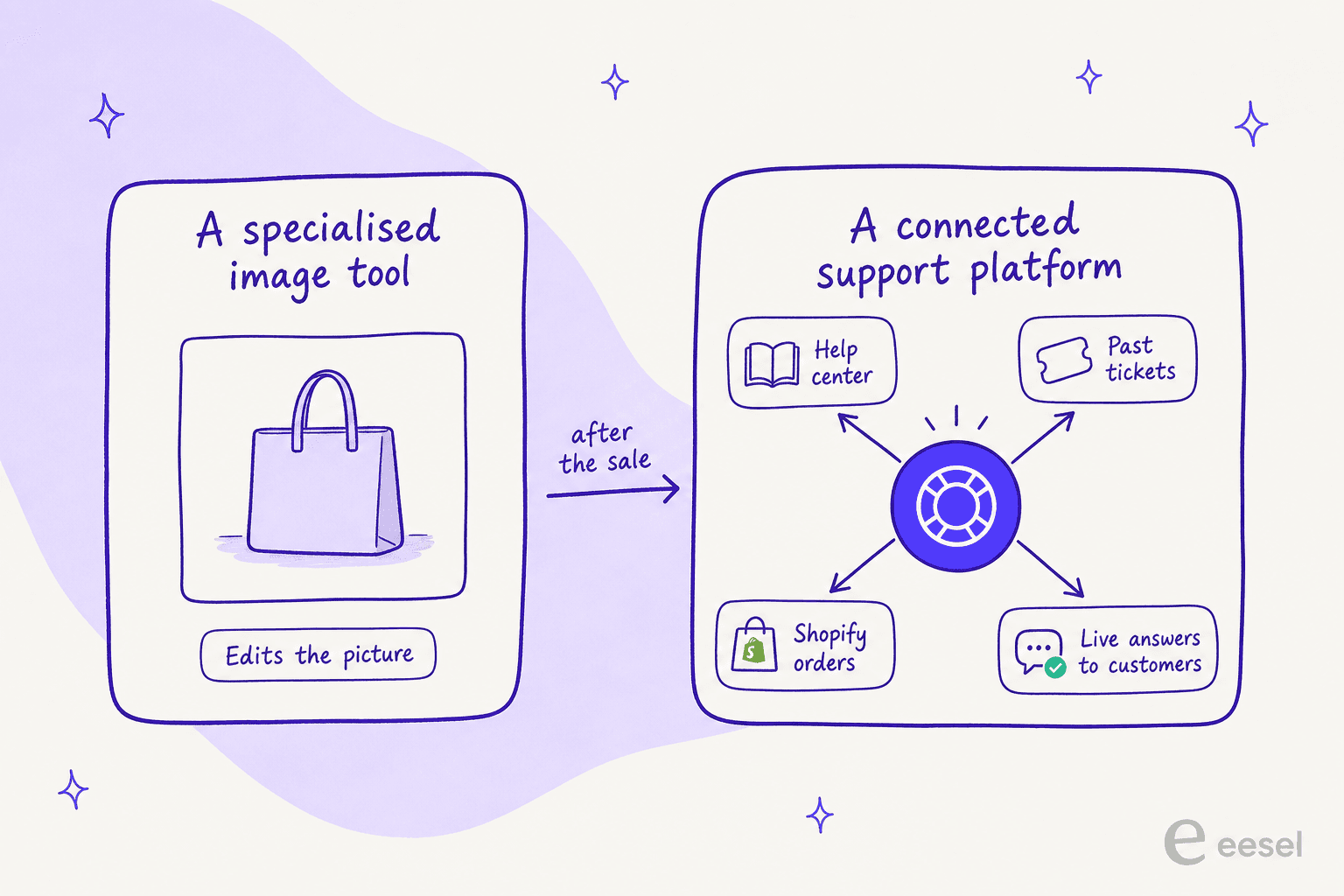
Here's how that approach differs from a specialized tool like PhotoRoom:
-
Get up and running in minutes: eesel AI connects with tools you're already using, like your Zendesk helpdesk or Shopify store, in a few clicks. No developer, no complicated API work. You can set up a working AI agent yourself in minutes.
-
Connect all your knowledge: An image editor works with images. eesel AI works with your company's entire brain, connecting to your help center articles, past support tickets, Google Docs, and Shopify product catalog to give customers and agents instant, accurate answers.
-
Clear and predictable pricing: Unlike a pay-per-image API that can leave you with surprise bills, eesel AI's pricing is a fixed monthly price for a set number of credits (1 credit per ticket or chat, from $299/month for 500 credits). No per-image fees, so you can budget and scale without costs spiraling.

If you're specifically on Shopify, I've rounded up the best AI helpdesk for Shopify and the best Shopify chatbot apps separately, plus a wider list of AI tools for Shopify sellers actually use.
Want an AI for your store? eesel works like a new hire that plugs into Shopify and your helpdesk in a few minutes and already knows your help center, then resolves order, refund, and return questions on its own. Try eesel free, no per-image fees.
Is PhotoRoom pricing worth it?
So, what's the verdict? PhotoRoom is a genuinely powerful tool for anyone who needs great-looking images, especially for e-commerce. The Pro, Max, and Ultra plans offer features that can absolutely save you time and make your products look more polished. If you're price-sensitive, it's still worth lining it up against a few PhotoRoom alternatives and skimming honest PhotoRoom reviews before you lock in an annual plan. If you mostly need raw image generation, tools like Freepik, Recraft AI, and Nano Banana Pro play in the same space.
But the pricing model can be a maze, the new AI-credit and batch meters take some getting used to, and the separate, usage-based cost for the API is a big factor for any business looking to automate.
For businesses that want to scale the entire customer journey, from the moment a customer sees a product to the support they get after buying, a broader platform like eesel AI offers a more connected, predictable, and scalable path forward. It helps you manage the conversations that actually drive your business.
Frequently asked questions
What are the main tiers available for PhotoRoom pricing?
In 2026, PhotoRoom pricing has five tiers: a Free plan, a Pro plan for resellers and solopreneurs, a Max plan for growing brands, a newer Ultra plan for high-volume sellers, and a custom Enterprise plan with API access. Each tier scales up your AI credits and monthly batch-export limits.
How much does PhotoRoom cost per month?
Billed annually, Pro is $7.50/mo, Max is $20.99/mo, and Ultra starts at $82.50/mo. Weekly and monthly billing cost more, so annual is the cheapest way to pay. The Free plan is $0 but adds a watermark.
Can I use the Free plan under PhotoRoom pricing for my e-commerce business?
No. Images exported from the Free plan include a PhotoRoom watermark and aren't licensed for commercial use. For any e-commerce business, you'll need a paid plan like Pro, Max, or Ultra. If you're weighing options, it's worth scanning a few PhotoRoom alternatives first.
How can I save money on PhotoRoom pricing plans?
Choosing annual billing significantly reduces the effective monthly cost versus weekly or monthly payment. Paying annually can cut the monthly equivalent close to half, so it's the move for anyone who'll use PhotoRoom past a single project.
What's the difference between the Max and Ultra plans?
Max gives you 1,500 batch exports a month and access to better AI models. Ultra steps up to 5,000 batch exports a month, the best AI models, advanced AI workflows, and the fastest processing, aimed at sellers managing large catalogs who need to automate at scale.