OpenClaw, previously known as Moltbot or Clawdbot, has gained significant attention. It's an open-source project that has generated considerable discussion, promising a personal AI assistant that lives on your computer and can perform tasks for you. With over 180,000 stars on GitHub, it has a large following.
After the initial setup, a practical question arises: what does it cost to run? The software is free, but that is not the whole story. You have to account for the hardware, the API fees that can accumulate, and the time you'll spend on setup and security.
The 'hard to use, expensive, and unsafe' criticism of OpenClaw is fair - especially for local deployments.

What is OpenClaw AI?
At its core, OpenClaw is a self-hosted, open-source personal AI agent. You run it on your own machine, whether that's a Mac, a Windows PC (with WSL2), or a Linux system. This setup gives you total control over your data since nothing is sent to a third-party server unless you choose to configure it that way.
The appeal of OpenClaw is that it’s an AI that can act, not just chat. It is built to be an agent with access to your system. According to the official documentation, its main abilities are:
- Full system access: It can read and write files on your computer and run commands in your terminal. This is a powerful capability that also introduces security considerations.
- Browser control: It can go online, browse websites, and fill out forms by itself.
- Chat integration: It connects directly to apps like WhatsApp, Telegram, and Slack, letting you interact with it from various platforms.
- Persistent memory: It learns from your conversations, building a personalized understanding of you and your needs over time.
- Proactive "heartbeat": You can set it up to perform tasks on a schedule, like sending a custom morning brief or checking your calendar.
The main concept to grasp is that OpenClaw isn't the "brain." It's the framework that connects to a powerful AI model you choose. You can plug it into models like Anthropic's Claude 4.5, OpenAI's GPT-5, or run local models on your own machine via Ollama. This decision shapes the agent's intelligence and, more importantly, its operational cost.
A breakdown of the complete OpenClaw AI pricing model
While the OpenClaw software itself is free, the actual cost is a combination of three factors: the hardware it runs on, the API calls it makes, and the time required for setup and maintenance.
Hardware costs: A key part of OpenClaw AI pricing
For OpenClaw to be useful, it needs to run 24/7 on a dedicated computer. It is not designed to run on a primary laptop that is frequently shut down. A popular choice in the OpenClaw community is a dedicated Mac Mini, which offers a balance of performance and low power consumption.
Other options include:
- A Raspberry Pi: This is a low-cost way to get started, but its processing power is limited. It's more suitable for tinkering than for demanding tasks.
- An old laptop: If you have one available, your initial hardware cost is $0. The main consideration is that consumer laptops are not designed for continuous, 24/7 operation.
- A Windows gaming handheld: This is another option. A device like the ROG Ally provides a compact, powerful, and dedicated machine with its own screen for easy management.
Your hardware choice largely depends on whether you plan to use cloud-based AI models or run them locally on the device.
API usage costs: The main recurring expense in OpenClaw AI pricing
This is where the ongoing costs are found. If you link OpenClaw to a service like Anthropic or OpenAI, you pay for each interaction. It's a pay-as-you-go system based on "tokens," which are small pieces of text.
I sent ~12 messages and it cost $40. Nothing significant or difficult. It's just highly inefficient 'out of the box.'
To provide a clearer picture, let's look at the pricing for the Claude 4.5 models released in late 2025, a common choice for OpenClaw users.
| Model | Input (per 1M tokens) | Output (per 1M tokens) | Best For |
|---|---|---|---|
| Claude Opus 4.5 | $5.00 | $25.00 | Peak intelligence, complex reasoning |
| Claude Sonnet 4.5 | $3.00 | $15.00 | Balanced performance and cost |
| Claude Haiku 4.5 | $1.00 | $5.00 | Speed-optimized, high-volume tasks |
It is important to note that these costs can fluctuate. Every message you send, every time the "heartbeat" feature runs, and every time it accesses a past conversation, you're using tokens. A single complex task that requires significant reasoning can become expensive quickly. One developer shared an experience of accumulating a bill of $623 in one month from their agent's API usage.
Running local models: A trade-off for your OpenClaw AI pricing
To avoid API bills, you can run Large Language Models (LLMs) on your own hardware with tools like Ollama or LM Studio. This approach means zero recurring API fees.
However, it involves a significant trade-off. You need a powerful computer, such as a high-end gaming PC or a specialized device with a strong GPU and ample VRAM. For instance, the ROG Ally X with 24GB of RAM is promoted as a suitable option for this use case. While you avoid monthly API bills, you face a much larger upfront hardware cost, and the performance may not match that of a top-tier cloud model like Claude Opus 4.5.
The powerful features influencing OpenClaw AI pricing
The reason OpenClaw costs can be high is that its most capable features are also the most token-intensive. You are essentially paying for the agent's autonomy with each API call.
How full system and browser access impacts OpenClaw AI pricing
OpenClaw's ability to read and write files, run shell commands, and control a web browser is what makes it a capable tool. In the project's showcase, you can find examples of users having their agent create invoices, manage calendars, and build a website just by chatting with it.
This is impressive, but it is important to consider the cost. A complex, multi-step task like "build a landing page for my new project" involves a large amount of reasoning from the AI model. Each step, from creating the file structure to writing the code and saving the files, is a series of operations that uses tokens from an expensive model like Claude Opus.
Persistent memory and the "heartbeat" feature in OpenClaw AI pricing
OpenClaw is built to remember your conversations and become more personalized over time. It also has a "heartbeat" feature that lets it proactively message you. One user set up their agent to check on them via Telegram if they hadn't sent a message in a while, a personalized and proactive feature.
The cost implication here is that the agent is always active. Even when you're not directly interacting with it, it's running in the background, checking tasks, and using its memory. This creates a low but constant stream of token usage that adds up over a month.
The ecosystem of skills and its effect on OpenClaw AI pricing
There's a community hub called ClawHub where people share "skills" that let OpenClaw connect to other apps and services, from Spotify and Philips Hue lights to Trello and GitHub.
One of the most impressive demos shows a user asking OpenClaw to build a new skill for Todoist on the fly, right inside a Telegram chat. The agent figured out how to do it, wrote the code, and installed the skill itself. While incredible, every one of those steps, such as understanding the request, searching the web for the Todoist API, writing the code, and testing it, is another set of operations that costs you API tokens.
Additional costs of OpenClaw AI: Security and setup
So far, we've only discussed financial costs. But there are other factors to consider, such as your time and the potential risk to your personal data. This is where the DIY nature of OpenClaw requires careful evaluation.
The security burden of self-hosting
Security is a significant consideration with OpenClaw. Since it has full access to your computer, a compromised agent could present a significant risk. Cybersecurity firms have highlighted these concerns.
Here are some of the specific, documented risks:
- Security researchers discovered over 1,800 exposed OpenClaw instances on the public internet, which leaked API keys, private chat logs, and other sensitive information.
- Some users misconfigure their reverse proxy, accidentally leaving their local agent accessible from the web.
- There's a risk of prompt injection. A malicious instruction hidden in an email or on a website could trick your agent into running harmful commands.
- Malicious "skills" are a genuine threat. Researchers at Cisco found a skill on ClawHub that was designed to silently steal data from a user's machine.
Cybersecurity experts have highlighted these risks. A report from Cisco described the platform's security model as a significant challenge. Researchers at Vectra AI warned that a compromised agent could lead to "credential theft, lateral movement, and ransomware." With OpenClaw, you are 100% responsible for your own security.
Setup and maintenance complexity
OpenClaw is designed for a technical user who is comfortable with the command line. The installation process involves running a curl script, going through an openclaw onboard wizard, and, if you're on Windows, setting up the Windows Subsystem for Linux (WSL2).
This is not a "set it and forget it" application. It's a DIY project that requires you to constantly keep up with updates, patch security vulnerabilities, and monitor its behavior. It represents a time commitment that extends beyond the initial setup.
The complexity and security risks of a self-hosted OpenClaw setup are significant, but the community has developed methods to mitigate them. For those committed to the DIY approach, it's possible to create a more secure and cost-effective local setup without expensive dedicated hardware. The following video provides a detailed guide on how to achieve this using virtualization.
Managed alternatives for business use cases
For businesses that require AI automation with managed security, support, and predictable pricing, alternative solutions exist. These services are often designed for specific business needs and handle the backend infrastructure for you.
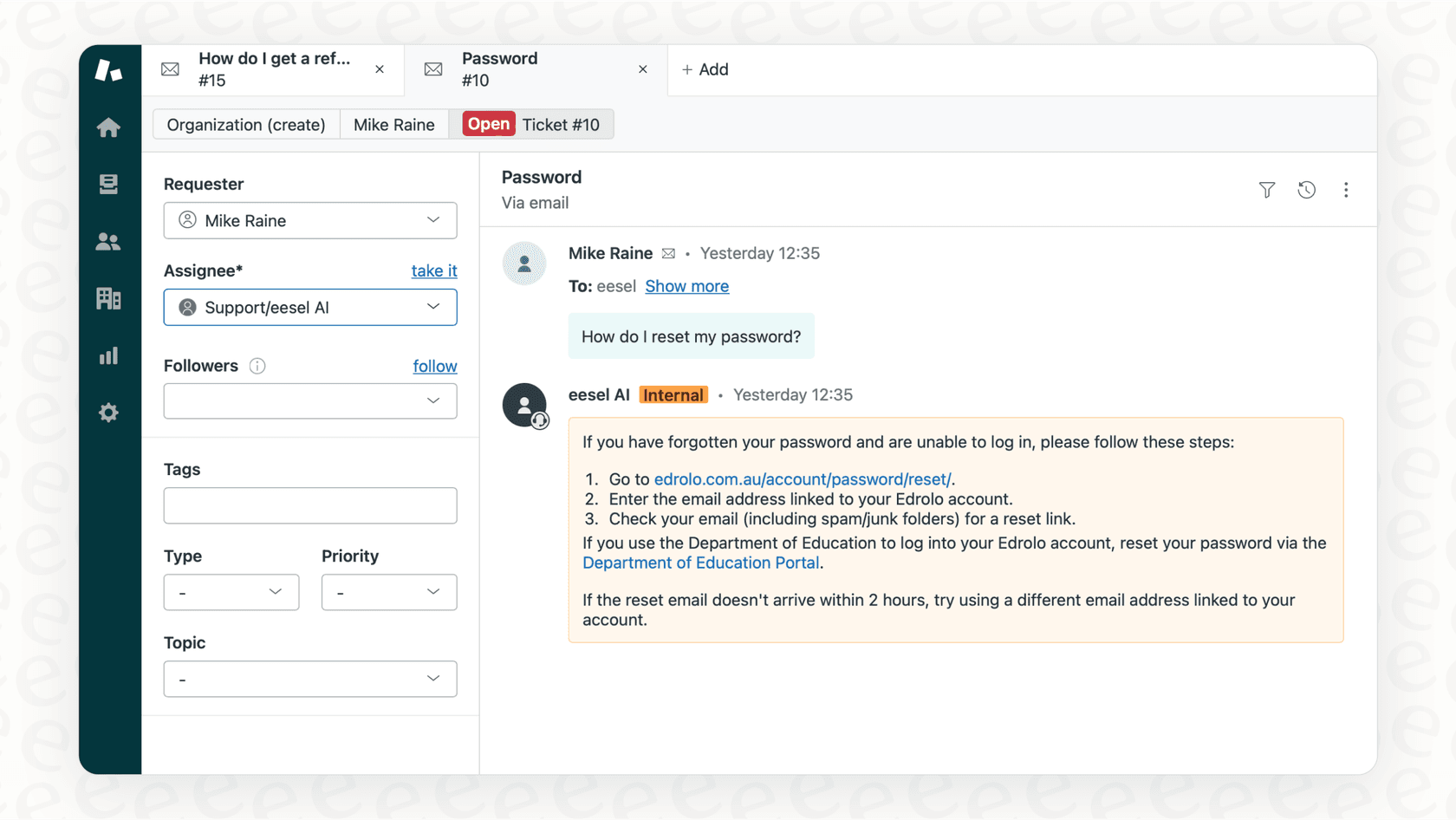
eesel AI is one such alternative. Instead of building and securing your own agent, eesel AI functions as an AI teammate. It is designed for business use cases and handles the infrastructure and security.
Here’s a quick comparison of the two approaches:
| Feature | OpenClaw | eesel AI |
|---|---|---|
| Setup | Command-line installation, API key configuration, and manual security hardening. | Connects to your existing tools like Zendesk or Intercom in minutes. Learns from your data automatically. |
| Security | User is fully responsible. Documented risks of exposed instances and malicious skills. | Managed service with enterprise-grade security, including data encryption and compliance with GDPR. Your data is never used for training. |
| Pricing | Usage-based API costs that can be unpredictable and fluctuate. | Predictable subscription plans with set interaction limits for budgeting. |
| Focus | A general-purpose, personal AI for technical tinkerers and developers. | A specialized AI teammate for business use cases like customer support, sales, and internal help desks. |
Balancing power with practicality
OpenClaw offers an exciting look into the future of personal AI. It provides power, flexibility, and data privacy. But that power comes with a trade-off: it requires technical skill, constant security monitoring, and comes with potentially high and unpredictable costs.
For the right person, like a developer or a dedicated hobbyist who enjoys tinkering, it is a fantastic tool.
However, for a business that needs reliable, secure, and scalable AI, the risks and management burden may be unsuitable. This approach requires careful consideration of security protocols for business environments.
For teams looking for a secure, scalable, and cost-predictable AI solution for business functions like customer service or internal knowledge management, a managed service can be a more direct path. To explore a managed AI solution, you can learn more about eesel AI.