

It feels like new text-to-video AI tools are popping up every other week, and the big rivalry that grabbed headlines in 2025 was between xAI's Grok Imagine and OpenAI's Sora. Both are impressive in their own right, promising to turn a line of text into a video clip. But once you get past the cool demos, their arrival brings up some real questions.
Update, October 2026: OpenAI has discontinued Sora. The web and app experiences closed on April 26, 2026, and the Sora API shut down on September 24, 2026. This comparison is kept as a record of how the two tools stacked up, and the pricing section now covers what Grok Imagine costs today.
This blog post will give you a straightforward comparison of Imagine vs Sora, looking at what they can actually do. More importantly, we're going to explore what this clash of creative AI means for businesses. Because while these tools are fun, they shine a light on the huge gap between generating wild, new content and delivering the kind of reliable, controlled AI that professional teams actually need to get work done.
What is xAI's Grok Imagine?
Grok Imagine is xAI's answer to the AI video craze, and you'll find it built right into the Grok app. Its method is a bit different from the competition. You start by feeding it a text prompt to create an image, and once you have that, you can animate it into a short video.
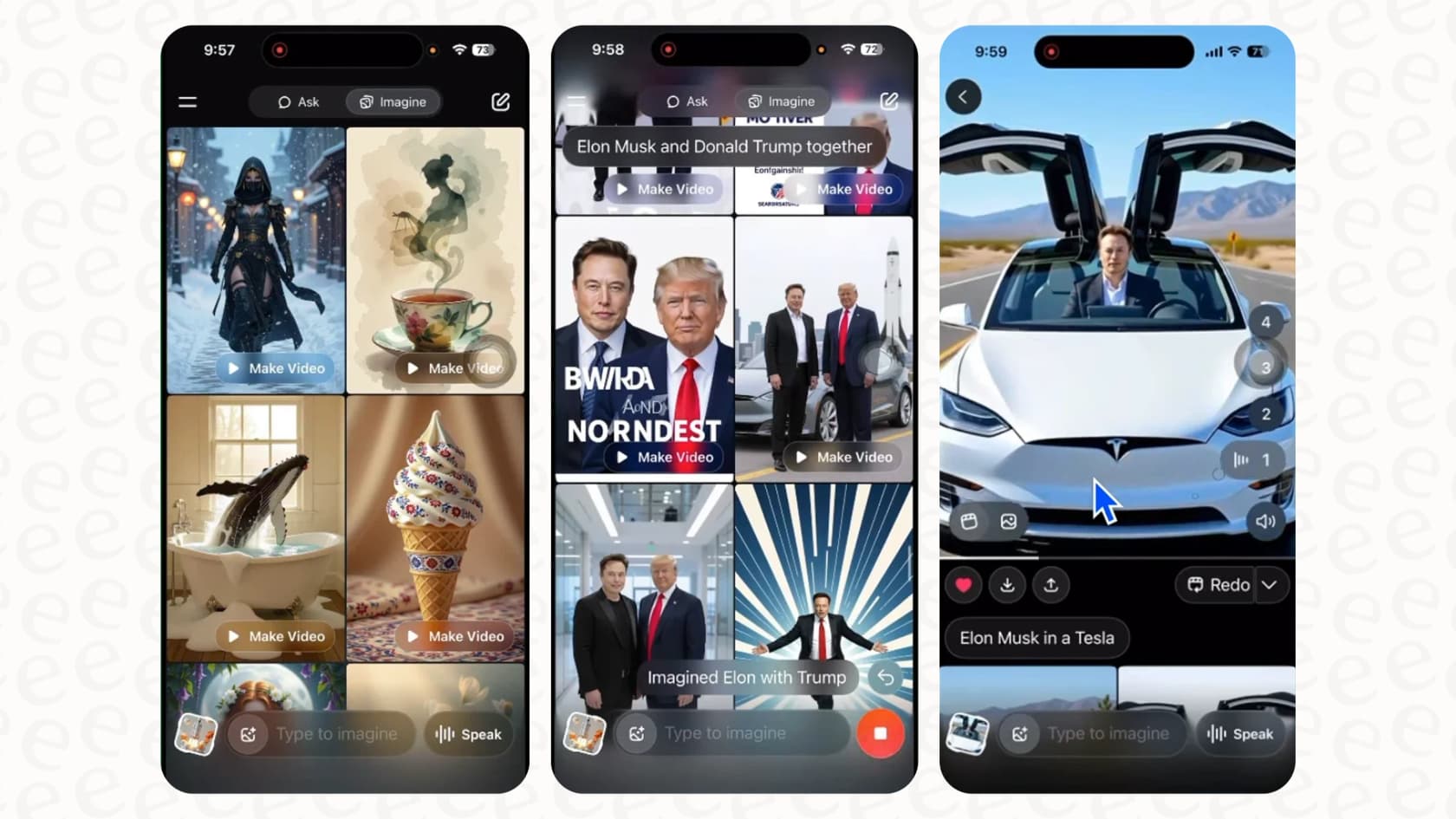
Its big claims to fame are speed and a focus on creating "fun and shareable content." Elon Musk has even pitched it as an "AI Vine," which tells you the goal is quick, viral clips, not cinematic epics. This is driven home by its controversial "Spicy" mode, a feature that allows for less-filtered, sometimes not-safe-for-work content. It's a tool that definitely values free expression and speed over strict corporate guardrails.
What is OpenAI's Sora?
Sora was the heavy-hitter from OpenAI, the same team that brought us ChatGPT. Unlike Imagine, Sora was a pure text-to-video generator. You give it a prompt, and it builds a complex, high-quality video scene from scratch that can be up to a minute long.
Sora's real strength was its grasp of how the physical world works. It can generate scenes with multiple characters, specific movements, and surprisingly accurate details on both the subject and the background. It’s great at creating cinematic, photorealistic videos that stick closely to what you asked for, positioning it as a tool for serious creative work rather than just cranking out memes.
Core differences: Imagine vs Sora
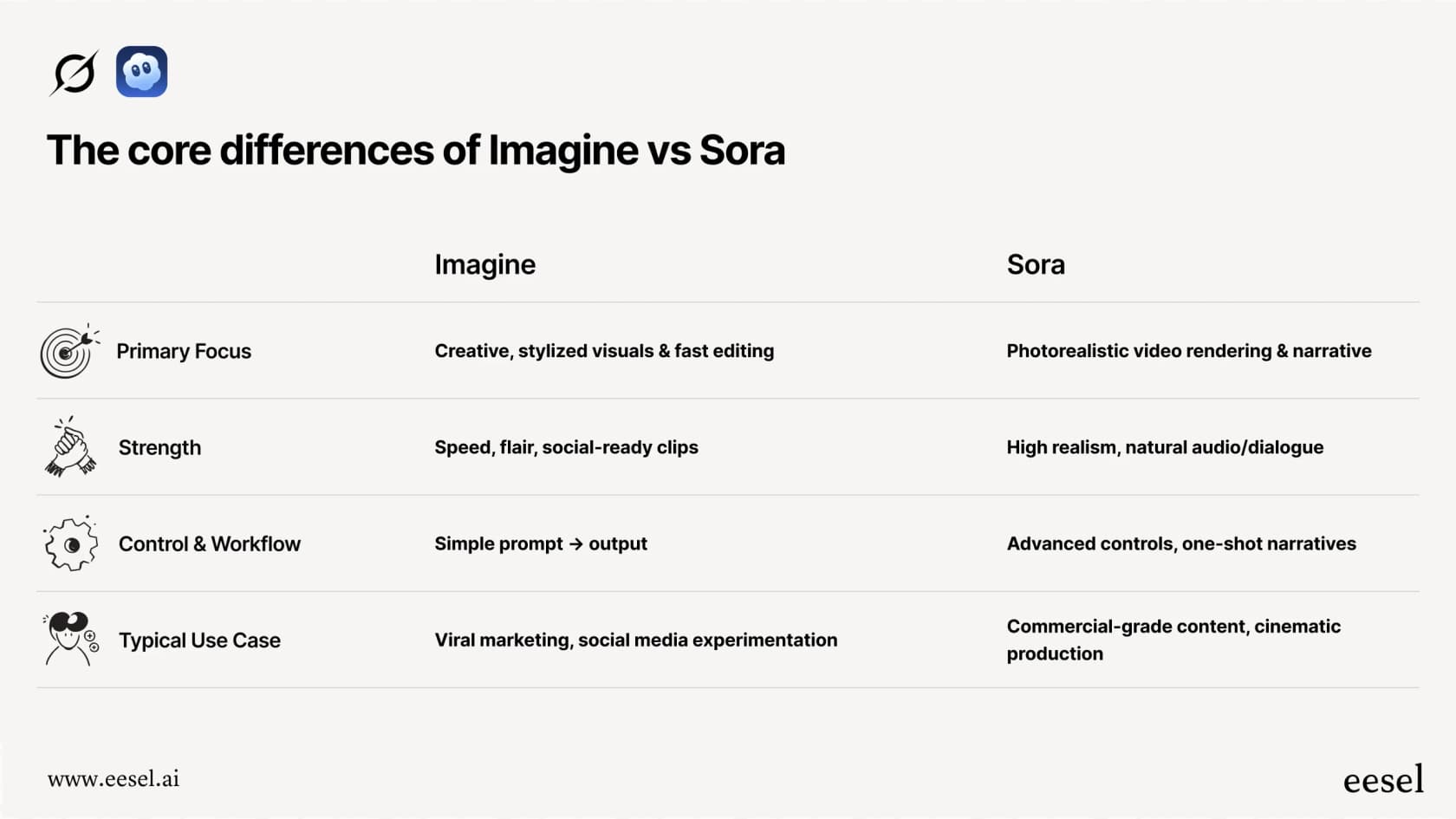
When you put these two tools side-by-side, some clear differences emerge that go way beyond just making videos. It’s about how they make them and who they're really for.
Imagine vs Sora: Quality and realism compared
Pretty much everyone in the tech world agrees: Sora’s videos are just more realistic and coherent. In a test run by Mashable using the prompt "Security camera footage of rabbits jumping on a trampoline at night," Grok Imagine's result was called "mid" and "meh." Sora, on the other hand, produced something that was impressively realistic and nailed the weird vibe of the prompt.
This quality difference isn't just in video. Users on OpenAI's community forums have noted that Sora can render tiny details like skin pores, which is something other models often miss, leaving images with a plasticky look. For any project that needed to look even remotely real, Sora was playing in a different league while it lasted.
Imagine vs Sora: Workflow and capabilities
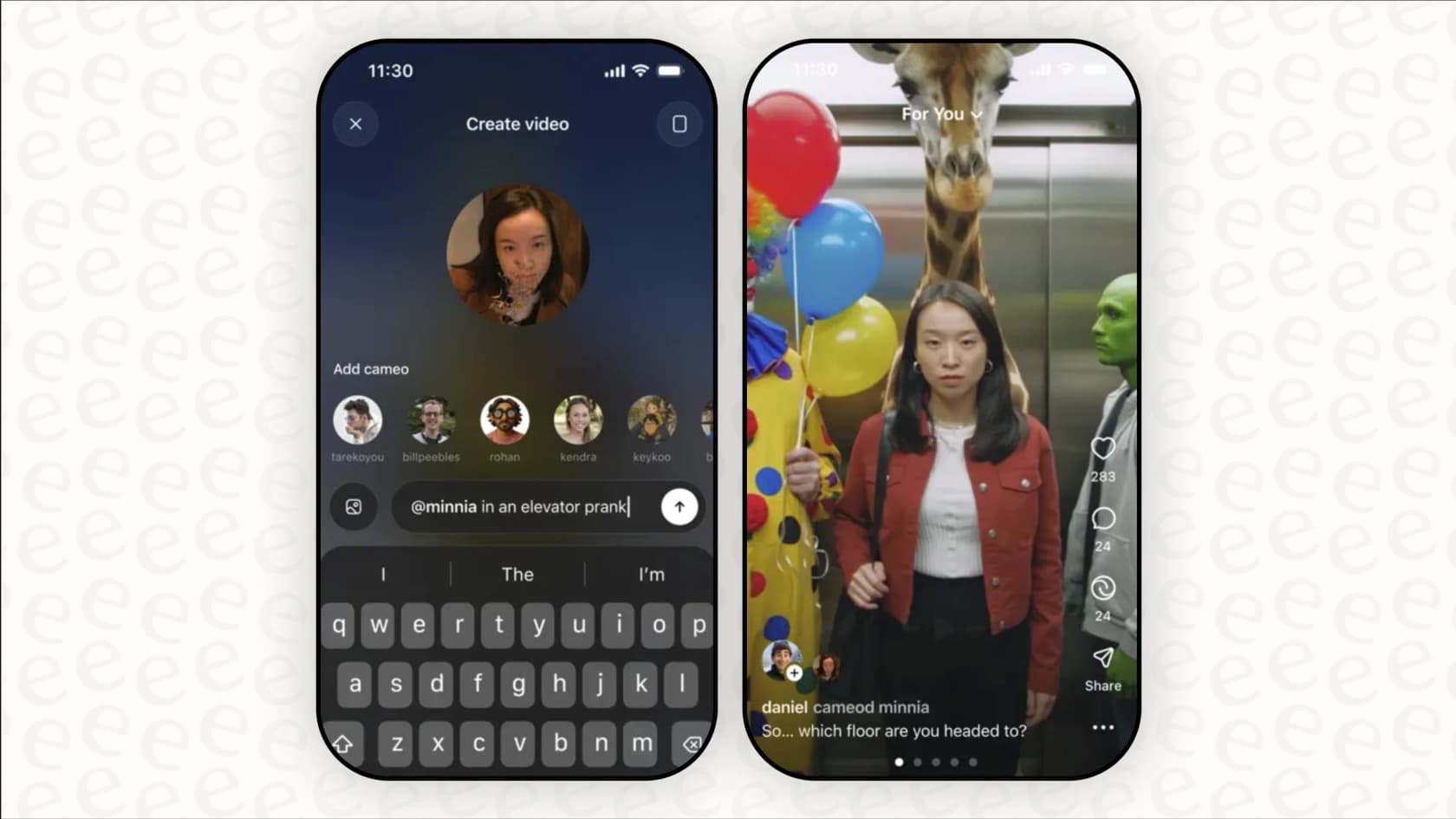
The way you actually make a video in each tool is fundamentally different, and that has a huge effect on the final product. Sora's text-to-video approach lets you build an entire scene from your imagination, describing characters, actions, and settings in detail. Grok Imagine's two-step process (text-to-image, then animate) is more restrictive; you're essentially just bringing one static moment to life.
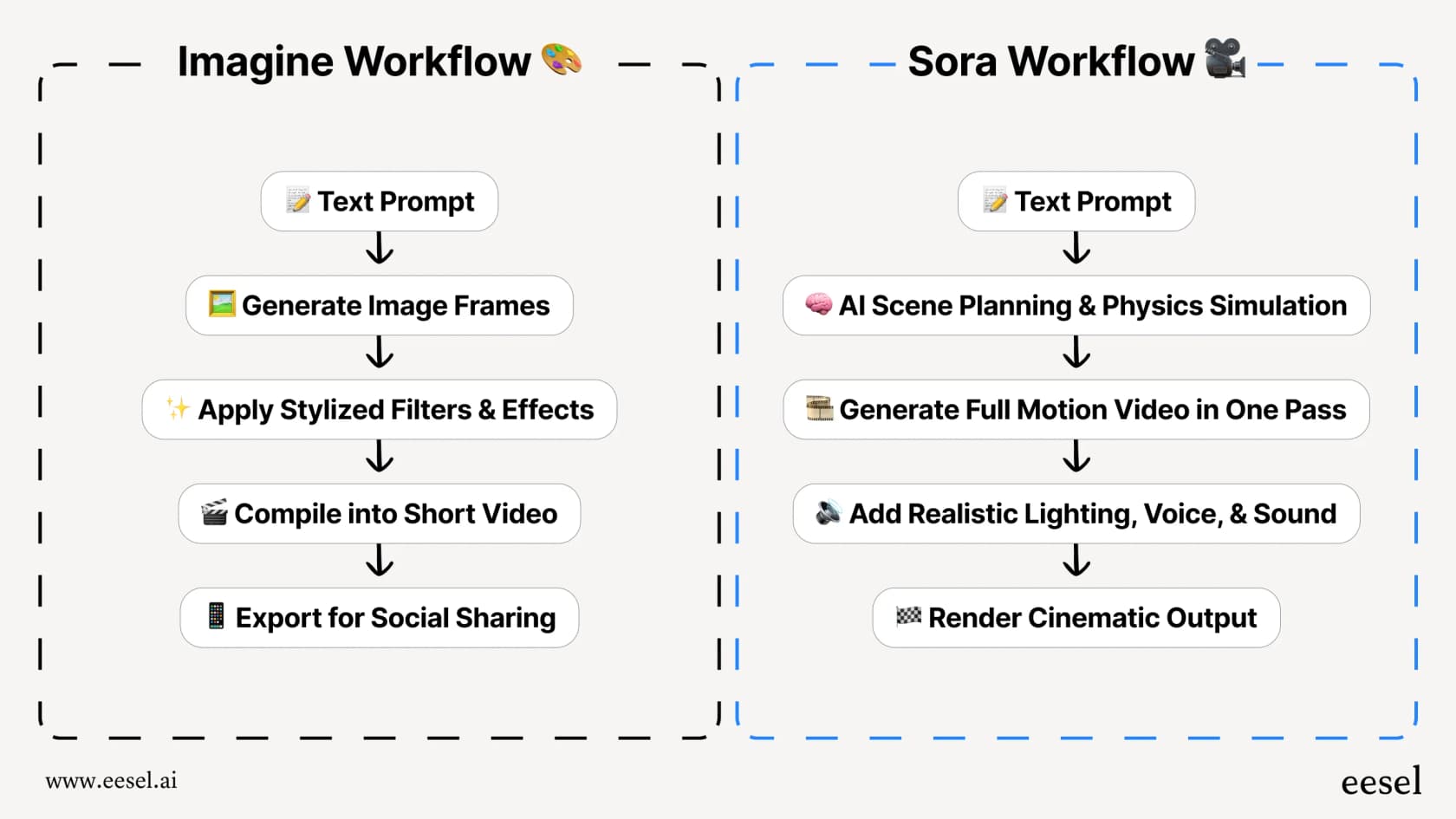
Audio is another point of contrast. Grok Imagine adds sound, but it's often a jumble of rough sound effects and garbled noise that doesn't really fit. The original Sora didn't generate its own audio, so you had to add sound yourself in post-production, though Sora 2 later added synchronized sound. The market is already pushing past this, though. Competitors like Google's Veo 3 are setting a new standard with synchronized dialogue and sound, which puts pressure on both Imagine and Sora to step up their game.
Imagine vs Sora: Speed and accessibility
If there's one area where Grok Imagine gets a clear win, it's speed. It cranks out images and videos much faster than its rivals, which is great if you want to play around with ideas quickly. But you're trading quality and complexity for that speed. It’s the right tool for making a quick-and-dirty meme, but it's not what you'd use for a professional project.
Getting your hands on these tools is also a different story. Grok Imagine is available to subscribers inside the Grok app, so it's fairly easy to access if you're already in that ecosystem. Sora never got past a limited release, and OpenAI shut it down in 2026, so Grok Imagine is the only one of the two you can use today.
The business risk: "Spicy" features vs. brand safety
Grok Imagine's "Spicy" mode is a perfect example of the risks that come with using public-facing generative AI for business. For any company, reputation is everything. Tying your brand to a platform known for generating unfiltered or NSFW content is a PR headache waiting to happen. The "move fast and break things" mantra might be fine for generating buzz, but it's a disaster when customer trust is on the line.
The real problem is the lack of control. When you use a public AI model, you can never be 100% sure what it's going to say or create. This is exactly why businesses need AI tools built for reliability, not rebellion. A spicy video generator might be fun for personal use, but an AI for your customer support team needs to be safe, on-brand, and completely under your command. Solutions like eesel AI are designed specifically for this, giving companies full control over the AI's knowledge base and persona so it always acts as a professional extension of the brand.
Beyond Imagine vs Sora: What businesses actually need from AI
The Imagine vs Sora debate is interesting, but for most businesses, it's a bit of a distraction. Creative AI is designed to be novel and often unpredictable. Practical business AI needs to be the exact opposite: accurate, consistent, and reliable. The two serve completely different purposes.
Tools like Sora and Imagine just don't solve the core problems businesses face. For a business AI to be truly useful, it needs:
-
Specific Knowledge: Business AI can't be trained on the entire internet. It needs to learn from your company’s private, internal knowledge, like help center articles, internal wikis, and past support tickets, to give answers that are actually correct and relevant to your customers.
-
Custom Workflows: It needs to do more than just generate text. A useful business AI has to take action, like tagging a support ticket correctly, looking up an order, or escalating a tricky issue to a human agent.
-
A Fast, Self-Serve Setup: Businesses can't afford to wait around for months while consultants build a custom solution. They need tools they can set up and manage themselves in minutes, not months.
This is where a platform like eesel AI comes in. Instead of a mysterious black box, it lets you unify your knowledge instantly, training the AI on your own documentation from sources like Confluence or Google Docs. It gives you a fully customizable workflow engine, so you can decide exactly which tickets get automated and what the AI is allowed to do. Best of all, you can go live in minutes, because it's a truly self-serve platform that plugs right into your existing helpdesk, whether that's Zendesk or Freshdesk.
Imagine vs Sora: Pricing and availability
Sora no longer has a price, because OpenAI discontinued it (its pricing was always a big question mark). Its web and app experiences closed on April 26, 2026, and the API shut down on September 24, 2026. OpenAI's help page says exported content can be downloaded from the Sora sunset page, and purchased credits can be used for Codex.
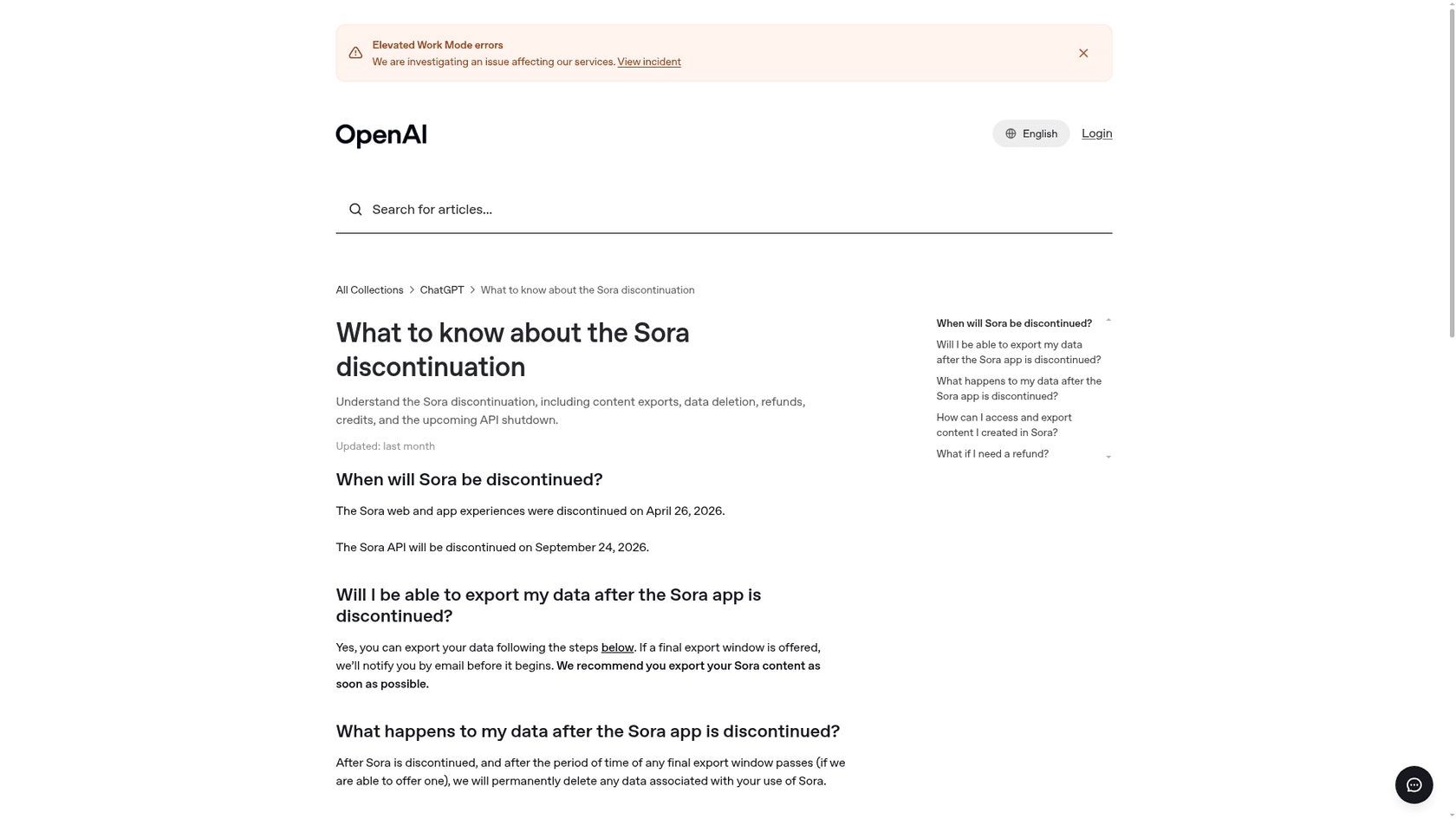
Grok Imagine, on the other hand, now has public API pricing per second of video:
| Model | 480p | 720p | 1080p |
|---|---|---|---|
| grok-imagine-video-1.5 | $0.08/sec | $0.14/sec | $0.25/sec |
| grok-imagine-video | $0.05/sec | $0.07/sec | n/a |
| grok-imagine-video-1.5-lite | $0.02/sec | $0.03/sec | $0.14/sec |
That is a clear price list you can budget against. Platforms built for business like eesel AI work the same way: you pay one fixed monthly price sized to volume, with a free plan of 100 credits and paid plans from $299 a month for 500 credits, where one credit covers one ticket or chat. Every integration and seat is included, so you can budget and scale your AI use without guesswork.
Imagine vs Sora: Choose the right AI for the right job
So, who's the winner in the Imagine vs Sora showdown? It really depends on what you're trying to do. Sora was the champ for high-quality, realistic video projects where creativity is key, but it is gone now. Grok Imagine is the go-to for speed and whipping up casual, viral content where polish isn't the main goal.
The real takeaway here is that you need to pick the right tool for the job. The very things that make an AI great for creative exploration, like unpredictability and being trained on broad public data, become major drawbacks in a business setting. For businesses, the most powerful AI isn't the one that can dream up the wildest video. It's the one that can solve customer problems accurately, safely, and efficiently, over and over again.
Ready to see how a controlled, business-first AI can change your support operations? Explore eesel AI's AI agents and copilots and see how you can automate support, make your team more efficient, and get total control over your AI workflows.
Frequently asked questions
What are the main differences between Imagine vs Sora regarding their core capabilities?
Grok Imagine starts by creating an image then animating it into a short video, prioritizing speed and shareable content. Sora generates complex, high-quality video scenes directly from text prompts, focusing on realism and cinematic detail from scratch.
How do the video quality and realism compare when evaluating Imagine vs Sora?
In the 2025 tests I cite below, Sora produced more realistic and coherent videos with impressive detail than Grok Imagine. Grok Imagine's output is typically considered lower quality and less realistic, as it trades visual fidelity for speed.
Which tool is faster or more accessible in the Imagine vs Sora comparison?
Grok Imagine holds a clear advantage in speed, generating content quickly, and is more readily available to subscribers within the Grok app. Sora, while high quality, was slower to generate and was only ever available in a limited release. OpenAI has since discontinued it.
What are the business risks associated with tools like Grok Imagine vs Sora, particularly concerning features like "Spicy" mode?
Grok Imagine's "Spicy" mode poses significant brand safety risks due to its potential for unfiltered or NSFW content, which can damage a company's reputation. The inherent lack of control in public generative AI makes these tools less suitable for reliable, on-brand business applications.
For a business, how do the practical needs for AI differ from what tools like Imagine vs Sora offer?
Businesses require AI that is accurate, consistent, and reliable, trained on specific internal knowledge, and capable of custom workflows. Tools like Imagine and Sora, designed for novel and often unpredictable creative generation, do not typically meet these core business requirements for practical business AI.
Is there any information available on the pricing and commercial availability of Imagine vs Sora?
Sora no longer has a price, because OpenAI discontinued it (the app on April 26, 2026 and the API on September 24, 2026). Grok Imagine is sold through xAI's API per second of video, from $0.08 per second at 480p up to $0.25 per second at 1080p on its newest video model.