How to scale blog writing without sacrificing quality

Stevia Putri

Katelin Teen
Last edited January 20, 2026
Ever feel like you're stuck on a content hamster wheel? You're publishing as fast as you can, but the demand for more just doesn't stop. The pressure to scale usually leads to one of two things: total burnout or a noticeable drop in quality. It's a classic problem.
Have really freaking good processes and procedures written out. Use ai mainly for bulk content flow and streamline editing with real people (hence good processes and procedures).

But what if scaling wasn't about just writing faster? What if it was about building a smarter, more sustainable system? A well-oiled machine that combines a solid strategy, talented people, and the right tech can turn your content production from a bottleneck into your biggest growth engine. For example, using a dedicated AI platform like the eesel AI blog writer for content creation has been shown to help scale a blog from 700 to 750,000 daily impressions in three months.
Understanding the basics of scaling blog writing
Content scaling is the art of increasing your content output without letting your quality standards slip. It’s not about doubling your workload; it’s about creating efficient, repeatable systems that let you produce more high-quality content in less time.
This matters in today's marketing world for several reasons:
- It builds authority: A bigger, better content library helps you rank for more keywords. The more helpful content you have, the more Google sees you as a go-to expert in your field.
- It drives compounding growth: Think of each blog post as a small asset. On its own, it might not seem like much, but over time, these assets work together, attracting organic traffic and leads long after you hit publish.
- It prepares you for the future of search: The game is changing. With Answer Engine Optimization (AEO) becoming more important for AI-powered search like Google's AI Overviews, having a deep well of high-quality content is a must. Gartner even predicts a 25% drop in search traffic from traditional search by 2026. The best way to stay ahead is to be the source AI engines pull from.
Scaling is about building smart systems, not just working harder. It’s the difference between running a marathon with a plan versus just sprinting until you collapse.
The strategic framework for scaling blog writing
In cooking, "mise en place" means having all your ingredients prepped and organized before you turn on the stove. It makes the actual cooking process smooth and efficient. The same idea applies to content. Getting your strategic framework in order before you start writing is the secret to scaling without chaos.
Develop a content roadmap and calendar
A content roadmap is your high-level game plan. It outlines the major themes, topics, and campaigns you’ll focus on over the next quarter or year. The content calendar is the tactical side of that plan, scheduling exactly which post gets published on what day.
This kind of planning takes the guesswork out of your day-to-day. No more frantic "what should we write about today?" meetings. Instead, you have a clear path that ensures every piece of content aligns with your bigger business goals. Tools like Asana’s editorial calendar template are great for visualizing your pipeline and keeping everyone on the same page.
Standardize your workflow with templates and briefs
Consistency is your best friend when you're scaling. Creating templates for different types of blog posts (like listicles, how-to guides, or reviews) ensures every article has a familiar structure and feel, no matter who writes it.
Even more important is the content brief. A detailed brief is the single source of truth for a writer. According to content pros, a solid brief should always include:
- The target audience and their pain points
- A primary keyword and a few secondary ones
- A clear call-to-action (CTA)
- Suggestions for internal links to other relevant posts
- A link to your brand style guide
A great brief is an investment. It might take 20 minutes to put together, but it can save hours of back-and-forth revisions later. If you're looking for inspiration, you can find good templates from HubSpot or Semrush.
Repurpose existing content to maximize ROI
Scaling doesn't always mean creating something from scratch. You're likely sitting on a goldmine of existing content that can be repurposed to reach new audiences or get a second life. It's one of the smartest ways to get more mileage out of the work you've already done.
Here are a few ideas:
- Take a deep-dive blog post and slice it into a dozen social media posts or a slick LinkedIn carousel.
- Bundle a series of related articles into a comprehensive ebook or downloadable guide.
- Find an older, high-performing post, update it with fresh data and insights from 2026, and republish it for a quick and powerful SEO boost.
Assembling a team for scaling blog writing
Even with the best systems in the world, you still need talented people to execute the plan. Moving beyond a one-person content operation means building a flexible team that can handle the increased volume without missing a beat.
Hiring freelance writers and editors
Finding great writers who understand your brand can be one of the biggest bottlenecks. But when you find them, they're invaluable.
Here are a few tips for hiring freelancers who will help you scale:
- Look for niche experts: Don't just hire a generalist. Find writers who have a proven track record and portfolio in your specific industry. They'll get up to speed much faster.
- Always do a paid test: Before you commit to a long-term relationship, assign a paid test project. It's the best way to see if their writing style, research skills, and reliability match your needs.
- Give them a clear style guide: A style guide is crucial for maintaining a consistent brand voice across multiple writers. It should cover everything from tone and grammar to how you refer to your products and customers.
Collaborating with subject matter experts
For really technical or in-depth topics, a writer can only take you so far. This is where Subject Matter Experts (SMEs) come in. These are the people within your company or industry who have deep, firsthand knowledge. Collaborating with them adds a layer of authority and credibility that's impossible to fake.
You don't need them to write the full article. Instead, you can:
- Interview an SME for 30 minutes and use the transcript as the foundation for a blog post.
- Ask them for a few unique quotes or insights to sprinkle throughout an article to add extra weight.
- Have them review a final draft for technical accuracy before you publish.
Using technology for scaling blog writing
If strategy is the blueprint and your team is the construction crew, then technology is the power tools. The right tech can take all your manual efforts and put them on overdrive, turning a clunky workflow into a streamlined content machine.
The limitations of basic AI tools
General-purpose AI tools like ChatGPT can be useful for tasks like brainstorming blog titles or drafting social media captions. However, when used for long-form content, the output may require significant editing. Common challenges include generating text that can be verbose or wordy, and some models can be repetitive when writing long-form content. Free versions may not have real-time internet access, so information could be outdated. The output is typically a block of text, leaving the user to handle formatting, find images, and create other assets.
Scaling blog writing with an AI content platform
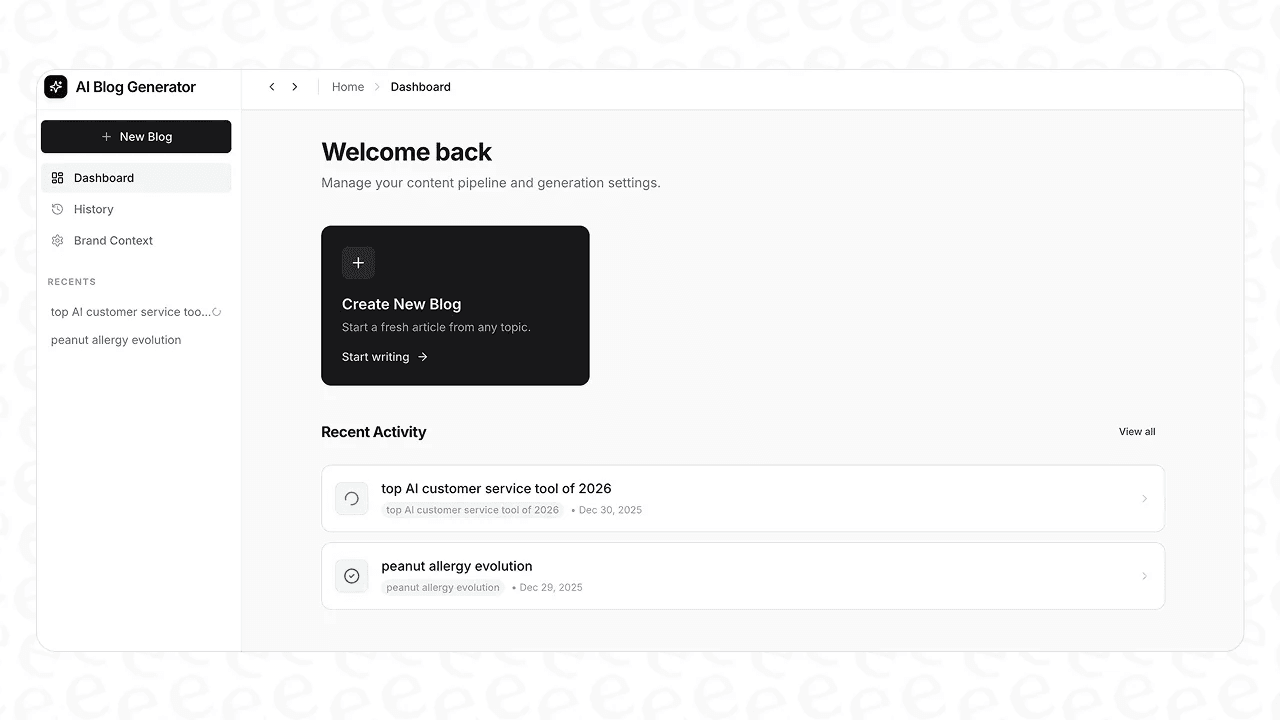
This is where a dedicated AI content platform, such as the eesel AI blog writer, can be applied. These platforms are designed as end-to-end systems for scaling blog content. They can help with the more tedious parts of the process, allowing teams to focus on strategy and quality. For example, such platforms often include features like:
- Context-Aware Research: Instead of generic text, it pulls in relevant, timely data based on the type of content you need. Writing a comparison post? It can find pricing data. A product review? It can grab technical specs.
- Automatic Asset Creation: This is a huge time-saver. It doesn't just give you text; it can generate a fully structured post complete with AI images, infographics, charts, and tables.
- Authentic Social Proof: Some platforms can automatically find and embed relevant Reddit quotes and YouTube videos directly into the post, adding a layer of real-world human perspective that makes your content more trustworthy.
- AEO Optimization: The content is automatically structured in a way that’s optimized for AI Answer Engines like Google AI Overviews. It's built for the future of search.
It’s completely free to try, so you can see the difference for yourself and generate your first post in minutes.
Measuring success and avoiding pitfalls
Scaling your content efforts is exciting, but it's easy to get lost in the flurry of activity. Success isn't just about how many articles you publish; it's about the results those articles generate.
Key metrics to track
To make sure your content engine is actually driving growth, keep a close eye on a few key performance indicators (KPIs):
- Organic traffic: Are more people finding your site through search?
- Keyword rankings: Are you climbing the ranks for your target keywords?
- Time on page: Are people actually reading your content?
- Conversion rates: Is your content driving sign-ups, downloads, or sales?
Tools like Google Analytics and Semrush are essential for tracking these metrics and understanding what's working and what isn't.
Avoiding the quality vs. quantity trap
This is the most common pitfall of content scaling. In the race to publish more, it's tempting to let quality standards slide. Don't do it.
Remember, the goal is to build a library of valuable, evergreen assets, not just a mountain of mediocre filler. A strong editorial review process is non-negotiable, even when you're using AI. Every single post should be reviewed by a human to ensure it's accurate, helpful, and aligns with your brand voice before it goes live.
Your path to a scalable content engine
Scaling your blog writing from a handful of posts to a full-blown content engine isn't about magic or working 80-hour weeks. It’s about building a smart system that combines a solid strategy, a talented team, and powerful technology.
By laying a strong strategic foundation, assembling the right people, and leveraging intelligent automation to handle the heavy lifting, you can finally break through the content bottleneck. You'll be able to produce more high-quality content than ever before, turning your blog into a true, sustainable engine for growth.
Ready to build your content engine? Generate your first blog post for free and see how an AI content platform can help.

Frequently Asked Questions
Share this article

Article by
Stevia Putri
Stevia Putri is a marketing generalist at eesel AI, where she helps turn powerful AI tools into stories that resonate. She’s driven by curiosity, clarity, and the human side of technology.