A complete guide on how to market blog writing services

Kenneth Pangan

Katelin Teen
Last edited January 20, 2026
Expert Verified

You’re a great writer. You can take a dense topic and spin it into a compelling story that gets clicks, shares, and conversions for your clients. But when it comes to marketing your own services, it suddenly feels like a different beast entirely. If that sounds familiar, you’re not alone.
Most writers get stuck relying on inconsistent referrals or endlessly scrolling through low-paying job boards. This leads to that dreaded "feast or famine" cycle that burns out even the most talented creatives.

The good news is that a solid marketing plan can create a predictable pipeline of high-quality leads. After all, marketers who prioritize blogging are 13x more likely to see a positive ROI, and the same principle applies to your writing business. Of course, creating your own content while juggling client deadlines is tough. That's where modern tools like the eesel AI blog writer can help, letting you scale your own marketing without sacrificing your nights and weekends.
Understanding the basics of how to market blog writing services
Marketing your blog writing services is more than finding another gig on Upwork. It is about strategically positioning yourself as an expert to attract the right clients: the ones who see the value in what you do and are happy to pay for it.
There's a huge gap between actively building your brand and passively applying for jobs. Job boards can be a race to the bottom, where you're competing with hundreds of others on price. Real marketing is about building a system that brings clients to you.
A good marketing strategy has three main parts. First, you need to build a professional presence through your website and portfolio. Second, you have to proactively connect with potential clients through networking and outreach. Finally, the long game is creating an inbound lead system with SEO and content marketing, so your ideal clients find you right when they need you. The following infographic provides a high-level overview of this three-pronged approach.
This guide will walk you through all three, helping you build a sustainable writing business where you’re the one in control.
Step 1: Build a strong foundation
Before you start telling everyone about your services, you need a professional online home base. This is the first place potential clients will look you up, and a strong first impression is key to building the trust you need to land a contract.
Create a professional website that converts
Think of your website as your digital storefront, always open for business. It’s not just an online resume; it's a lead-generation machine that works for you while you sleep. A professional, easy-to-navigate site immediately shows that you’re a serious business owner, not just a hobbyist.
Make sure your site includes these key pages:
- Homepage: Get straight to the point. Have a clear headline that says who you help and what you do, like "B2B Blog Writing Services for SaaS Companies."
- Services page: Don't be vague. Detail what you offer (e.g., blog posts, case studies, ebooks) and be specific about what each package includes.
- About page: This is your chance to connect with people. Tell your story, highlight your expertise, and let potential clients see the person behind the words.
- Contact page: Make it incredibly easy for someone to get in touch. A simple form and a clear email address are all you need.
Build a strong portfolio
A killer portfolio is non-negotiable. It’s the most effective way to provide hard proof that you can deliver.
Here’s what to include in yours:
- Showcase 3-5 of your absolute best pieces that are relevant to the clients you want to attract.
- If you're just starting and don't have client work, no problem. Write a few high-quality samples in your target niche.
- For each piece, add a short description of the project, the client's goal, and the outcome, if possible.
Start your own blog to showcase expertise
Want to prove you're an expert blogger? Well, blog. It's the ultimate "show, don't tell" marketing move. A blog on your own website is the best way to demonstrate your writing style, your thought process, and your deep knowledge of your niche.
Plus, it's a huge win for your business. Websites with active blogs get 434% more indexed pages and 97% more inbound links. This helps your ideal clients find you through a simple Google search, flipping the script so you're not always the one doing the chasing.
So, what should you write about? Simple: answer the questions your ideal clients are asking. If you want to write for tech startups, create content about SaaS marketing strategies. If you're targeting e-commerce brands, write about building a content-driven sales funnel.
Step 2: Find your first clients
With your website and portfolio ready, it’s time to get proactive. These strategies are all about getting your first few high-quality clients in the door to build momentum and generate some cash flow.
Use professional networks like LinkedIn
LinkedIn is so much more than a place to post your resume. Think of your profile as a landing page.
Here’s how to make it work for you:
- Optimize your headline: You have 220 characters, so use them wisely. Ditch the generic "I help X do Y" formula and be specific. Try something like, "Freelance B2B SaaS Writer | Turning Complex Tech into Compelling Blog Content."
- Focus on engagement: In the beginning, don't stress about creating viral posts. The fastest way to get on people's radar is to engage with their content. Leave thoughtful, insightful comments on posts from potential clients and industry leaders.
- Connect strategically: Stop sending connection requests to other freelance writers. Instead, connect with the people you want to work for, like content managers, marketing directors, and founders in your target niche.
Find clients on modern platforms
Platforms like Upwork and Fiverr can be competitive, which can sometimes lead to a focus on price. To find opportunities with potentially less competition, consider exploring some of the more modern, curated platforms.
- Contra: This is a commission-free platform with a $25/hour minimum bid, which immediately filters out low-ball offers. It’s a great fit for writers who already have a portfolio to show off.
- Facebook Groups: Look for niche industry groups. A community like the "Cult of Copy Job Board" can be a goldmine for high-quality leads without a platform taking a 20% cut.
- Industry Forums: Don't overlook old-school forums. Places like BlackHatWorld or other niche communities can connect you with long-term clients who aren't hanging out on the major freelance sites.
Use smart cold outreach
Cold emailing still works, but only if you do it right. Blasting out hundreds of generic templates is a waste of your time. A targeted, personalized approach is far more effective.
The trick is to warm up your leads first. After you've engaged with a prospect's content on LinkedIn for a week or two, your name will look familiar when it lands in their inbox. It’s no longer a truly cold email; it’s more of a warm introduction.
Don't feel like you have to send 50 emails a day. Consistency is what pays off when you land that one great contract.
Step 3: Scale your marketing with content SEO
Active outreach is great for getting started, but it's not a scalable long-term plan. You can’t be pitching and writing full-time forever. The ultimate goal is to build an inbound marketing engine where a steady stream of high-quality clients comes directly to you. This is where content and SEO come in.
The scaling challenge for writers
Inbound marketing is about shifting from being a "hunter" to a "farmer." Instead of chasing down every lead, you plant seeds by creating valuable content that attracts clients organically and positions you as the go-to expert in your field.
But here’s the catch: as a solo writer, who has the time? Producing enough high-quality content to rank on Google is incredibly time-consuming. The average blog post takes around 4 hours to write, and that’s time you probably don’t have when you’re swamped with client work. Your own marketing is always the first thing to get pushed aside.
This is where you need to use technology to work smarter, not harder.
How the eesel AI blog writer can help
The content creation bottleneck is a real problem for freelance writers. The eesel AI blog writer is designed to help with this issue. It is a tool that produces a complete, publish-ready, and SEO-optimized blog post from a single keyword.
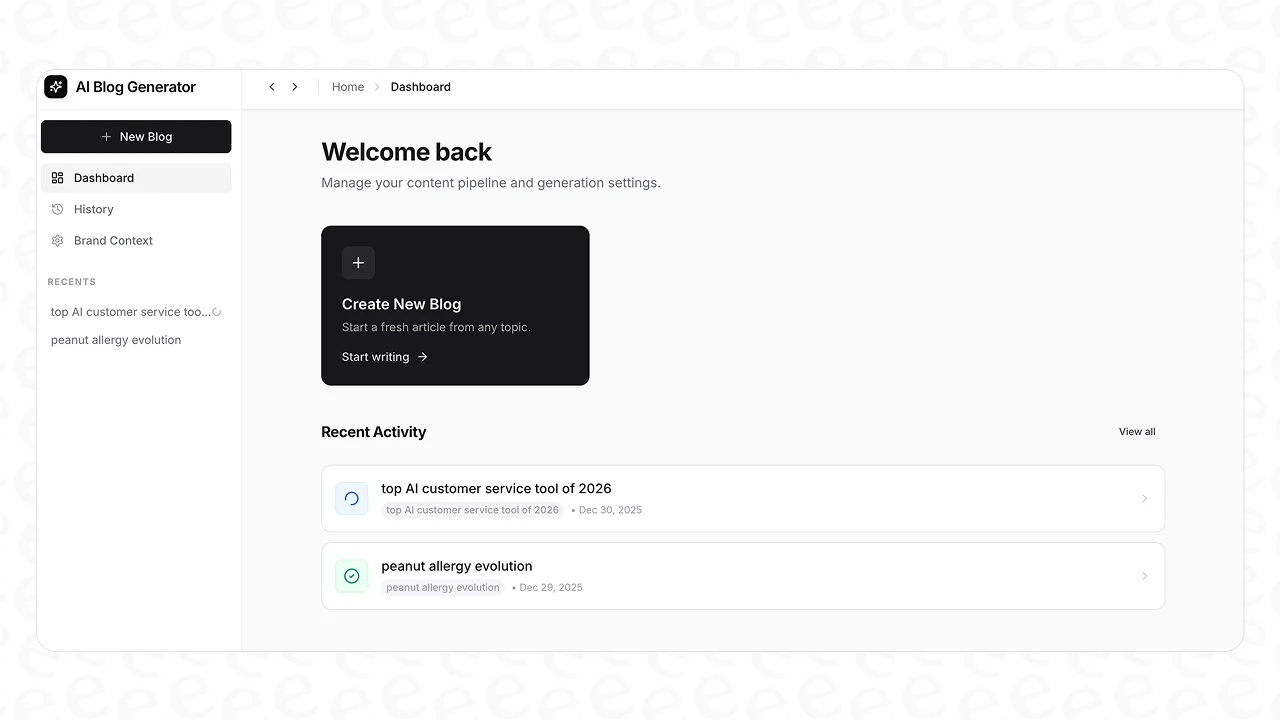
We know it works because we used this exact tool to grow our own blog from 700 to over 750,000 daily impressions in just three months. It’s a powerhouse for driving organic traffic, and it can do the same for your writing business.
Here are a few features that make it perfect for marketing your services:
- Context-aware research: It goes deeper than surface-level AI writing. If you ask it to write a product comparison, it automatically pulls in data like pricing and key features, making you look like a deeply researched expert without the hours of work.
- Automatic asset generation: The tool automatically creates and embeds AI-generated images, infographics, and data tables. This makes your content more engaging and professional, helping you stand out.
- Authentic social proof: It finds real, relevant quotes from discussions on Reddit and embeds related YouTube videos, adding a layer of human nuance and credibility that standard AI tools can't match.
- Natural brand integration: Just provide your website URL, and the AI learns about your brand and services. It can then weave in natural mentions of what you offer, turning every blog post into a soft-sell asset for your business.
Seeing these strategies in action can provide a clearer picture. The following video breaks down how to create blog posts that not only showcase your expertise but also actively generate leads for your business.
A video explaining how to market blog writing services by creating blog posts that generate leads for your business.
Stop hunting for clients and start attracting them
Marketing your blog writing services doesn’t have to be a constant struggle. The path to a sustainable business is a three-step process: build a strong foundation with a professional website and portfolio, use active outreach like LinkedIn and smart emails to gain early traction, and then scale your efforts with a powerful content SEO strategy.
The real key is shifting your mindset from a gig-to-gig freelancer to a long-term business owner. Your marketing isn't an afterthought; it's a core function that deserves your attention.
The best way to market your writing is to prove your expertise with high-quality content. If you're ready to build an inbound marketing engine that brings clients to you without sacrificing all your time, generate your first blog for free with the eesel AI blog writer and see what a publish-ready article looks like in minutes.
Frequently Asked Questions

Share this post
Article by
Kenneth Pangan
Writer and marketer for over ten years, Kenneth Pangan splits his time between history, politics, and art with plenty of interruptions from his dogs demanding attention.