7 best AI blog writer tools tested for 2026

Stevia Putri
Written by

Stevia Putri

Reviewed by

Katelin Teen

Last edited January 16, 2026

Expert Verified

7 best AI blog writer tools tested for 2026

The market is filled with AI writing tools, each promising to improve content strategy. However, the quality of AI-generated content can vary significantly, with some tools producing generic text that requires heavy editing. To identify the tools that produce high-quality, SEO-optimized articles, I tested seven of the most popular options available. This review shares my findings.

What is an AI blog writer?

Previously, many AI writers functioned like advanced autocomplete tools, generating text that often lacked full coherence. While interesting, these early versions were not robust enough for business applications.

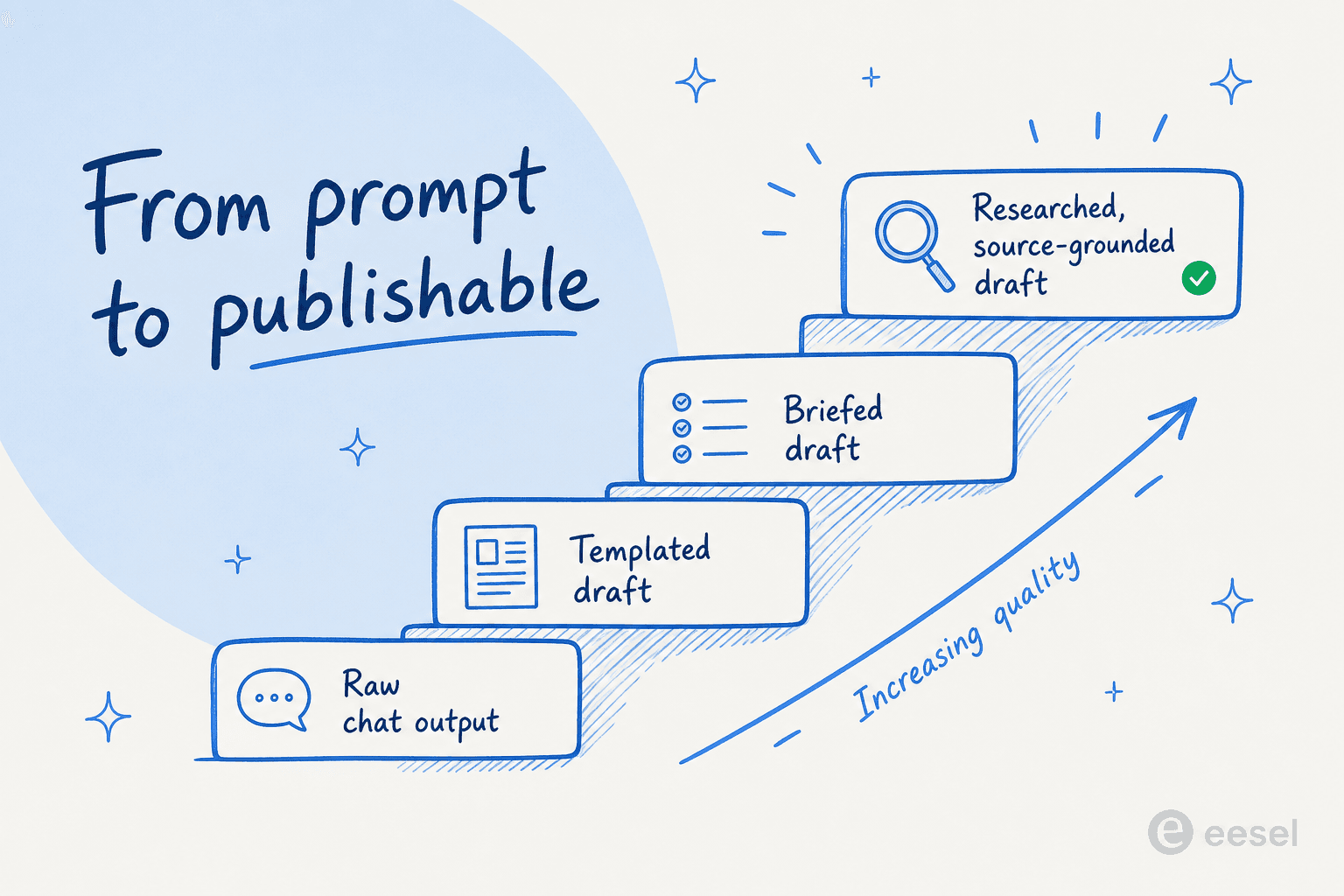
Today’s AI blog writer is significantly more advanced. These tools are designed to act more like a content strategist than a simple text generator. They start by figuring out the search intent behind your keyword. Then, they do the research, structure the article for SEO, and generate a first draft that’s pretty much ready to go.

An infographic showing the evolution from basic text generators to the modern AI blog writer that handles SEO, research, and asset creation.

The goal isn't just about writing anymore. It's about creating complete, optimized articles designed to rank on search engines and get cited in AI answer engines like Google's AI Overviews. This means the best tools don't just stop at text. They also generate assets like custom images, data tables, and even pull in social proof from places like Reddit to make the content more credible.

Reddit
This is what I do. I outline, have it do a first draft, edit it for a good period, and then add the “me” to it.

How we evaluated the best AI blog writer tools

To keep things fair, I didn't just skim through feature lists. I used each tool to generate actual content and judged them on a few key things to see how they performed in a real-world workflow.

An infographic detailing the five criteria used to evaluate the best AI blog writer tools: content quality, SEO features, asset generation, ease of use, and value for money.

  • Content quality: This was the big one. I checked for readability, factual accuracy, and whether the tone felt natural. Did it sound like a machine listing facts, or did it have a genuine flow?

  • SEO & AEO features: A blog post that doesn't rank is basically a diary entry. I looked at how well the tools used keywords, created a logical heading structure, and optimized for Answer Engine Optimization (AEO). AEO is super important for showing up in Google's AI Overviews and other answer-driven search results.

  • Asset generation: A great blog post is more than just a wall of text. I gave extra points to tools that could create visuals like AI-generated images, data tables, infographics, and embed relevant media like YouTube videos.

  • Ease of use & workflow: How many clicks does it take to get from a keyword to a finished article? I looked at how intuitive the process was and how much cleanup was needed after the first draft.

  • Value for money: And of course, I looked at the price. Is the cost justified by the quality, features, and completeness of the final article?

Comparison of the top AI blog writer tools

For those who just want the highlights, here's a quick rundown of the tools I tested.

ToolBest ForStandout FeatureStarting Price (Billed Annually)
eesel AIGenerating complete, publish-ready blog posts in one clickContext-aware research and automatic asset generationCredit-based ($99 for 50 blogs)
JasperMarketing teams needing an AI content automation platformBrand voice controls and campaign-focused workflows$59/month per seat (Pro)
RightBloggerSolo bloggers focused on SEO and a wide range of tools90+ specialized AI tools and autoblogging features$15/month (Pro)
Copy.aiGTM teams automating sales and marketing workflowsAI-powered workflows and integrations for Go-To-Market tasks$24/month (Chat)
HubSpot AI blog writerBusinesses looking for a powerful, integrated content platformSeamless integration with HubSpot's market-leading CRM ecosystemFree tools; Content Hub Pro from $450/month
GravityWriteContent creators needing a large variety of writing toolsOver 250+ tools including a 1-click WordPress publisher$8/month (Plus)
StoryChiefContent teams managing a full editorial workflowAI integrated within a content collaboration and publishing platform$81/month per seat (Team Editorial)

The 7 best AI blog writer tools of 2026

Alright, let's get into the details. Here’s a full breakdown of each tool, what it does best, and where it could do better.

1. eesel AI

A view of the dashboard for the eesel AI blog writer, demonstrating its one-click article generation feature.

The eesel AI blog writer is built to do one thing well: turn a single keyword into a complete, SEO-optimized blog post that’s ready to publish. It's less of a general writing assistant and more of a specialized content machine. We use this tool to grow our own blog, and it took us from 700 to over 750,000 daily impressions in three months.

  • Pros: Its biggest strength is the "one-click" workflow. You give it a keyword, and it returns a fully formed article with AI images, relevant YouTube videos, and even real Reddit quotes for social proof. This saves a ton of time on finding and creating assets.

  • Cons: It's specialized for long-form blog content. If you need an AI to write tweets or ad copy, this isn't the tool for that purpose.

  • Pricing: It’s free to try. After that, you can buy credits as you need them, starting at $99 for 50 blog posts.

2. Jasper

A screenshot of the homepage for Jasper, a popular AI blog writer and content automation platform.

Jasper is one of the biggest names in AI writing. It's an AI Content Automation platform built for marketers. It’s especially good at keeping a consistent brand voice across all your content, from blog posts to social media, thanks to its "Jasper IQ" feature that learns your brand style.

  • Pros: Jasper's versatility is a huge plus. With over 100 different templates and apps, it can handle almost any marketing writing task. It’s also set up well for team collaboration.

  • Cons: Jasper primarily generates the text draft, requiring users to source and integrate multimedia assets like images and videos separately to complete the post.

  • Pricing: The Pro plan starts at $59 per seat per month when billed annually.

3. RightBlogger

A screenshot of the homepage for RightBlogger, an AI blog writer toolkit with over 90 specialized tools.

RightBlogger is a toolkit with over 90 AI tools built by bloggers, for bloggers. It's not just one big generator; it's a suite of specialized tools for tasks like writing an article, doing keyword research, or even turning a YouTube video into a blog post.

  • Pros: The sheer number of tools you get is impressive, especially for the price. It has a full SEO suite built-in, and its "Autoblogging" feature can automatically schedule and publish posts to WordPress, which is a nice perk.

  • Cons: The workflow can feel disconnected, as users may need to navigate between multiple tools within the platform to assemble a complete article.

  • Pricing: The Pro plan is very affordable, starting at just $15 per month for unlimited words when billed annually.

4. Copy.ai

A screenshot of the homepage for Copy.ai, an AI blog writer and Go-To-Market automation platform.

Copy.ai has shifted its focus to become a Go-To-Market (GTM) AI Platform for sales and marketing teams. It's built to automate complex processes like researching prospects, enriching lead data, and crafting personalized outreach emails at scale.

  • Pros: If you're a sales or marketing team looking to automate your GTM motion, Copy.ai is incredibly powerful. Its workflow builder can connect different tasks to run complex jobs on autopilot.

  • Cons: While Copy.ai can generate blog posts, its core focus is on GTM automation. The blog content may serve better as a starting point, potentially requiring more work to add advanced SEO structures and media compared to specialized blog writing tools.

  • Pricing: There's a free plan to get started. The paid Chat plan starts at $24 per month when billed annually, but the more powerful workflow features are in the higher-priced plans.

5. HubSpot AI blog writer

A screenshot of the homepage for the HubSpot AI blog writer, part of its AI-powered customer platform.

HubSpot's AI features, which they call "Breeze," are woven directly into its AI-powered customer platform. The AI blog writer is part of their Content Hub, letting you generate posts, remix existing content, and manage your entire content calendar without leaving the HubSpot ecosystem.

  • Pros: The seamless integration is a standout feature. As a mature and reliable platform that powers thousands of companies, HubSpot makes it easy to create content and immediately tie it to your marketing campaigns and CRM data, which is a huge time-saver.

  • Cons: HubSpot offers tiered plans to match different team sizes and growth stages, making it a powerful choice for businesses that want a long-term, scalable ecosystem.

  • Pricing: You can access basic AI tools for free. The full suite is in the Content Hub Professional plan, starting at $450 per month when billed annually.

6. GravityWrite

A screenshot of the homepage for GravityWrite, an AI blog writer suite with over 250 content creation tools.

GravityWrite is another all-in-one AI content suite, offering over 250 specialized tools. It's not just for blogs; it can help with YouTube scripts, ad copy, social media posts, and can even generate an entire AI-powered website for WordPress.

  • Pros: Its main strengths are its versatility and low price, making it a fantastic option for creators who need to produce a wide variety of content. Its AI blog writer can generate long articles and even has a one-click publish-to-WordPress feature.

  • Cons: Due to the wide variety of tools, the output can sometimes be general and may require more editing to align with a specific brand voice.

  • Pricing: A free plan is available. The Plus plan is a steal, starting at just $8 per month when billed annually.

7. StoryChief

A screenshot of the homepage for StoryChief, an all-in-one AI blog writer and content marketing platform for teams.

StoryChief is an all-in-one content marketing platform that builds its AI writing tools into a larger system for content operations. It’s designed for teams to plan content on a calendar, collaborate on drafts, run them through an approval process, and publish, all from one place.

  • Pros: For content teams and agencies that need structure and collaboration, StoryChief is excellent. It streamlines the entire editorial workflow. The AI writer is a solid part of this system.

  • Cons: The platform's comprehensive feature set and pricing are geared toward teams, which may be more than what a solo blogger or small business requires.

  • Pricing: The Team Editorial plan, which you'll need for the SEO and publishing features, starts at $81 per seat per month when billed annually.

Beyond the first draft: Tips for using any AI blog writer

Getting a first draft from an AI is a great start, but it's not the finish line. If you want to create content that genuinely connects with people and ranks well, you still need a human in the loop.

An infographic with three tips for improving content from an AI blog writer: inject expertise, fact-check the output, and optimize for answers.

Inject your personal expertise

An AI can scrape the internet for facts, but it can't share your personal experiences. This is your secret weapon. Add your own stories, case studies, or unique opinions to the draft. This is what makes your content valuable and sets it apart from the hundreds of other AI-generated articles on the same topic.

Fact-check the output

AI models are getting smarter, but they still make things up sometimes (a phenomenon called "hallucination"). They might cite incorrect stats, misattribute quotes, or present old information as current. Always take a few minutes to double-check any facts, figures, or key claims before you hit publish. Your credibility depends on it.

Optimize for answers, not just keywords

Modern SEO is less about stuffing keywords and more about directly answering your audience's questions. Use your tool to create a solid foundation, then go back through and refine it to clearly and concisely answer the main questions someone searching for your topic would have. This is key for AEO (Answer Engine Optimization) and is your best shot at getting featured in AI-powered search results. Tools like the eesel AI blog writer are designed for this from the ground up, structuring content to provide clear, citable answers.

Watching a hands-on review can provide a different perspective on how these tools perform in real-time. The following video offers a deep dive into various AI writing tools, giving you a visual walkthrough of their features and content quality.

This video offers a deep dive into various AI writing tools, giving you a visual walkthrough of their features and content quality.

Which AI blog writer is right for you?

After testing these tools, it is clear that the best option depends on your specific needs.

For GTM teams that need to automate complex sales and marketing plays, Copy.ai is a powerhouse. For larger content teams that need a structured editorial workflow, StoryChief is an excellent choice. If you're a solo blogger on a tight budget, the sheer volume of tools you get with RightBlogger and GravityWrite is hard to beat.

For users whose primary goal is to generate complete, media-rich, and SEO-optimized blog posts with minimal manual work, a specialized tool can be a highly effective solution.

Scaling your content production with an AI blog writer

The right AI tool does more than just help you write faster; it helps you create better, more comprehensive content. It can take over the heavy lifting of research, structuring, writing, and asset creation, freeing you up to focus on strategy and adding your unique human insights.

If you're ready to see what a purpose-built tool can do, give the eesel AI blog writer a try. You can generate your first full article for free and see the difference for yourself.

Frequently asked questions

For beginners, tools like RightBlogger or GravityWrite are great options. They offer a wide range of features at a very low price, letting you experiment with different content types without a big investment. Their interfaces are generally straightforward, making it easy to get started.

Yes, absolutely. Modern tools like the eesel AI blog writer are specifically designed for SEO. They analyze search intent, structure content with proper headings, and incorporate keywords naturally. We used it to grow our own blog from 700 to over 750,000 daily impressions, so it definitely works. However, you still need to add your own expertise and fact-check the output to create top-tier content.

The cost varies widely. Some tools offer plans for as little as $8-$15 per month, like GravityWrite and RightBlogger. More comprehensive platforms like Jasper or StoryChief can cost $50-$80+ per month per user. Others, like eesel AI, use a credit-based system where you pay per article, which can be more cost-effective if you don't publish daily.

No, as long as you use it correctly. Google has stated that high-quality AI-generated content is not against its guidelines. The key is "high-quality." If you just publish the raw, unedited output, it might sound generic and won't perform well. But if you use the AI as a tool to create a solid first draft and then edit, fact-check, and add your unique insights, it can be a powerful asset for your SEO strategy.

General AI writers like Jasper are versatile and can handle everything from social media posts to ad copy. A dedicated AI blog writer, like eesel AI, is specialized. It focuses on one thing: creating complete, long-form, SEO-optimized articles. This often means it handles research, structure, and asset generation (like images and videos) more effectively for blog content, giving you a more publish-ready draft in one go.

Not really. It's more of a powerful assistant. An AI blog writer can handle the time-consuming parts of content creation like research, outlining, and drafting. This frees up human writers to focus on higher-value tasks like strategy, editing, adding personal anecdotes, and ensuring factual accuracy. It's a collaboration, not a replacement.

Share this post

Stevia undefined

Article by

Stevia Putri

Stevia Putri is a marketing generalist at eesel AI, where she helps turn powerful AI tools into stories that resonate. She’s driven by curiosity, clarity, and the human side of technology.