


The world of generative AI is moving incredibly fast, and platforms like Fireworks AI are a big reason why. It’s a name you hear a lot in developer circles, promising the tools to build, tune, and scale sophisticated AI systems with impressive speed and stability. But is it the right tool for every single job?
This Fireworks AI review is here to cut through the hype. We'll break down what the platform actually does, who it’s really for, and where it just doesn’t make sense. We’ll look at its core features, confusing pricing, and real-world performance to help you decide if it’s a fit, especially if you’re a support or IT lead who just wants to get things done without hiring a team of AI engineers.
What is Fireworks AI?
At its heart, Fireworks AI is a production-ready platform built to help developers run and fine-tune large language models (LLMs) quickly and efficiently. The simplest way to think about it is as a specialized, high-performance cloud for AI. Instead of dealing with the headache of managing your own GPU clusters, you can use the Fireworks AI API to access and serve over 100 open-source models for things like building chatbots, coding assistants, or semantic search.
An AWS case study found that Fireworks AI can deliver up to 4x higher throughput than standard open-source options while slashing latency in half. Its main purpose is to give developers raw inference power so they can build their own applications.
Here’s the catch, though: Fireworks AI is infrastructure, not a ready-to-use business app. It gives you an incredibly powerful engine, but you still have to design, build, and maintain the car yourself. For business teams in customer support or IT, that distinction is everything. You need something that plugs right into your help desk, not a box of parts.
Features and capabilities
Fireworks AI is packed with some serious firepower for its target audience: AI developers. It’s all about helping them build, tune, and scale AI models. Let’s take a look at what that actually means.
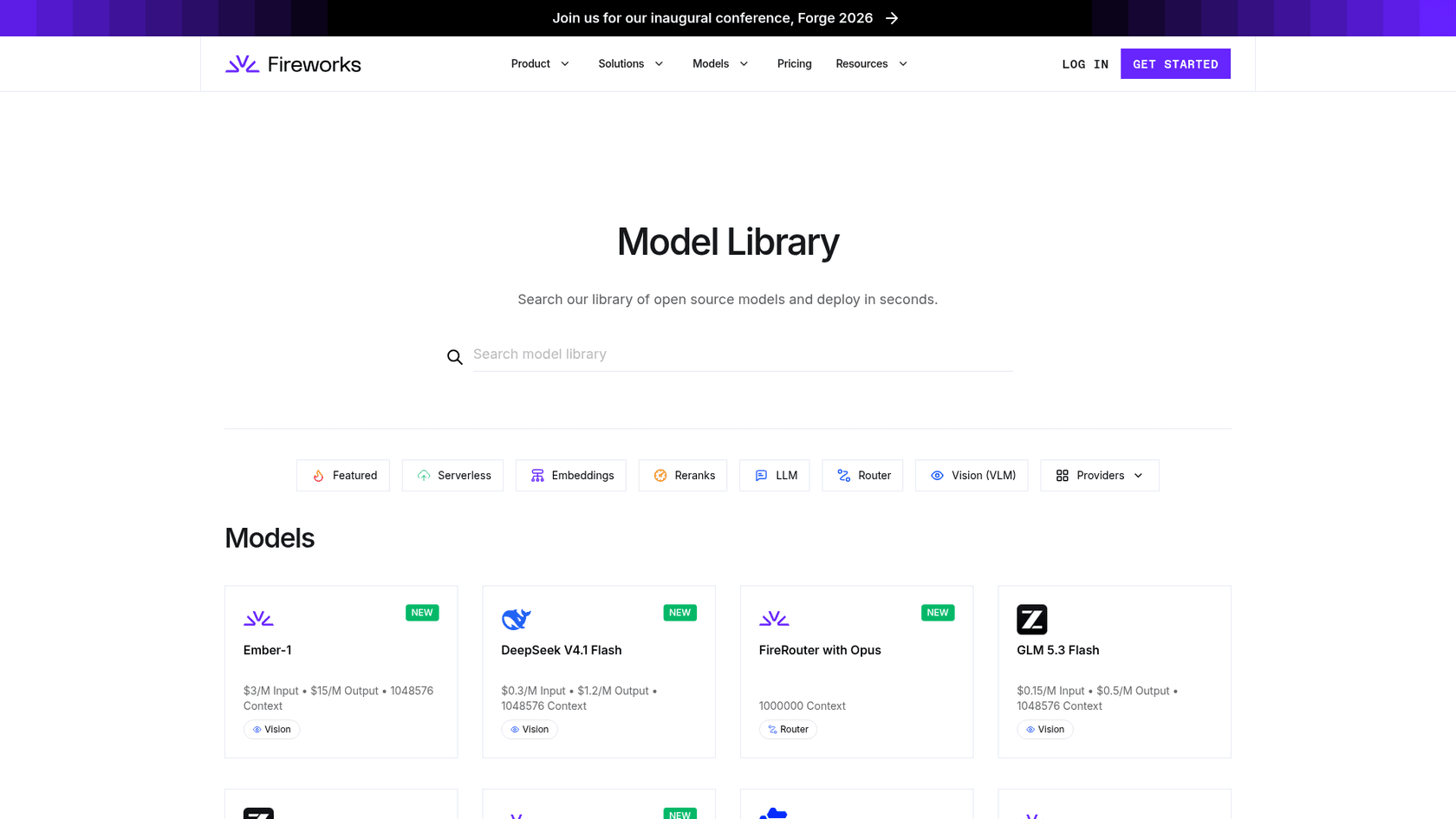
A massive library of open-source models
Right out of the gate, Fireworks gives developers access to more than 100 popular open-source models. You’ve got language models like Llama 3 and Gemma, plus specialized models for generating code or creating images. This lets teams experiment to find the right model for their specific project without the cost and complexity of hosting it all themselves.
Seriously fast inference speeds
Let's be honest, no one has the patience for a laggy chatbot. This is where Fireworks AI really shines. Its main selling point is performance. By using custom-built software and the latest hardware, it delivers top-tier speed. For any app that needs to feel responsive in real-time, this low latency makes a huge difference. Companies like Sourcegraph and Notion have even talked about the performance boosts they saw after switching over.
Advanced fine-tuning options
A generic model is a good start, but a model customized with your own data will always perform better. Fireworks AI provides tools to fine-tune models to learn your company’s specific lingo, tone of voice, or a particular skill. It supports modern techniques like LoRA (Low-Rank Adaptation), which is a much more efficient way to customize a model without having to retrain the whole thing from scratch.
The developer dilemma: Where Fireworks AI falls short
For all its technical muscle, our Fireworks AI review found a major catch: the platform’s biggest strength is also its biggest weakness for most companies. It’s built for developers, and only developers. It’s a powerful box of tools, not a finished solution.
It's not a business application
Fireworks’ console is built for developers managing models and deployments, not for a support manager or IT admin building an AI agent. If you want to use Fireworks AI, you have to roll up your sleeves and:
-
Write code to interact with its API.
-
Build your own user interface, like a chat widget for your website or an internal tool.
-
Figure out all the logic for how the AI should behave, what questions it can handle, and when to pass a conversation to a human.
This requires a serious, ongoing investment in engineering time, a huge hurdle for teams that just want to automate simple support tickets or answer common internal questions.
No direct integrations with business tools
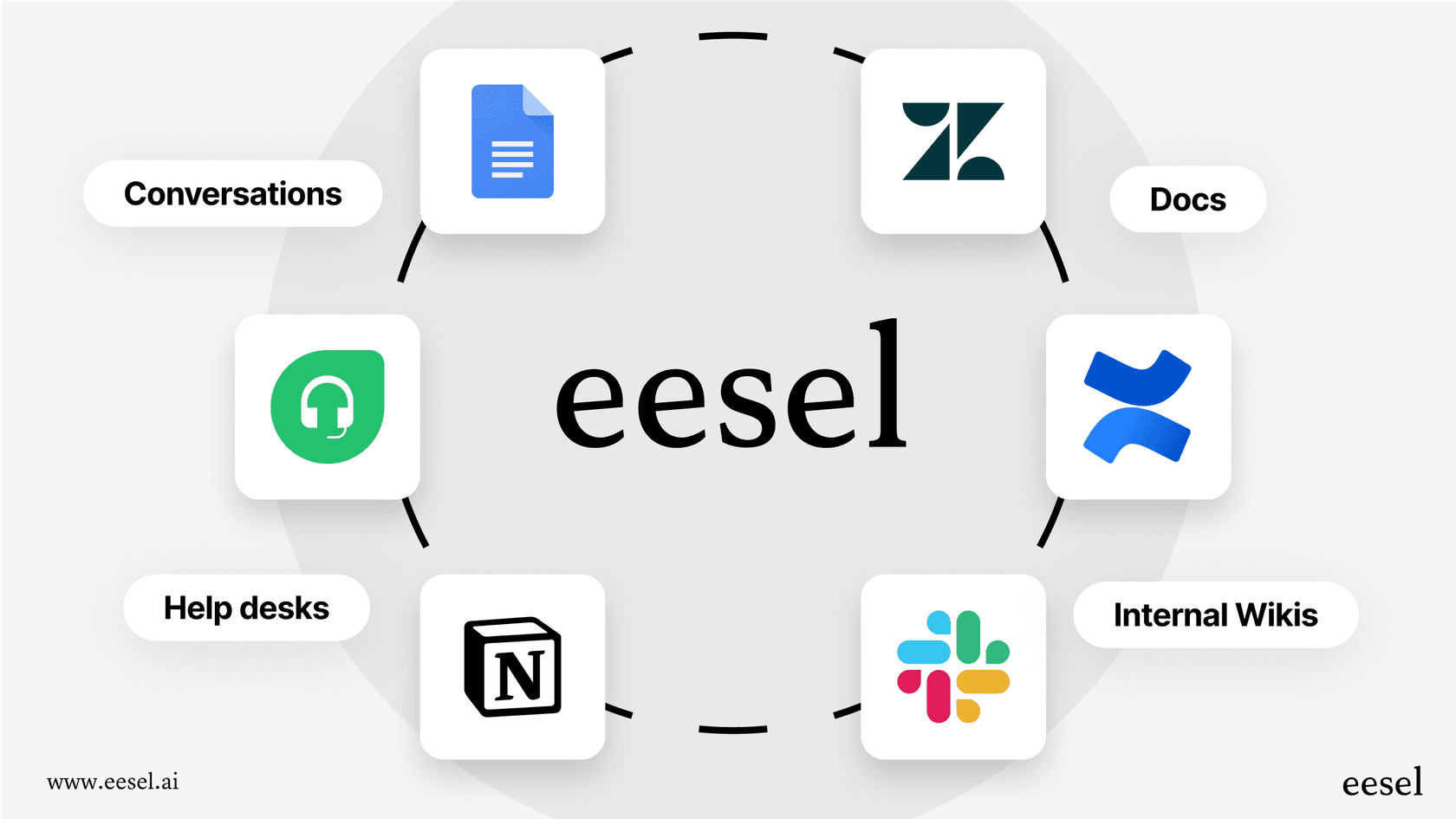
Fireworks’ documented integrations cover agent frameworks, observability tools, and cloud marketplaces rather than help desks, company wikis, or chat tools. If you want your AI to answer questions using knowledge from your Zendesk tickets or Confluence pages, you’re on your own to build the data pipeline. That means exporting data, formatting it, and managing the whole retrieval process yourself.
This is where you see the big difference between an infrastructure tool and a true business application. A platform like eesel AI is designed for this exact problem. It has one-click integrations with dozens of common tools like Zendesk, Freshdesk, Slack, and Google Docs. You can be up and running in minutes because the platform handles all the messy integration work for you. It’s a complete solution, not just the raw parts.
Lack of built-in workflow and automation tools
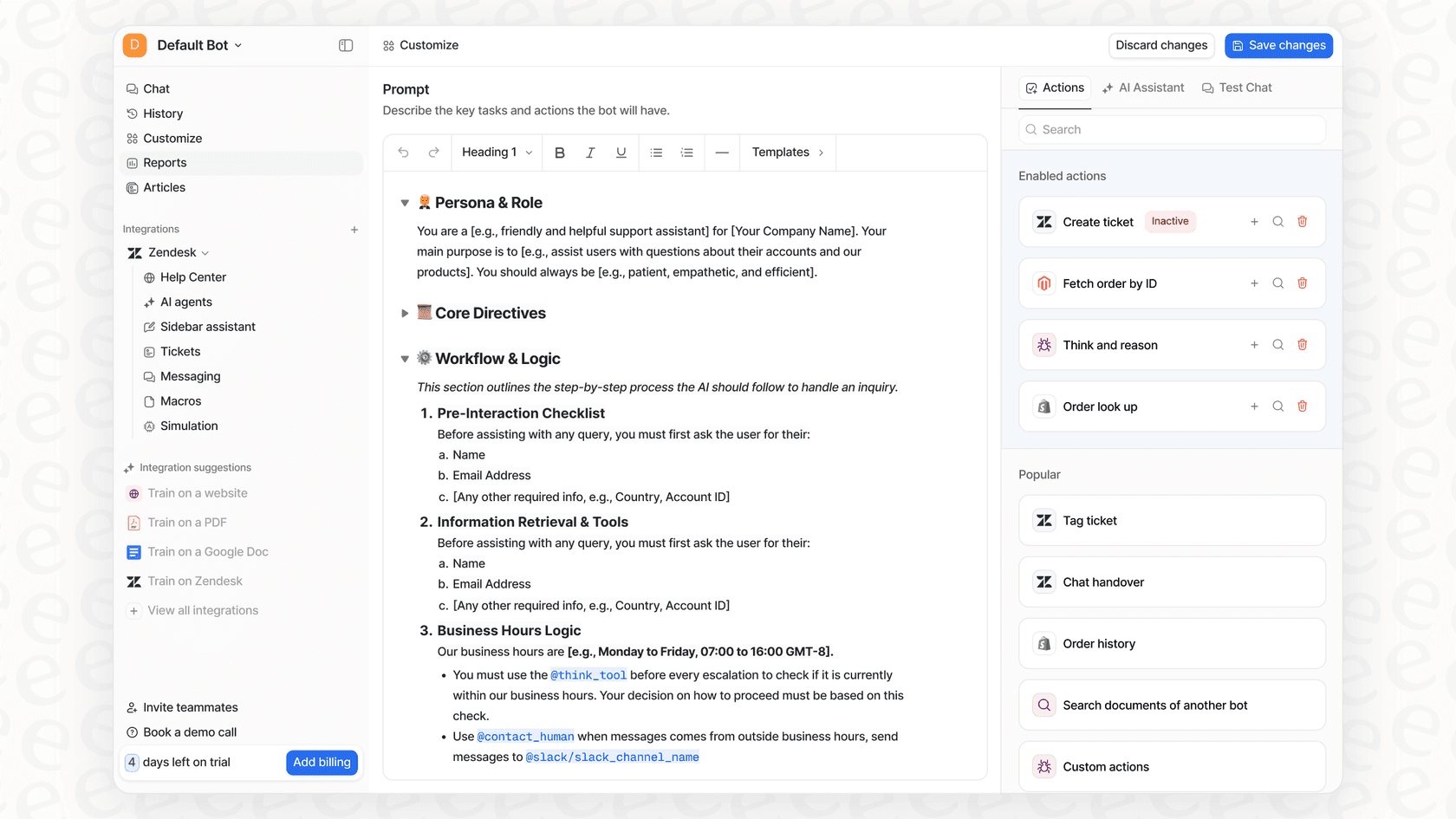
A useful support AI does more than just find answers. It needs to tag tickets correctly, route conversations to the right team, and know when to escalate to a human. Fireworks AI gives you the model to generate a text response, and its docs don't describe ticket tagging, routing, or escalation steps.
Again, a solution designed for support teams works differently. For example, eesel AI comes with plain-English instructions, actions and automations that let you:
-
Choose exactly which tickets to automate: You can start small, automating responses to simple questions, and have everything else escalated.
-
Define custom actions: The AI can do more than talk. It can tag tickets, look up order info in Shopify, or update a user's status in your private database.
-
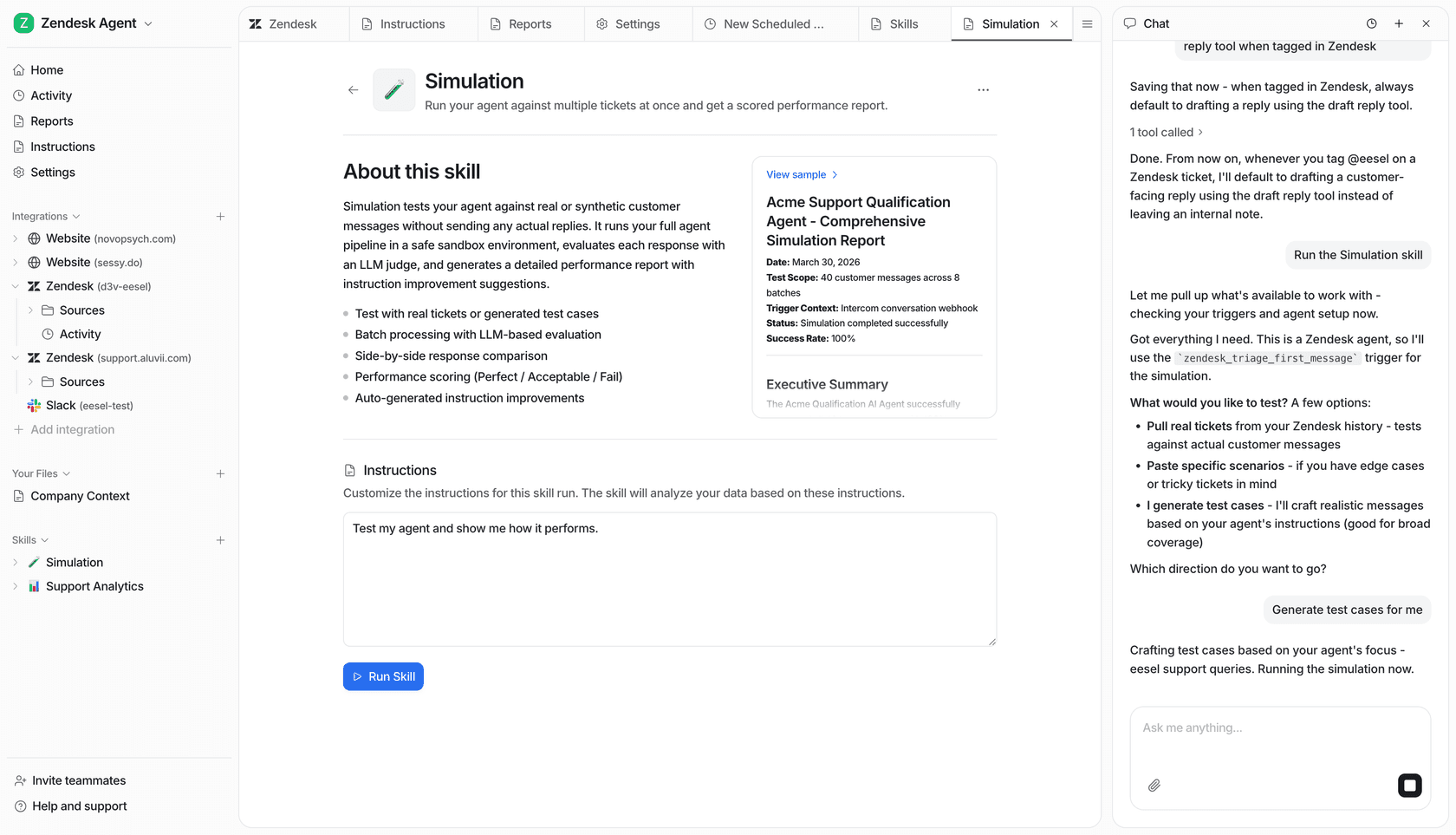
Simulate performance: Before you even turn it on for customers, you can test the AI on hundreds of your past tickets to see exactly how it would have performed, with each answer scored. This gives you real confidence before going live.
Fireworks AI doesn't ship this layer. All that crucial workflow logic and testing is left for your developers to build from the ground up.
Pricing, performance, and user feedback
A tool is only as good as its real-world performance and its price tag. Let's see how Fireworks AI does here.
Pricing: Complex and unpredictable
Fireworks AI uses a pay-as-you-go pricing model. You’re charged per million "tokens" (pieces of words) for serverless access or by the second for dedicated GPU time.
Here’s a quick look at their serverless pricing:
| Base Model Size | Price per 1M Tokens |
|---|---|
| Over 16B parameters | $0.90 |
| MoE models (e.g., Mixtral 8x7B) | $0.50 - $1.20 |
| Individually listed models (e.g., Kimi K3) | $3.00 input / $15.00 output |
This pricing is based on info from the official Fireworks AI pricing page.
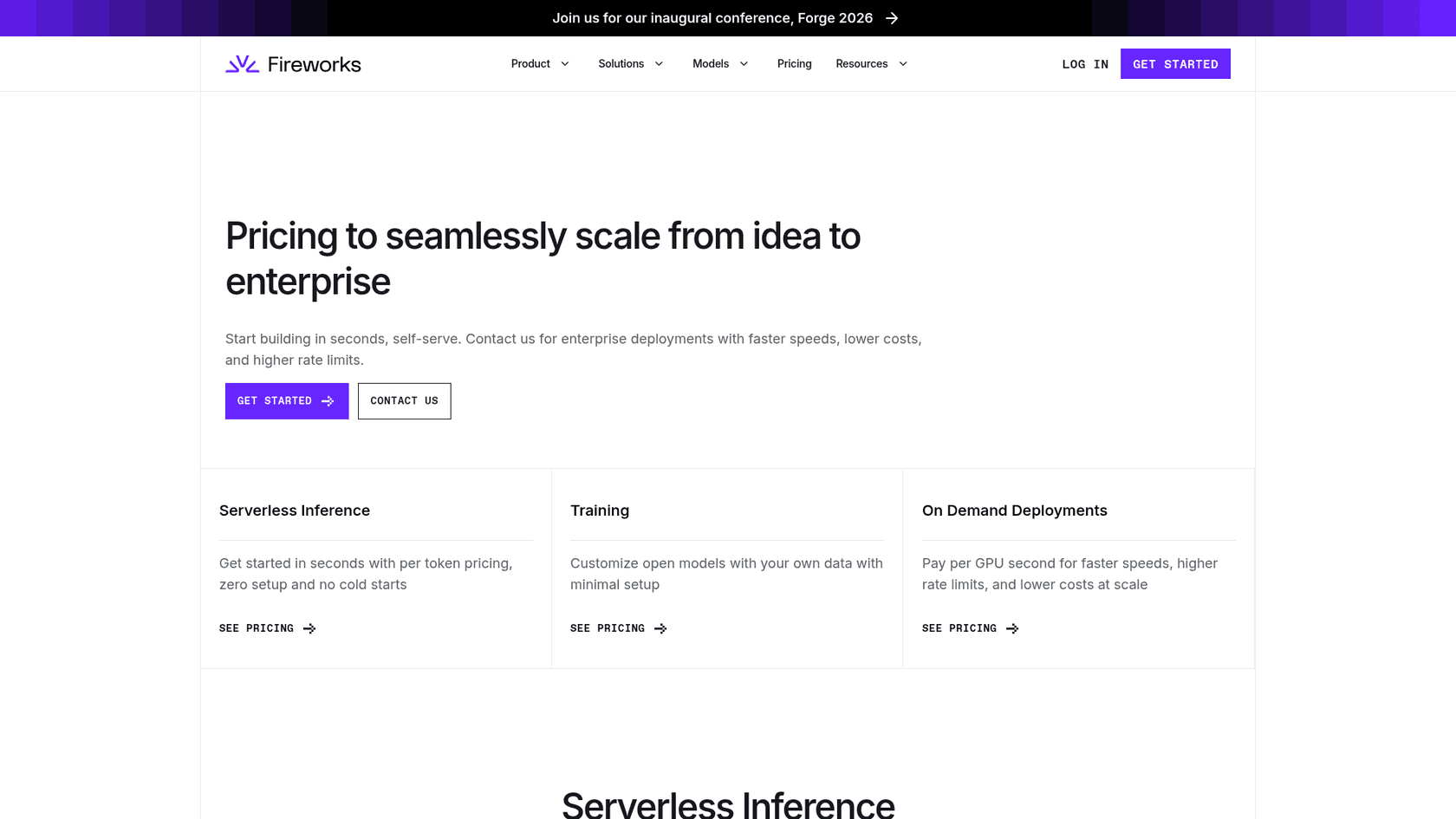
While this model is great for a developer tinkering on a project, it can be a real headache for a business trying to set a budget. Your monthly bill follows usage, so forecasting takes more work. Fireworks says serverless runs on prepaid credits with an optional monthly spend limit, and dedicated H100 GPUs list at $8.00 per hour.
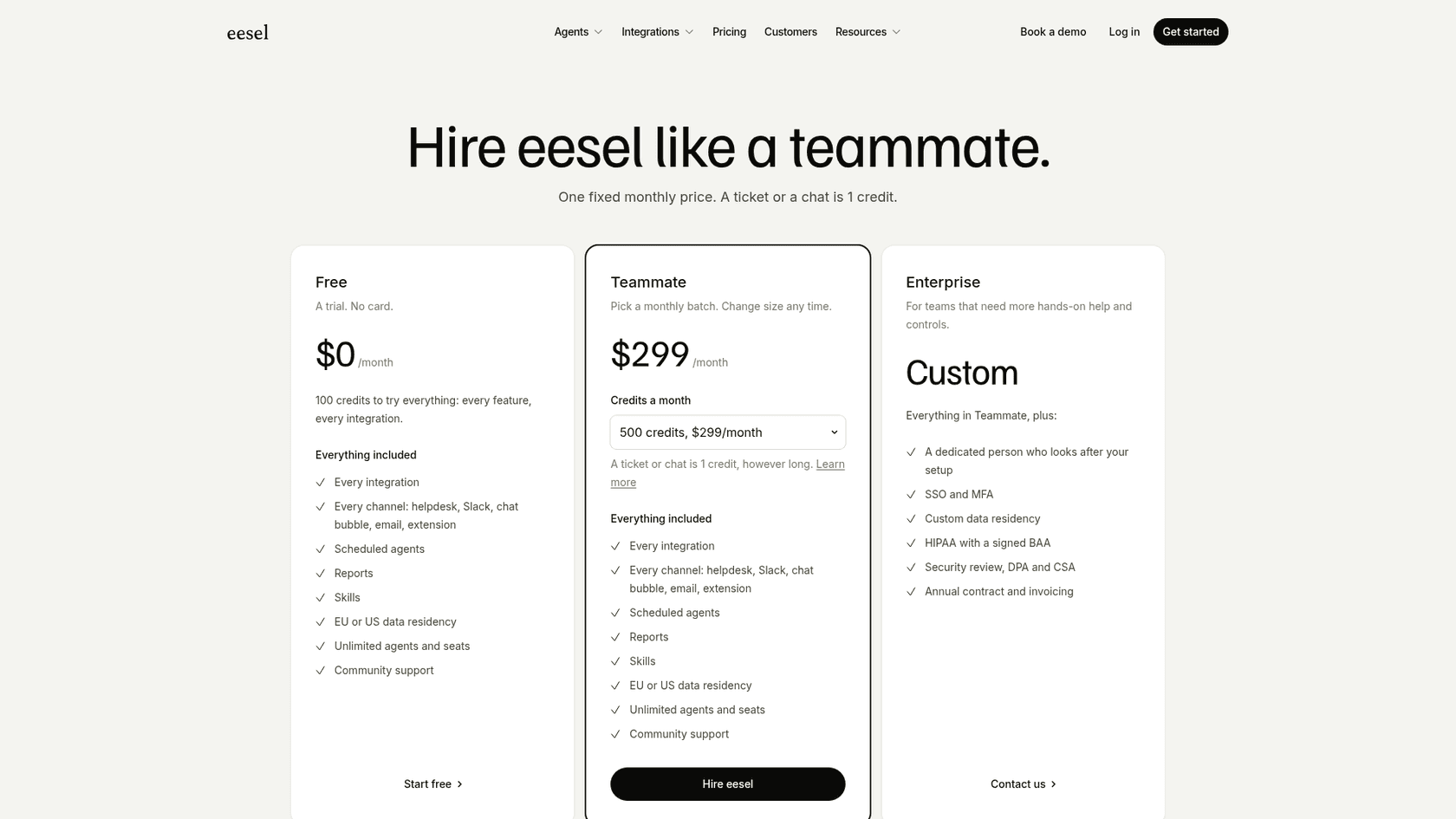
For comparison, platforms like eesel AI offer clear, predictable pricing based on a fixed monthly batch of credits, where a ticket or chat is one credit. You aren't penalized with per-resolution fees when you have a busy support month.
Performance and user reviews
Developers generally give Fireworks AI high marks for its speed. However, when you dig into reviews on platforms like Trustpilot, you find a small number of reviews from users who expected a more polished business service. At the time of my check, the profile showed 8 reviews and a 2.3 score. Themes in those reviews include:
-
Slow support: People report waiting weeks to get help with bugs or other problems.
-
Sudden changes: Models sometimes get removed without any warning, which can break applications that rely on them.
-
Inconsistent quality: Some users feel the models are overly compressed, leading to responses that aren't as good as they should be.
This kind of feedback really drives home what the platform is: a fast-moving tool for experts, not a stable, fully-supported service for business teams.
A powerful engine that needs a driver
So, what's the final verdict of our Fireworks AI review? It’s a fantastic platform for the people it was built for: AI engineers and developers who need a high-performance engine for their custom applications. The speed, model selection, and fine-tuning options are excellent.
However, it’s completely the wrong tool for business teams in support, IT, or operations looking to solve problems today. It doesn’t have the user-friendly interface, direct integrations, or automation workflows to be useful without a development team. Trying to use Fireworks AI for frontline support is like buying a Formula 1 engine to power your lawnmower, it's impressive, but it's wildly complicated and not made for the job.
If you want to automate customer support, run an internal help desk, or launch a chatbot without spinning up a whole engineering project, you need an AI platform that’s built as an application, not as infrastructure.
Your next step: Try an AI platform built for business
Instead of building from scratch, consider a platform that you can get running in minutes and that connects to the tools you already rely on. eesel AI is designed from the ground up for support and internal knowledge automation.
With eesel AI, you get:
-
A truly self-serve setup: You can connect your help desk and knowledge sources in just a few clicks. No need to sit through a mandatory sales demo.
-
Complete control over automation: A simple but powerful workflow engine lets you decide exactly what the AI should handle and what it shouldn't.
-
Unified knowledge, instantly: eesel AI learns from everything at once: your past tickets, help articles, Confluence, Google Docs, and more.
-
A risk-free way to test: You can run a simulation on your historical data to see how it would have answered, with fixes suggested, before you ever show it to a customer.
Stop worrying about infrastructure and start solving your actual business problems. Learn more about eesel AI and see what an AI platform designed for your team can do.
Frequently asked questions
Who is the target audience for Fireworks AI, based on this Fireworks AI review?
According to this Fireworks AI review, its primary target audience is AI engineers and developers. It provides them with powerful infrastructure and tools for building and scaling custom AI applications, rather than being a ready-to-use business application.
What are the core strengths highlighted in this Fireworks AI review regarding its performance?
This Fireworks AI review highlights its seriously fast inference speeds, providing low latency crucial for real-time applications. It also offers access to a massive library of over 100 open-source models and advanced fine-tuning options like LoRA.
What are the main limitations for business users discussed in this Fireworks AI review?
For business users, this Fireworks AI review points out that it is not a ready-made business application, and its console is built for developers. Its documented integrations cover agent frameworks and observability tools rather than help desks, and it doesn't describe built-in support workflows, so it takes significant development effort.
Can you explain the pricing model according to this Fireworks AI review, and is it budget-friendly for businesses?
This Fireworks AI review describes a pay-as-you-go pricing model, charged per million "tokens" or by dedicated GPU time. While suitable for developers, it's harder for businesses to forecast because the bill follows usage, though Fireworks offers an optional monthly spend limit.
How does a Fireworks AI review differentiate it from business-ready solutions like eesel AI?
This Fireworks AI review differentiates it by calling Fireworks AI an "infrastructure" tool, requiring users to build everything from scratch. In contrast, solutions like eesel AI are presented as complete applications with one-click integrations, built-in workflows, and self-serve setup designed for business teams.
Does this Fireworks AI review mention any common user complaints or negative feedback?
Yes, this Fireworks AI review notes common user complaints from platforms like Trustpilot. These include slow customer support, sudden removal of models without warning, and inconsistent quality where models are perceived as overly compressed.