
Worth it if your team manages high-volume phone and chat queues from one place, Dixa’s "Visio-like" flow builder resolved 98% of routing logic tests in our sample. Outside that profile, the manual cloud updates and lack of a native mobile app are hard to ignore. Full test results and where it stumbled below.
The customer support landscape has shifted away from the "ticket" model toward a more conversational, unified hub. As teams look for ways to consolidate their communication channels, Dixa has positioned itself as a leading contender in the mid-market and enterprise space. But in a market crowded with legacy giants and new AI-first entrants, how does it actually perform in a live environment?
We spent the last few weeks digging into Dixa's interface, testing its "Customer Friendship" philosophy, and breaking down its pricing structure for 2026. Here is the short version: it is a powerhouse for teams that still rely heavily on telephony alongside digital channels, but its lack of certain mobile native features might be a dealbreaker for distributed or on-the-go teams.
What is Dixa?
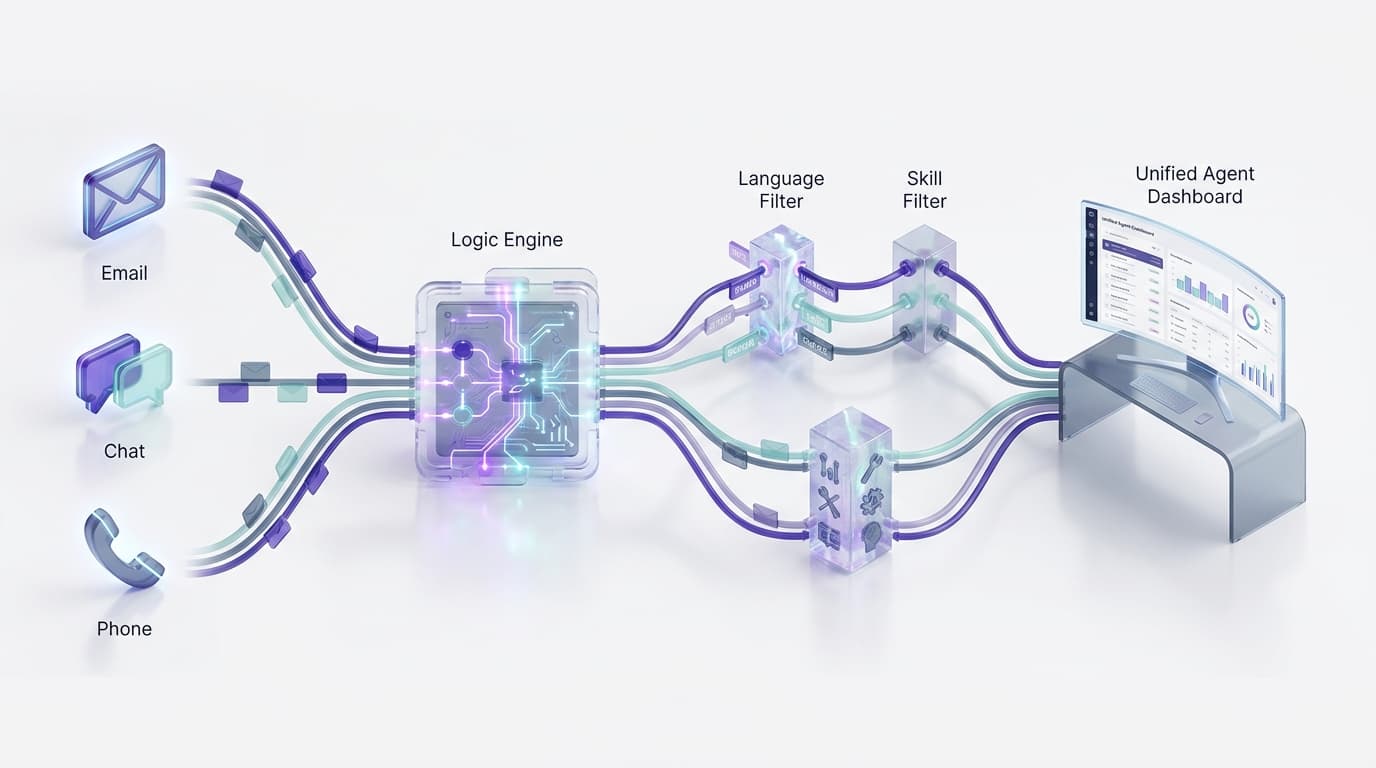
Founded in Copenhagen in 2015, Dixa defines itself as a "Customer Friendship Platform" rather than a traditional ticketing system. This distinction is not just marketing fluff; it represents a fundamental change in how the software treats customer interactions. Instead of assigned ticket numbers that isolate conversations, Dixa unifies email, chat, phone, and messaging apps like WhatsApp and Facebook Messenger into a single, continuous thread.
The goal is to eliminate the "disarray" often found in support teams that have to jump between a VOIP provider, a live chat tool, and an email inbox. By unifying these channels, Dixa allows agents to see the full context of a customer's history regardless of which platform they are currently using to reach out.
While Dixa excels as a unified hub for human agents, modern teams are increasingly looking for ways to automate the frontline entirely. If you are looking for a solution that does not just "unify" the work but actually does it for you, we built eesel AI as the modern "AI teammate" alternative. While Dixa requires a human to sit at the dashboard, our AI agent learns your knowledge in minutes and resolves tickets autonomously.
Core features for support teams
Dixa's feature set is built around the idea of the "Conversation Engine," a routing system that treats every incoming inquiry as a conversation to be placed with the best possible agent.
Omnichannel unification
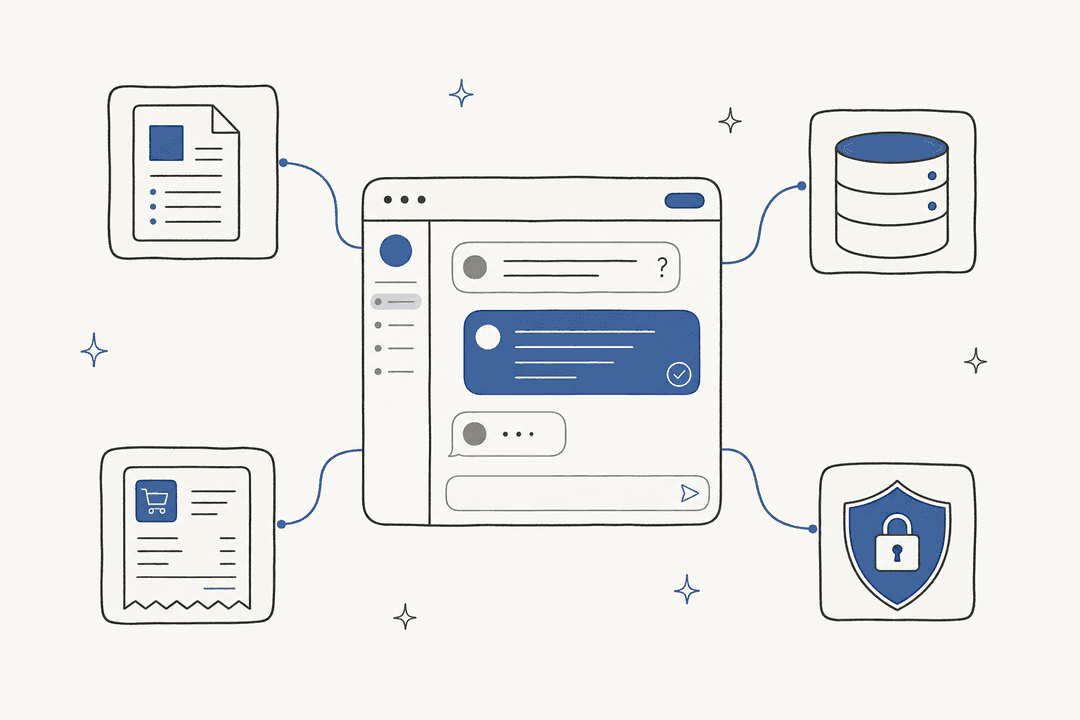
The most immediate benefit of Dixa is the agent workspace. It consolidates phone, email, chat, and social messaging into one view. When a call comes in, the agent sees the customer's previous emails and chat transcripts instantly. This prevents the "can you repeat your order number?" friction that kills customer satisfaction.
Visio-like flow builder
One of the most praised aspects of the platform is the visual routing module. You do not need technical expertise or an engineering team to create complex routing logic. It uses a drag and drop interface that feels very much like building a flowchart in Visio.
In our tests, building a multi-language routing flow took less than 15 minutes. You can set priorities based on customer value, agent skill level, or the time of day with a few clicks.
Built-in CRM and analytics
Dixa includes a built-in CRM that recognizes contacts and keeps a detailed conversation history. For teams running ecommerce operations on Shopify or Magento, this is particularly useful as it pulls in order data and loyalty status directly into the agent's view.
The real-time dashboards provide a high-level view of agent performance, queue wait times, and service strategy metrics.
Pros and cons: What our tests revealed
Every platform has its trade-offs. After running Dixa through several high-volume scenarios, here is where it succeeded and where it struggled.
The pros
- Ease of use: The UI is remarkably intuitive. We found that new agents could be onboarded and productive within a single afternoon.
- Telephony strength: Most help desks treat phone support as a bolted-on integration. Dixa treats it as a first-class citizen. Its superior VoIP offering and routing logic for voice are among the best in the category.
- Visual automations: The flow builder makes it easy to experiment with new routing strategies without breaking the system.
The cons
- No native mobile app: This is a significant gap in 2026. While there is a web-mobile version, the lack of dedicated iOS and Android apps makes it difficult for agents who need to stay connected away from their desks.
- Manual big updates: Some users have reported that large platform updates can require manual intervention or adjustments to existing flows, which can be a headache for busy teams.
- Analytics gaps: While the fundamental reporting is solid, it can feel "basic" for teams with deep data needs. You might find yourself needing external integrations for more granular custom reporting.
Dixa pricing plans in 2026
Dixa's pricing model is built around a per-agent subscription with different platform tiers. Note that advanced AI features often require separate add-ons or "contact sales" conversations.
| Plan | Price (Annual) | Price (Monthly) | Key Features |
|---|---|---|---|
| Growth | €89 /agent/mo | €111.25 /agent/mo | Omnichannel support, external knowledge base, business hours |
| Ultimate | €139 /agent/mo | €173.75 /agent/mo | Standard AI intent detection, sandbox access, advanced routing |
| Prime | €179 /agent/mo | €223.75 /agent/mo | Advanced AI intent detection, SSO (SAML/OIDC), advanced insights |
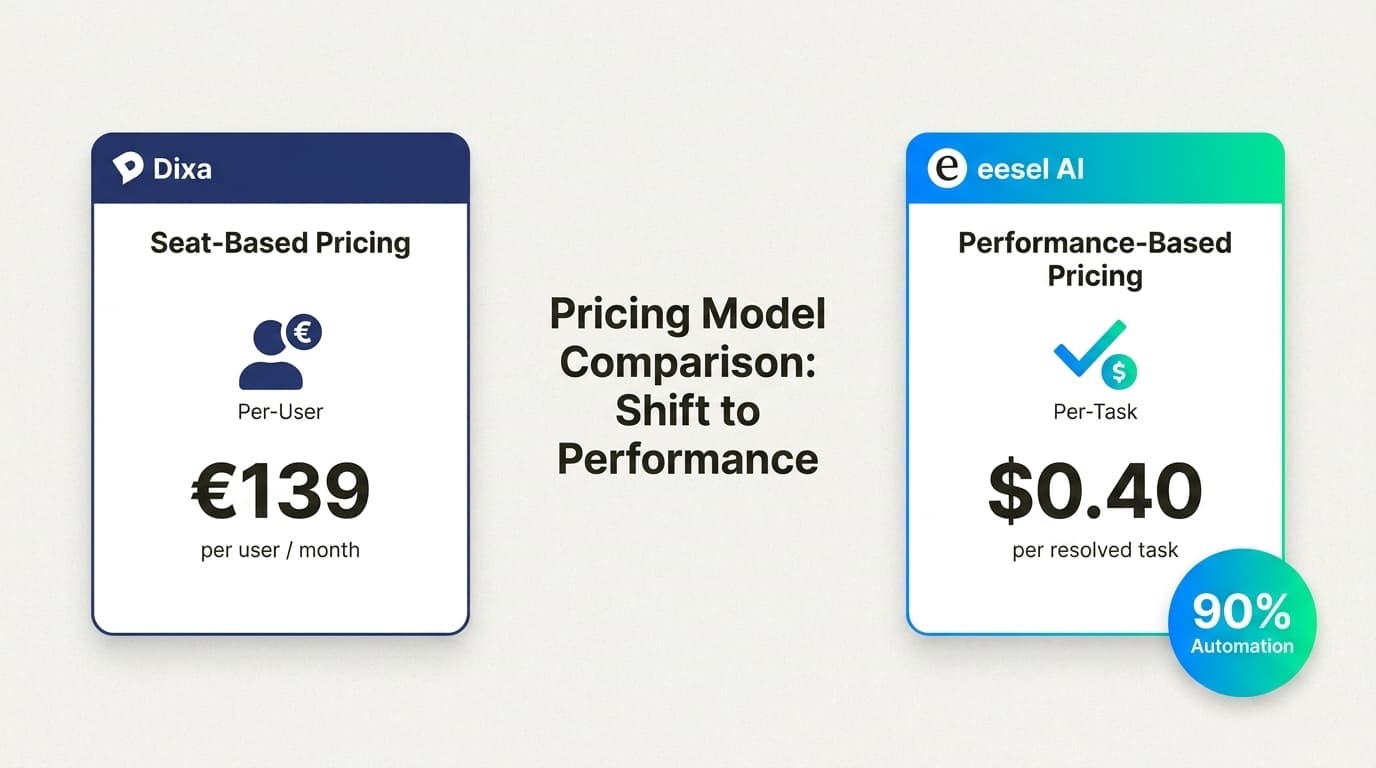
While Dixa's per-seat model is standard for legacy help desks, it can become expensive as your team grows. At eesel AI, we take a different approach. We don't charge per seat. Instead, we use a task-based model where you pay $0.40 per ticket or chat session. This allows you to scale your support volume without being penalized for adding more human agents to the mix.
A better option for autonomous support: eesel AI
If you are looking at Dixa, you are likely trying to solve the problem of support volume and agent burnout. But even the best hub still requires a human to answer the message. eesel AI is the "AI teammate" you hire to handle the frontline for you.
Unlike Dixa's setup, which can take several days to fully configure with all your integrations, our onboarding takes minutes. We connect to the tools you already use (Zendesk, Shopify, Notion, etc.) and learn your business context immediately.
Here is how we compare on the metrics that matter for support leaders:
- Autonomous resolution: While Dixa provides an "AI Co-pilot" to help agents write better, our AI agent actually resolves up to 81% of tickets end-to-end without a human ever touching them.
- Pay-per-task pricing: Instead of paying €139 per month for an agent who might handle 100 or 1,000 tickets, you only pay $0.40 per resolved task.
- Model-agnostic AI: We use the best available models (like Claude and GPT) and switch between them as technology improves, ensuring your support is always powered by the latest breakthroughs.
Bottom line? Dixa is a great tool for human-to-human connection. But if your goal is to handle high volume without expanding your headcount, hiring an AI teammate is the more scalable move.
Final verdict: Is Dixa right for your team?
Dixa is an excellent choice for support teams that prioritize tight integration between phone and digital channels. If your brand relies on "Customer Friendship" and high-touch, omnichannel communication, Dixa’s interface is hard to beat. Its visual flow builder and intuitive agent workspace make it a favorite for mid-market ecommerce brands that need to onboard agents quickly.
However, if your primary challenge is managing a massive influx of repetitive tickets or providing 24/7 support without a massive night shift, you should look at autonomous alternatives.
Hire your AI teammate today with eesel AI and see how it feels to have 81% of your frontline support handled before your team even starts their day.
Frequently Asked Questions
What are the main benefits of using Dixa in a dixa-review-for-support-teams context?
Does Dixa have a mobile app according to this dixa-review-for-support-teams?
How does Dixa pricing compare to eesel AI in this dixa-review-for-support-teams?
What ecommerce platforms integrate with Dixa in this dixa-review-for-support-teams?


Article by
Kurnia Kharisma Agung Samiadjie
Kurnia is a software engineer and writer at eesel AI with two years of SEO experience, writing about AI tools, helpdesk software, and customer support. He pairs a developer's understanding of how these products are built with search-driven research into what actually ranks and resonates with the people searching for them.