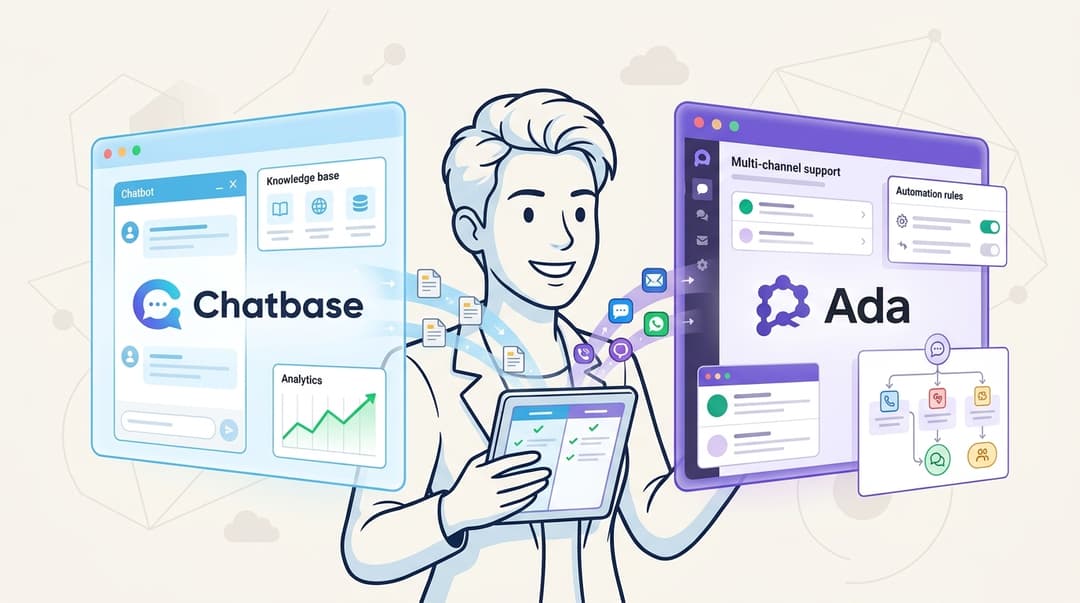
AI agents for customer support have moved from experimental to essential. But choosing between platforms is not straightforward. Each tool takes a different approach to automation, pricing, and implementation.
This guide compares Decagon and Alhena AI head-to-head. Both promise to reduce support costs and improve customer experience, but they serve different business types and use cases. By the end, you will understand which platform fits your specific needs, plus how a third option might bridge the gap between them.
What is Decagon?
Decagon is an enterprise AI agent platform founded in 2023 by Jesse Zhang and Ashwin Sreenivas. The company has raised $231 million in funding, including a $131 million Series C at a $1.5 billion valuation. Its positioning is clear: build AI agents that handle complex customer interactions across every channel.
The core technology is Agent Operating Procedures (AOPs). These let teams define agent workflows in natural language while technical teams maintain control over guardrails and integrations. Non-technical users can shape agent behavior without waiting for engineering sprints.
Decagon's customer list reads like a who's who of tech-forward companies: Chime, Duolingo, ClassPass, Rippling, Hertz, Oura, Notion, and Eventbrite. These are not small implementations. Chime achieved 70% chat and voice resolution. Duolingo hit an 80% deflection rate. ClassPass saw a 95% reduction in support costs.
The platform covers voice, chat, email, and SMS from a single intelligence layer. It integrates with major CRMs, help desks, and knowledge bases. Security is enterprise-grade with SOC 2 and GDPR compliance.
Decagon is built for teams that want deep control over AI behavior and have the technical resources to configure it. The trade-off is complexity. You will need engineering involvement to get the most out of it.
What is Alhena AI?
Alhena AI, formerly known as Gleen, takes a different approach. Founded by Ashu Dubey and Nagendra Kumar, the platform focuses specifically on eCommerce brands. Its promise is turning customer experience into revenue, not just cutting support costs.

The key differentiator is the combination of support and sales. Alhena provides a shopping assistant that guides customers from discovery to checkout, alongside traditional support automation. This dual focus makes it unique in the market.
Pricing is transparent and accessible. The Pro plan starts at $199 per month (billed annually at $239/month), with a free tier for smaller operations. Enterprise plans are custom. This is a fraction of what enterprise platforms typically charge.
Customer results are impressive for the target market. Victoria Beckham saw a 20% increase in average order value. Tatcha achieved an 11.4% revenue contribution from AI with a 38% AOV uplift. Manawa reduced response times from 40 minutes to 1 minute while improving CSAT scores.
Alhena emphasizes "hallucination-free" AI that only responds when confident. Setup is fast, under 48 hours, with no developer time required. The platform integrates with Shopify, WooCommerce, and major social channels including Instagram and WhatsApp.
Decagon vs Alhena AI: Feature comparison
| Feature | Decagon | Alhena AI |
|---|---|---|
| Primary focus | Enterprise AI agents | eCommerce support + sales |
| Configuration | AOPs (natural language + code) | No-code, ready-to-use |
| Setup time | Weeks with engineering | Under 48 hours |
| Pricing model | Contact sales (not public) | $199/month transparent |
| Channels | Voice, chat, email, SMS | Chat, email, voice, social |
| Best for | Tech-forward enterprises | DTC eCommerce brands |
| Shopping assistant | No | Yes (core feature) |
| Hallucination guarantee | No | Yes (stated explicitly) |
Let's break down what these differences mean in practice.
Configuration approach. Decagon's AOPs give you granular control. You can define complex workflows, set precise guardrails, and iterate rapidly. This power comes with a learning curve. Alhena is more plug-and-play. You get pre-built eCommerce workflows that work out of the box.
Channel coverage. Both cover the major channels, but Decagon's voice capabilities are more mature. If phone support is critical to your business, Decagon has the edge. Alhena covers voice but emphasizes chat and social commerce where most eCommerce interactions happen.
Revenue vs cost focus. Decagon is primarily about operational efficiency: deflect tickets, reduce headcount, lower costs. Alhena adds a revenue layer. The shopping assistant actively drives sales, which can offset the platform cost through increased conversion.
Pricing transparency. Alhena wins here. You know exactly what you will pay. Decagon requires a sales conversation, which typically means higher price points and longer procurement cycles.
Pricing comparison
Pricing is where these platforms diverge most clearly.
Alhena AI publishes its pricing openly:
| Plan | Monthly Price | Annual Price | Conversations | Key Features |
|---|---|---|---|---|
| Free | $0 | $0 | 25 | Basic features, 500 URLs |
| Pro | $199 | $239 (billed annually) | 2,005-5,500 | Advanced analytics, social integrations |
| Enterprise | Custom | Custom | Unlimited | Dedicated CSM, API access |
Overage on the Pro plan is $1.20 per conversation. The free tier lets you test before committing.
Decagon does not publish pricing. Based on industry positioning and competitor comparisons, expect enterprise-level pricing. The model is typically per-conversation or per-resolution. You will need to contact sales for a quote.
The transparency difference matters for budgeting. With Alhena, you can calculate ROI before talking to sales. With Decagon, you invest time in the sales process before knowing if it fits your budget.
Use case fit: When to choose each platform
Choose Decagon if:
- You are a tech-forward enterprise with engineering resources
- You need granular control over AI behavior and workflows
- Voice support is a significant portion of your volume
- You want to build custom integrations and logic
- You have complex, multi-step support processes
- You value simulation and testing capabilities before deployment
Decagon shines when you have the team to configure it deeply. The AOP system rewards technical investment with powerful, customized agents.
Choose Alhena AI if:
- You run an eCommerce business on Shopify or WooCommerce
- You want AI for both support AND driving sales
- You need transparent, predictable pricing
- You prefer quick setup without engineering involvement
- You want personalized product recommendations
- Social commerce (Instagram, WhatsApp) is important to your brand
Alhena is built for eCommerce operators who want results fast. The revenue-focused features mean it can pay for itself through increased conversion, not just cost savings.
eesel AI: An alternative approach
There is a third path worth considering. At eesel AI, we have built an AI teammate that combines the autonomy of Decagon with the ease of Alhena.
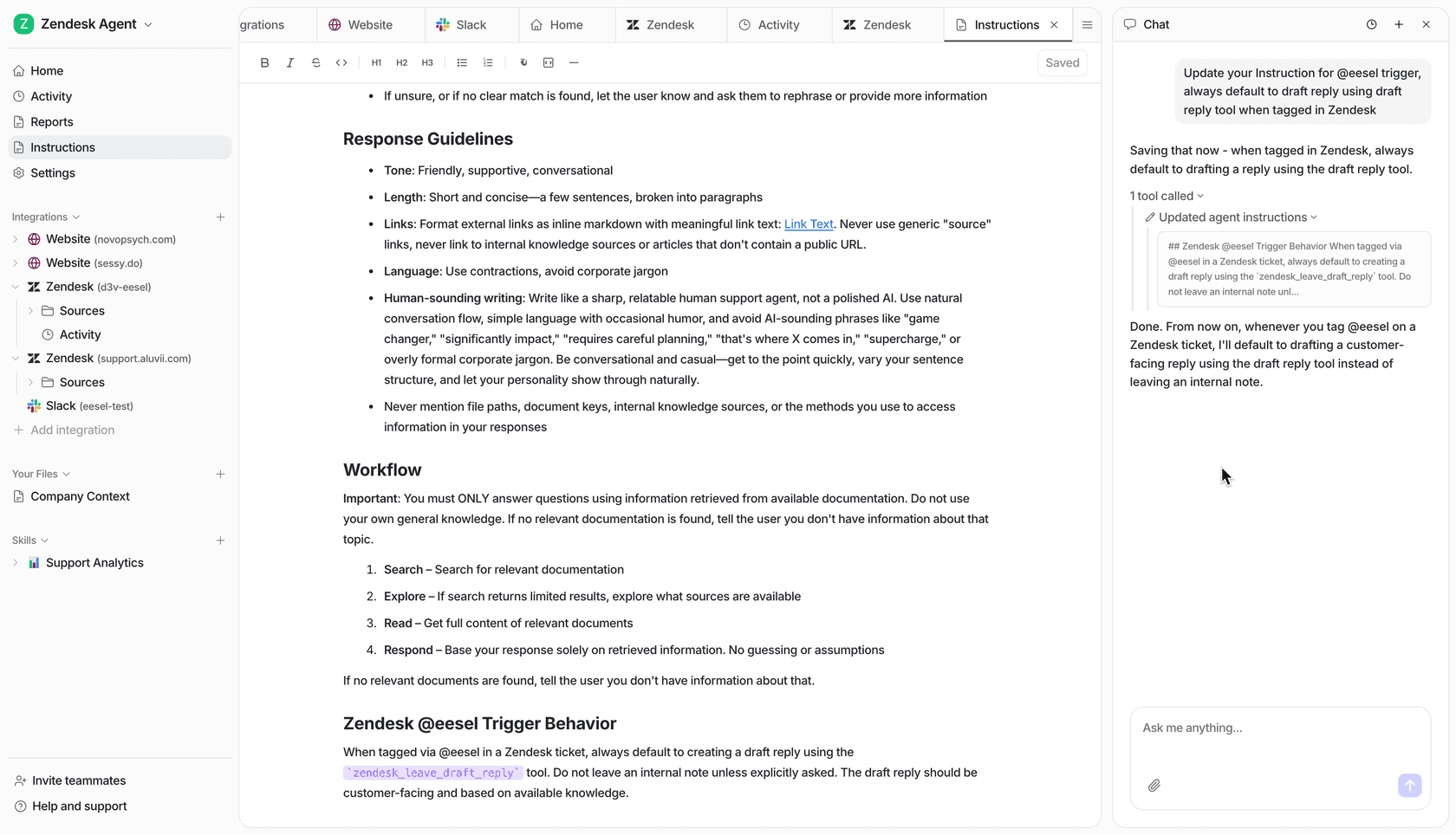
Here is how we differ from both:
Minutes to onboard, not weeks. Connect eesel to your help desk and it learns from your existing data immediately. Past tickets, help center articles, macros, connected docs (Confluence, Google Docs, Notion). No manual training. No documentation uploads. No configuration wizards.
Progressive rollout. Like any new hire, eesel starts with oversight. You can have it draft replies for review before sending, limit it to specific ticket types, or set business hours. As eesel proves itself, you expand its scope. Eventually, it handles full frontline support autonomously.
Plain-English control. Define what eesel handles and when it escalates in natural language. "If the refund request is over 30 days, politely decline and offer store credit." No code. No rigid decision trees.
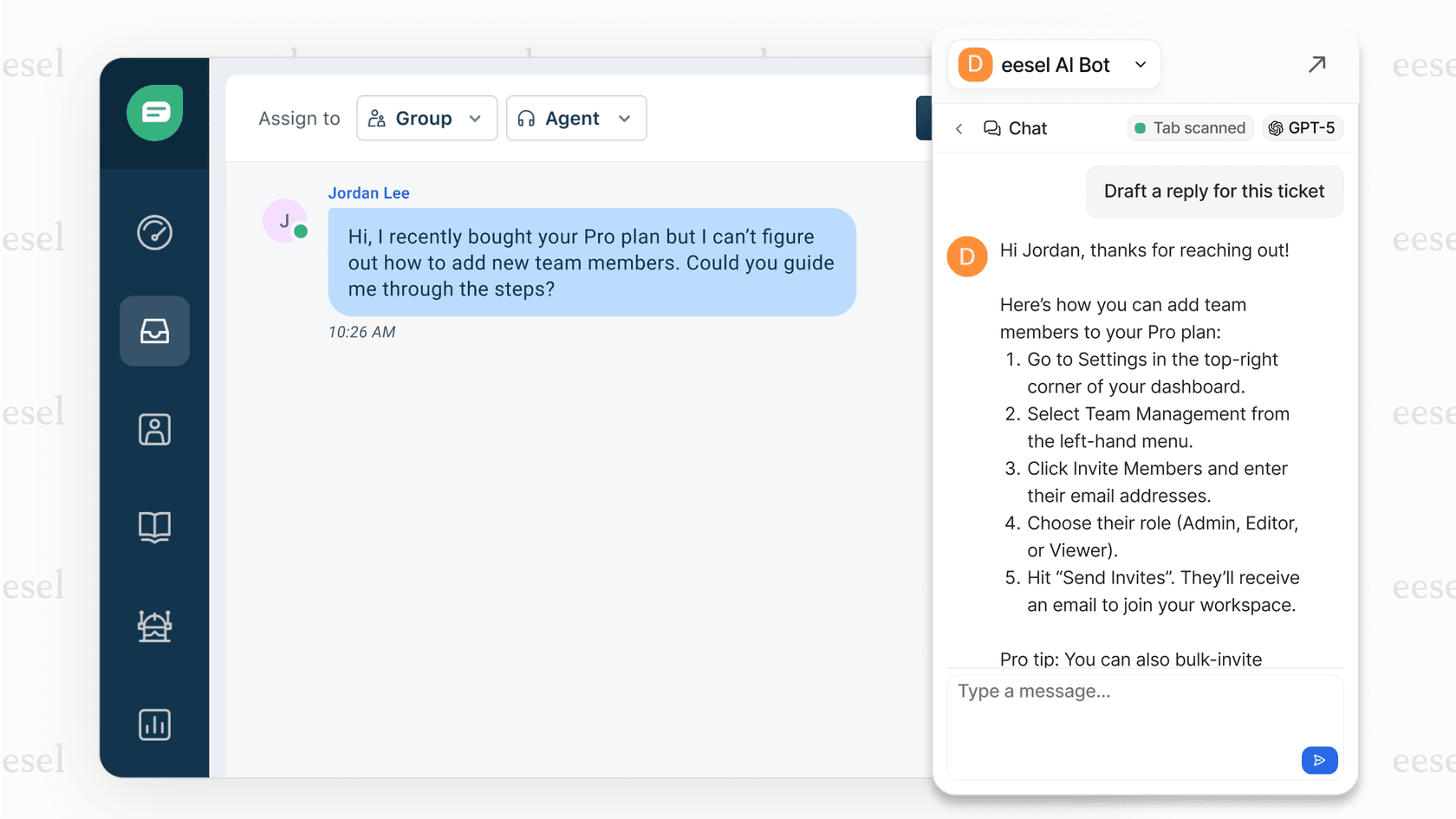
Pre-go-live testing. Run eesel on thousands of past tickets before going live. See exactly how it would respond. Measure resolution rates. Identify gaps. Gain confidence before touching real customers.
Mature deployments achieve up to 81% autonomous resolution with a typical payback period under 2 months.
If you are evaluating Decagon for its power but concerned about complexity, or considering Alhena but need broader enterprise capabilities, eesel AI offers a middle ground. You get enterprise-grade AI without the enterprise-grade setup time.
Making your decision
The choice between Decagon and Alhena AI comes down to your business type and resources.
Go with Decagon if you are a large enterprise with technical teams, complex workflows, and a need for deep customization. The investment in configuration pays off if you have the resources to maximize it.
Go with Alhena AI if you are an eCommerce brand wanting fast deployment, transparent pricing, and a platform that drives revenue alongside cost savings. The 48-hour setup and shopping assistant features are hard to beat for DTC brands.
Consider eesel AI if you want autonomous AI capabilities without the heavy implementation. Our teammate model lets you start fast and level up based on performance, not engineering capacity.
The right platform is the one that fits your team's capabilities and your customers' needs. All three can deliver results. The question is which path gets you there fastest with the resources you have.