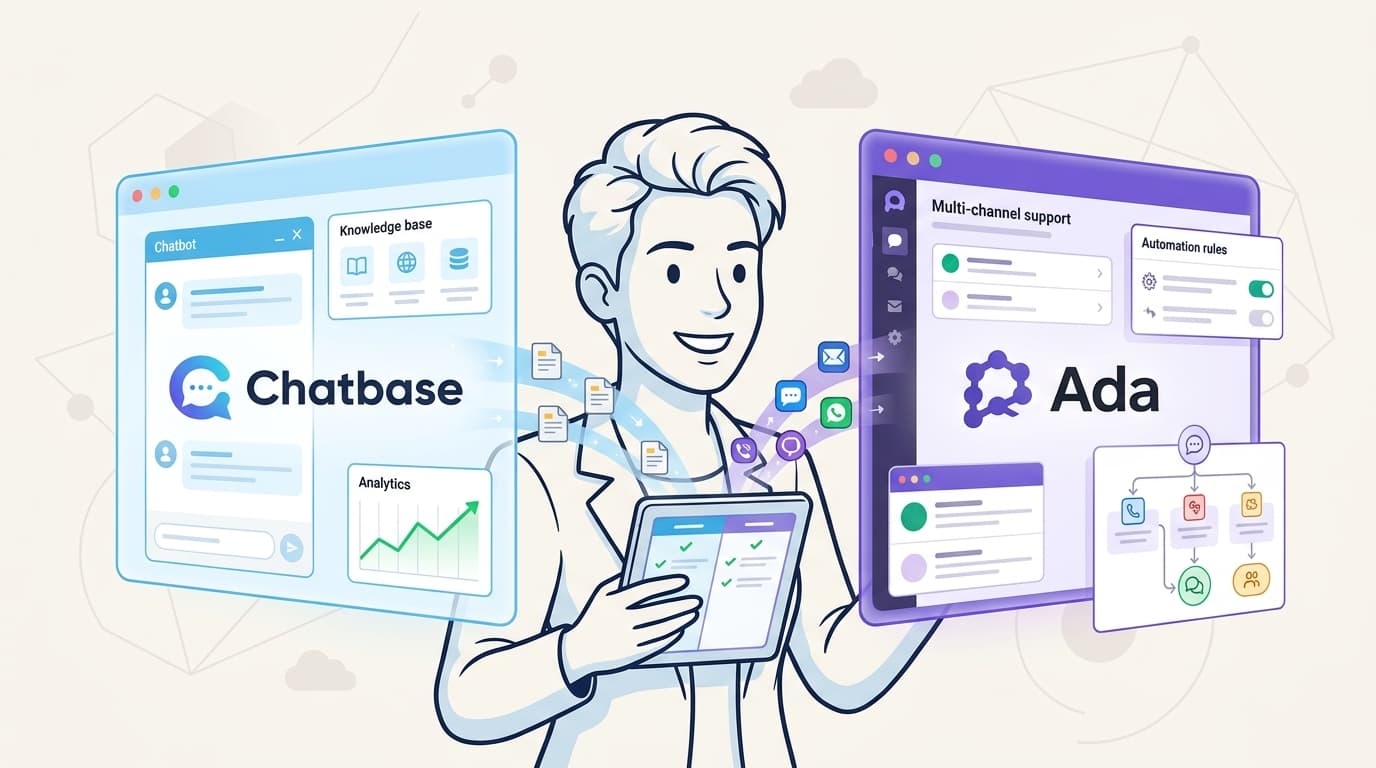
If you have ever shopped for an AI customer support agent in 2026, you have probably bumped into both Chatbase and Ada within the first ten minutes of searching. They land in the same Google results, get name-checked in the same Reddit threads, and both promise to automate the boring parts of your support inbox. They are, however, very different products built for very different buyers.
Chatbase is a self-serve platform aimed at anyone who wants an AI support agent up and running fast. Ada is an enterprise platform aimed at companies running customer service at very high volume. The marketing pages can blur that distinction, but the pricing pages do not.
This comparison walks through the parts of each product that actually matter when you are weighing them: how they are built, how they connect to your existing stack, how the buyer experience differs, where each one struggles, and how to think about whether either of them is right for you. We will keep things grounded in what the official sites say today, with links so you can verify everything yourself.
A note on conflict of interest: we make eesel AI, an AI agent for customer support that competes in the same general space. We will mention it where it is relevant (mostly in the "how to choose" section), but the rest of the article is about Chatbase and Ada.
What each one is
The two products solve overlapping problems but reach for different shelves on the buyer side.
Chatbase
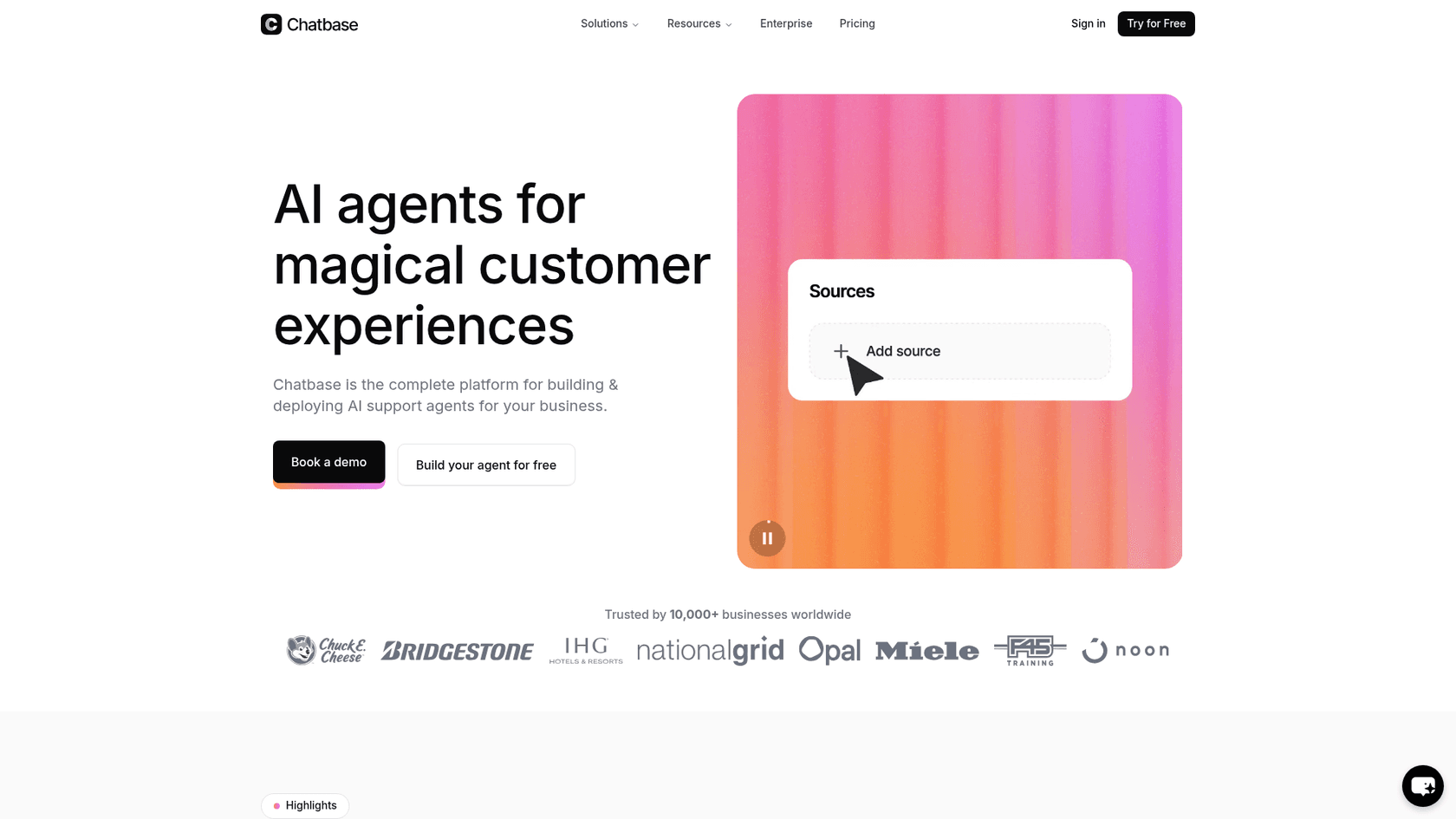
Chatbase calls itself "the complete platform for building & deploying AI support agents for your business." It is a self-serve product: you can sign up, train an agent on your business data, configure actions, and deploy it in minutes, with no credit card required for the free tier.
The pitch is reach. Chatbase says it serves over 10,000 businesses, with logos including Chuck E. Cheese, Bridgestone, IHG, National Grid, Miele, and F45 Training. Marc Manara, Head of Startups at OpenAI, is quoted on the homepage saying:
"Chatbase is a strong signal of how customer support will evolve. It is an early adopter of the agentic approach, which will become increasingly effective, trusted, and prominent." (Chatbase homepage)
Underneath, Chatbase is a build-your-agent toolkit on top of advanced models from OpenAI, Anthropic, Gemini, DeepSeek, Meta, and Moonshot AI. The model picker is a real feature: on Hobby and above, you can compare models and pick the right backbone for your use case.
Ada
Ada calls itself an enterprise AI customer experience platform. The flagship product is the ACX (Agentic Customer Experience) Platform, built on a patent-pending Unified Reasoning Engine that launched in February 2026. The pitch is depth and scale: one AI brain operating identically across voice, email, chat, WhatsApp, SMS, Instagram, in-app messaging, and custom channels.
Ada was founded in 2016, is headquartered in Toronto, and is used by global brands including Monday.com, IPSY, Pinterest, Square, and Cebu Pacific. The platform is not self-serve. The official pricing page asks you to book a free consultation and tells you up front:
"We are a great fit for companies with at least 300,000 annual customer service conversations." (Ada Pricing Page)
That single line is the most important sentence on either company's marketing site. It is a hard floor on who Ada wants as a customer.
Architecture: build-it-fast vs design-it-once
The two products share a stated goal (an AI agent that resolves customer conversations end to end), but they take different paths to it.
Chatbase: self-serve agent builder, multi-model
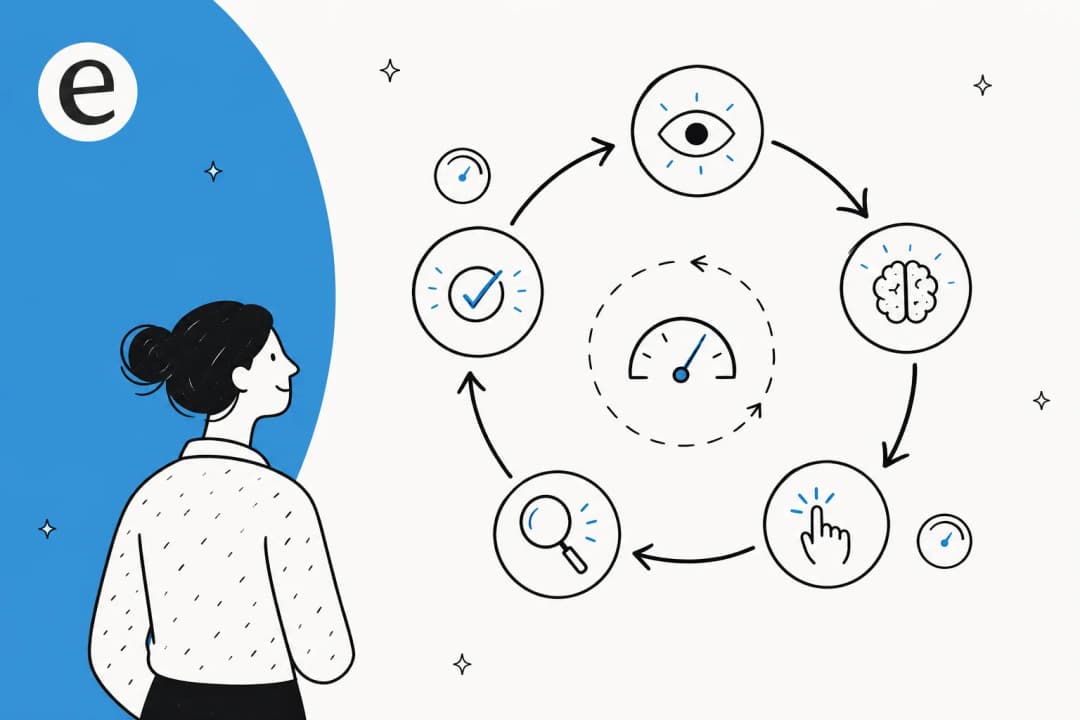
Chatbase frames the lifecycle in five steps on its homepage [https://www.chatbase.co]:
- Build & deploy your agent (train on business data, configure actions).
- Agent solves your customers' problems.
- Refine and optimise.
- Route complex issues to a human.
- Review analytics and insights.
The trick is the model picker and the integration surface. On Standard and above, you get advanced OpenAI, Anthropic, Gemini, DeepSeek, Meta, and Moonshot AI models, plus Stripe, Zendesk, Salesforce, HubSpot, Zoho Desk, Freshdesk, Sunshine, Zapier, Twilio, Shopify, Slack, WhatsApp, Messenger, Instagram, Calendly, and WordPress integrations [https://www.chatbase.co/pricing]. The trade-off is depth: most reviewers describe Chatbase's model surface as wide rather than deep.
Ada: one Reasoning Engine, every channel
Ada's pitch is the opposite. Its Unified Reasoning Engine is a single AI brain that handles voice, chat, email, social, and custom channels with the same logic, the same safeguards, and the same coaching loop. The architecture has two pieces:
- Immediate responses for fast, simple inquiries.
- Background processing for complex multi-step tasks (invoice lookups, order edits, system integrations) that run in parallel without blocking the conversation.
Around the engine sit two more features that matter for support teams:
- Playbooks: multi-step workflows that retrieve live data from connected systems and execute actions (cancel orders, resend invoices, update accounts) without rigid scripting.
- Coaching: a feedback loop where refinements you make to past conversations automatically apply to future ones. No manual script editing.
Both Playbooks and Coaching are now available on voice channels as part of the Reasoning Engine launch.
Channels and integrations
This is where the architecture difference shows up most clearly.
| Capability | Chatbase | Ada |
|---|---|---|
| Web chat widget | ✓ | ✓ |
| ✓ | ✓ | |
| Slack | ✓ | (not specifically listed) |
| Messenger / Instagram | ✓ | ✓ |
| Voice / telephony | ✓ (Standard and above, 10–20 concurrent calls) | ✓ (native, omnichannel-first) |
| (via integrations and API) | ✓ (native channel) | |
| SMS | (via Twilio integration) | ✓ |
| In-app messaging | ✓ (via API and SDKs) | ✓ |
| Custom channel via API | ✓ | ✓ |
| Helpdesk integrations | Zendesk, Freshdesk, Zoho Desk, Sunshine, HubSpot | Zendesk (deep), Salesforce, ServiceNow, Freshdesk, Genesys |
| Multilingual support | 80+ languages [https://www.chatbase.co] | 50+ languages [https://www.ada.cx/platform/] |
The honest read here: Chatbase's channels list is broader on paper because it is reachable through Twilio and Zapier. Ada's channels list is shorter on paper but each channel runs natively on the same Reasoning Engine, with the same Playbooks and the same Coaching loop. For an enterprise team that wants identical agent behaviour on a phone call and a WhatsApp message, that consistency is the point of paying for Ada.
Pricing and the buyer experience
If you take one section away from this comparison, take this one. Pricing is the cleanest divider between Chatbase and Ada, and it tells you almost everything about which one fits which team.
Chatbase pricing (verified on the official pricing page, 2026-05-05)
Chatbase publishes a public pricing page with five tiers, four of them with public dollar amounts. All the numbers below are the yearly-billed prices the page displays under the Yearly toggle.
| Plan | Yearly billed | Annual total | Message credits / month | AI Actions per agent | Training size per agent | Members |
|---|---|---|---|---|---|---|
| Free | $0/mo | $0 | 50 | 0 | 400 KB | 1 |
| Hobby | $32/mo | $384/yr | 500 | 5 | 10 MB | 2 |
| Standard | $120/mo | $1,440/yr | 4,000 | 8 | 20 MB | 3 |
| Pro | $400/mo | $4,800/yr | 15,000 | 12 | 40 MB | 5 |
| Enterprise | Let's Talk | Custom | Higher | Higher | Higher | Custom |
Add-ons are also published on the same page:
- Auto recharge credits: $40 per 1,000 message credits.
- Extra agents: $300 per AI agent / year.
- Remove "Powered By Chatbase" branding: $1,188 per year.
A few quick reads. Free is real but constrained: 50 message credits per month, one member, 400 KB of training content per agent, and agents get deleted after 14 days of inactivity [https://www.chatbase.co/pricing]. Hobby is the first plan with advanced model access. Voice and telephony only show up on Standard and above. Help desk integrations and API access also gate at Standard.
The Capterra reviews on Chatbase have a recurring theme around the credit caps:
"The limits on conversations/tokens becomes a roadblock." (Verified Reviewer, Director IT, Capterra, October 19, 2023)
"Price. I think that the price is a bit too steep for the credits that are allocated for each plan." (Verified Reviewer cons section, Capterra)
That is normal for a credit-based model: the tier you buy is roughly the volume you can serve, and you stair-step up as you grow.
Ada pricing (what the official pricing page shows)
Ada's official pricing page does not display any pricing. It is a "Book a free consultation" form with the following gate, verbatim:
"We are a great fit for companies with at least 300,000 annual customer service conversations." (Ada Pricing Page)
The form asks for company name, business email, and your expected customer contact volume across all channels (with a dropdown that ranges from 0–99,999 up to "More than 100 million") [https://www.ada.cx/pricing].
That is the entire public pricing surface. There are no plan names, no dollar amounts, no per-conversation rates, and no annual contract bands you can quote without going through sales. Various third-party blogs and Reddit threads cite figures (you can find numbers like "$300k+ annually" in some discussions), but those are not on Ada's pricing page, and we are sticking to what is.
The implication is straightforward. If you cannot meet the 300,000 annual conversations minimum or you need to budget a tool without sitting through a discovery call, Ada is not built for you. If you can meet it and you want a single platform across voice, chat, email, social and custom channels, the consultation is the entry point.
Where each one really shines
Pricing aside, the product strengths are real on both sides.
What Chatbase is good at
-
Time-to-deploy. Capterra reviewers consistently flag the speed at which an agent can be trained and deployed. The signal-to-noise on positive reviews is strongest around setup. From the public reviews:
"What I like most about Chatbase is how easy it is to import sources to the Bot. It loads quickly and there are many different resource types to add." (Isaiah A., IT Solutions Specialist, Capterra, September 7, 2023)
-
Model choice. Hobby and above unlock advanced OpenAI, Anthropic, Gemini, DeepSeek, Meta, and Moonshot AI models, with a built-in playground to experiment [https://www.chatbase.co/pricing]. If your team has opinions about which underlying LLM they want, that flexibility matters.
-
Transparent self-serve. A real free tier, public pricing, and a free build path with no credit card. For a team that wants to test before they buy, this is unblocked from day one.
What Ada is good at
-
Omnichannel consistency. A single Reasoning Engine across voice, chat, email, WhatsApp, SMS, Instagram, in-app and custom channels, with policies deployed once and replicated everywhere [https://www.ada.cx/platform/]. For a global brand that needs the same answers on a phone call as in a chat window, this is the headline feature.
-
Voice that actually works. Voice channels run on the same engine as everything else, with Playbooks and Coaching now extending to voice. For high-stakes voice scenarios (account recovery, identity verification, complex troubleshooting), this is meaningful.
-
Compliance and governance. Ada lists HIPAA, SOC 2, GDPR, and AIUC-1 certifications, plus enterprise-grade governance for AI behavior. For regulated industries, that is non-negotiable.
-
Deep helpdesk integration. Ada has an explicit Zendesk partnership page and supports multiple Zendesk Help Centers connected to a single AI agent (a March 2026 addition). For Zendesk shops, that depth is hard to match.
Where each one struggles
Both products have honest weak spots that are worth flagging.
Chatbase
-
Hallucinations on long-tail content. The single most common Capterra critique is that the bot occasionally invents answers or URLs with confidence:
"I think a temporary issue is that Chatbase is growing fast and focused on building out a product. The customer information and service, the documentation seems to get less focus than the focus on product development. The problem with 'hallucination' is quite apparent and the bot WILL generate a totally wrong answer with that greatest of eloquence and confidence, which might (rightfully so) throw some people off." (Rik H., Information Technology and Services, Capterra, September 16, 2023)
-
Credit cliffs. The message credit caps (50 / 500 / 4,000 / 15,000 per month) feel generous in the abstract and tight in practice once you launch in front of real users. The auto-recharge add-on at $40 per 1,000 message credits is the safety valve, but the unit economics need watching.
-
Integration depth varies. Multiple reviewers mention third-party integrations that worked for the basic case but stopped short of querying data tables or appointment systems:
"I couldn't find a way to smoothly integrate with some third-party apps, read from data tables for things like appointment schedules, and look up prices to answer customer questions." (Shaun R., Business Development, Capterra, September 19, 2023)
Ada
-
Pricing opacity. The most consistent buyer complaint about Ada in third-party reviews and Reddit threads is the lack of public pricing. We are not going to lift those quotes here because we cannot link them to a stable source, but the pattern is real and the pricing page itself confirms there is no way to budget without sales involvement.
-
Onboarding length. Public case studies and review summaries describe full enterprise deployment as an 8 to 16 week effort with Ada's professional services team. The builder UI is approachable, but a serious rollout is a project, not a weekend.
-
Knowledge ingestion is narrower than it looks. Ada is strongest when learning from a clean, well-maintained help center. It struggles with unstructured sources (past tickets, internal wikis, PDFs, Notion, Confluence) compared to platforms designed to ingest those formats natively. If your support knowledge lives in tickets and docs rather than help center articles, that gap will show up in resolution rates.
Where eesel fits
A short pitch, then back to the comparison.
We make eesel AI, and we sit in the middle of the Chatbase / Ada axis on purpose. eesel is self-serve like Chatbase (real free trial, public pricing, no required sales call), but the core product is built for support teams: it ingests past tickets, macros, and helpdesk knowledge alongside help center articles, with deep integrations into Zendesk, Freshdesk, Slack, and many more channels.
The honest decision tree we point teams to:
- If you need an AI agent in front of customers in days, you have one or two members on the team, and your volume is modest, Chatbase is the fastest path. The free tier is real.
- If you process at least 300,000 annual customer service conversations, you have a help center you trust, and you want one platform across voice, chat, email and social, Ada is built for you. The consultation is the entry.
- If you are between those poles (mid-market, growing, want a product that learns from real ticket data and runs in your existing helpdesk without a 16-week rollout), eesel is the option we built for that shape.
You can browse eesel pricing on the same page where you sign up. No sales call required.
How to choose between Chatbase and Ada
Three questions usually settle it.
- What is your annual conversation volume? Below ~100k, Chatbase is the realistic option. Above 300k, Ada will engage you and the math may work. In between, there is no clean answer from either side and you will need to evaluate alternatives.
- Do you need omnichannel voice? If voice is a first-class channel for your business (and your customers expect identity verification, recovery flows, complex troubleshooting on a phone call), Ada's Reasoning Engine is built for that. Chatbase has voice and telephony from Standard up, but the depth is different.
- Can you live with a sales-led purchase? If procurement requires a public price sheet, or if you want to test the product hands-on before paying, Ada's process is a hard constraint. Chatbase is the opposite: free tier, public pricing, no friction.
Two notes that are easy to miss.
- Plan for the cliff. With Chatbase, the cliff is credit limits. With Ada, the cliff is the contract structure. Both are real and both are worth modelling before you commit.
- Knowledge curation is the work. Whichever platform you pick, the quality of your AI is downstream of the quality of your knowledge. Help center articles, past tickets, internal docs and macros are the unit of value. Tools come and go; the curated knowledge layer compounds.
Wrapping up
Chatbase and Ada are not really competitors in the same buying decision. They are two different products optimised for two different teams. Chatbase wins on speed, transparency, and breadth of model and integration choices. Ada wins on omnichannel depth, voice, governance, and consistency at very high volume.
If your team sits squarely in one of those two camps, the choice is straightforward. If you are between them, the right move is usually to talk to a tool that was built for the middle. We made eesel AI for exactly that shape. You can start a free trial, or read more comparisons over on our blog. Either way, the next step is to test the agent on your real ticket data, not on a marketing demo.