
ServiceNow is one of those rare enterprise platforms that almost every CIO has an opinion on before the first demo. It's the system 85% of the Fortune 500 already use, the platform that rebranded in 2025 as the AI control tower for business reinvention, and the vendor whose pricing nobody outside a procurement meeting actually knows.
This review is for the enterprise leader who wants the honest version. What ServiceNow actually does in 2026, where it earns its reputation, where it limps, what it really costs, and how to think about it next to your existing helpdesk and AI tooling. The verdict, briefly, is that ServiceNow is rarely the wrong answer for a Fortune 500 IT shop and rarely the right answer for a mid-market team that just needs a faster ticket queue. Everything below is the long form of that.
What ServiceNow actually is in 2026
ServiceNow (NYSE: NOW) sells itself as a single AI-grounded workflow platform, with the line on the homepage being AI without workflows is just expensive advice. The pitch is that most companies have AI; few have the data to ground it, the workflows to deploy it, and the governance to control it. ServiceNow's argument is that combining all three on one platform is what makes AI actually act on enterprise work, not just describe it.
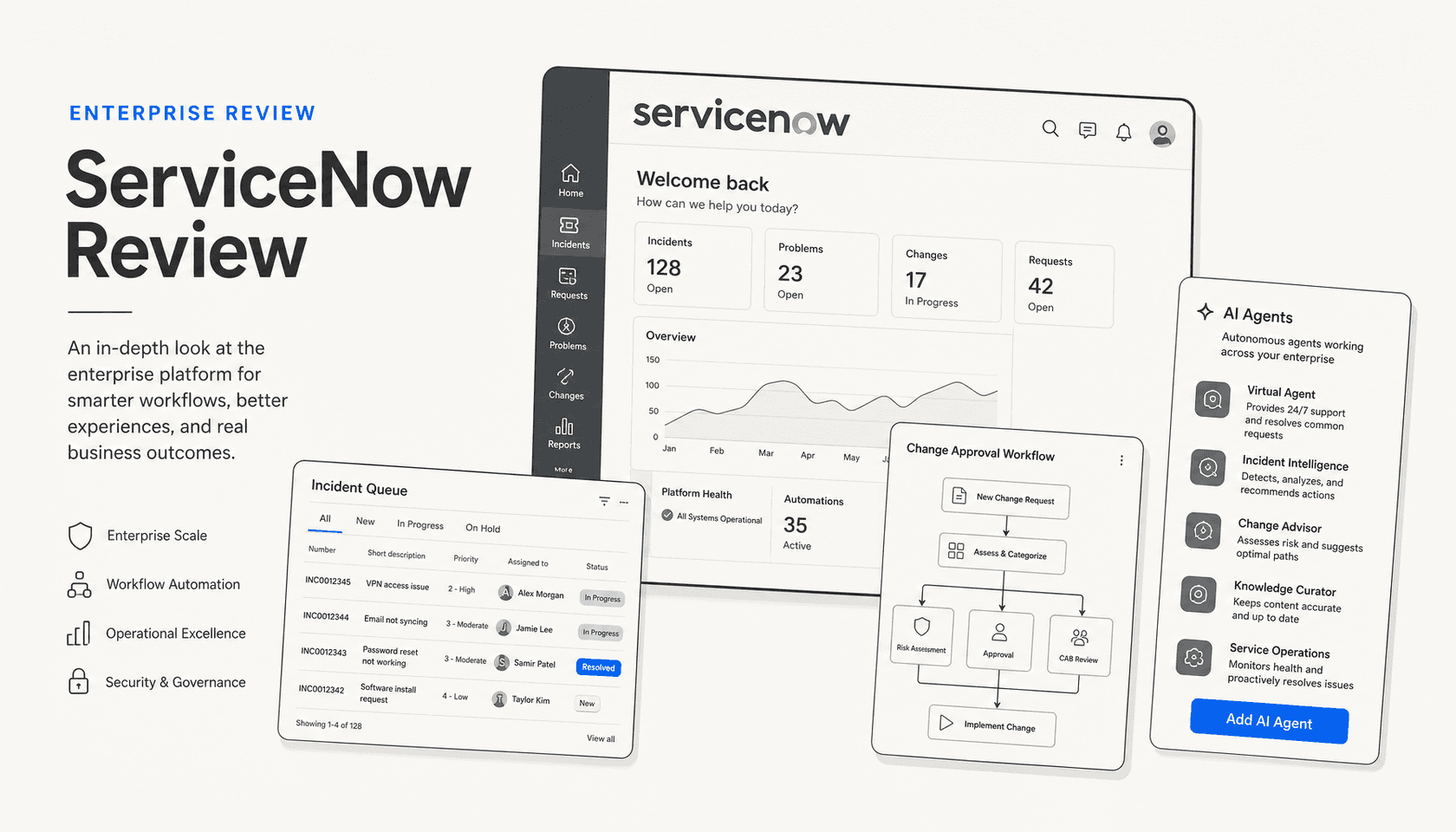
The product surface is sprawling. The ServiceNow AI Platform is sold across IT (ITSM and ITOM), CRM and Customer Service Management, Employee Experience, Risk and Security, and App Development. Underneath that are five overlapping AI brands: Now Assist for generative AI features, AI Agents for autonomous task workers, AI Control Tower for governance, Workflow Data Fabric for data plumbing, and the new Autonomous Workforce for AI specialists with defined roles.
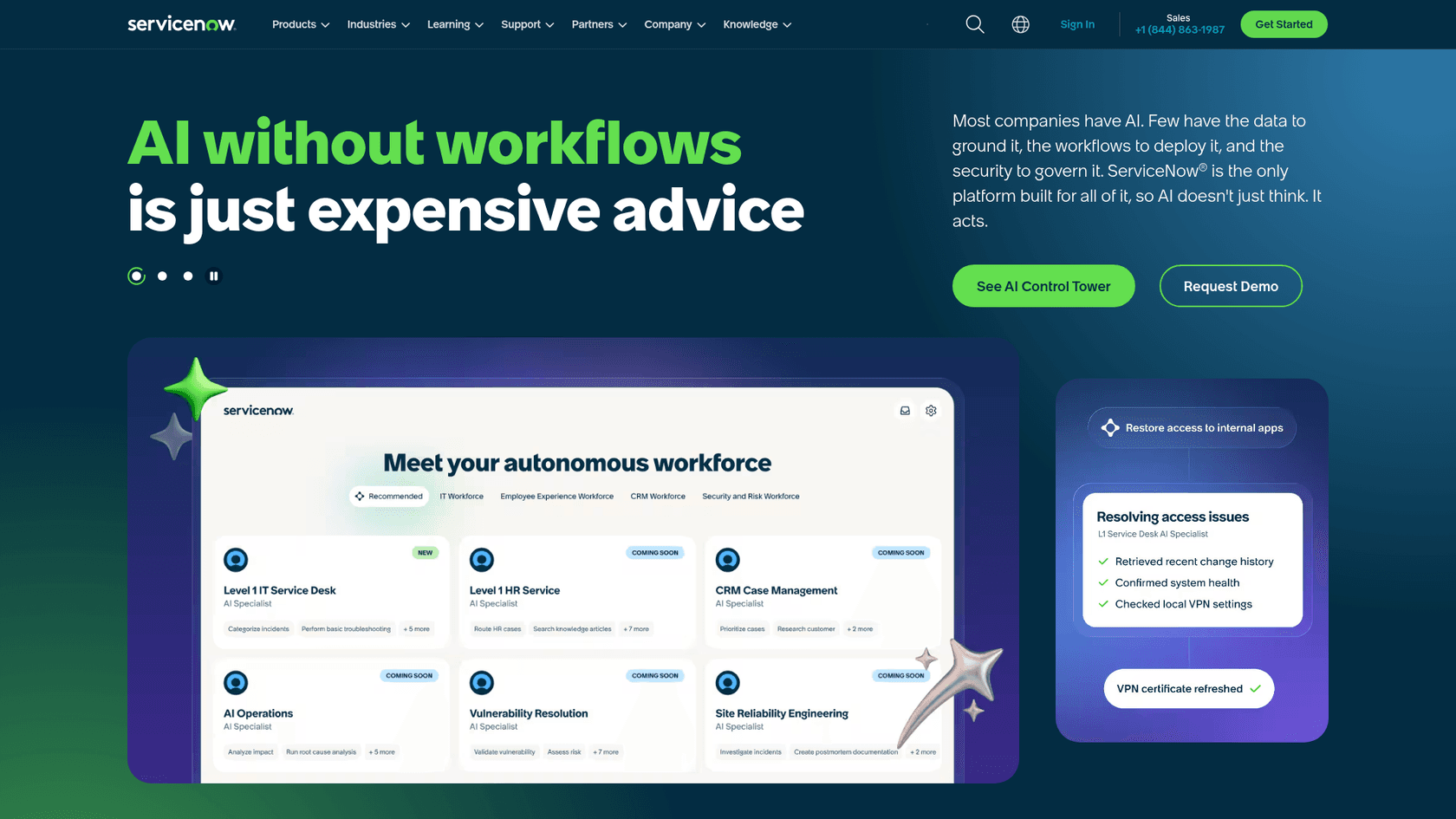
The headline numbers ServiceNow displays on its homepage are real and worth keeping in mind for context: 85% of the Fortune 500 on the platform, a 98% renewal rate, and 95B workflows running through it. Customer logos shown across the homepage include CVS, Pepsico, Rolls-Royce, FedEx, Booking.com, Fujitsu, Adobe, Lenovo, Visa, and the City of Raleigh. This is what the enterprise category leader looks like.
A second thing happened in late 2025 and early 2026 that materially changes how ServiceNow looks for AI buyers: ServiceNow completed its acquisition of Moveworks in December 2025, then on February 26, 2026 launched the Autonomous Workforce line plus a new product called EmployeeWorks (Moveworks-powered conversational front door). Importantly, Moveworks continues to be sold standalone and ServiceNow's ITSM tiers now bundle a matching Moveworks for ITSM SKU at every tier (Foundation, Advanced, Prime). If your last view of ServiceNow predates that bundling story, the platform you're evaluating now looks different.
What's actually inside the platform
The reason a ServiceNow demo can feel overwhelming is that the platform packs at least six distinct product layers. We'll walk through the four that matter most for enterprise IT and customer service buyers.
ITSM and the three-tier package model
ServiceNow ITSM is still the load-bearing helpdesk product. Reviewers consistently describe it as the place where IT chaos becomes structured work. One G2 reviewer put it well: instead of scattered requests and unclear priorities, everything flows through a defined system where issues are tracked, routed, and resolved with accountability.
ITSM is sold in three named tiers, all with a Get Custom Quote button at the end. Foundation covers the basics (Service Catalog and Request Management, Incident Management, Asset Management and CMDB, Virtual Agent, Workflow Data Fabric, the foundational Now Assist tier). Advanced adds Major Incident Management, Change Management, Problem Management, AI Voice Agents, Platform Analytics, and Process Mining. Prime is where the autonomous AI specialists sit, including the L1 Service Desk AI Specialist, AI Agents for ITSM, and the AI Agent for Digital End-User Experience. Each tier also includes the matching Moveworks for ITSM SKU.
This packaging matters because most of the AI value sits at Prime. If you are evaluating ServiceNow specifically for autonomous resolution, you are usually evaluating Prime, not Foundation.
Now Assist, the GenAI layer
Now Assist is ServiceNow's generative AI brand. It is not one feature; it's a family that varies per product line, with separate SKUs for Now Assist for ITSM, ITOM, CSM, FSM, HRSD, SPM, and Creator, plus industry variants for Financial Services, Public Sector, Telecommunications, and Technology providers. The capabilities are familiar to anyone who has tried a modern AI helpdesk feature: summarization, conversational chat, content creation for emails and ticket replies, code and flow generation, custom skills, and AI search.
Under the hood, ServiceNow runs its own domain-specific Now LLMs trained on ServiceNow customer use cases, and supports third-party models including Microsoft Copilot, Azure OpenAI, IBM WatsonX, OpenAI, and Google Gemini. Customers can also bring their own LLMs.
The most common Now Assist criticism on G2, in a real reviewer's words, is that the AI features can feel limited unless they are properly configured and licensed. That's a real concern. Now Assist is rarely the part of ServiceNow that ships with magic out of the box, and Prime-tier licensing plus internal configuration work are usually what unlock it.
AI Agents and the Autonomous Workforce
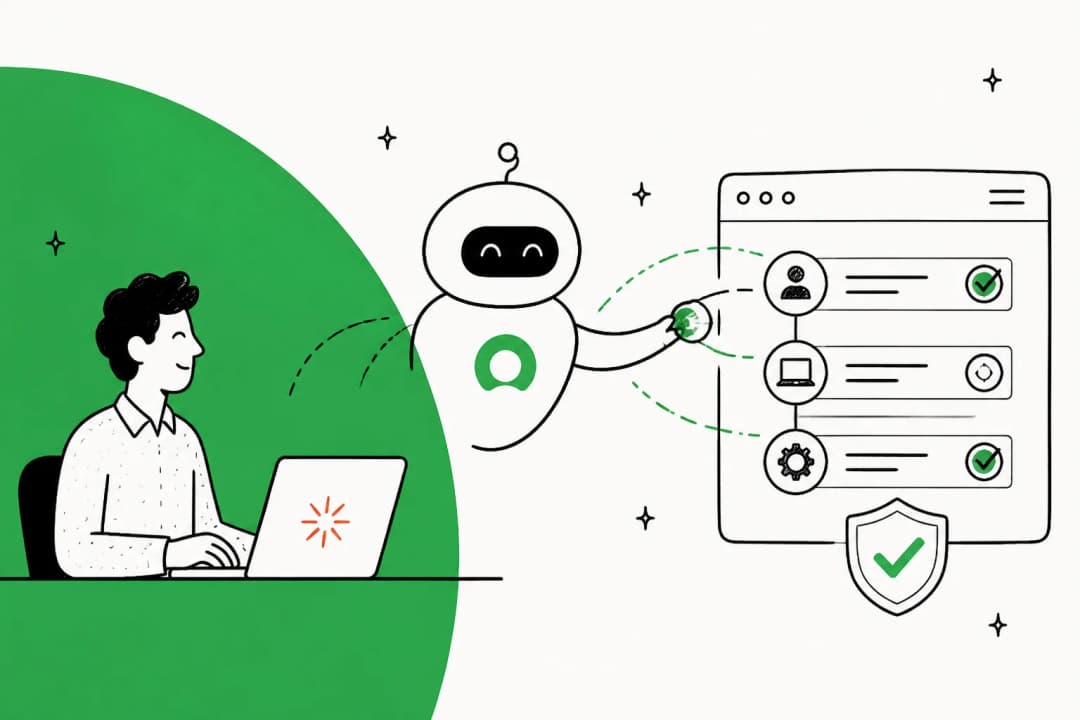
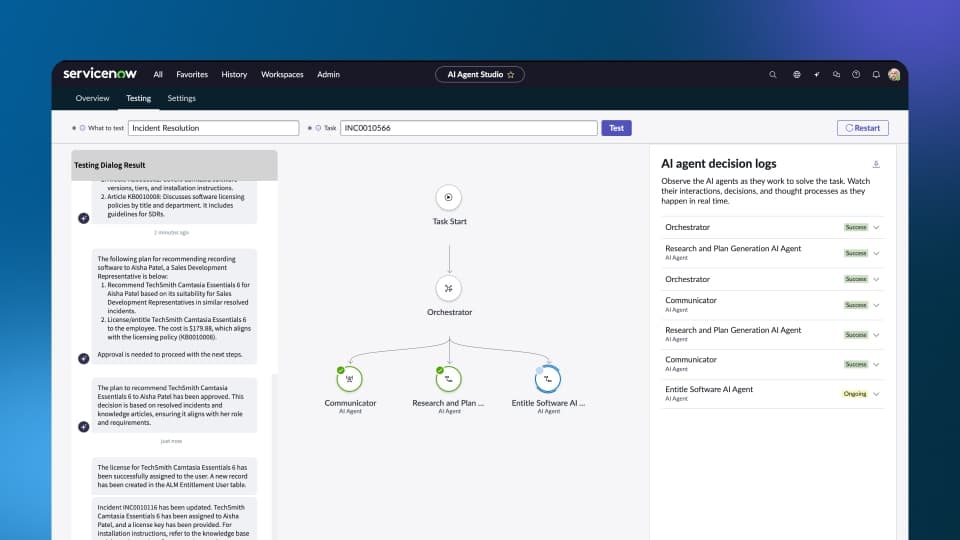
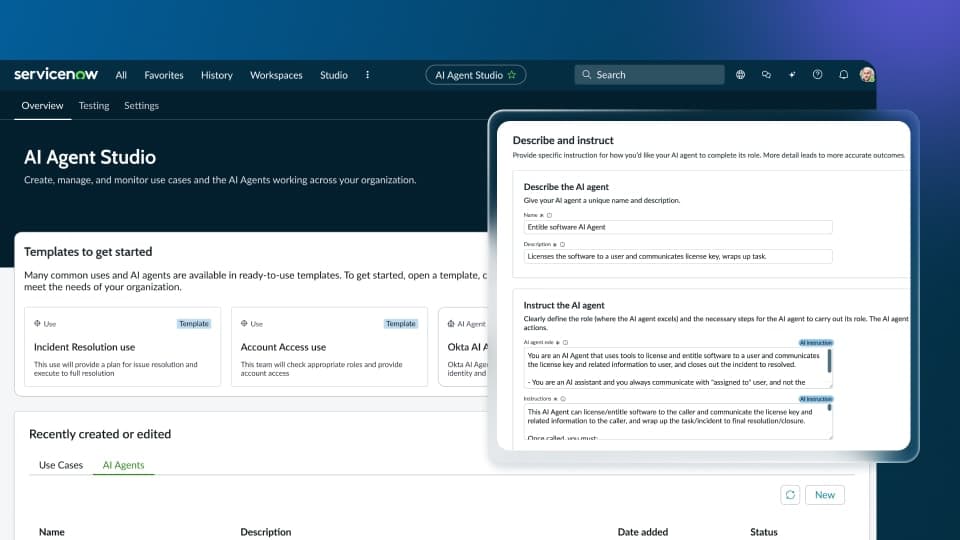
The piece that gets the most marketing oxygen in 2026 is AI Agents. ServiceNow draws a line between chatbots and agents that's worth quoting: chatbots use machine learning to interpret inputs and generate responses, while ServiceNow AI Agents can learn, think, collaborate, and act autonomously without relying upon user inputs. The platform side of this is built on AI Agent Studio for building, AI Agent Orchestrator for coordinating multi-agent workflows, and AI Agent Fabric for cross-system communication using the Model Context Protocol and Agent2Agent (A2A).
The Autonomous Workforce line, announced February 26, 2026, is a step beyond per-task agents. The pitch is AI specialists with defined roles, like a Level 1 Service Desk AI Specialist, an Employee Service Agent, or a Security Operations Analyst, that orchestrate work end to end. The first one shipped is the L1 Service Desk AI Specialist, which autonomously resolves password resets, software access provisioning, and network troubleshooting, drawing on knowledge bases, historical incident data, and proactive remediation workflows. ServiceNow says it's already handling 90%+ of internal IT requests and resolving cases 99% faster than human agents at ServiceNow itself. The L1 specialist is in controlled availability today and expected to be generally available in Q2 2026.
What's notable is that ServiceNow is now explicit that its AI reads from historical incident data. Older third-party reviews sometimes assert Now Assist does not learn from past tickets, but ServiceNow's own product pages now contradict the absolute version of that claim. The differentiation a buyer can fairly draw is between vendor-side fine-tuning of foundation models (what ServiceNow does) and per-tenant ticket learning that's exposed and tunable to the customer (what some lighter AI agents like eesel emphasize), not whether ServiceNow touches ticket history at all.
AI Control Tower and Workflow Data Fabric
The two pieces buyers ignore until procurement asks about them are AI Control Tower and Workflow Data Fabric. Control Tower is governance, with modules for AI Asset Lifecycle Management, AI Risk and Compliance Management, AI Case Management, and prebuilt content for the NIST AI Risk Management Framework and EU AI Act. Workflow Data Fabric is the data plumbing, with Zero Copy Connectors that let agents query data in source systems without staging it twice.
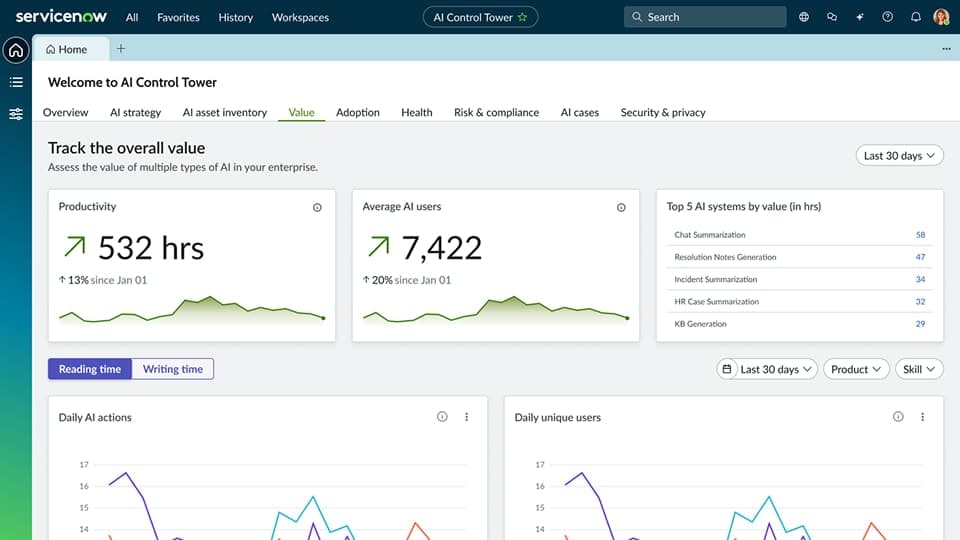
For a regulated enterprise (financial services, public sector, healthcare), this is often the difference between a successful AI deployment and a stalled one. It's also the part most under-described in marketing comparisons against lighter AI tools, because the value only shows up when an internal audit team or regulator turns up.
What ServiceNow actually costs
Here is the part where most reviews get fuzzy. ServiceNow does not publish dollar pricing on any public page we could find. The most detailed pricing surface is the ITSM plans and packages page, which lists three tiers and a feature matrix and ends in a Get Custom Quote button. The same is true for AI Control Tower and Now Assist. The platform-level pricing URL many older reviews link to (now-platform/pricing.html) returns a 404.
The honest version of a pricing table for ServiceNow ITSM in 2026 looks like this.
| Tier | What it includes | Price |
|---|---|---|
| ITSM Foundation | Service Catalog, Request Management, Incident Management, Asset Management, CMDB, Virtual Agent, Workflow Data Fabric, Service Graph Connectors for End-User Computers, Now Assist Foundation, Moveworks for ITSM Foundation, App Engine (10 tables) | Get custom quote |
| ITSM Advanced | Foundation + Major Incident and On-Call Management, Change Management, Problem Management, AI Voice Agents, Platform Analytics Advanced, Process Mining (10K records/year), Now Assist Advanced, Moveworks for ITSM Advanced, App Engine (25 tables) | Get custom quote |
| ITSM Prime ("Recommended") | Foundation + Advanced + L1 Service Desk AI Specialist, AI Agents for ITSM, AI Agent for Digital End-User Experience, DevOps Change Velocity, Digital Product Release, Now Assist Prime, Moveworks for ITSM Prime, Process Mining (15K records/year), App Engine (50 tables) | Get custom quote |
A few honest caveats on this table. ServiceNow's own ITSM pricing page cites three customer ROI figures (a $750,000 IT cost reduction at Amedisys, 166% increase in self-service rate at RACQ, 30% reduction in MTTR at Mindsprint) but these are customer outcomes, not list prices. Third-party consultancies like Unthread and RedressCompliance have published their own estimates of ITSM at $70 to $200 per fulfiller per month with Now Assist adding 25% to 60% on top, but those figures are not on a ServiceNow page. We've gone deeper into how the license role model works in our ServiceNow license cost breakdown, where we walk through Fulfiller, Approver, Requester, and Unrestricted user concepts that ServiceNow's own pricing page does not detail.
The other line item rarely on a vendor pricing page but always on the actual invoice is implementation. ServiceNow does not publish a deployment timeline either, but customer wins like Stellantis onboarding 48,000 employees in one day suggest fast time to value for narrow use cases, while broader rollouts typically pull in ServiceNow Professional Services or a partner. Don't underestimate this line on the budget.
Where ServiceNow earns its reputation
When ServiceNow goes well, it goes very well. The pattern reviewers describe in G2's 1,270 reviews is the same one you hear in customer interviews: workflow automation across teams, structured incident and change management, integrations across the stack (Microsoft Teams, SharePoint, identity providers, monitoring tools like Dynatrace), and dashboards that make IT visible to executives.
The customer outcomes ServiceNow advertises are also genuinely impressive. From the homepage and AI Agents page (these are vendor-published numbers, but they're attributed to named customers):
- Pure Storage: 7x faster case resolution
- Bell Canada: 3 million customer support calls deflected annually
- AstraZeneca: 30,000+ hours reclaimed annually
- Hitachi Vantara: 40% reduction in time spent building forms and workflows
- Griffith University: 87% increase in self-service rate
- CANCOM: 80% ticket deflection rate across all departments
Internally at ServiceNow, the Autonomous Workforce is handling 90%+ of employee IT requests, with the L1 specialist resolving cases 99% faster than human agents. The City of Raleigh's CIO Mark Wittenburg recently said:
"ServiceNow Now Assist is already resolving 98% of initial touchpoints by intelligently routing requests to the right destination, and we're excited about the potential for Autonomous Workforce to further transform how we deliver IT support." Mark Wittenburg, CIO, City of Raleigh
The recognition record matches. ServiceNow is a 6x consecutive Leader in the Gartner Magic Quadrant for Enterprise Low-Code Application Platforms, ranked #1 in the 2025 Gartner Critical Capabilities for Building and Managing AI Agents Use Case, and a leader in four Gartner Magic Quadrant reports including AI Applications in IT Service Management (September 2 2025) and CRM Customer Engagement Center (October 27 2025). The 4.4 out of 5 G2 score, with 69% of reviewers giving five stars and 24% giving four, is consistent across more than a thousand reviews.
For a Fortune 500 IT shop with the team and budget to land a multi-quarter platform project, this is what the destination looks like. The reasons to pick ServiceNow are real.
Where ServiceNow falls short
The same G2 page that praises workflow automation also lists, in the auto-aggregated cons tags, Learning Curve (72), Expensive (60), Complexity (56), Limited Customization (51), and Customization Difficulty (48). Read those tags together and you get the real shape of the criticism: ServiceNow is broad, deep, and expensive to own.
The pricing critique recurs. From a verbatim G2 review:
"Pricing is another concern, since the platform is relatively expensive and the ROI tends to be clearer for larger organizations than for smaller teams. While customer support and documentation are generally helpful, resolving advanced or environment-specific issues can still take time. The AI and intelligence features are promising as well, but they can feel limited unless they are properly configured and licensed. Overall, ServiceNow is very capable, but its complexity and cost can be real barriers." Anonymous G2 reviewer, ServiceNow ITSM
The complexity critique is structural. ServiceNow's surface area is enormous, the product names overlap (Now Assist vs AI Agents vs Autonomous Workforce vs Virtual Agent vs EmployeeWorks), and meaningful AI features sit at the top of the package. Reviewers report that running ServiceNow well typically requires either dedicated platform engineers or a long-term partner relationship, and both add to total cost of ownership.
The AI critique is more nuanced in 2026 than it used to be. The L1 Service Desk AI Specialist and the new Autonomous Workforce framing are real upgrades, and the historical incident data point closes a gap reviewers used to call out. But the same review patterns hold: the value lights up under Prime, after configuration, in the hands of a team with platform fluency. None of that makes ServiceNow wrong; it just makes it heavy.
When ServiceNow makes sense and when it doesn't
A short, honest decision matrix.
| Situation | ServiceNow fit |
|---|---|
| Fortune 500 IT shop with a five-figure-plus monthly enterprise platform budget and a multi-quarter rollout horizon | Strong fit. This is where the platform earns its reputation. |
| Multi-department workflow problem (IT + HR + customer service + risk all touching the same tickets) | Strong fit. Single platform, single data model, single audit trail. |
| Mid-market team that needs faster IT ticket triage with AI on top | Often overkill. Lighter ITSM tools (Freshservice, Jira Service Management, Zendesk) plus an AI agent on top usually fit better. |
| You've already standardized on Salesforce or another CRM and want AI for customer service | Worth comparing against Salesforce Agentforce and lighter AI agents that connect to your existing helpdesk before consolidating onto ServiceNow CSM. |
| You need an AI agent answering tickets next quarter, not next year | Different category. ServiceNow Prime is the destination, not the bridge. |
The cleanest version of this is the one ServiceNow itself implies in its Workflow Data Fabric marketing. Even ServiceNow says you don't have to rip and replace your existing systems to get value, with Workflow Data Fabric explicitly framed as eliminating rip-and-replace or months of custom integration work. For most enterprises evaluating ServiceNow against another helpdesk, the question isn't "ServiceNow or them," it's "what do we route through ServiceNow and what stays where it is."
How ServiceNow fits next to your existing helpdesk and AI tooling
If your enterprise is partway down the ServiceNow path (most are: 85% of Fortune 500 is hard to argue with), the practical question is rarely "should we use ServiceNow." It's "where does ServiceNow earn its keep, and where do we keep using something lighter."
Three patterns we see work in 2026:
- Customer service AI on top of your existing helpdesk. Many enterprises run customer support on Zendesk, Freshdesk, or another vendor and don't want to migrate to ServiceNow CSM just to get autonomous resolution. An AI agent layer like eesel sits on top of the helpdesk you already have, learns from past tickets, and runs as the front line for repetitive support work. The ServiceNow Customer Service Management product can still own the workflow side without forcing the front-line AI into the platform.
- ITSM consolidated, customer service kept separate. Several large customers run ServiceNow ITSM Prime for the IT desk (because the workflow breadth is genuinely best in class) and a separate, lighter system plus AI agent for customer-facing support. This avoids over-paying for Now Assist licenses across teams that don't need the full platform.
- AI specialists in the ServiceNow tier you already pay for, AI agents on top of everything else. ServiceNow's Autonomous Workforce is real, especially for IT use cases that already live on the platform. For everything else (HR, customer service, internal knowledge, sales support), an external AI agent that reads your tools and answers in chat is usually faster to deploy. We covered this trade-off in more depth in our ServiceNow competitors guide.
The point isn't that ServiceNow is wrong. It's that "the AI control tower for business reinvention" is a strategic destination, not a tactical move. If you have a tactical problem (an IT queue piling up, a support team under volume pressure, a knowledge base that nobody searches), there are lighter answers that get you there next quarter while the ServiceNow rollout takes its course.
The verdict, briefly
ServiceNow is the rare platform that lives up to its category-leader status. The 2026 product, especially with the Moveworks acquisition, Autonomous Workforce launch, and the L1 Service Desk AI Specialist, is a substantial step forward from the platform reviewers were criticizing two years ago. For a Fortune 500 IT shop solving an enterprise coordination problem, it is hard to do better.
The honest caveats are about cost, complexity, and time to value. Pricing is opaque, the Prime tier is where most of the AI value sits, and meaningful deployments typically require dedicated platform engineering. If your problem is narrower (an existing helpdesk you're happy with, a customer service team that needs AI now, a department that doesn't want to wait for the platform rollout), there are lighter answers that pair well with ServiceNow rather than competing with it.
If you are evaluating an AI agent that connects to your existing helpdesk, knowledge base, and docs, learns from past tickets, and runs autonomously without a multi-quarter platform migration, eesel is built for exactly that. We integrate with the helpdesk you already have (Zendesk, Freshdesk, Jira Service Management, ServiceNow itself) and let you ship an AI agent in a week instead of a year. You can start free and decide later whether you want to consolidate onto ServiceNow CSM, sit alongside your existing setup, or run your AI front line independently. The choice should fit your team's reality, not your vendor's roadmap.
Frequently Asked Questions
Is ServiceNow worth it for enterprise teams in 2026?
How much does ServiceNow actually cost?
What's the difference between ITSM Foundation, Advanced, and Prime?
Can I add AI to my existing helpdesk without moving to ServiceNow?
What goes wrong in ServiceNow implementations?


Article by
Kurnia Kharisma Agung Samiadjie
Kurnia is a software engineer and writer at eesel AI with two years of SEO experience, writing about AI tools, helpdesk software, and customer support. He pairs a developer's understanding of how these products are built with search-driven research into what actually ranks and resonates with the people searching for them.