
Choosing the right call center software can feel like picking between two solid options that do similar things in different ways. If you're comparing CloudTalk and Dialpad, you're looking at two established platforms with strong reputations but fundamentally different approaches to business communications.
Both platforms serve sales and support teams, but they prioritize different strengths. CloudTalk built its foundation on call center functionality with extensive international reach. Dialpad started as a unified communications platform and layered AI capabilities throughout its stack.
This comparison breaks down exactly how they differ across pricing, features, AI capabilities, and use cases. We'll also look at how modern AI alternatives like eesel AI approach customer conversations differently from traditional call center software.
What is CloudTalk?
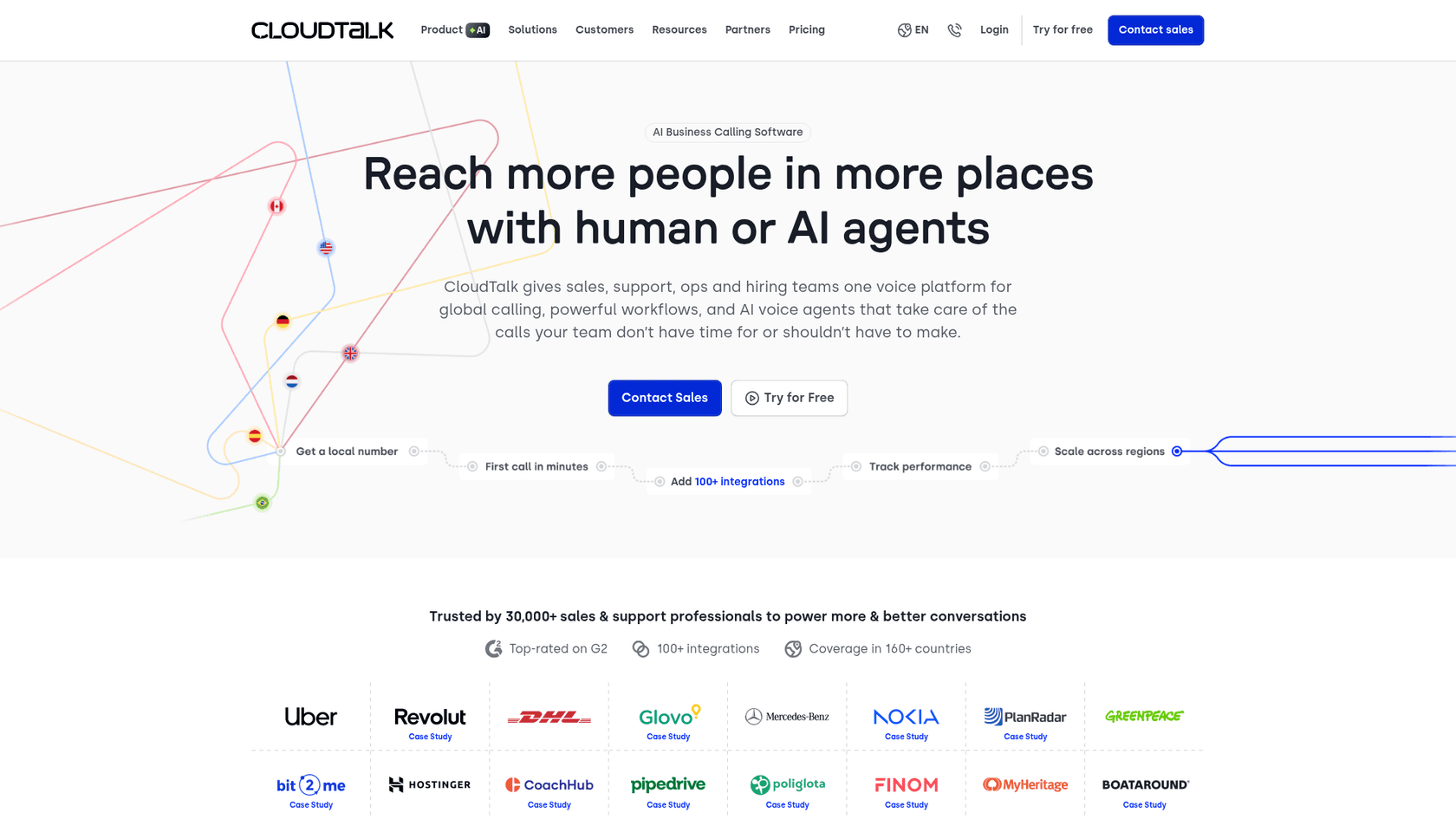
CloudTalk is a cloud-based call center software founded in 2016, designed specifically for sales and support teams that need reliable voice communications with global reach. The platform serves over 30,000 users across 160+ countries, positioning itself as a call-center-first solution rather than a general communications tool.
The core philosophy behind CloudTalk is straightforward: provide dedicated calling features that help teams reach more prospects and support customers efficiently. This focus shows in their dialing capabilities. CloudTalk offers power dialers, parallel dialers, and preview dialers that let sales teams work through contact lists systematically. Support teams get IVR systems, smart routing, and call queuing to manage inbound volume.
CloudTalk's standout feature is its AI Voice Agent, an autonomous calling capability that handles inbound and outbound conversations without human intervention. These agents can schedule appointments, look up order information, and handle basic support queries. Unlike add-on AI features, CloudTalk treats this as a separate product tier priced at €350-1,250 per month for teams.
The platform integrates with 100+ tools including major CRMs like Salesforce, HubSpot, Zendesk, and Pipedrive. Users rate it 4.4/5 on G2 based on over 1,400 reviews, with particular praise for call quality and international number availability.
CloudTalk makes most sense for teams that prioritize calling functionality above all else. If your sales process relies heavily on outbound dialing or you support customers across multiple countries, the platform's specialized features justify its position in the market.
What is Dialpad?
Dialpad takes a broader approach to business communications. Founded in 2008, the platform evolved from a VoIP provider into an AI-native unified communications platform that handles voice, video, messaging, and contact center functionality in one system.
The key differentiator is Dialpad's AI infrastructure. Since 2018, the company has built proprietary AI capabilities directly into its platform rather than bolting them on as features. DialpadGPT, their custom large language model, powers real-time transcription, sentiment analysis, and automated coaching across all conversations.
Dialpad's AI Recaps automatically generate call summaries and action items, saving reps from manual note-taking. AI CSAT scores customer satisfaction on every call (achieving 91% coverage compared to the 15% industry average from post-call surveys). AI Playbooks provide real-time guidance during sales calls, surfacing battle cards when competitors are mentioned or objections arise.
The platform offers three main products: Dialpad Connect for unified communications, Dialpad Support for contact centers, and Dialpad Sell for sales teams. Each shares the same AI foundation but targets different use cases. Dialpad also offers AI Agent for autonomous customer interactions, using conversation-based pricing where you pay only when the AI delivers value.
With 4.4/5 on G2 from nearly 4,000 reviews, Dialpad scores highly for ease of use and AI capabilities. The platform integrates with 70+ tools including Microsoft Teams, Google Workspace, and major CRMs.
Dialpad fits teams that want communications, collaboration, and AI intelligence in one platform rather than managing separate tools for calling, meetings, and customer support.
CloudTalk vs Dialpad: Feature comparison
AI capabilities
This is where the two platforms diverge most significantly.
CloudTalk offers AI Voice Agents as a premium add-on. These autonomous agents handle routine calls independently, escalating to humans when needed. The platform also provides AI conversation intelligence for sentiment analysis and call insights. However, CloudTalk's AI features feel more like dedicated tools you layer on top of calling functionality.
Dialpad embeds AI throughout the entire platform. Every call gets real-time transcription. Every conversation receives automatic summarization. Every rep gets live coaching cues. The AI works silently in the background rather than requiring activation or configuration. Dialpad reports that customers see 50% improvement in post-call efficiency with AI Recaps and save 30 hours monthly per agent using AI transcripts.
Bottom line: If you want AI as an autonomous calling feature, CloudTalk delivers. If you want AI woven into every interaction, Dialpad's approach is more comprehensive.
Dialing and automation
CloudTalk wins on pure dialing capabilities. The platform offers power dialer, parallel dialer, and preview dialer modes that let sales teams optimize their outreach approach. These features come standard on the Expert plan (€49/user/month) rather than requiring enterprise tiers.
Dialpad provides power dialer functionality but reserves it for higher-tier plans. The platform's strength is less about dialing volume and more about making each call more effective through AI guidance.
For teams making hundreds of outbound calls daily, CloudTalk's dialing infrastructure provides more flexibility. For teams focused on call quality and coaching, Dialpad's approach may prove more valuable.
Global reach
CloudTalk offers coverage in 160+ countries, making it one of the most internationally comprehensive calling platforms available. This matters if you need local numbers across multiple regions or support customers worldwide.
Dialpad covers 70+ countries, which serves most businesses but falls short of CloudTalk's global footprint. If international presence is critical to your operations, CloudTalk's broader coverage is a clear advantage.
Integrations
CloudTalk connects with 100+ tools natively, including deep CRM integrations that sync call data automatically. The platform emphasizes help desk connectivity with Zendesk, Intercom, Gorgias, and others.
Dialpad offers 70+ integrations, with some advanced features locked to higher tiers. The platform's native integration with Google Workspace and Microsoft 365 makes it attractive for organizations already using those ecosystems.
Both platforms integrate with major CRMs, but CloudTalk's broader integration library gives it an edge for teams using specialized tools.
Call quality and reliability
CloudTalk advertises 99.999% uptime SLA across all plans, backed by global VoIP infrastructure. The platform's focus on calling means reliability is core to its value proposition.
Dialpad also offers 99.999% uptime but ties it to Enterprise plans. Standard and Pro plans get solid reliability without the formal SLA guarantee.
For most businesses, both platforms provide adequate reliability. Enterprise teams requiring guaranteed uptime may prefer CloudTalk's universal SLA or Dialpad's Enterprise tier.
Pricing comparison
CloudTalk pricing
| Plan | Price (annual) | Key Features |
|---|---|---|
| Lite | €19/user/month | Basic calling, US/Canada unlimited, softphone |
| Starter | €25/user/month | Worldwide calling, SMS, basic IVR |
| Essential | €29/user/month | Advanced IVR, smart routing, 100+ integrations |
| Expert | €49/user/month | Power dialer, wallboards, advanced analytics |
| AI Voice Agent | €350-1,250/team/month | Autonomous AI calling |
Add-ons: Power Dialer (€15/user/month), Parallel Dialer (€39/user/month), AI Conversation Intelligence (€9/user/month)
Dialpad pricing
| Plan | Price | Key Features |
|---|---|---|
| Standard | $15/user/month | Basic calling, AI transcription, unlimited US/CA calling |
| Pro | $25/user/month | CRM integrations, analytics, 24/7 phone support |
| Enterprise | Custom | Advanced features, 99.999% SLA, SSO, dedicated support |
AI Agent: Conversation-based pricing (contact sales)
Key pricing insights
CloudTalk includes more advanced calling features at lower price points. You get power dialer functionality at €49/user/month versus Dialpad's higher-tier requirements. However, CloudTalk's AI Voice Agent is a significant add-on cost.
Dialpad includes AI features at every tier, making its entry-level plan more capable than the price suggests. The platform's conversation-based pricing for AI Agent can be more cost-effective for teams with variable call volumes.
Both platforms offer 14-day free trials. CloudTalk's annual discounts provide meaningful savings, while Dialpad's month-to-month flexibility suits teams testing the waters.
CloudTalk vs Dialpad: User experience
Setup and onboarding
CloudTalk promises setup in under 24 hours with no developer work required. The platform provides guided onboarding to get teams operational quickly. This matters for sales teams that can't afford downtime during transitions.
Dialpad offers quick self-serve setup for basic features. Advanced configurations may require support involvement, though the platform's modern interface reduces complexity.
Support quality
CloudTalk provides 24/7 support via chat, email, and phone across all plans. User reviews consistently praise their responsiveness and technical knowledge.
Dialpad offers 24/5 support on Standard plans and 24/7 phone support on Pro and Enterprise tiers. Reviews are more mixed on responsiveness, with some users reporting longer resolution times.
Mobile experience
CloudTalk's CloudTalk Go app for iOS and Android focuses on core calling functionality. The mobile experience is streamlined for agents who need to handle calls on the go.
Dialpad's mobile apps offer full feature parity with the desktop experience. This includes access to AI features, messaging, and video conferencing from mobile devices.
User feedback
A CloudTalk user from Poliglota reported: "The transition was super smooth. Agent productivity grew by 10%."
Dialpad users frequently cite ease of use as a primary benefit. One reviewer noted: "Best part is ease of use, clear audio, dependable performance."
Who should choose CloudTalk?
CloudTalk fits teams that prioritize calling infrastructure and international reach. Consider CloudTalk if:
- Your sales team makes high volumes of outbound calls and needs power dialer, parallel dialer, or preview dialer capabilities
- You support customers across multiple countries and need local numbers in 160+ regions
- You want AI Voice Agents specifically for autonomous calling rather than general AI assistance
- Your budget works better with predictable per-user pricing that includes advanced dialing features
- Call center functionality is your primary need rather than unified communications
The platform's focus on voice communications means you're getting specialized tools rather than generalist features. For pure calling performance, CloudTalk delivers more at lower price points.
Who should choose Dialpad?
Dialpad suits teams that want AI-enhanced communications across channels. Consider Dialpad if:
- You need unified communications (voice, video, messaging) in one platform rather than separate tools
- Real-time AI transcription, coaching, and sentiment analysis would improve your team's performance
- Your organization uses Google Workspace or Microsoft 365 and wants seamless integration
- You prefer AI features built into every plan rather than added as premium options
- Video conferencing is as important as voice calling for your team
Dialpad's AI-native approach means intelligence is woven throughout the platform rather than layered on top. Teams that value insights and automation over raw dialing power will find more to like here.
The modern alternative: eesel AI for AI-powered customer interactions
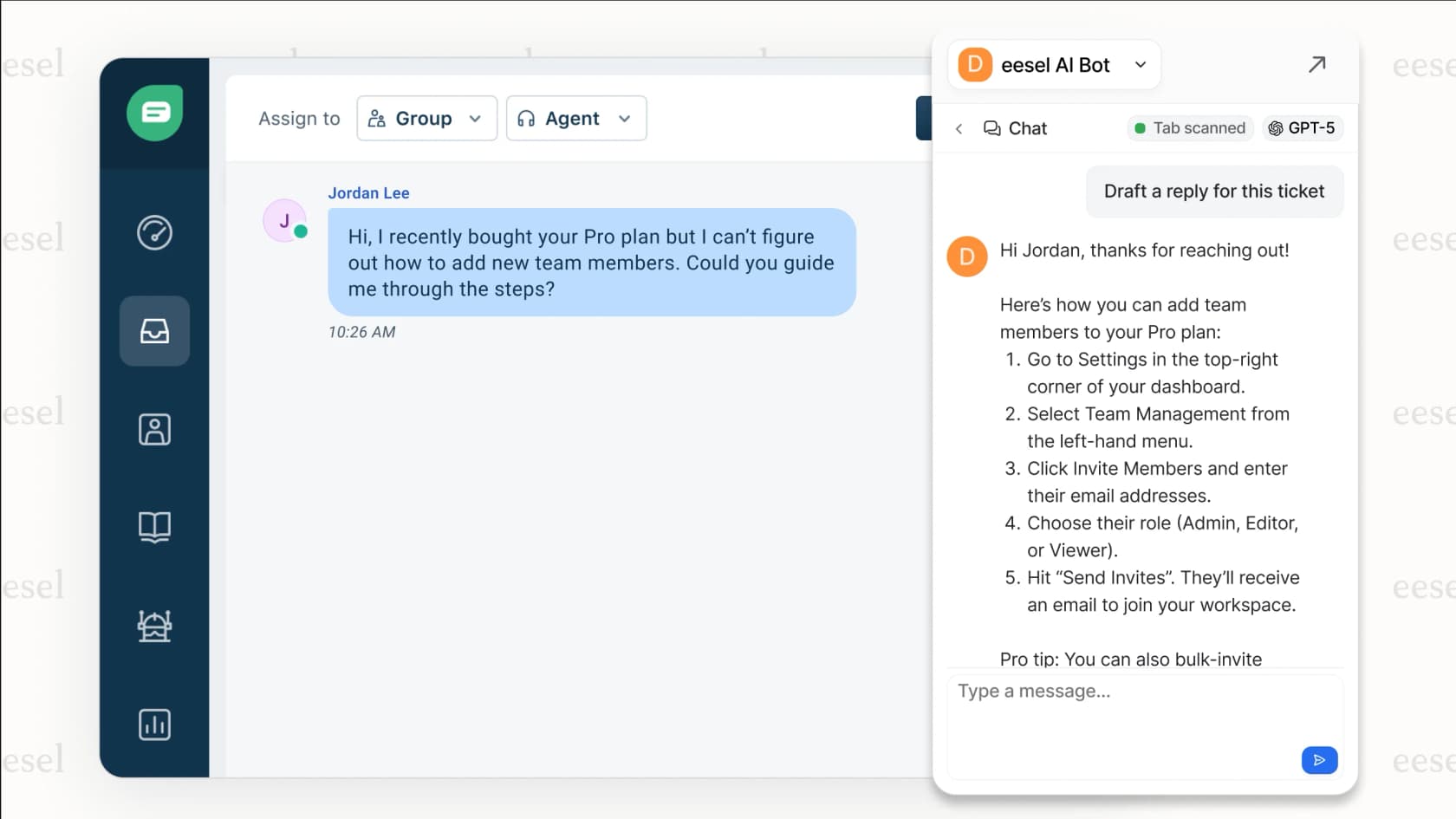
While CloudTalk and Dialpad improve how teams handle phone calls, modern AI alternatives approach customer conversations differently. eesel AI works as an AI teammate within your existing help desk rather than a separate calling platform.
Here's how the approach differs:
Hire, don't configure. Traditional call center software requires complex setup, workflow design, and dialer configuration. With eesel AI, you connect it to your help desk (Zendesk, Freshdesk, Intercom, Gorgias) and it learns your business from past tickets, help center articles, and macros. No documentation uploads. No training wizards. eesel understands your tone, policies, and common issues from day one.
Progressive rollout. Like any new hire, eesel starts with guidance. You can have it draft replies for agent review, limit it to specific ticket types, or set business hours when it operates. As eesel proves itself, you expand its scope to handle full conversations autonomously. You control when to "promote" eesel based on actual performance.
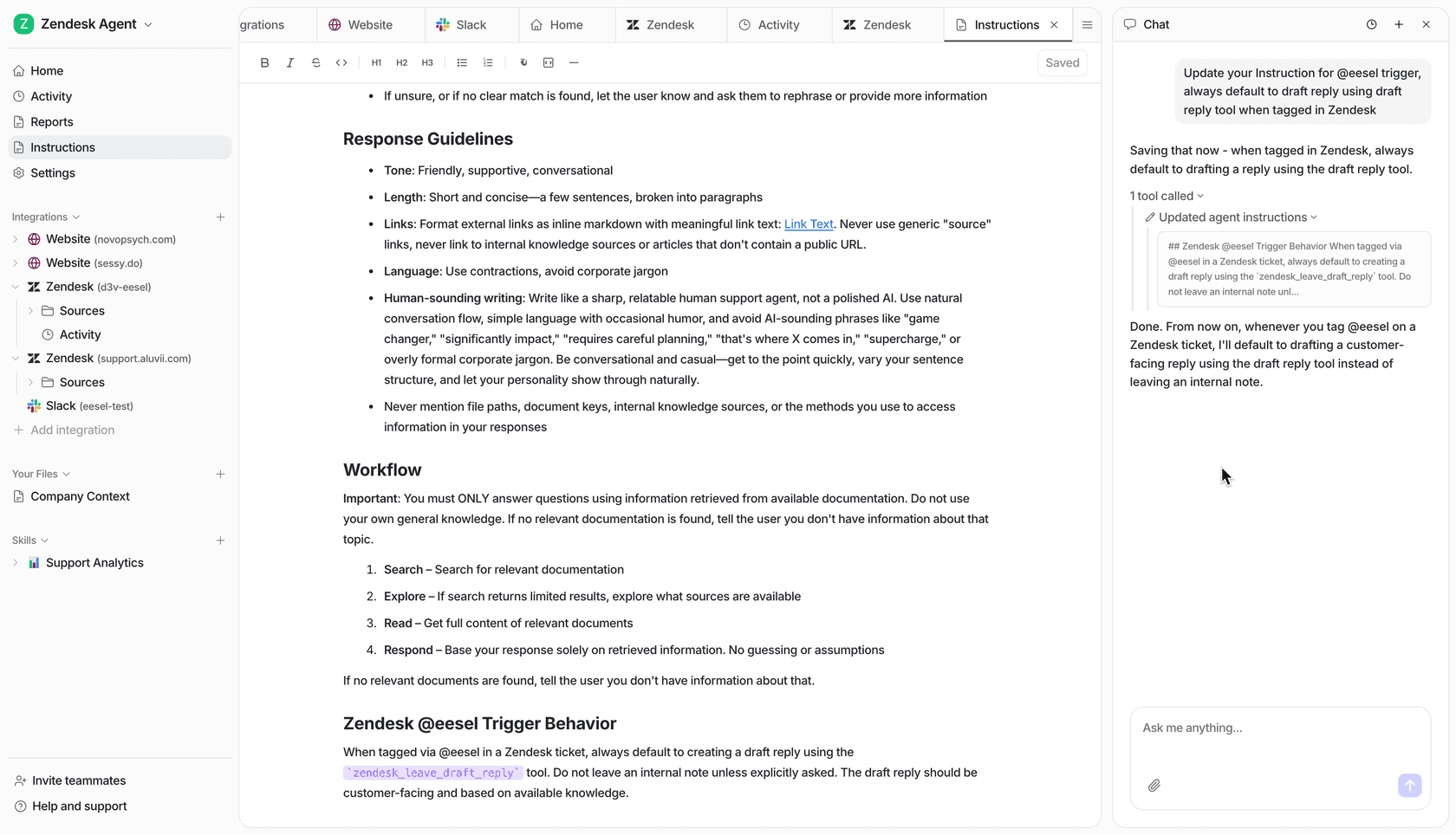
Plain-English instructions. Instead of complex dialer configurations or IVR trees, you define what eesel handles in natural language: "If the refund request is over 30 days, politely decline and offer store credit." "Always escalate billing disputes to a human." No code required.
Works across channels. While CloudTalk and Dialpad focus on voice, eesel handles email, chat, and social messaging within your existing help desk. This matters because many customer interactions never need a phone call if they're handled well in written channels first.
When to consider eesel AI: If you want AI to handle customer conversations across channels (not just phone), work within your existing tools rather than adding another platform, and prefer the mental model of hiring a teammate over configuring software.
Making your decision: CloudTalk vs Dialpad
The choice between CloudTalk and Dialpad comes down to what your team values most.
Choose CloudTalk if: Calling is your core need, international reach matters, and you want advanced dialing features included rather than locked behind enterprise tiers.
Choose Dialpad if: You want unified communications, AI woven throughout your interactions, and real-time coaching for your team.
Both platforms serve their target use cases well. CloudTalk's call-center-first approach delivers more dialing power per dollar. Dialpad's AI-native platform offers intelligence that compounds in value over time.
If you're evaluating either platform, take advantage of their 14-day trials. Test call quality, integration setup, and how your team actually uses the features. The best choice is the one your agents adopt and your customers benefit from.
For teams ready to explore how AI can handle customer conversations differently, eesel AI offers a free trial that connects directly to your existing help desk.