

Is there a ChatGPT group chat plan to buy?
No. The current OpenAI retirement notice says the wind-down began on July 9, 2026. Since that date, people cannot create a group chat, turn an existing conversation into one, or join through an invite link.
Existing chats have not disappeared immediately. OpenAI says they remain available during the transition, then become read-only. You can still review the messages, files, and images already in a group, but you cannot rely on the feature for a new shared workflow.
This changes the answer to the original pricing question. Previously, a reader could ask whether their own ChatGPT plan included group chats. Now the useful answer is: do not upgrade a plan to get a feature that is being retired. Preserve anything important in an existing group and choose a replacement based on the work that must continue.
Price the replacement by the job
“We need another group chat” usually bundles several different needs together. Splitting them apart makes the cost comparison more honest.
| If the team needs to… | Start with | Cost to evaluate |
|---|---|---|
| Make one decision together | Existing chat, meeting, or document | No new AI workflow; record the decision clearly |
| Co-write a proposal or plan | Shared document | Editor time, source ownership, and review |
| Ask recurring internal questions | A teammate with maintained knowledge | Usage, source upkeep, access, and review |
| Coordinate an incident | Existing incident channel and system of record | Human ownership and reliable status updates |
| Automate a multi-system task | A purpose-built workflow | Engineering, permissions, monitoring, and failure handling |
A plan price is only one part of the cost. A cheap shared assistant can become expensive when it gives answers from outdated material, sends a message without the right approval, or forces a teammate to clean up after every response.
For a recurring question, ask four practical questions before comparing vendors:
- What sources should the assistant use, and who keeps them current?
- Where should it answer: a document, a team channel, or a support queue?
- What actions, if any, may it take without a person checking first?
- How will the team inspect an answer, approval, or downstream message?
Those answers tell you whether you need a simple chat tool, a shared workspace, or an integrated teammate. They also make an apples-to-apples cost comparison possible.
What to do with an existing group chat
OpenAI does not require action to preserve existing history. If the group is still active, though, decide where the next conversation will live before the chat becomes read-only. Use a data export if the group needs a separate copy of its material.
Do not move everything automatically. Keep the useful parts:
- A decision and its owner belong in the team’s system of record.
- A current process belongs in the maintained runbook or help center.
- A working draft belongs in the document the team will keep editing.
- A recurring question belongs with the sources that answer it, not in a pile of old chat messages.
The old group chat can remain a reference. It should not be the only place where the team expects current instructions to live.
A shared AI workflow needs more than a subscription
Imagine a sales-operations team replacing a shared thread used for questions about discount approvals. Before opening an AI teammate to a second regional team, the manager wants to know what the workspace is paying for and whether answers still use the current approval policy. Buying more ChatGPT seats would not answer those questions.
A useful replacement retrieves the approved discount policy and names the required approver. It does not award a discount or infer approval from an old group discussion. Someone still owns the policy, authorizes any commercial action, and decides how much paid AI work to enable.
For teams that already work in Slack, the eesel Slack integration can answer an @mention in a thread and continue the follow-up conversation there. An authorized person connects Slack, the bot must join the intended channel, and the owner enables the mention trigger and permitted actions. It can join public channels through the enabled action; private channels require a human invite. Slack itself is not copied into the teammate as knowledge; connect the policy, help center, Confluence, website, or files that should ground the answer.
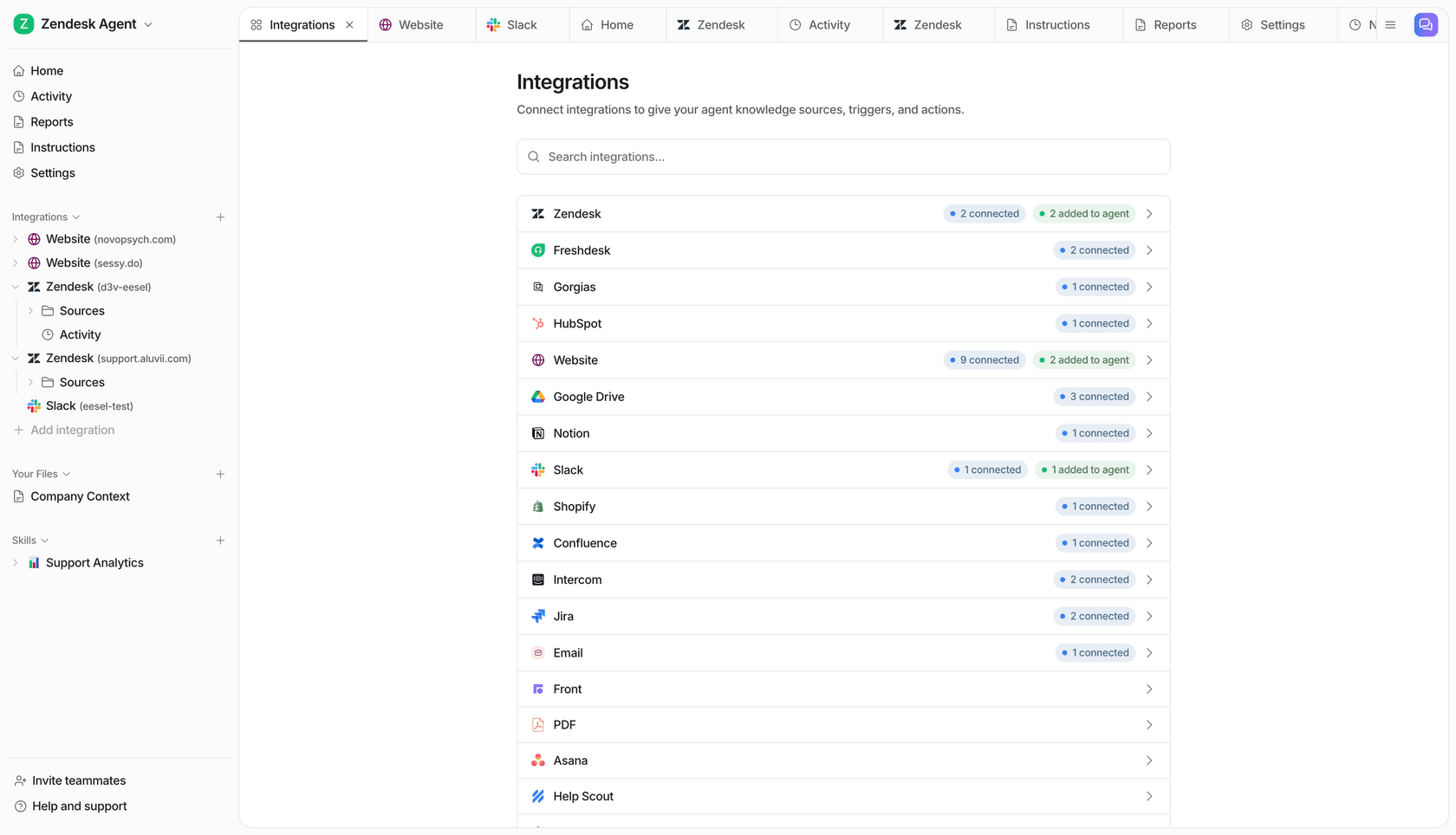
The eesel integrations view, used to check what a teammate can access.
Check paid usage and permissions with eesel CLI
The eesel CLI operates the same workspace and teammate as the dashboard. With Node.js 18.17 or newer, a person can use it from a terminal, a script can use its JSON output, and a coding agent such as Claude Code, Codex, or Cursor can inspect the setup.
Before expanding a shared workflow, use the CLI to answer the pricing and permission questions that matter. billing reports live billing state; status shows the current plan; integrations shows what is connected; approvals shows held actions; and activity shows what the teammate has been doing. These observation commands are free.
npx @eesel/cli whoami
npx @eesel/cli status --agent "Operations knowledge"
npx @eesel/cli billing --agent "Operations knowledge"
npx @eesel/cli integrations --agent "Operations knowledge"
npx @eesel/cli approvals --agent "Operations knowledge"
npx @eesel/cli activity --agent "Operations knowledge"
For the regional rollout, ask Codex to summarize the current billing state and recent activity, then list what the owner still needs to decide. For example: which teammate is handling discount questions, which source contains the approval thresholds, and whether a connected tool could change a quote. billing is read-only. It does not purchase capacity, impose a spending cap, or predict the cost of the next conversation.
Keep a dated copy of the billing output before and after an owner-approved pilot. Compare it with recorded activity, but do not attribute the entire difference to your test if other teammates or automations were running. This gives the manager observed workspace information for the rollout decision instead of an invented per-seat savings claim. It is not a substitute for the applicable rates and billing terms.
Chat is different from the inspection commands. It is live, billed workspace work, not a pricing calculator or a permission sandbox. Approve the test budget and use a controlled teammate without production quote-writing permissions. Ask who must approve a discount under the connected policy; separately check that it does not treat a colleague's informal message as approval to change a quote. Inspect the answers and activity. A successful CLI chat does not prove a Slack reply or commercial action happened correctly; test any enabled channel separately before expanding access.
Choose the next shared workflow deliberately
The end of ChatGPT group chats does not require every team to buy a new AI plan. Some groups only need a better document or a clear place to record decisions. Others need recurring, source-backed answers in the channel where work already happens. Still others need an automation that is worth owning and maintaining.
Price the outcome, not the retired feature. The right replacement is the one whose sources, permissions, usage, and human ownership match the work the group is trying to do.
Use eesel CLI before you expand shared AI work
eesel can give a team a teammate that answers recurring questions from the sources the team approves. Use the dashboard to connect and configure it, then use the CLI to inspect the same teammate’s plan, billed usage, integrations, held actions, and activity before widening access.
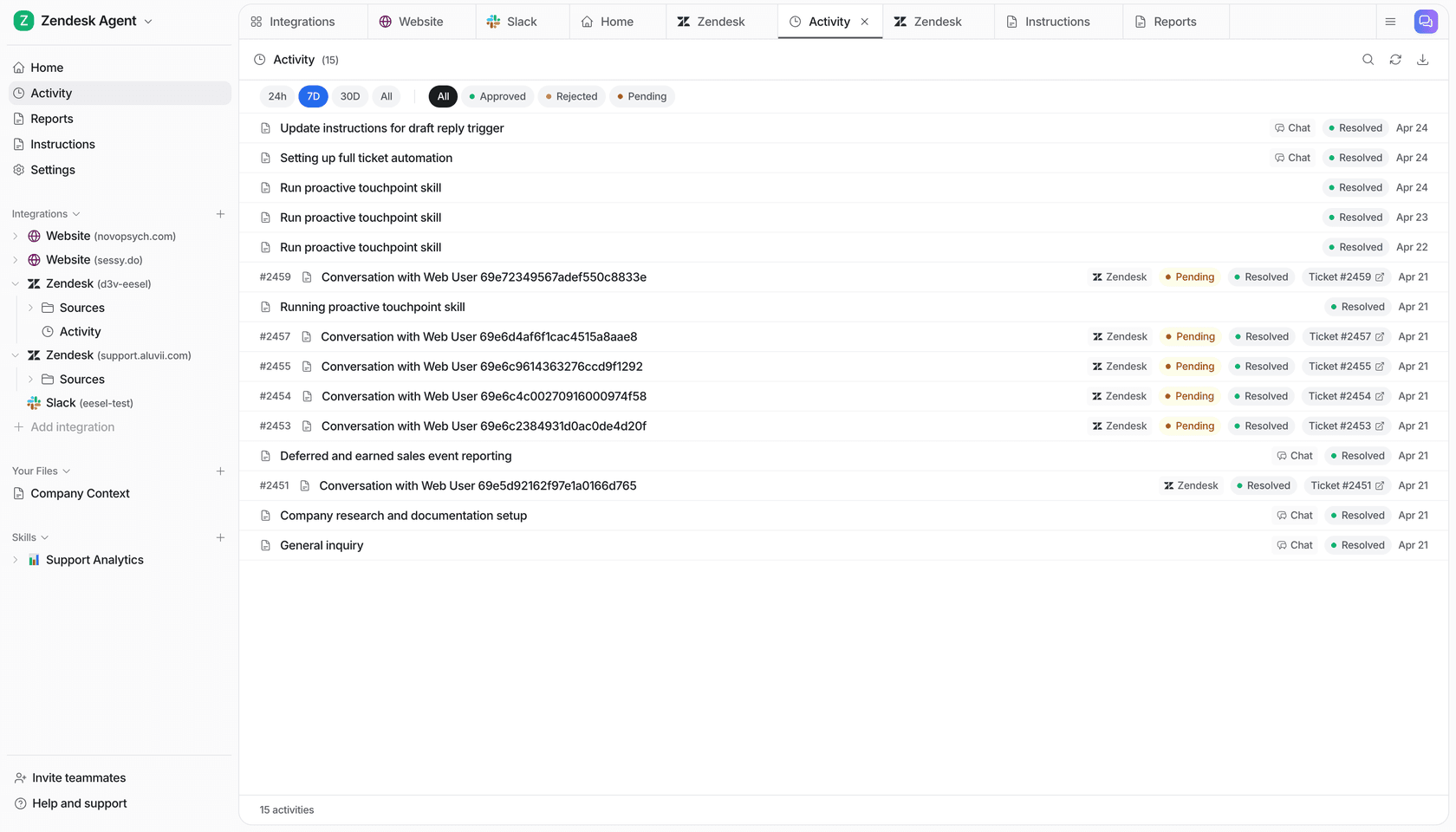
The eesel activity view, where a workspace owner can review completed work.
Try eesel with one maintained source, a defined channel, and a person accountable for the result.
Frequently Asked Questions
Do ChatGPT group chats cost extra?
There is no current group-chat upgrade to buy. OpenAI began winding down the feature on July 9, 2026, so a Free, Go, Plus, Pro, Business, or Enterprise plan should not be chosen to obtain new group-chat access.
Can I create a ChatGPT group chat with Plus or Pro?
No. OpenAI says people can no longer create a group chat, convert an existing conversation into one, or join through an invite link. A paid plan does not change that retirement status.
What happens to existing ChatGPT group chats?
Existing group chats remain available during the transition and will become read-only. Messages, files, and images already shared remain accessible, but teams should decide where ongoing work will continue.
Should a team upgrade ChatGPT because its group chat is ending?
Not for the retired feature. Start with the job that needs replacing: a document for co-writing, an existing team channel for discussion, or a knowledge teammate for recurring questions. Then compare the cost and controls of that replacement.
Can eesel answer questions in Slack?
Yes, after Slack is authorized, the bot joins the intended channel, and the owner enables the mention trigger and actions. Public channels can be joined through the enabled action; private channels need a human invite. The teammate answers an @mention in a thread and continues follow-ups there. Connect relevant knowledge sources separately.
How can I inspect eesel usage and permissions before paying for more work?
The eesel CLI can show billing, connected integrations, standing instructions, held approvals, and activity for the same workspace used in the dashboard. Those checks are free; chat is live billed work, so approve any test cost before sending a message.