Beyond the basics: 9 blog writing principles for content that ranks

Stevia Putri
Last edited January 20, 2026
A lot of blog writing advice feels a bit basic. "Use short sentences," "add images," "write a catchy headline." It’s not bad advice, but it's like telling a chef to "use salt." Sure, it's necessary, but it’s hardly the secret recipe.
The real gap between content that vanishes and content that ranks, engages, and builds a brand comes down to a set of core principles. These are the foundational rules that guide every decision you make, from the topic you pick to the final call to action. They're why a post feels authoritative and genuinely helpful, not just like a string of keywords.
What are blog writing principles?
Blog writing principles are the timeless, strategic foundations of good writing. They are different from tactics.
Tactics are the "how." They're things like "put the keyword in the first paragraph" or "post on Tuesday at 10 AM." They are specific actions, and they change constantly as algorithms get updated and new platforms pop up.
That’s because principles are based on human psychology: how we take in information, what makes us trust someone, and what keeps our attention. Algorithms change, but people don’t, at least not that quickly. Focusing on these core principles makes sure your content stays relevant, no matter what Google's next update throws at you.
Foundational blog writing principles for content strategy
Before you write a single word, you need a plan. The success of a blog post is often decided long before you open up a blank document. These first principles are all about strategy, picking the right topics and doing the research to ensure your content has a purpose.
Principle 1: Write for a specific audience, not a general one
You've probably heard the saying, "If you're talking to everyone, you're talking to no one." It's a cliché because it's true. The best blog posts feel like a one-on-one conversation. They speak directly to a specific person who has a specific problem.
To pull this off, you have to know who you're writing for. What are their biggest frustrations? What questions are they Googling late at night? Are they a beginner who needs a simple definition, or an expert looking for a deep dive? Your content has to reflect that. This changes everything: the topics you pick, the language you use, and how deep you go. A post for a startup founder will sound completely different from one for a senior IT manager, even on a similar topic.
Principle 2: Back every claim with specific details
Vague statements are easy to forget. Specific details are what make your content credible, useful, and something people remember. Anyone can say, "This software is great." A great blog post proves it by showing you how and why it's great.
Don't just make claims; back them up. Use data, share a personal story about how you used a feature, or walk through an example step-by-step. Instead of saying "our tool improves efficiency," say "our tool helped one team cut their average ticket resolution time from 8 hours to 2.5 hours by automating triage." One is a fluffy marketing claim, the other is a powerful, believable result.
This is where modern tools can really help. For instance, a platform that uses context-aware research can automatically pull in specific pricing data for a product comparison or find technical specs for a review. This adds a layer of rich, factual detail that immediately makes your content more authoritative.
Principle 3: Prioritize topics with clear user intent
Every time someone types something into Google, they have a goal. They're trying to get something done. This is called user intent, and matching your content to it is essential if you want to rank.
There are a few main types of intent:
- Informational: The user wants to learn something ("what is AEO").
- Commercial: The user is researching before they buy ("best AI blog writers").
- Transactional: The user is ready to make a purchase ("eesel AI pricing").
- Navigational: The user is looking for a specific website ("eesel AI login").
An infographic explaining the four main types of user intent according to blog writing principles: informational, commercial, transactional, and navigational.
Your blog post has to directly match the intent of your target keyword. If someone is searching for the "best project management software," they want a comparison with features, pros, and cons. A blog post that only defines project management will flop because it doesn't help them achieve their goal. Always ask yourself: what is the person searching for this really trying to do? Then, make your content the best possible answer to that question.
Core blog writing principles for effective writing and craft
Once your strategy is set, it's time to write. This is where the craft comes into play. A great idea can fall flat if the writing is clunky, boring, or just hard to read. These principles are about turning your solid strategy into something people actually want to read.
Principle 4: Structure for skimmability
Here’s a tough truth: people don't read on the internet, they skim. Your audience is busy and looking for specific information. If they can't find it fast, they'll hit the back button without a second thought.
Your job is to make your content as easy to scan as possible. This means breaking up those big walls of text. Use:
- Short paragraphs: Stick to 2-4 sentences.
- Clear headings and subheadings: These act like a roadmap for your reader.
- Bulleted and numbered lists: Make key points stand out.
- Bold text: Use it sparingly to highlight the most important takeaways.
Good structure isn't about dumbing down your content; it's about respecting your reader's time. It lets them quickly get the main points and then dive deeper into the sections that matter most to them.
Principle 5: Write with a conversational and authentic voice
Nobody wants to read a textbook or a corporate press release. The best blogs feel personal and real. They build trust by sounding like a human, not a robot spitting out facts.
Write like you talk. Use a conversational tone. Speak directly to the reader with "you," and don't be afraid to use "I" or "we" to share your own perspective. This creates a connection and makes your content feel more like helpful advice from a friend than a lecture from a faceless company.
Try to avoid overly formal language and industry jargon. If you have to use a technical term, just take a second to explain it simply. This authenticity is a huge advantage, especially with so much generic AI content out there. A genuine, human voice really stands out.
Principle 6: Weave in stories and real-world examples
Our brains are wired for stories. Facts and figures can be dry and hard to remember, but a story sticks with you. Stories make abstract ideas feel real and help readers see how your advice works in the real world.
Whenever you're explaining something, try to ground it with a quick anecdote, a case study, or a real-world example. Instead of just listing tips for better customer service, share a story about a time a company gave amazing service and break down what made it so good. This makes your advice more relatable, believable, and easier to act on.
You can also boost this with social proof. Embedding relevant Reddit quotes or forum discussions into your post can be very effective. It shows your readers what real people are saying and struggling with, adding a layer of authenticity you just can't fake.
Principle 7: Create a compelling narrative arc
Even a technical blog post should tell a story. It needs a clear beginning, middle, and end. This structure keeps the reader hooked and pulls them through your content from start to finish.
- The Beginning (The Hook): Your intro needs to grab the reader's attention right away. Acknowledge their problem or ask a compelling question to show you understand them. Clearly state what problem your post is going to solve.
- The Middle (The Value): This is the main body of your post. It's where you deliver on the promise you made in your headline and intro. You provide the detailed solutions, insights, and evidence to solve the reader's problem.
- The End (The Takeaway): Your conclusion should wrap up the most important points and give the reader a clear next step. Don't just end abruptly; guide them on what to do with their new knowledge.
An infographic illustrating the narrative arc as part of blog writing principles, showing the beginning (hook), middle (value), and end (takeaway).
Technical blog writing principles for optimization and reach
You could write the most brilliant, helpful blog post in the world, but if no one can find it, it doesn't matter. These final principles are about making sure your content gets discovered. They connect the creation process to distribution, helping your content find the people who need it most.
Principle 8: Optimize for search engines and answer engines
Modern content optimization is more than just traditional SEO. Today, you also need to think about AEO, or Answer Engine Optimization.
First off, the SEO basics still matter. You need to naturally include your target keyword in key spots like your title, URL, meta description, and a few headings. This helps search engines figure out what your page is about.
But things are changing. With tools like Google's AI Overviews, search engines are trying to provide direct answers instead of just a list of links. Gartner even predicts that traditional search volume will drop 25% by 2026 because of this shift. AEO is about structuring your content to succeed in this new world. This means writing clear, concise answers to common questions and using straightforward headings that work as signposts for both users and AI crawlers.
Principle 9: Design for discoverability and engagement
Your headline is your first, and often only, chance to get a click. It has to be compelling enough to stand out on a crowded search results page. It should be specific, promise a clear benefit, and spark a little curiosity.
Once you get the click, you have to keep the reader engaged. Visuals are essential for this. Images, charts, infographics, and embedded videos do more than just make your post look nice. They break up the text, explain complex ideas, and increase the time people spend on your page, a key engagement metric for search engines.
Finally, every post needs a purpose. What do you want the reader to do when they're done reading? Your call to action (CTA) gives them that direction. Whether it's "subscribe to our newsletter," "download our ebook," or "try our free tool," a clear and relevant CTA turns a passive reader into an active one.
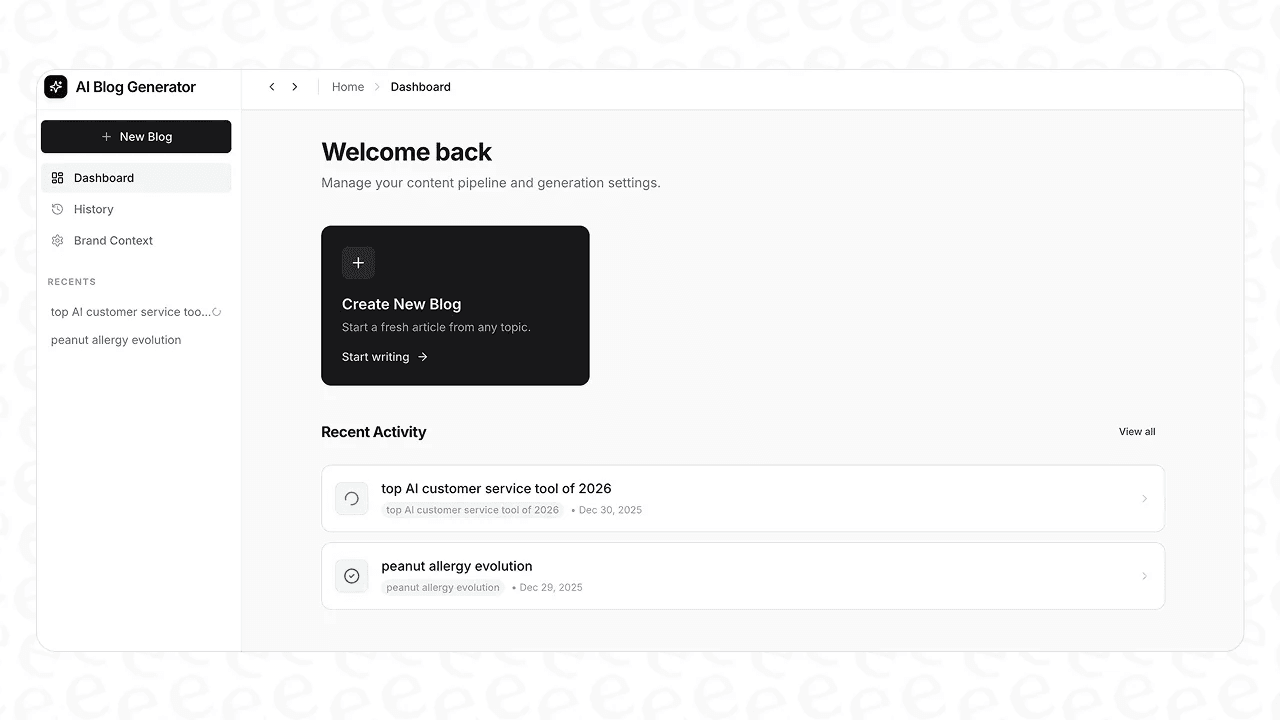
How the eesel AI blog writer operationalizes these blog writing principles
Here’s how it helps:
- Structure & Skimmability: It doesn't just give you a wall of text. It automatically generates a complete, well-structured post with a logical flow, including H2s, H3s, bulleted lists, and tables.
- Detail & Authority: Its context-aware research adds those important specific details, like pulling pricing data for comparisons. It also builds credibility by automatically adding citations and suggesting internal links to improve authority.
- Engagement & Social Proof: To add that human touch, it finds and embeds relevant YouTube videos and authentic Reddit quotes directly into the post, grounding your content in real-world conversations.
- SEO & AEO Optimization: The tool is built for modern search. It naturally includes your target keywords and structures the content with clear, answer-first formatting to perform well in both traditional search and new AI answer engines.
- Visuals: Instead of you spending hours making visuals, it generates a complete post with assets included, like custom, AI-generated images and infographics that are relevant to your topic.
By handling the execution, it lets you scale up high-quality, principle-driven content without burning out your team.
From principles to practice
Mastering blog writing comes down to understanding three pillars: a solid strategy, engaging writing, and smart technical optimization. While tactics will change, these nine principles are the constants that will help you build a successful blog and a loyal audience for the long run.
It takes time to internalize them and apply them consistently. But the payoff is content that doesn't just fill a quota; it builds authority, drives traffic, and delivers real value to your readers.
Ready to apply these principles without all the heavy lifting? See how we scaled to 750k+ monthly impressions. Generate your first article for free.

Frequently Asked Questions
Share this article

Article by
Stevia Putri
Stevia Putri is a marketing generalist at eesel AI, where she helps turn powerful AI tools into stories that resonate. She’s driven by curiosity, clarity, and the human side of technology.