A beginner guide to blog writing that actually drives traffic

Stevia Putri

Katelin Teen
Last edited January 20, 2026
Let's be honest, almost every business has tried its hand at blogging. But how many actually get anything out of it? Most of the time, it feels like you're just shouting into an empty room. You pour hours into writing a post, hit publish, and then... nothing. No new traffic, no leads, and no real business impact.
Building a blog is the easy part. Getting eyes on the blog is the real challenge.

The secret isn't just about writing well. It's about having a system. A repeatable strategy for growth that starts with understanding why you're creating a piece of content long before you type the first word.
What is strategic blog writing?
So, what do I mean by "strategic blog writing"? It's about creating content that has a clear business goal, not just sharing random thoughts like a personal diary. Hobby blogging is for fun; business blogging is a marketing channel built to attract, engage, and convert people.
The main goals are pretty simple:
- Pull in your ideal audience from search engines.
My second blog grew to 95K monthly pageviews in the first 1-2 months from Pinterest.
- Build your reputation as an expert in your field.
- Turn casual readers into potential customers.
To make that happen, every single post you publish has to solve a specific problem or answer a direct question for your reader. That’s the heart of a "people-first" approach, and it’s exactly what Google’s ranking systems are designed to reward. The moment you stop writing for yourself and start writing for your audience, everything changes.
The foundational pillars of blog writing
Before you even start writing, you need to get the groundwork right. Nailing these three things is non-negotiable if you want your content to have a fighting chance.
Understanding your audience and their search intent
"Search intent" is just a fancy term for figuring out what someone is really looking for when they type something into Google. Are they trying to learn something (informational), find a specific website (navigational), compare different options (commercial), or buy something right now (transactional)?
For example, someone searching "best running shoes" is in comparison mode (commercial intent). They're looking for reviews, lists, and a breakdown of pros and cons. A blog post about the history of running shoes would completely miss the mark. On the flip side, someone searching "how to tie running shoes" just needs a quick, simple guide (informational intent).
Keyword research and topic selection
Keyword research sounds complicated, but it's really just about identifying the exact words and phrases your audience uses when they're looking for solutions you offer. It’s how you confirm that people are actually searching for the topic you want to write about.
You don't need pricey tools to get going. A free tool like Google Keyword Planner is a great starting point. It helps you see how many people are searching for a term and find related phrases.
According to Google's SEO Starter Guide, it's also a good idea to think about the different ways people might search for the same thing. A foodie might search for "charcuterie board ideas," while a complete novice might look up "what to put on a cheese board." Good content is ready for both.
Creating a logical post structure with an outline
An outline is your roadmap. It's vital for creating a post that’s easy for people to read and for search engines to understand. A clear structure with a logical flow keeps readers on the page and tells Google what your content is about.
The classic structure works for a reason:
- Introduction: Hook the reader and tell them what the post will cover.
- Body Paragraphs: Use H2 and H3 headings to break topics into smaller, easy-to-digest sections.
- Conclusion: Briefly summarize the key takeaways.
A visual workflow showing the ideal blog post structure, a key part of this beginner guide to blog writing.
This isn’t just for old-school SEO. As AI-powered search becomes more common, a well-structured page is more important than ever. In fact, pages with clear heading structures are reportedly 40% more likely to be cited in AI-generated answers. An outline helps you prepare for the future of search.
Crafting content that resonates and ranks
Once your foundation is solid, it's time to actually write. This is where you combine your strategic plan with good writing to create something that people enjoy reading and that search engines feel confident recommending.
Writing for humans, not just algorithms
Forget about stuffing keywords and writing robotic, SEO-first content. The best way to rank in 2026 is to write for people. Use a conversational, friendly tone. Keep your paragraphs short, use simple language, and write as if you're explaining something to a friend.
Google uses a framework called E-E-A-T (Experience, Expertise, Authoritativeness, and Trustworthiness) to figure out content quality. The best way to show this is to genuinely help your reader. As their guide on creating helpful, people-first content puts it, you should always ask if your content clearly answers the "Who, How, and Why" behind your topic. This builds trust and proves you know what you're talking about.
Integrating visuals and rich media
A giant wall of text is a guaranteed way to make someone hit the back button. Today's content needs to be visual. Things like images, screenshots, and infographics break up the text, make things easier to understand, and keep people engaged.
But you can go further. Embedding a relevant YouTube video can add a ton of value, and pulling in real quotes from forums like Reddit can add a layer of social proof and authenticity. For a step-by-step walkthrough, watching an expert break down the process can be incredibly helpful. The video below provides a complete guide for beginners, covering everything from finding a topic to hitting publish.
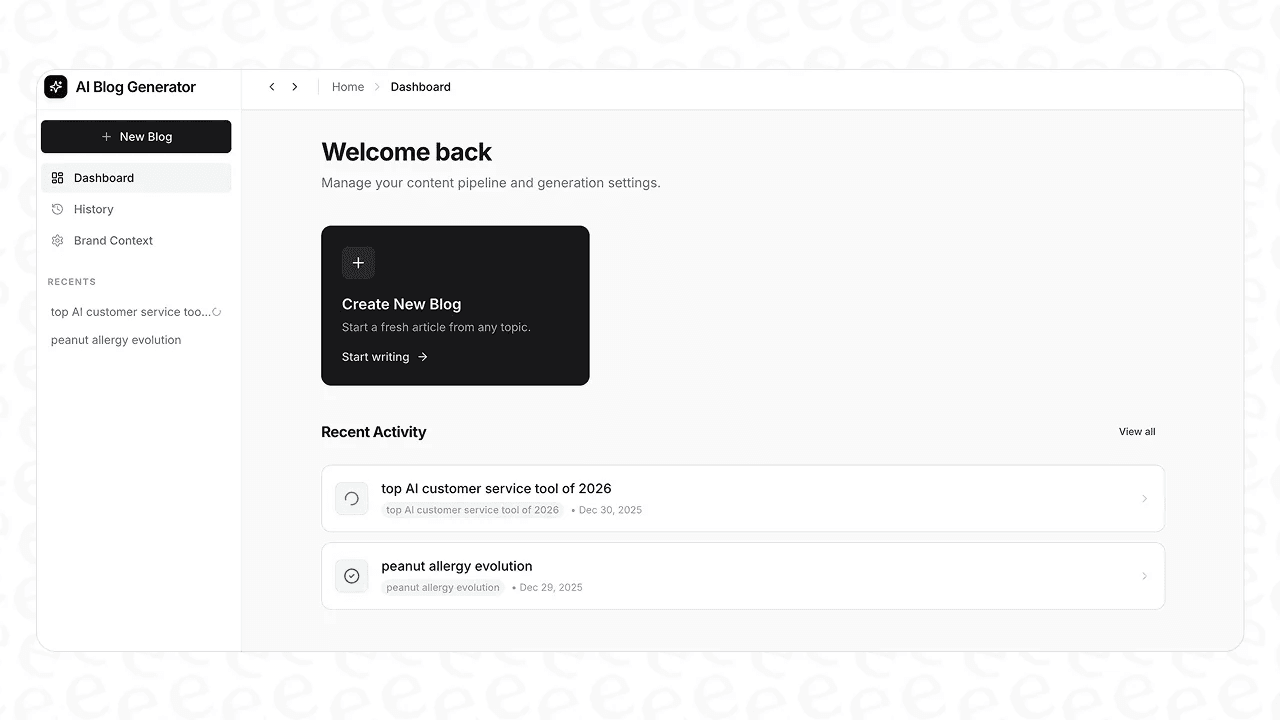
This used to be a lot of manual work, but modern tools can do it for you. For example, the eesel AI blog writer doesn't just write text. It automatically creates unique images and infographics, finds and embeds relevant YouTube videos, and pulls in insightful Reddit threads right into your draft. It builds a media-rich post for you from the start.
The art of the irresistible headline
Your headline has one job: get people to click. It doesn't matter how brilliant your blog post is if nobody opens it. Your headline is your first impression on a crowded search results page.
You don't have to be a world-class copywriter. A few simple formulas work surprisingly well:
- Use numbers: "7 Simple Ways to Improve Your Writing"
- Ask a question: "Are You Making These Common Blogging Mistakes?"
- State a clear benefit: "How to Write a Blog Post That Drives Traffic"
Just remember the golden rule: the headline has to be an honest promise of the content inside. A clickbait title that doesn't deliver will only damage your credibility.
Optimizing your blog post for modern search
You’ve written and edited your post. Ready to go, right? Almost. Hitting "publish" is just the start. To give your content the best shot at being seen, you need to handle a few final optimization steps.
Essential on-page SEO for every post
This is the basic stuff that gives search engines the right signals.
- Meta Title & Description: This is the text that shows up in Google search results. Your meta title should be interesting and include your target keyword, and the description should be a mini-advertisement for your post, convincing people to click.
- Internal & External Links: Link to other relevant posts on your own site (internal linking) to keep people around longer. Also, link out to credible sources (external linking) to back up your claims and show you've done your homework.
- Image Alt Text: Add a short, descriptive text to your images. This helps visually impaired readers understand the image and gives search engines more context, a best practice recommended in Google's developer guides.
Optimizing for AI Overviews and answer engines (AEO)
The way people search is changing. AI-powered results, like Google's AI Overviews, are becoming the new normal. Answer Engine Optimization (AEO) is about structuring your content so these AI systems can easily find, understand, and use it in their answers.
The tactics are simple but effective: use clear, question-based headings, answer those questions directly and concisely, use FAQ sections, and cite your sources. This is a huge advantage for a modern content strategy. It's why platforms like the eesel AI blog writer are designed for AEO from the start, creating perfectly structured content that’s ready to be featured in the next wave of search technology.
Scaling your blog writing with the eesel AI blog writer
That’s where the eesel AI blog writer comes into play. It's a tool designed to automate many parts of this strategic system.
It streamlines the process, condensing what might be a multi-day effort into a single step. You give it a topic, and it returns a complete, publish-ready blog post that follows all the best practices we've discussed:
- Context-aware research: It doesn't just write generic fluff. It generates deeply researched drafts that actually match what the user is looking for.
- Automatic asset generation: It creates custom infographics and AI images, and finds relevant YouTube videos and real Reddit quotes to add depth.
- Built for modern search: The content is automatically structured and optimized for both traditional SEO and the new world of AEO, so it's designed to be cited by AI Overviews.
This is the exact tool we used to get our own huge traffic growth. It’s not a replacement for strategy; it’s a way to actually execute it consistently. You can generate your first post for free to see the quality for yourself.
A repeatable system for blogging success
A successful blog isn't about luck; it's the result of a repeatable system. It all starts with understanding your audience, creating genuinely helpful content that solves their problems, and optimizing it so it can be found.
While the principles are simple, actually doing it consistently is where most people fail because it’s just so time-consuming. Using the right tools is how you can achieve the consistency and scale needed to succeed with blog writing.
Generate your first AI-powered blog post for free
Ready to put this guide into action? See what a strategic, AI-powered workflow can do. Generate your first complete, SEO-optimized blog post for free. Try the eesel AI blog writer now.

Frequently Asked Questions
Share this article

Article by
Stevia Putri
Stevia Putri is a marketing generalist at eesel AI, where she helps turn powerful AI tools into stories that resonate. She’s driven by curiosity, clarity, and the human side of technology.