How to master blog writing for sales and turn content into customers

Katelin Teen
Katelin Teen
Last edited January 19, 2026
Many companies maintain a blog, publishing articles and tracking page views. However, it can be challenging to connect a blog post about general industry trends to a new customer. For most businesses, the link between content and revenue is often unclear. The problem is that while many businesses blog, few see it directly impact sales. Content can feel like a requirement rather than a tool designed to guide readers to a solution.
This isn't just another post hyping up content marketing. We're getting practical. The goal is to give you a straightforward, actionable plan for making your blog a sales engine. It’s about shifting your focus from just chasing keywords to solving real customer problems, and in doing so, making your product the obvious next step.
It’s a lot to manage, especially when you’re trying to grow. That's where the right tools can make a world of difference. For instance, the eesel AI blog writer was built to bridge this exact gap. It helps teams create high-quality, sales-focused content at scale, going way beyond the simple drafts you get from other AI tools. It’s about building a content machine that actually helps your bottom line.
What is blog writing for sales?
Let's clear up a common misconception. "Blog writing for sales" doesn't mean turning every article into an aggressive pitch. If your posts sound too promotional, you may deter the very people you’re trying to attract. Readers are looking for value, not a lengthy advertisement.
So, what is it? It’s a way of creating content that speaks to your customers' specific pain points at every stage of their journey. It's about meeting them where they are. This could be when they are just realizing they have a problem, actively looking for solutions, or comparing options. The goal is to guide them toward an answer that naturally includes what you offer. It’s about being the most helpful voice in the room.
The idea behind this is simple. As marketing expert Ed Dale famously said, all great selling is about either “pain relief or gain creation.” Sales-driven blogs do exactly that. They start by identifying a reader's "pain" (a frustrating problem) and offering them a "gain" (a clear, actionable solution). When you do this consistently, you build trust. The eventual sale feels like the natural conclusion to a helpful conversation, not a forced transaction.
Crafting a sales-focused blog strategy
Writing without a plan is like trying to build a house without a blueprint. You might end up with something that looks like a structure, but it probably won't be very stable. A solid strategy is the foundation of any content engine that generates sales. Without one, you’re just creating content and hoping it connects with the right person. Let's build that foundation.
Identify customer pains and gains
Before you write a single word, you need to get inside your customer's head. One of the most effective ways to do this is with the "Pains and Gains" exercise, a technique highlighted on the ProBlogger podcast. It’s incredibly simple but will fundamentally change how you approach content.
Here’s how it works:
- Brainstorm Pains (2 Minutes): Set a timer for two minutes and list every problem, fear, frustration, and roadblock your target audience faces related to your industry. Don't overthink it, just write.
- Brainstorm Gains (2 Minutes): Reset the timer for another two minutes. This time, list all their desired outcomes, dreams, goals, and aspirations. What does success look like for them?
An infographic explaining the 'Pains and Gains' exercise, a key part of a strategy for blog writing for sales.
Let’s use a practical example. Imagine you sell project management software.
- Pains might include: "Missing project deadlines," "Team communication is a mess," "Feeling completely disorganized," "No idea who is working on what."
- Gains would be: "Effortlessly managing team tasks," "Hitting every project milestone," "Having a single source of truth for all projects," "Feeling in control and ahead of schedule."
See how specific and emotional those are? This four-minute exercise gives you a goldmine of content ideas. Each pain point and desired gain can become a blog post. By building your content calendar around these pains and gains, you ensure every article you publish is valuable and relevant to your ideal customer.
Structure content with the PAS framework
Here’s the breakdown:
- Problem: You start by stating the problem clearly and with empathy. Lead with the pain point you identified. This shows the reader you understand their world and makes them think, "Yes, that's exactly what I'm dealing with." It hooks them immediately.
- Agitate: This is where you gently turn up the heat. You dig into why this problem is such a big deal. What are the consequences of not solving it? What frustrations does it cause? This step is key because it makes the need for a solution feel more urgent. You’re not just talking about a problem; you’re talking about its impact.
- Solution: Now, you deliver the value. This is the core of your blog post where you provide actionable advice and steps to solve the problem. You’re the expert guide. And this is where your product comes in. You can mention it naturally as part of the solution: a tool that makes implementing the advice even easier. It’s a helpful recommendation, not a hard sell.
The anatomy of a post that sells
Write headlines that promise a solution
Your headline is your first impression. Its job isn't to be clever; its job is to make a clear promise to solve a problem for a specific person. A vague headline like "The Future of Marketing" attracts casual browsers. A specific headline like "How to Cut Your Marketing Spend by 20% Without Losing Leads" attracts potential customers.
A good headline isn't clickbait. It’s a transparent value proposition. It should use emotional drivers and specifics to attract qualified readers who are looking for what you have to offer.
Here are a couple of formats that consistently work:
- "How-to" Headlines: They're timeless because they promise a tangible skill or outcome (e.g., "How to Write a Sales Email That Actually Gets a Reply").
- List-Based Headlines: People love lists. They’re easy to scan and promise a specific number of takeaways (e.g., "7 Ways to Improve Your Customer Response Time Today").
The goal is to stop the scroll. Your headline should make a busy person pause and think, "I need to read this."
Create a structure that guides the reader
People often scan blog posts, looking for the information that’s most relevant to them. If your post is a dense block of text, they may leave. You have to structure for scannability.
Here’s how:
- Short Paragraphs: Keep paragraphs to 2-4 sentences. This creates white space and makes the content feel less intimidating.
- Use Headings and Subheadings (H2s & H3s): Break your post into logical sections with clear headings. This creates a visual hierarchy and lets readers jump to the parts that interest them most.
- Bold Key Ideas: Use bold text to emphasize the most important takeaways. This helps skimmers pull out the key points even if they don't read every word.
- Use Lists: Bullet points and numbered lists are perfect for outlining steps or benefits. They break up the text and make complex information easy to digest.
- Add Visuals: Images, infographics, and embedded videos are essential. They make your post more engaging and can help explain complex ideas.
Make the call to action (CTA) clear and relevant
This might be the most overlooked, and most critical, part of a sales-focused blog post. You've done all the work to attract a reader, show them you understand their problem, and provide a valuable solution. Now what? If you don't give them a clear next step, you're leaving a potential lead stranded.
Every single post needs a logical, compelling call to action. A CTA doesn't always have to be "Buy Now." That can be too aggressive for someone just starting their research. Think about softer conversions that continue the conversation:
- Download a related checklist or template.
- Sign up for a relevant email course.
- Watch a webinar on the topic.
- Book a no-pressure demo.
The key is that the CTA must be contextually relevant. If your blog post is about "how to improve customer support response times," a perfect CTA would be to try an AI support tool that helps teams respond faster. The CTA should feel like the natural next step, not an abrupt sales pitch.
Scaling your blog writing for sales with tools
So you have the strategy, the framework, and the structure. The final piece is execution, and the biggest challenge here is consistency. Writing one great, sales-focused blog post is an achievement. Writing three of them every week is a massive undertaking. It takes time, research, and resources, which is where most content marketing efforts fall apart.
This is where AI tools can help. To effectively scale your efforts, it is important to find a tool built for creating high-quality, deeply researched, and conversion-focused content. Look for platforms that can generate content designed to meet specific business objectives, moving beyond simple text generation.
IMO opinion, AI is like most tools. Garbage in, garbage out. You can’t throw a Kw at it and expect a week written article. You still need to research proper KWs. You need to study the SERPs. You still need to perfect a great outline. Once all that is done, AI is a crutch, it can assist you.

Using the eesel AI blog writer
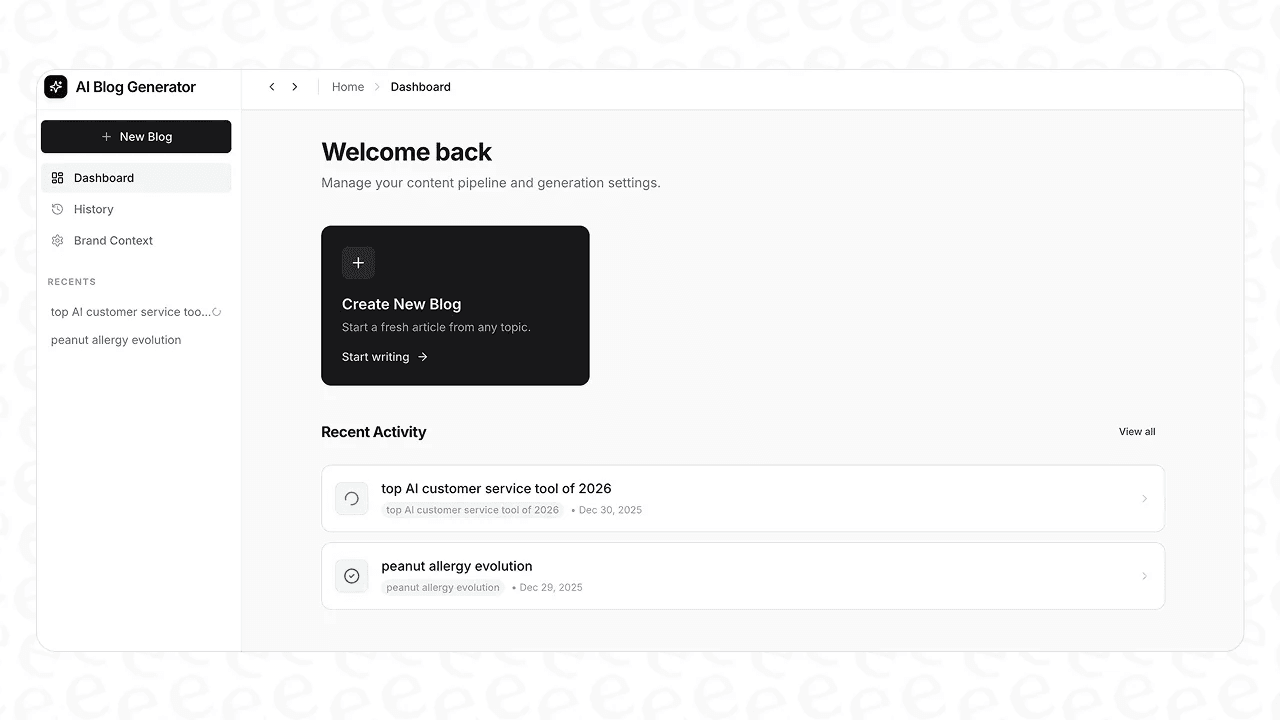
Here are some key features for creating content that sells:
- Deep research with citations: The AI doesn't just make stuff up. It actively researches the topic to provide factual content, complete with citations. This is crucial for building the trust you need to eventually make a sale.
- Automatic asset generation: A great blog post is more than just text. The eesel AI blog writer produces a complete post that includes AI-generated images, infographics, tables, and even relevant YouTube video embeds. This saves your team hours of manual work.
- Authentic social proof: To add a layer of human experience, the tool can automatically find and integrate real quotes and insights from Reddit and other forums. This kind of social proof is powerful because it shows readers that other people are dealing with the same problems.
- Built-in SEO and AEO: The content isn't just optimized for traditional search engines. It's also optimized for AI Answer Engines like Google's AI Overviews and Perplexity. This ensures your solutions are visible wherever your potential customers are looking for answers.
To illustrate its capabilities, the eesel team used its own blog writer to grow its blog from 70k to 750,000 daily impressions in just three months. This was achieved by publishing over 1,000 high-quality, sales-focused blogs generated by the platform. This demonstrates how it's possible to achieve both quantity and quality.
The platform is completely free to try. For teams ready to scale up, plans are available, such as the Early Bird offer that provides 50 blog generations for $99/mo.
For a deeper dive into how you can structure your blog posts to be more effective sales tools, check out this video for some simple but powerful tips.
From writing to selling: A new approach
Effective blog writing for sales isn't about being pushy. It’s about a shift in mindset. It’s about deeply understanding your customers' problems and consistently creating valuable content that guides them toward a solution. It’s about becoming a trusted advisor, not just another vendor.
Let's quickly recap the framework. It all starts with a simple "Pains and Gains" strategy to ensure your content is always relevant. From there, you use a persuasive structure like the PAS framework. You design your posts for scannability with clear headlines and context-aware CTAs. And finally, you leverage smart tools to scale your efforts so you can build a content engine.
Stop thinking of your blog as a marketing expense. It's time to turn it into your most effective salesperson.
Call to Action: Ready to turn your blog into your best salesperson? Generate your first blog post for free with the eesel AI blog writer and see how easy it is to create content that converts.

Frequently Asked Questions
Share this article

Article by
Katelin Teen
Katelin is an operations specialist at eesel where she uses her psychology training and education experience to optimize B2B SaaS processes. Outside of work, she unwinds with story-driven games, writing, and keeping up with latest tech innovations.