A strategic overview of blog writing for email list building

Stevia Putri
Last edited January 20, 2026
An email list is probably the most valuable marketing asset you can own. It's a direct line to your audience, a channel you actually control, free from the whims of some algorithm deciding who sees your content. It’s a stable, reliable way to build a community and grow your business.
So, what’s the best way to build that list? By consistently publishing high-quality blog content that your ideal customers actually want to read. When you give people real value, they're more than happy to trade their email address for more of it.
Why strategic blog writing for email list building matters
When we talk about blog writing for email list building, we're not just talking about getting more eyeballs on your site. It’s a specific approach. It means creating targeted content that's intentionally designed to attract your ideal audience and give them a compelling reason to subscribe.
This is a big step up from generic blogging, where the main goal is often just traffic. Traffic is nice, but it’s a vanity metric if those visitors just bounce and never come back. The real goal is to turn anonymous readers into contacts you can build a relationship with.
It’s not just about ROI, either. Email just converts better. The average conversion rate for email is 8%, while social media is stuck at 3%. When you consistently provide value through your blog, you build trust and establish yourself as an authority. People start to see you as a go-to source, which makes them much more receptive when you eventually have something to offer. Your blog becomes the top of your funnel, warming up leads and turning curious readers into loyal fans.
The foundation: Creating content that converts
Before you worry about where to put your sign-up forms, you need content that’s so good people feel like they’re missing out if they don't subscribe. This is all about creating genuine value that makes someone want to hear from you again.
Using lead magnets to drive subscriptions
Let's face it, "Subscribe for updates" is one of the most boring offers on the internet. People's inboxes are crowded, and you need to offer something much more compelling in exchange for an email address.
This is where lead magnets come in. A lead magnet is just a term for a valuable freebie you give away to encourage people to subscribe. And they really work. Over 50% of marketers say that lead magnets generate higher conversion rates than other types of sign-up forms.
The trick is to offer something that perfectly complements your blog content. Here are a few proven formats that do the job well:
- Checklists and Cheat Sheets: If you write a "how-to" post, offer a simple, downloadable checklist that summarizes the steps. It’s an easy win for the reader.
- Templates and Swipe Files: Wrote a post about great email subject lines? Offer a swipe file with 50 ready-to-use examples.
- Ebooks and Guides: For your big, comprehensive posts, bundle the content into a nicely designed ebook that readers can save and reference later.
- Webinars and Workshops: Offer exclusive access to a live training session or a recording of a past workshop on a related topic.
- Interactive Quizzes or Calculators: Create a simple tool that gives users a personalized result, like a "What's your content marketing IQ?" quiz.
An infographic showcasing five effective lead magnet ideas for blog writing for email list building, including checklists, templates, ebooks, webinars, and quizzes.
How content upgrades boost subscriptions
Content upgrades are like powerful lead magnets. Instead of a general freebie, a content upgrade is a bonus resource that is hyper-specific to the blog post someone is currently reading.
It’s the logical next step for an engaged reader, which is why they convert so well. For instance, if you have a blog post detailing "10 SEO Tips for Beginners," the content upgrade could be a simple PDF checklist of those exact 10 tips. The reader is already invested in the topic, so offering a convenient, takeaway version is a no-brainer.
You might be thinking that creating a unique bonus for every single post sounds like a mountain of work. It can be, but it doesn't have to be. This is another area where AI can help by quickly repurposing existing content into different formats like checklists or summaries, saving you hours of manual effort.
Strategic opt-in placement
So, you’ve got great content and a compelling lead magnet. Now, where do you actually ask people to sign up? The placement of opt-in forms can make a huge difference in your conversion rates. You want to make it easy to subscribe without being obnoxious.
The best places for your email opt-in forms
There’s no single "best" spot, so it's smart to use a mix of different placements. Here are some of the most effective options:
- Feature Box/Welcome Mat: This is a prominent sign-up form that appears right at the top of your homepage, above the main content. It’s impossible to miss and, according to Pinpointe research, it can be a major source of new subscribers.
- Pop-ups (Exit-Intent & Scroll-Triggered): Pop-ups get a bad reputation, but when used smartly, they’re incredibly effective. An exit-intent pop-up appears only when a user is about to leave your site, giving you one last chance to convert them. A scroll-triggered pop-up can be set to appear after a reader is, say, 70% of the way through a post, targeting your most engaged visitors.
- Embedded Forms: Placing your call-to-action (CTA) directly within the body of your blog post is a natural and non-intrusive way to capture emails. You can add one after your intro and another before your conclusion.
- Post Footer: This is a classic. After someone has finished reading your entire article, they’re clearly interested. Placing a sign-up form at the bottom is a standard and effective practice.
- Sidebar: A sidebar form is always visible, but it can sometimes suffer from "banner blindness" where users have trained themselves to ignore it. It’s still worth having, but it probably shouldn’t be your only opt-in location.
An infographic illustrating the most effective places to put email opt in forms on a blog to support blog writing for email list building.
Writing copy that convinces readers to subscribe
The words you use on your forms are just as important as where you put them. You need to quickly communicate the value of subscribing.
Focus on benefit-driven language. Instead of a lazy "Join our newsletter," try something that highlights the outcome, like "Get weekly marketing strategies that actually drive growth."
Your call-to-action button also needs to be compelling. Avoid generic words like "Submit" or "Subscribe." Instead, use action-oriented text that relates to your offer, like "Send me the report" or "Get the checklist." A little social proof can work wonders, too. Something as simple as "Join 15,000+ other smart marketers" can significantly boost conversions.
Finally, be transparent. Briefly explain what people are signing up for and how often they'll hear from you. This simple step helps build trust from the start and sets the stage for a healthy relationship.
How to scale your efforts with eesel AI
Putting all of this into practice is a solid strategy. But the biggest challenge for most teams is consistency. To really build momentum, you need to publish high-quality content regularly, and that’s often the biggest bottleneck.
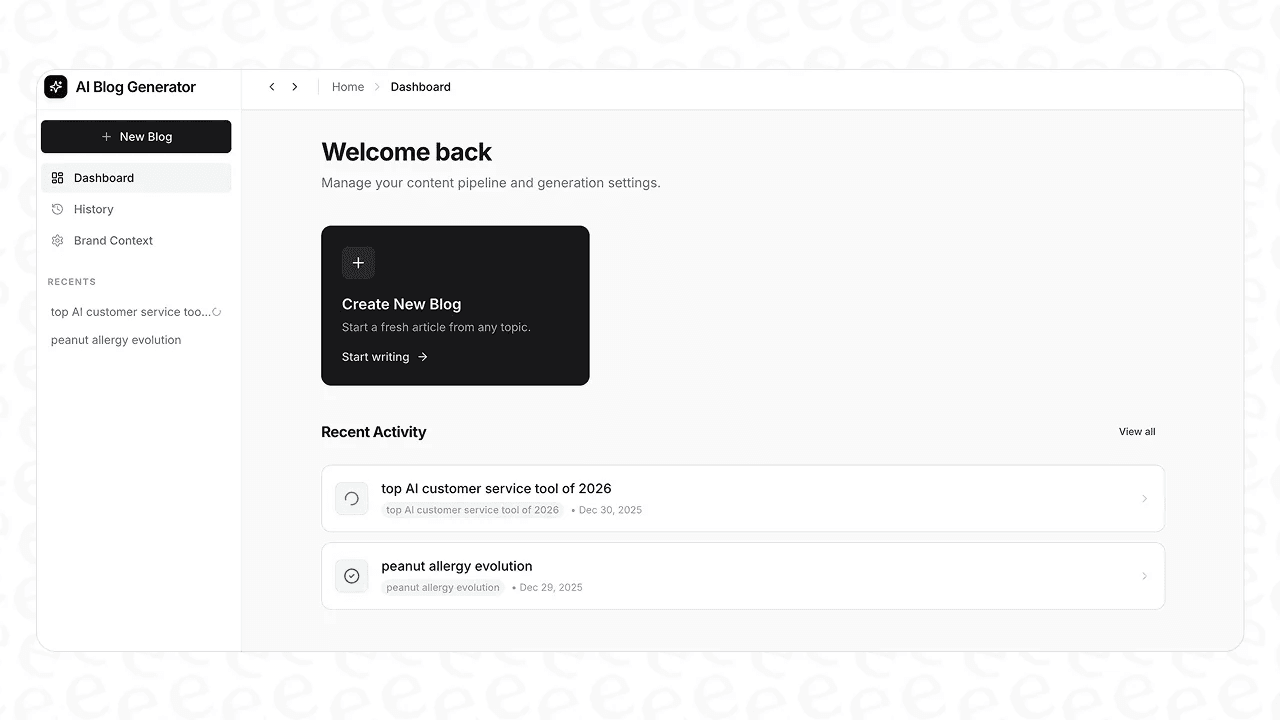
Here’s how it approaches content generation:
- Deep, context-aware research: eesel AI focuses on in-depth research. If you ask it to write a comparison post, it will automatically pull in relevant details like pricing and key features. For a product review, it finds the technical specs. This helps create valuable content.
- Automatic asset generation: A great blog post is more than just text. The eesel AI blog writer generates the entire package, including AI-created images, infographics, and data tables. It even finds and embeds relevant YouTube videos to make your content more engaging.
- Authentic social proof integration: It can find and embed real, relevant quotes from Reddit conversations. This adds a layer of authentic, human experience to your articles that builds trust and makes your content far more relatable.
- Human-like tone and SEO: The content is also designed to be readable and is optimized for both traditional search engines and the new wave of AI Answer Engines (AEO), ensuring you attract the right audience.
I work at eesel AI, and our whole approach with our AI blog writer is to avoid that exact problem. Instead of just scraping the SERPs, it can pull context from a specific URL you give it. This means it can learn a company's actual brand voice, product details, and unique perspective, rather than just regurgitating what's already out there.

By using the eesel AI blog writer, your team can shift its focus from the heavy lifting of content production to high-level strategy, such as choosing the perfect blog topics and creating irresistible lead magnets. It’s the engine we used to help our own blog impressions grow significantly in just three months.
For a deeper dive into the practical steps of turning your blog into a subscriber magnet, the video below offers some excellent, actionable strategies.
Turn your blog into a list-building machine
Building a thriving email list doesn't happen by accident. It’s the result of a deliberate strategy built on creating high-value content with compelling lead magnets, placing your opt-in forms in strategic locations, and, most importantly, maintaining consistency.
An email list is an asset you own. It provides stable, long-term growth and delivers a high ROI. Your blog is the single best tool you have to build that asset, one valuable article at a time. By combining a smart strategy with powerful tools, you can turn your blog from a simple content hub into a powerful, automated list-building machine.
Ready to stop chasing algorithms and start building an asset you own? Generate your first blog post for free with the eesel AI blog writer and see how easy it is to create content that converts readers into loyal subscribers.

Frequently Asked Questions
Share this article

Article by
Stevia Putri
Stevia Putri is a marketing generalist at eesel AI, where she helps turn powerful AI tools into stories that resonate. She’s driven by curiosity, clarity, and the human side of technology.