The 7 best tools for checklist blog writing in 2026

Stevia Putri

Katelin Teen
Last edited January 20, 2026
Trying to produce high-quality, SEO-friendly blog posts every week is a real challenge. One post might be a home run, while the next one feels a bit flat. Maybe you forgot to add alt text to your images, or your internal links are a mess. It is just hard to keep all the details straight.
The key to consistency isn't just more coffee. It's a checklist. A good checklist can turn the chaos of blogging into a repeatable system, making sure every single post is polished and ready to perform.
These days, modern tools can make the process even easier. Some help you manage your checklist, while others, like the eesel AI blog writer, can complete the process for you. We actually used it to grow our own blog from 700 to 750,000 daily impressions in just three months. This article will break down the best tools available to help you master a checklist-driven approach to blogging.
What is checklist blog writing?
Checklist blog writing is simply a structured way to create content. Instead of going with the flow, you follow a set list of steps for every stage of the process, from brainstorming ideas to publishing and promoting your post.
Think of it like a pilot's pre-flight check. It makes sure you cover all the essentials:
- Keyword research and optimization
- Structuring your post with clear headings
- Formatting for readability
- Optimizing images and adding alt text
- Adding internal and external links
- Crafting a compelling meta description
- Promoting the post after it’s live
Why a checklist improves your content
Using a checklist isn't just about staying organized; it's about making your content better. Here’s why it makes such a big difference.
A checklist acts as your quality control. It ensures every post meets the same high standard, whether that’s maintaining your brand’s tone of voice or covering all the on-page SEO basics.
When you don't have to constantly try to remember every little task, you free up a lot of mental space. This means less decision fatigue and more brainpower for what really matters: creating insightful content that your audience actually wants to read.
Let's face it, SEO has a lot of moving parts. A checklist guarantees that you never overlook important ranking factors like keyword placement, meta descriptions, image alt text, and internal linking. It’s a simple way to build SEO right into your workflow.
And if you work with a team, a checklist is a must. It creates a clear, shared process that makes it easy to pass tasks between writers, editors, and marketers, all while keeping everyone on the same page.
most seo teams use chatgpt and stop there. that helps with writing, but not with decisions. research, tracking, and feedback loops matter more day to day. tools that surface gaps, show trends, or reduce manual work tend to earn their place. i have seen teams move faster once they clearly mapped one tool to one task and ignored the rest. fewer tools, used often, beats a big unused stack.

Our criteria for selecting the best tools
To put this list together, we didn't just search for "best writing tools" and call it a day. We tried each one, judging them on a few key things that really matter to content creators:
- Core Functionality: How well does the tool actually support a checklist workflow? Does it have templates, task management features, or automated checks that make your life easier?
- Ease of Use: Is it easy to pick up, or do you need a manual the size of a phone book? We looked for tools that work for both solo bloggers and bigger teams.
- SEO & Optimization Features: Does the tool offer specific, helpful advice on SEO, readability, and content structure?
- Integration: Does it play well with other tools you already use? We gave extra points to tools that integrate with common platforms like WordPress and Google Docs.
- Value for Money: Is the price fair for what you get? We looked for options that offer good value at various price points, including some with solid free plans.
Comparison of the top tools
Here’s a quick overview of how our top picks compare.
| Tool | Best For | Key Features | Pricing Model |
|---|---|---|---|
| eesel AI blog writer | Automating the entire blog creation checklist | AI content generation, automatic asset creation, AEO optimization | Credit-based |
| AIOSEO | WordPress users needing an integrated SEO checklist | On-page TruSEO analysis, Link Assistant, readability score | Freemium |
| CoSchedule | Marketers managing a full content calendar | Marketing calendar, social scheduling, Headline Studio | Freemium |
| Grammarly | Improving writing quality and proofreading | Grammar/spelling checks, plagiarism detection, tone suggestions | Freemium |
| Trello / Asana | Teams needing a custom, manual checklist workflow | Customizable boards/projects, task assignments, collaboration | Freemium |
| Semrush Writing Assistant | SEOs optimizing content in real-time | SEO recommendations, readability analysis, Google Docs integration | Subscription |
| Clearscope | Content teams in highly competitive niches | In-depth content reports, content grading, SERP analysis | Subscription |
The 7 best tools for checklist blog writing
Now let's get into the specifics of each tool.
1. eesel AI blog writer
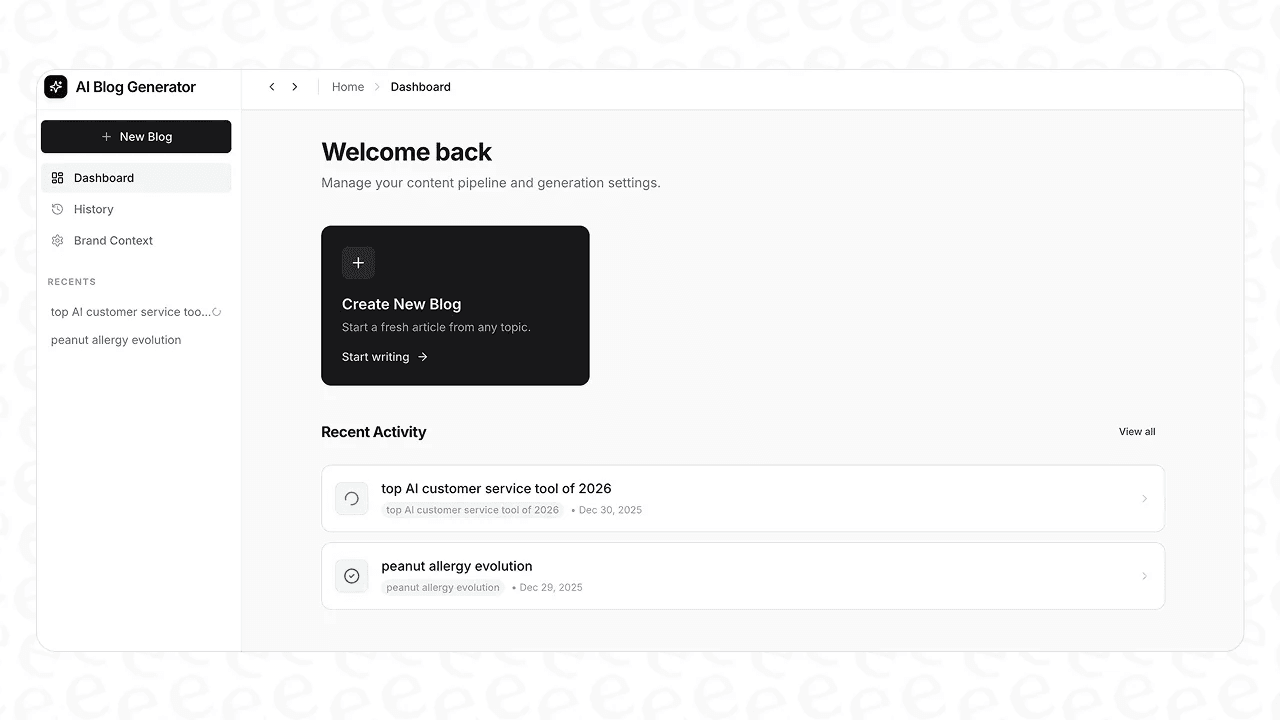
- Pros: Its biggest advantage is producing a complete article with AI-generated images, infographics, and relevant YouTube and Reddit embeds. This one feature automates dozens of tedious checklist items. Its research is context-aware, pulling in relevant data (like pricing for comparison posts), and its focus on AEO (Answer Engine Optimization) helps your content get featured in AI overviews.
- Cons: While it is a powerhouse for content generation, it isn't a project management tool for tracking manual tasks after publication, like social media promotion or email outreach. Its purpose is to create the final piece of content, not manage the workflow around it.
- Pricing: It's completely free to try. The paid plan is simple: $99 for 50 blog posts, and you can buy more credits when you need them.
2. AIOSEO
- Pros: The seamless WordPress integration is its main strength. You don't have to switch between different tabs or tools. The on-page analysis is very thorough, and features like the Link Assistant and Headline Analyzer help you check off optimization tasks without leaving your site.
- Cons: Its primary strength is its deep integration with WordPress, which also means it is exclusive to that platform. Additionally, many of the best features, like the AI Writing Assistant, require both a paid AIOSEO plan and an extra SEOBoost subscription.
- Pricing: There's a decent free version to get you started. Paid plans start at $49.50 per year.
3. CoSchedule

- Pros: The standout features are its powerful Headline Studio, which helps you craft click-worthy titles, and the option to create social media promotion templates. This ensures the "promotion" part of your checklist doesn't get forgotten and can be done easily.
- Cons: It can get expensive, especially for solo bloggers or small teams. The free plan is quite limited, with only one user and 15 scheduled social messages.
- Pricing: A free plan is available. Paid plans start at $19 per user per month (billed annually).
4. Grammarly
- Pros: It's very accessible, with a browser extension that works almost anywhere you write. The premium version includes a plagiarism checker that scans against billions of web pages and a useful citation generator for APA, MLA, and Chicago styles.
- Cons: The free version only covers the basics. Its suggestions can sometimes make writing sound robotic or strip out your personality. It also might not understand niche or industry-specific terms.
- Pricing: A free version is available. The Pro plan starts at $12 per member per month (billed annually).
5. Trello and Asana
- Pros: Their biggest strength is complete customization. You can build a checklist that perfectly matches your team's process, assign tasks, and set deadlines. Asana is great for complex projects with its different views and templates, while Trello's simple Kanban board is a classic. Both have great free versions.
- Cons: The downside is that you have to set everything up yourself. They aren't designed specifically for blogging, so you won't find features like SEO analysis or headline scoring. It's up to you to make sure the checklist is followed.
- Pricing: Both offer strong free plans. Trello's paid plans start at $5 per user per month. Asana's paid plans start at $10.99 per user per month.
6. Semrush Writing Assistant
- Pros: It integrates directly into Google Docs and WordPress, which is very convenient. It provides clear, actionable suggestions on target keywords to include, readability improvements, and tone of voice, turning complex SEO into a simple to-do list.
- Cons: You need a Semrush subscription to use it. It’s also very focused on SEO, so it won't help with other parts of your checklist, like creating images or promoting your post after it's published.
- Pricing: Included with Semrush subscriptions, which start at $165.17 per month (billed annually).
7. Clearscope
- Pros: It gives you a detailed breakdown of top-ranking content, a clear "content grade" to aim for, and a list of important terms and topics to include. This is invaluable for making sure your post has the depth it needs to compete for difficult keywords.
- Cons: The price point may be out of reach for most solo bloggers and small businesses. There’s also a bit of a learning curve to get the most out of its detailed reports.
- Pricing: The Essentials plan starts at $129 per month.
Tips for creating your own template
If you're thinking about going the manual route, building your own checklist is a great place to start. Here are a few tips to do it right:
- Break it into phases: Don't just make one massive list. Organize your checklist around the main stages of content creation: Pre-Writing (research, outlining), Writing (drafting), Post-Writing (editing, SEO, images), and Promotion (social media, email).
- Start from a template: You don't have to start from scratch. Use the points in this article as a starting point and then tweak it to fit your specific workflow.
- Be specific and actionable: Vague items like "Optimize SEO" aren't very helpful. Break it down into smaller, specific tasks like "Add keyword to title," "Write a meta description under 160 characters," and "Add alt text to all images."
- Automate where you can: Look for repetitive tasks on your list that eat up your time. While a tool like Trello helps you track these tasks, a tool like the eesel AI blog writer can completely automate the content creation part. This can save you hours of work and make sure nothing important gets missed.
An infographic with four tips for creating your own template for checklist blog writing, including breaking it into phases and automating tasks.
For a more detailed walkthrough, watching how others structure their checklists can provide valuable insights into building an efficient and effective workflow.
Master your content workflow
A checklist-driven approach is essential for anyone who's serious about creating consistently great blog content. It’s the difference between hoping for good results and building a reliable system that actually delivers them.
Whether you build a custom process with Trello, use an integrated SEO tool like AIOSEO, or go all-in on data with Semrush, the goal is the same: create a repeatable process that guarantees quality.
If you’re ready to move beyond just managing a checklist, it might be time to find a tool that completes it for you.
Ready to stop managing checklists and start publishing great content? Try the eesel AI blog writer for free and generate your first publish-ready blog post in minutes.

Frequently Asked Questions
Share this article

Article by
Stevia Putri
Stevia Putri is a marketing generalist at eesel AI, where she helps turn powerful AI tools into stories that resonate. She’s driven by curiosity, clarity, and the human side of technology.