Blog writing for customer education: A complete guide

Katelin Teen
Katelin Teen
Last edited January 20, 2026
Here’s a number that might make you pause: 63% of customers look at a company’s onboarding before they even decide to buy. That’s a lot of people making up their minds based on how well you can teach them to use your product. An informed customer isn't just a bonus; they're essential to your business.
The trouble is, teaching customers effectively is hard to do when you're growing. Your support team probably feels like they're on a hamster wheel, answering the same five questions all day. Meanwhile, all the really good info is stuck in a dusty internal wiki or a bunch of scattered Google Docs. It’s a mess for your team and a pain for your customers.
This is exactly where blog writing for customer education can step in. It’s a smart way to get ahead of problems and empower users, instead of just reacting to them. You get to meet people right where they are: searching for answers on Google.
Now, trying to scale something like this used to be a nightmare. But with AI content generation platforms like the eesel AI blog writer, creating a steady stream of high-quality educational articles is actually manageable without overwhelming your team.
What is blog writing for customer education?
At the end of the day, customer education content is anything you create to help people use your product better and hit their goals. It’s about teaching, not selling. You’re essentially handing your customers a roadmap to success.
And the blog is the perfect place for this roadmap. It’s a living, searchable hub for all your educational stuff. Unlike a rigid knowledge base, a blog can handle everything from simple how-to guides to deep-dive strategy pieces, and it’s all designed to be found through search engines.
The real goal is to gently guide user behavior by clearing away any potential hurdles. When you get this right, people find value in your product much faster. This makes them more successful, keeps them engaged, and makes them far more likely to stick with you for the long run.
So, what does good customer education content actually look like?
- It’s actionable and practical. It focuses on solving real problems that your users are facing today.
- It’s clear and easy to follow. It skips the jargon and talks like a helpful human.
- It explains the "why." It doesn't just show users how to click a button; it explains why that button is going to make their life easier.
- It builds confidence. The aim is to make users feel smart and capable on their own.
Key benefits of using blog writing for customer education
Putting time and effort into a blog that educates your customers isn't just about being nice. It pays off in real, tangible ways for your business. Let's get into the main benefits.
Achieve faster onboarding
You know that feeling when you sign up for a new tool and just... stare at the screen? That's the learning curve we're talking about, and if it's too steep, people will leave. A confusing onboarding process can send 74% of potential customers running to a competitor. Yikes.
Blog posts serve as a self-help library that users can access anytime. "Getting started" guides, feature walkthroughs, and articles on best practices let people learn at their own speed. When done right, education has a huge effect on product adoption. A Forrester report found that the average customer education program can boost product adoption by 38%.
Reduce customer support costs
Is your support team drowning in the same questions over and over? It’s a classic problem, and it’s an expensive one. It also prevents your team from digging into the trickier, high-value problems where they can really make a difference.
A blog can be a lifesaver here. By creating detailed articles that tackle your most frequent questions, you shift to a one-to-many support model. A single, well-crafted post can prevent thousands of future tickets. The numbers confirm this: investing in customer education can lead to a 16% drop in support questions and a 7% reduction in overall support costs. That gives your team some much-needed breathing room.
Increase brand loyalty
When you consistently share genuinely useful content, you shift from being just another tool to being a trusted resource. People start to see you as an expert, and that builds a ton of trust.
This authority is the foundation of real, lasting customer loyalty. Research shows that 86% of customers say they’ll stay loyal to a brand that provides solid onboarding and ongoing education.
Foster a community
A blog doesn't have to be a monologue. It can be a place where your users learn from each other. The comments section can turn into a small forum where people swap tips, ask follow-up questions, and share their own solutions.
This creates a fantastic feedback loop for your product and content teams. You get a direct window into your customers' biggest challenges, which can inspire new content, product tweaks, and more.
What kind of educational content should you create?
Alright, you see the value. But what should you actually be writing? Here’s a look at the most effective types of educational blog content.
Dedicated knowledge base or help center articles
These are the bread and butter of your educational content. Think of them as detailed "how-to" guides that give clear, step-by-step instructions for using specific features. They are the backbone of your self-service support.
For instance, you could write posts like "How to set up your first automation rule" or "A complete guide to your dashboard settings."
Pro tip
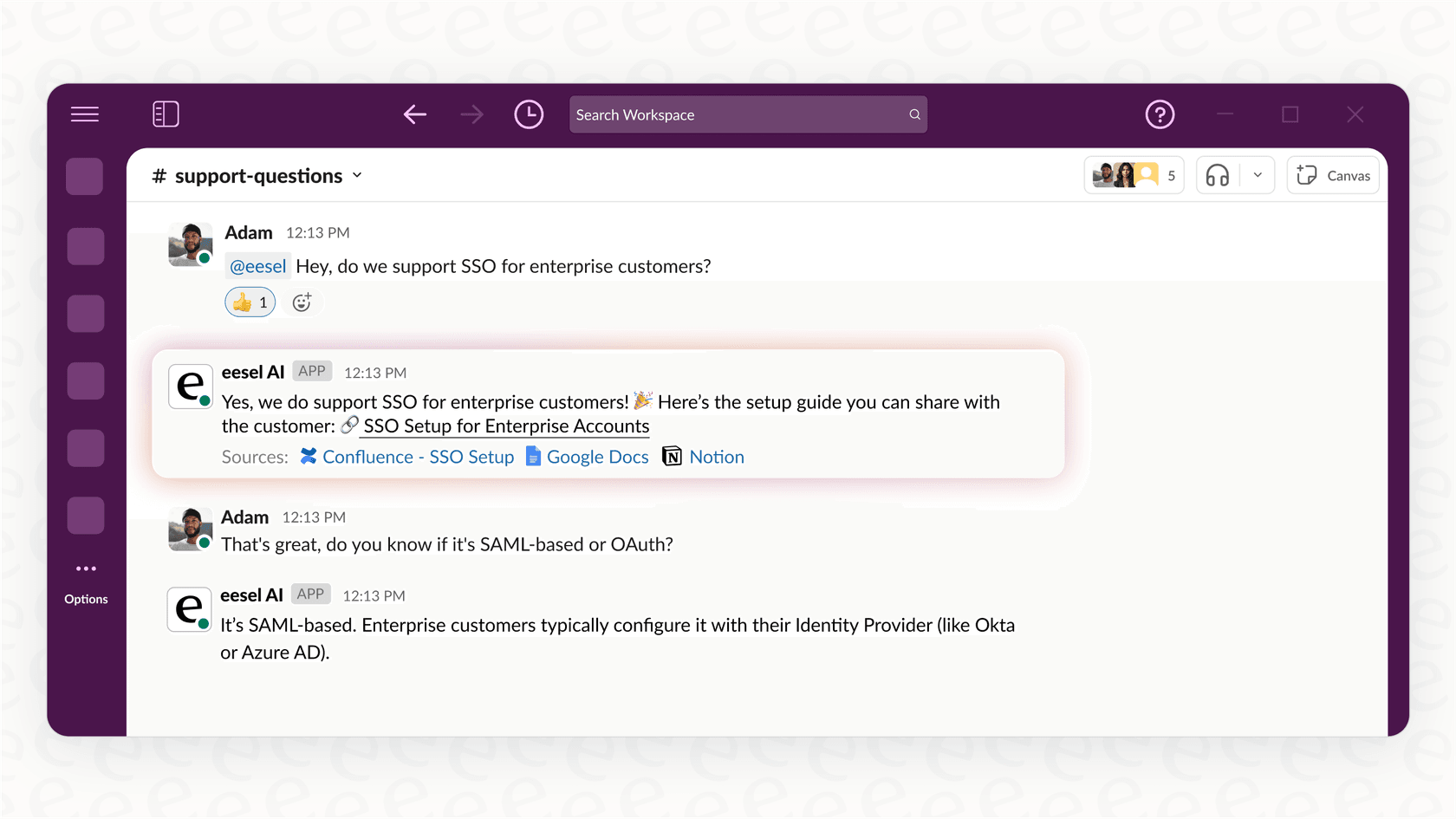
Use very clear headings, plenty of screenshots, and numbered lists to make these articles easy to scan and follow. This type of structured content is also perfect for training an AI internal chat bot that can give your support team instant answers right inside Slack or Teams.
Product updates and feature announcements
When you roll out a new feature, don't just announce it. Use your blog to explain why it's important and show customers how it solves a real-world problem.
Instead of a bland post titled "We launched a new integration," go with something like "How our new [App] integration streamlines your workflow." This frames the update around a clear benefit, which helps drive adoption and shows you're always improving the product.
Best practices and strategic guides
This is where you graduate from the basics of your product and start teaching customers how to excel in their roles.
If you sell a CRM, you could write "5 strategies for effective lead management." If you have an analytics tool, you might create a guide on "How to identify key growth trends in your user data." This type of content positions you as a strategic partner, not just a software provider, and connects your product directly to your customers' success.
Live webinar and on-demand learning summaries
Don't let your live events fade away. Repurpose them into blog content that can live on forever. Many people can't attend a live webinar but would still benefit from the information.
It's pretty simple to do. Post a recording of the webinar on your blog, add a written summary of the key points, and include a full transcript. This approach works well for different learning styles and makes your valuable content much easier to find through search.
How to scale your blog writing for customer education with the eesel AI blog writer
The biggest hurdle with all of this is scale. Consistently creating high-quality, in-depth educational content is a huge amount of work. It takes serious time to research, write, edit, and create visuals.
This is where an AI content generation platform can make all the difference. The eesel AI blog writer was built to solve this exact problem. It’s the tool we used to grow our daily impressions from 700 to over 750,000 in just three months by publishing over 1,000 optimized blogs.
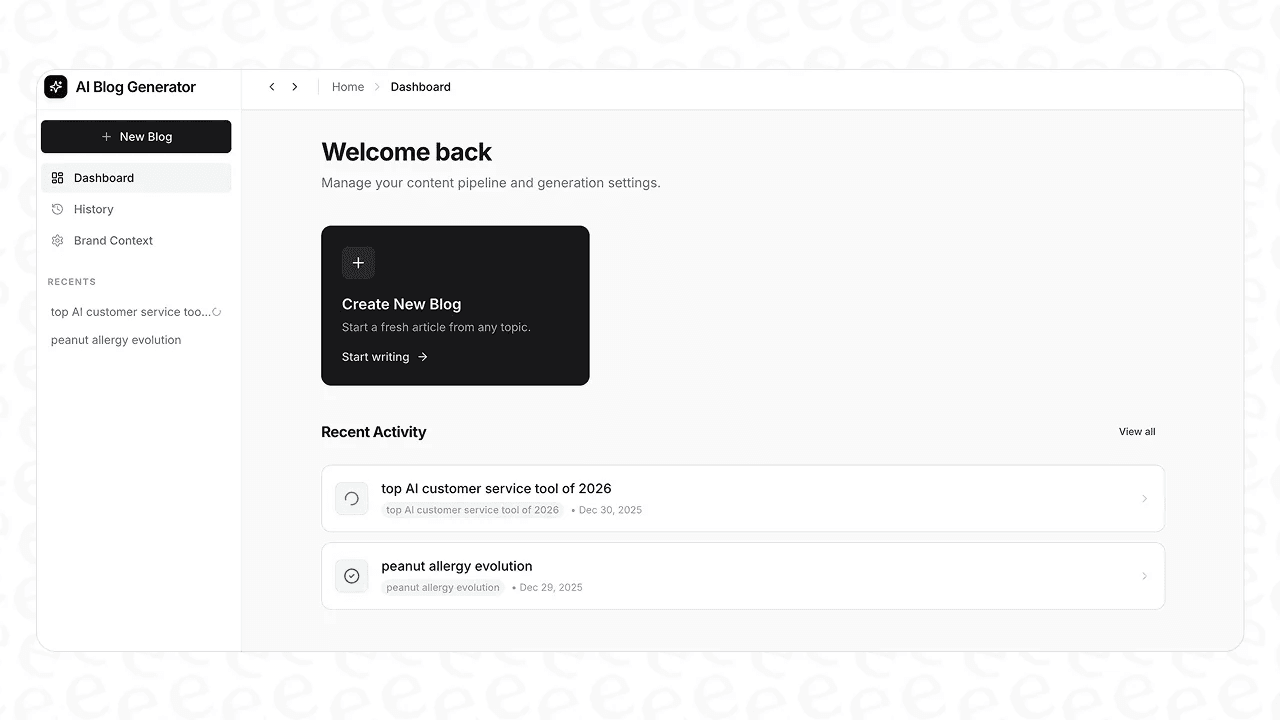
It creates a complete, publish-ready post, not just a first draft. Here’s how it works:
- Context-aware research: You give it a keyword or a topic. The AI figures out what the user is looking for. If it’s a comparison post, it finds pricing data. If it’s a technical guide, it pulls in the right specs.
- Automatic assets: It generates a full article with headings, tables, AI-generated images, and even infographics to simplify complex topics.
- Authentic social proof: It automatically finds and weaves in real Reddit quotes and relevant YouTube videos. This adds a layer of real-world context and helps build trust, which is key for Google's E-E-A-T (Experience, Expertise, Authoritativeness, and Trustworthiness) guidelines.
- AEO optimization: The content is structured for AI Answer Engines like Google's AI Overview, helping to establish your site as a reliable source on a given topic.
My two cents is yes. I use Active Inspiration (A.I.) software to 'break me out' of the blank page freeze. The issue is when the content is 70% AI or more. AI should really be used as an Assistive Interface for writing great content, not producing mechanical bastardized word slop by running and rerunning paragraphs through GPT-3. So, yes get it, but only if you are going to use it correctly. Otherwise, it's a waste of your money and Google will make you regret it.

Simply put, you can generate a complete, SEO-optimized, and media-rich educational blog post in minutes, not days. This allows you to build out a comprehensive customer education hub without the usual time and expense.
Building your customer education blog strategy
Jumping in without a plan is a great way to burn a lot of time for zero results. You need a clear strategy to make sure your efforts are sustainable and actually make an impact. Here’s a simple framework to get you started.
Understand your audience and their pain points
You can't write helpful content if you don't know what your customers are struggling with. So, don't guess. Go talk to your support and sales teams. They're on the front lines every day and know the most common questions, frustrations, and roadblocks your customers hit.
You should also look at your data. Sift through support tickets in your help desk (like Zendesk or Freshdesk), read through community forums, and send out customer surveys to find recurring themes. This data is a goldmine for content ideas.
Define your goals and how you'll measure them
What are you really trying to accomplish with your content? Your goals should be specific and measurable, otherwise you’ll have no idea if what you're doing is working.
Here are a few examples of solid goals:
- Reduce support tickets about "billing questions" by 20%.
- Increase the adoption rate of our new "reporting feature" by 15%.
- Improve our overall customer satisfaction (CSAT) score by 10%.
Once you have goals, track the right metrics. This might include page views on your educational posts, time on page, and bounce rate. And don't forget to listen to the qualitative feedback in the blog comments.
Create an editorial calendar
Consistency is key in content. An editorial calendar helps you maintain a steady flow of valuable articles and keeps everyone on the same page.
Map out your topics, target keywords, content formats, authors, and publish dates. Aim to plan at least a month ahead so you're not always scrambling. You don't need a complicated tool for this; a simple spreadsheet or a Trello board works just fine.
Promote and distribute your content
Your work isn't over when you hit "publish." You have to actively get your content in front of the right people.
Here are a few channels to focus on:
- Link to relevant articles directly inside your app with tooltips or pop-ups.
- Share new posts on your social media channels and in your email newsletters.
- Arm your support team with a library of articles they can easily share in their replies to give standardized, high-quality answers.
For a deeper dive into creating educational content that resonates with users and helps them succeed, the following video offers some excellent insights.
Start empowering your customers today
Blog writing for customer education isn't just another content marketing tactic; it's a strategic move that pays dividends in loyalty, retention, and efficiency. It turns your website from a simple marketing brochure into a resource that actively helps your customers win.
For a long time, the biggest roadblock was the sheer effort required to produce great content consistently.
Tools like the eesel AI blog writer can help lower that barrier. You can start building a powerful customer education engine today. Stop answering the same questions on repeat, and start empowering your customers to find success on their own. Why not generate your first article for free and see the quality for yourself?

Frequently Asked Questions
Share this article

Article by
Katelin Teen
Katelin is an operations specialist at eesel where she uses her psychology training and education experience to optimize B2B SaaS processes. Outside of work, she unwinds with story-driven games, writing, and keeping up with latest tech innovations.