

Most mobile-first support tools excel at the initial chat but fail when it comes to end-to-end resolution. We compared 9 platforms that promise to replace the legacy "ticket" model with autonomous AI. The results, and the one pricing trap most teams miss, are detailed below.
The legacy model of customer support is broken. For years, teams have been told that "more tickets" is a sign of growth, but in 2026, we know that tickets are actually a sign of friction. If a customer has to open a ticket, your product or your documentation has already failed them. This realization is driving a massive shift away from platforms like Helpshift toward "agentic" AI support.
We aren't just looking for bots that can deflect a few FAQs. We're looking for AI teammates that can learn a business in minutes, take real actions in other tools, and resolve issues without a human ever touching the keyboard. If you're currently managing a support queue in Helpshift and feeling the weight of per-issue pricing or complex SDK setups, it's time to look at the leaderboard.
Why teams are shifting away from Helpshift in 2026
Helpshift has long been the darling of the mobile gaming world. Its in-game SDKs are legendary, and for a long time, it was the only way to provide support without making players leave the app. But as the support landscape has evolved toward autonomy, Helpshift's legacy structure has started to show its age.
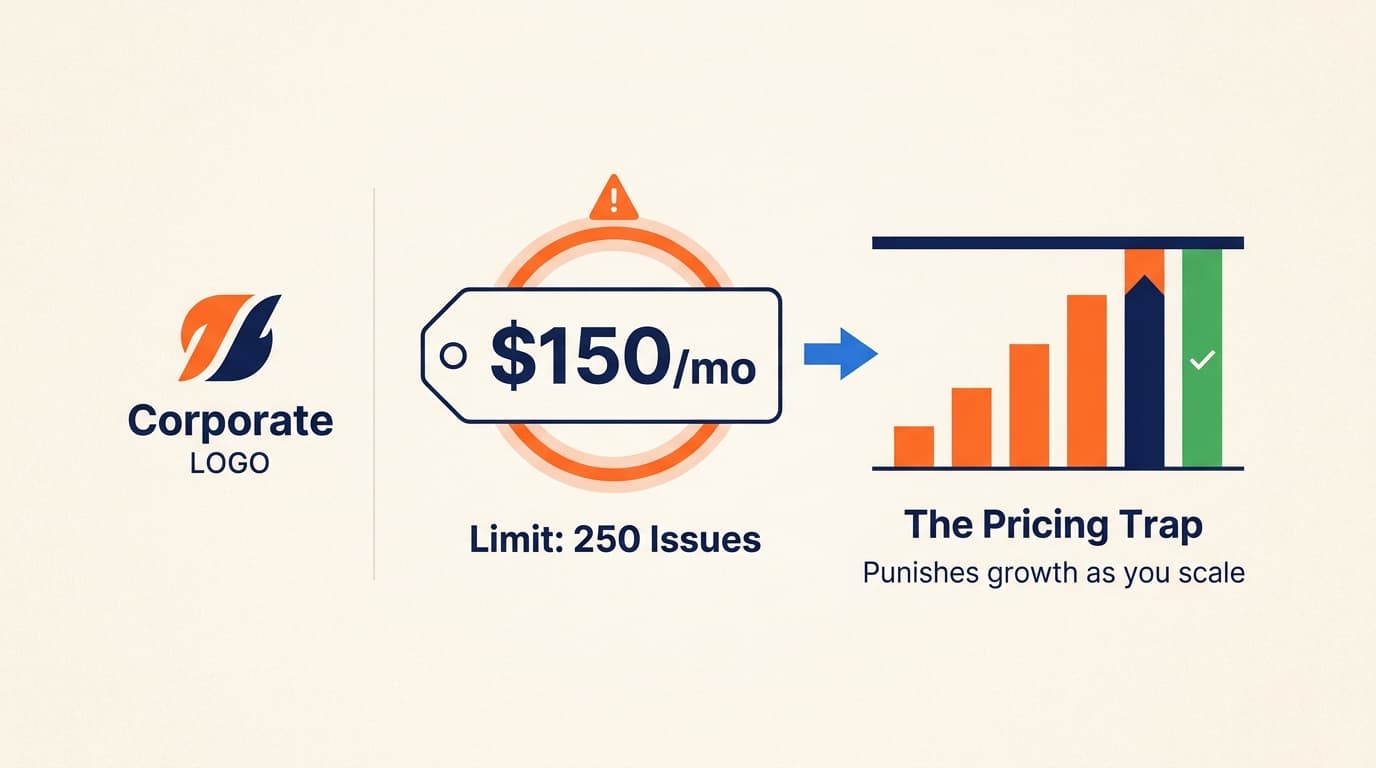
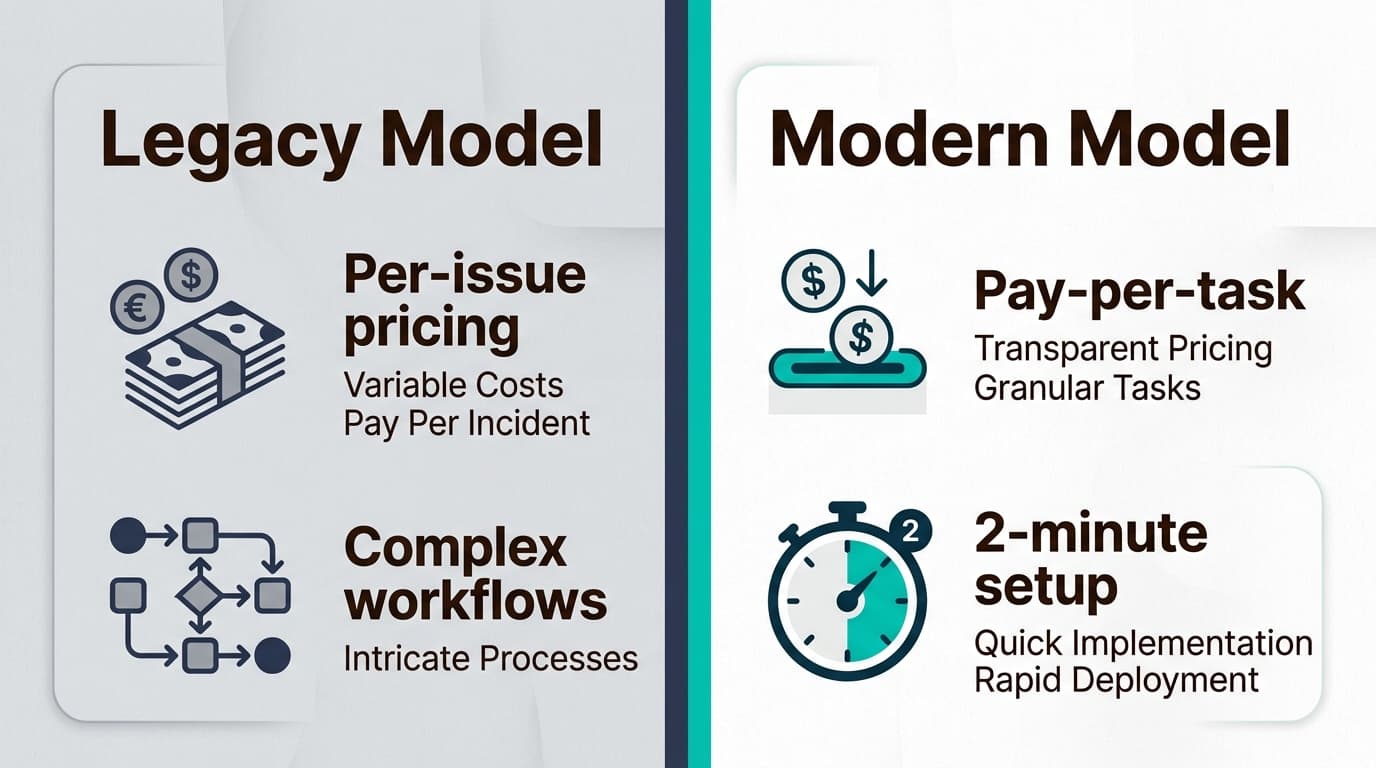
The most common complaint we hear from teams moving away is the "issue" pricing trap. Unlike many modern platforms that charge per seat or per successful resolution, Helpshift's pricing often starts around $150 per month for only 250 issues. For a high-volume mobile game or a fast-growing app, you can burn through that limit in a single morning. As one Featurebase analysis points out, large teams can find this model extremely punishing as they scale.
Then there's the setup. While Helpshift is powerful, it's not a "plug and play" tool. Mastering its advanced features (like Smart Intent or deep SDK integrations) requires significant engineering time and a steep learning curve. One reviewer on G2 noted that the setup can be "time-consuming and complex," requiring teams to have a deep understanding of their customer experience before they even get started.
The pros I mentioned can be time-consuming and complex to set up. You need to ensure you understand how your customers experience your support.
G2
Finally, reporting remains a sore spot. In an era where AI can provide deep sentiment analysis and trend intelligence, Helpshift's native analytics often feel subpar. Teams struggle to track agent performance and CSAT trends with the granularity that 2026 support demands. The shift we're seeing isn't just about switching tools; it's about shifting to a model where you hire an AI teammate rather than just configuring a bot.
How we picked the best Helpshift alternatives
To build this leaderboard, we didn't just look at feature lists. We evaluated these tools on how they handle the actual reality of support in 2026. If a tool requires three months of "training" or a dedicated developer to build every workflow, it didn't make the cut.
We used four main criteria for our evaluation:
- Autonomous Resolution: We looked for tools that can actually close a conversation, not just draft a reply for a human to send.
- Setup Speed: In 2026, your AI should be able to learn from your existing Notion docs, help center, and past tickets in minutes.
- Omnichannel Capability: While mobile is important, the best tools handle email, web chat, and social messaging with equal grace.
- Pricing Transparency: We prioritized tools that don't hide behind "request a demo" for basic pricing or punish you for every "issue" created.
The 9 best Helpshift alternatives for 2026
The following platforms represent the best of the current market. Whether you're a 500-person gaming studio or a scrappy SaaS startup, there's a teammate here that's a better fit than a legacy helpdesk.
1. eesel AI
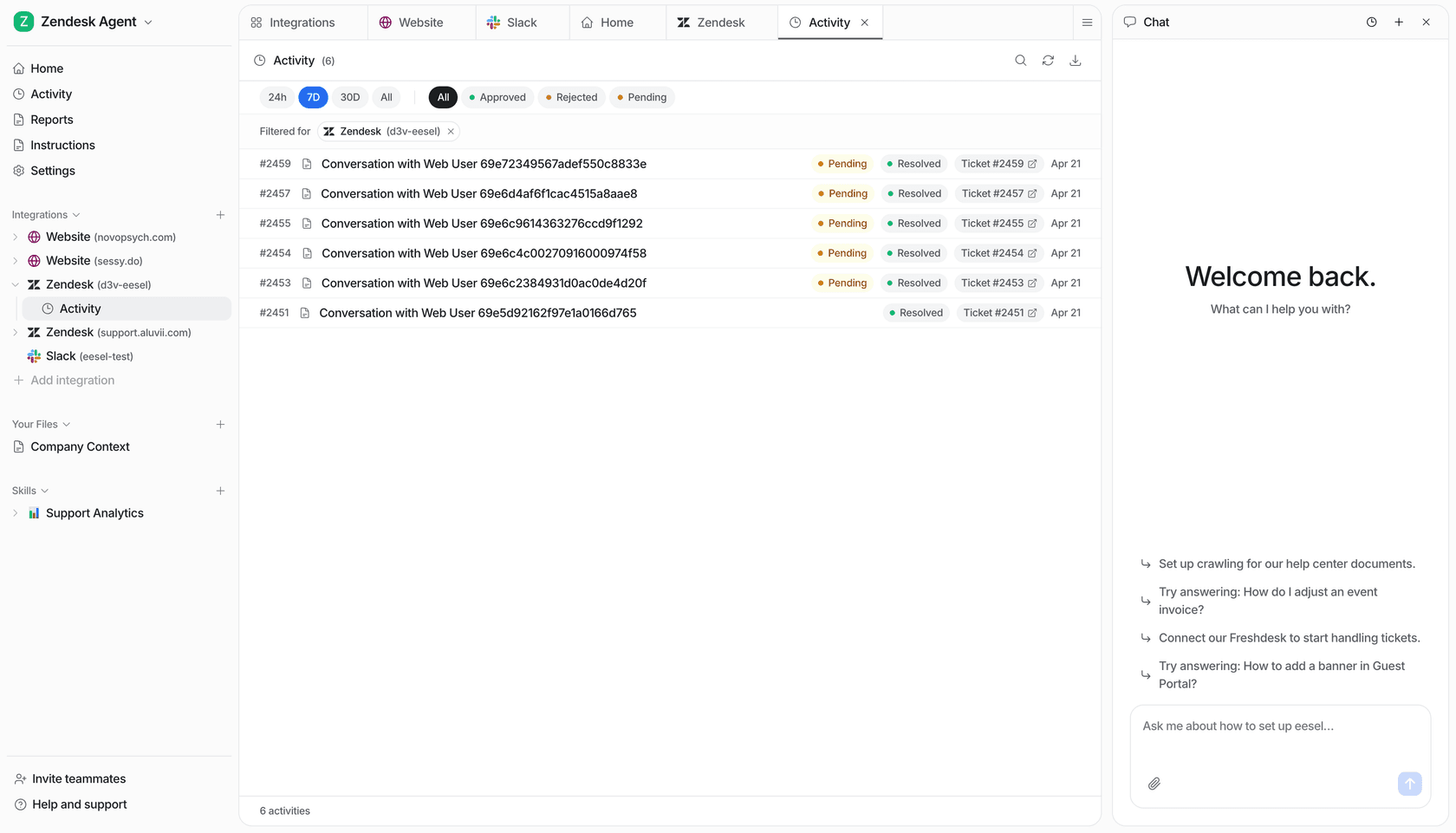
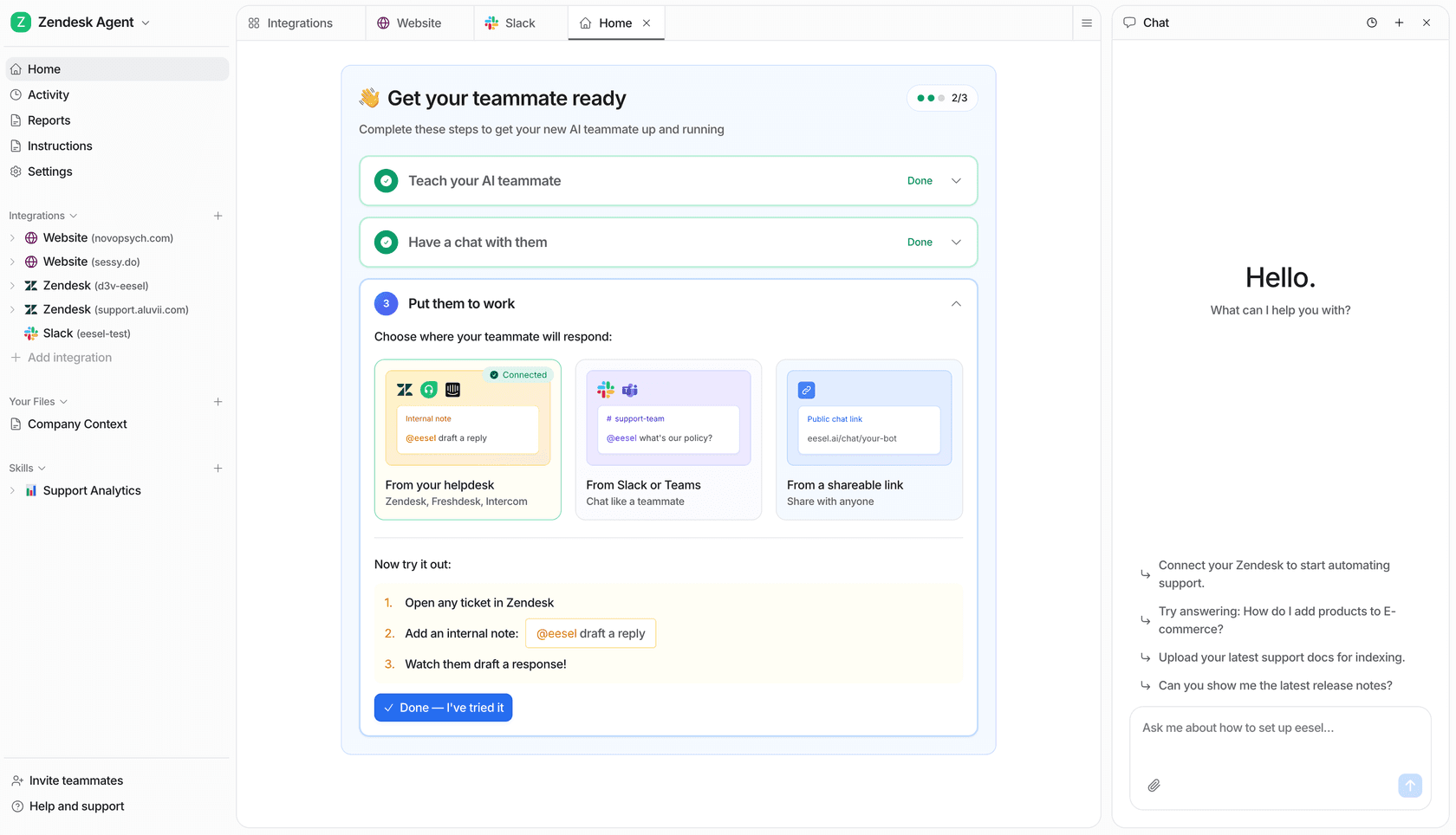
eesel AI is less of a "tool" and more of a new hire for your support team. While most platforms require you to manually build out decision trees and "if-this-then-that" workflows, we built eesel AI to learn exactly like a human does. You connect it to your help center, your past tickets, and your internal docs (like Notion or Google Docs), and it onboards in minutes.
Our core philosophy is "plain-English control." If you want our AI Agent to handle a specific refund policy or escalate VIP customers, you just tell it so in plain text. There's no code required. This approach allows teams to achieve an autonomous resolution rate of up to 81% without an engineering project.
Before you go live, you can even run a "pre-go-live simulation." This lets you see exactly how eesel AI would have responded to your last 1,000 tickets, giving you total confidence before it ever talks to a customer. It's the most transparent way to deploy AI in 2026.
| Plan | Price | Credits Included | Key Features |
|---|---|---|---|
| Free | $0 | 100 credits | Full feature access, no credit card required |
| Teammate | From $299/mo | 500 credits (1 credit per ticket or chat) | Every integration and channel, no seat fees; larger batches up to 5,000 credits ($1,899/mo) |
| Add-ons | SSO and MFA from $199/mo | - | Priority support from $299/mo, data residency $500/mo, HIPAA talk to us |
Pros:
- Learns from your existing data in under 2 minutes.
- One fixed monthly price with no seat fees keeps costs predictable.
- High resolution rates without rigid decision trees.
Cons:
- Best for digital-first teams; less focused on legacy telephony support.
2. Zendesk
If you're a massive enterprise that needs a tool for every possible use case, Zendesk is the standard. It has the most mature ecosystem in the helpdesk world, with over 1,800 apps in its marketplace. For teams migrating from Helpshift, Zendesk offers a much more robust set of analytics and reporting tools.
Zendesk has also leaned heavily into AI with its "Resolution Platform." Its AI agents are built to handle complex issues autonomously across all channels. However, be prepared for the "add-on" culture. While the base seat price is competitive, advanced AI features often require a significant additional monthly investment.
3. Help Scout
Help Scout is the choice for teams that prioritize a "human-first" support experience without the complexity of an enterprise helpdesk. It pioneered the idea of a shared inbox that looks like a personal email to the customer, removing the "ticket number" feel that many users dislike.
The big draw for Help Scout is its "Beacon" tool. You can embed knowledge base articles and chat directly into your app or website, allowing users to help themselves before reaching out to an agent. Its AI features, like AI Summarize and AI Drafts, help teams move faster without losing the personal touch.
4. Gorgias
If you're an e-commerce brand on Shopify, Gorgias is likely the only alternative you should consider. It's built specifically for retail, allowing agents to edit Shopify orders, process refunds, and track shipments without leaving the helpdesk.
Its AI Agent is designed for "sales and support skills," meaning it doesn't just answer questions, it can also make product recommendations to drive revenue. This makes support a profit center rather than just a cost.
5. Freshdesk
Freshdesk is the go-to for teams that need a reliable, omnichannel helpdesk that "just works" without a massive price tag. It's built on a traditional ticketing model but has been rapidly adding AI capabilities through its Freddy AI suite.
It's particularly strong for small-to-medium teams that need to manage email, chat, and phone in one place. Its interface is less complex than Zendesk, making it much easier to train new agents.
6. Featurebase
Featurebase takes a different approach by combining support with product feedback. (Note: Featurebase is also cited as a source in this article.) For modern product teams, this is a "best of both worlds" scenario. Instead of just answering a ticket about a missing feature, you can automatically add that user to a feedback board or show them the public roadmap.
It's a "product-led" support tool. The AI search and changelogs help deflect tickets by keeping users informed about what's coming next. It's a great fit if your support team works closely with your product team.
7. Crisp
Crisp is famous for its "flat-rate" pricing model. You pay one price for the entire team, no matter how many agents you add. For teams coming from Helpshift's "per-issue" model, this can feel like a breath of fresh air.
Despite the low price, Crisp is packed with features like co-browsing, shared inboxes, and its own AI chatbot. It's a great "all-in-one" choice for startups that want to move fast without worrying about seat counts.
8. Ada
Ada is an AI agent platform aimed at large enterprise support teams, and it has a dedicated gaming offering, which makes it a natural comparison for studios on Helpshift. Its AI agent handles event and tournament questions, account recovery, subscription changes, and player onboarding, and its Playbooks turn your SOPs into automated workflows the agent follows step by step.
Its newer Ada Computer feature gives the AI agent API, code, and MCP tools so it can complete tasks in your business systems under your controls. Ada doesn't publish prices. Its pricing page is a demo request form that asks for your yearly contact volume, so expect a quote-based contract.
9. Kustomer
Kustomer is a helpdesk built around customer data, with a custom insights pane and custom objects next to each conversation. Its packages include omnichannel messaging across chat, email, text, voice, and online forms, plus Facebook, Instagram, WhatsApp, and TikTok Shop, along with smart routing, SLA management, and AI assistants for search, workflows, and the knowledge base.
Kustomer doesn't post prices either. Its pricing page runs a two-minute ROI assessment and then connects you with someone who builds a quote for your team. Voice and WhatsApp are billed pay as you go, and some channel setups may need a statement of work and an implementation fee.
How we conducted this Helpshift alternatives comparison
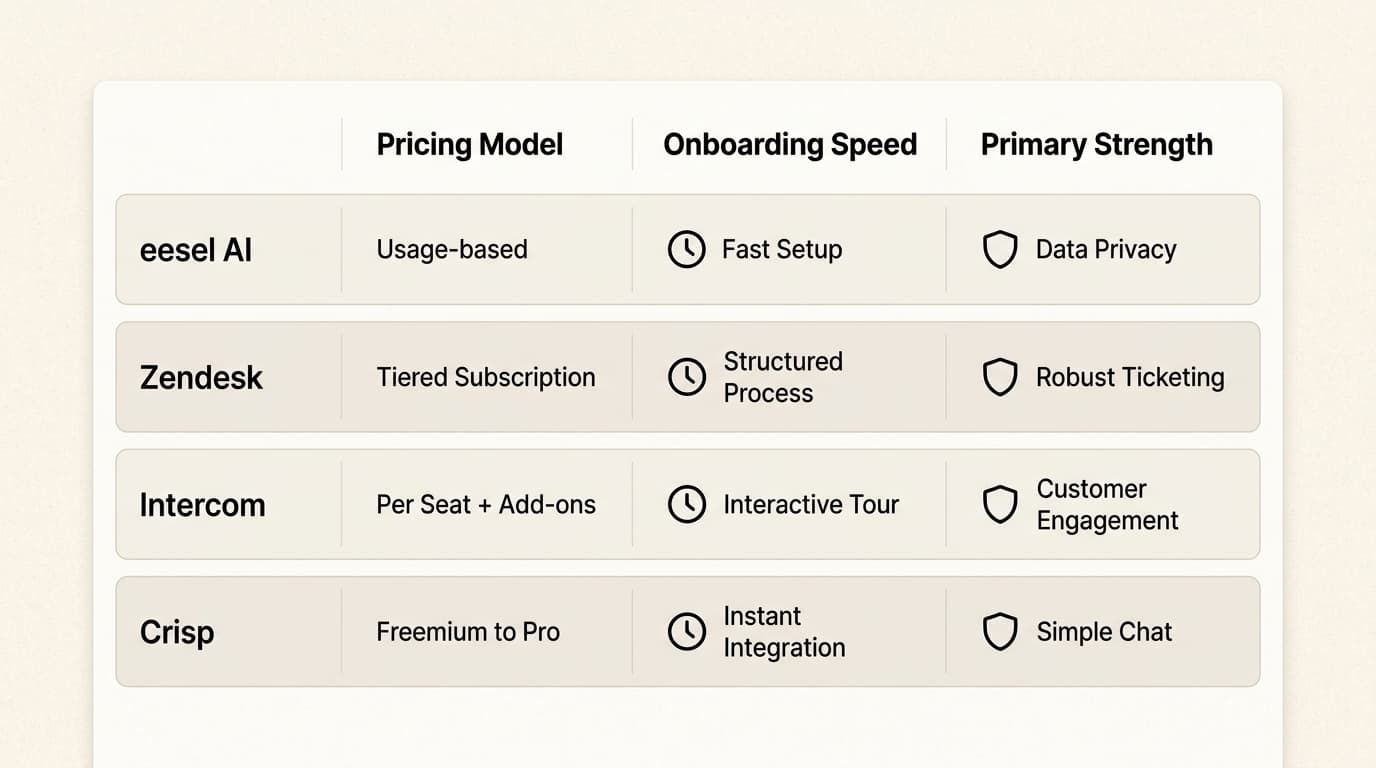
To make this comparison useful, we evaluated each platform using a consistent set of criteria. Here is what we looked for:
- Autonomous Resolution: We looked for the tool's ability to solve problems end-to-end, not just provide a better writing interface for agents.
- Setup Speed: We measured how quickly a platform could ingest documentation and be ready for a "simulation" run.
- Pricing Predictability: We prioritized models that make it easy for a manager to budget for the next 12 months and work out the total cost per resolved conversation.
- Omnichannel Depth: We checked if "omnichannel" was a real feature or just an API connector to another tool.
Comparing the top Helpshift competitors at a glance
| Product | Best For | Key Strength | Resolution Model |
|---|---|---|---|
| eesel AI | Speed & Autonomy | 2-minute setup | Fixed monthly credits |
| Zendesk | Enterprises | 1,800+ integrations | Seat + AR usage |
| Help Scout | Human-First Support | Shared Inbox / Beacon | Seat-based |
| Gorgias | E-commerce | Shopify order editing | Ticket volume |
| Freshdesk | Mid-market | Easy to start | Seat-based |
| Featurebase | Product Teams | Feedback + Support | Seat-based |
| Crisp | Small Startups | Flat-rate pricing | Workspace-based |
| Ada | Enterprise & Gaming | Playbooks + Ada Computer actions | Quote-based |
| Kustomer | Omnichannel CX Teams | Customer data + omnichannel routing | Quote-based |
Which Helpshift alternative is right for you?
Choosing the right platform depends entirely on your team's size and where your customers live.
If you are a massive enterprise with deep legacy requirements and a 500-person support team, Zendesk is the standard choice. You'll pay a premium, but you'll have the most robust reporting in the world.
For e-commerce brands, the choice is usually Gorgias. The ability to refund a Shopify order without leaving the chat window is a productivity "unlock" that's hard to beat. However, if you want that same e-commerce power but with a faster setup and a more "agentic" AI, our AI Chatbot for commerce is a strong alternative.
If you are a modern tech team that values speed and wants to pay only for successful resolutions, eesel AI is the clear winner. By treating AI as a "teammate" rather than a tool to be configured, you can solve the Helpshift headache in a single afternoon.
Scale your support with eesel AI
At the end of the day, the best Helpshift alternative is the one that lets your human agents focus on what they do best: empathy and complex problem solving. Legacy helpdesks keep your team stuck in the "ticket" loop, but in 2026, that's optional.
"Hiring" eesel AI is the fastest way to get your time back. You don't need a dev team to write code, and you don't need a three-month onboarding plan. You just connect your help center, tell eesel AI how you want it to behave, and watch it resolve tickets in your voice.
Bottom line? Most teams don't need a more complex helpdesk. They just need a better teammate. You can start for free with 100 credits today, no credit card required.