
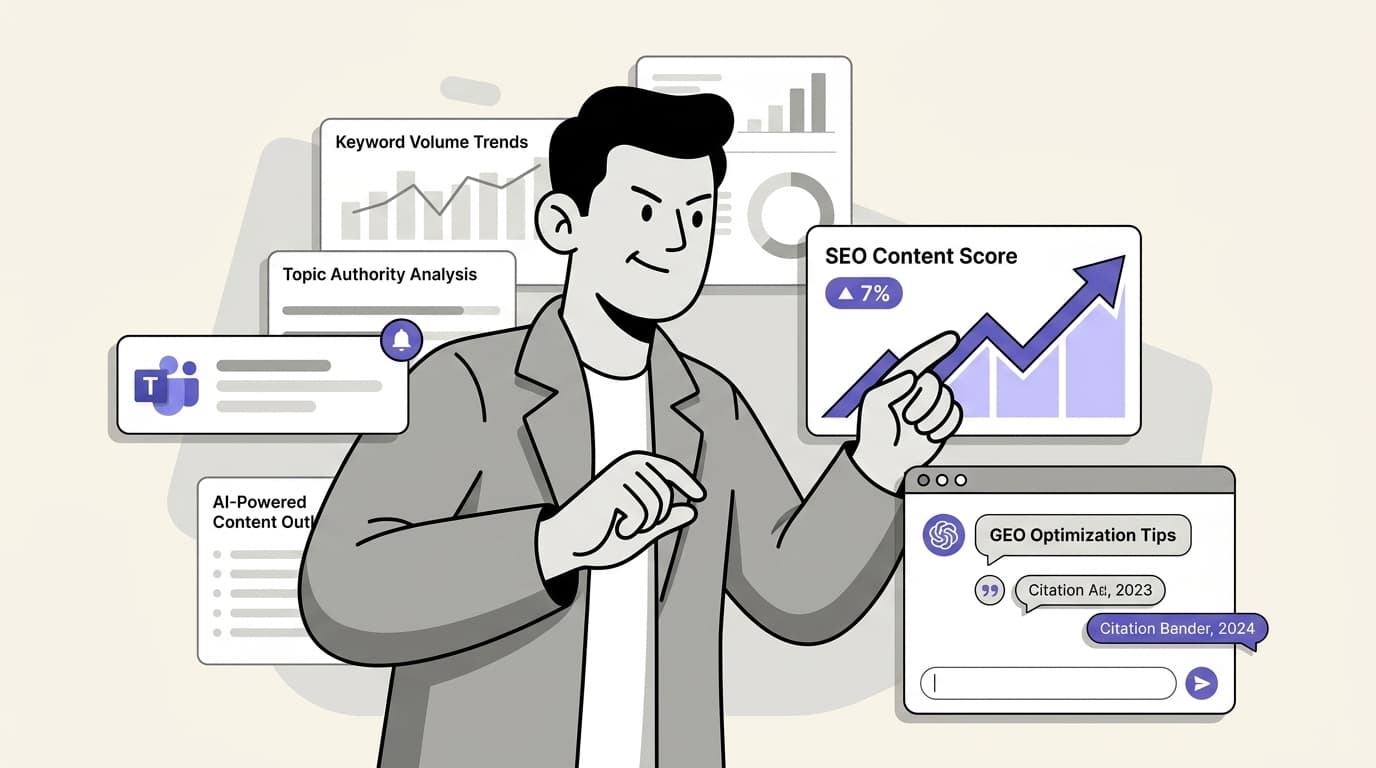
I tested 14 AI SEO tools with a high-volume content backlog to see which ones actually move the needle for professional teams. Most tools produce generic fluff that requires hours of human editing, but the winners shared one critical differentiator: they prioritize topical authority over simple keyword density. Full breakdown of the survivors below.
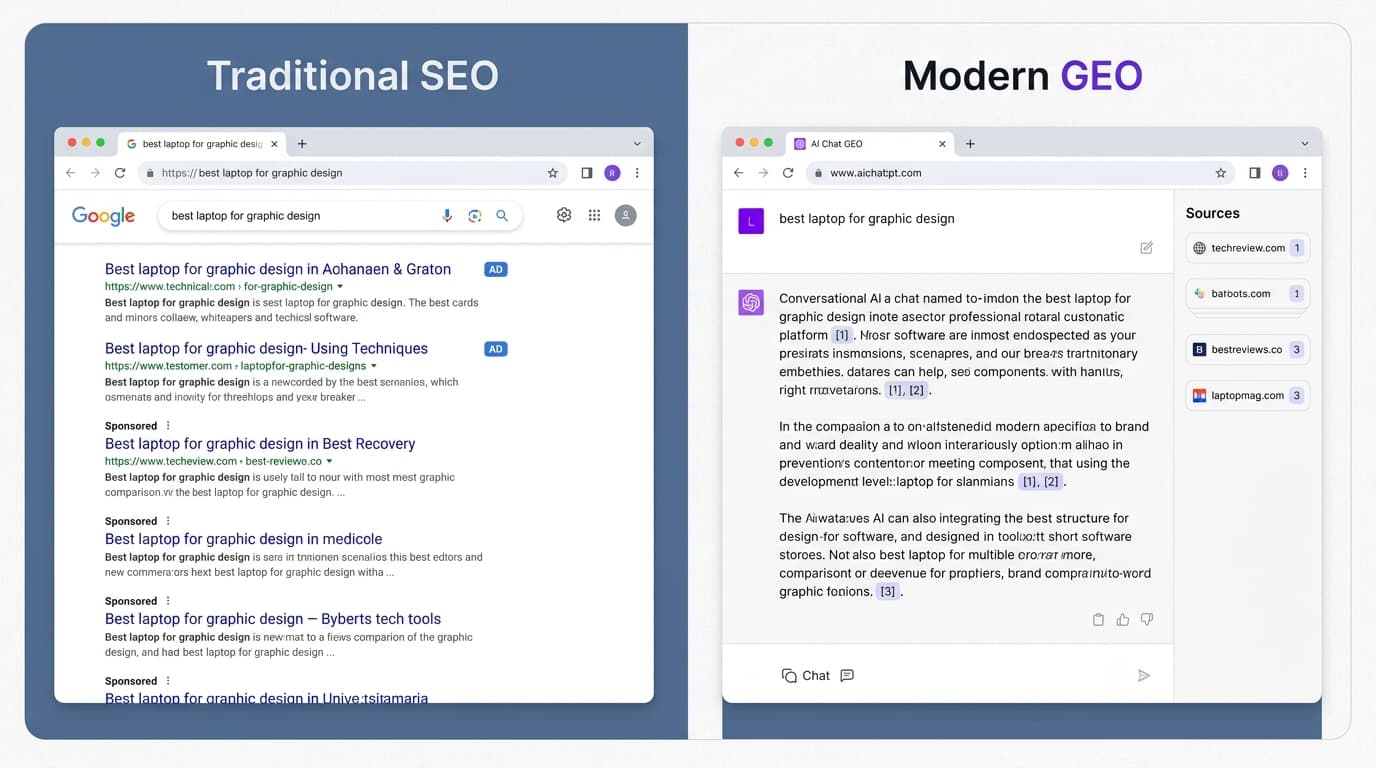
The shift toward Generative Engine Optimization (GEO) has changed the definition of a "good" SEO tool. It is no longer enough to just track keyword positions in a list of blue links. Today, your content needs to be the primary source that LLMs cite when answering complex user queries. This requires a level of research depth and structural precision that standard GPT-wrappers simply cannot achieve.
What are AI SEO tools for content teams?
In 2026, AI SEO tools for content teams are defined as platforms that use artificial intelligence to automate and enhance keyword research, content creation, and technical audits. These aren't just writing assistants; they are comprehensive technical platforms that handle the heavy lifting of data analysis and structural optimization.
The biggest shift we have seen is the transition from traditional SEO to Answer Engine Optimization (AEO) and GEO. Modern tools are built to ensure your brand is the one cited in AI search results like ChatGPT and Google's AI Mode. Instead of focusing on solo creators, these platforms now prioritize team collaboration and content velocity, allowing a small team to manage the output of a full-scale agency.
Why content teams need an AI tech stack in 2026
Efficiency is the primary driver. We found that teams using an AI-integrated stack cut down the 70+ hours per month traditionally spent on manual audits and research. When you're dealing with 500+ annual Google algorithm updates, manual tracking is effectively impossible.
There's also the matter of brand presence. You need a way to track how your company appears inside AI search results. If ChatGPT is recommending your competitor because their content is structured better for LLM retrieval, you're losing traffic that traditional rank trackers won't even show you. Understanding the difference between AEO and SEO is now a prerequisite for any content lead.
Our criteria for picking the best AI SEO tools
To build this list, we evaluated each platform against four core pillars:
- Real-world results: We looked for measurable improvements in traffic or ranking efficiency, specifically focusing on topical authority.
- AI-first functionality: We prioritized tools built from the ground up with AI cores, rather than legacy suites with AI features tacked on.
- Integration capabilities: Each tool had to connect seamlessly with modern CMS platforms like WordPress and Webflow.
- Accuracy and reliability: In 2026, hallucination is a disqualifier. We looked for tools with transparent data-backed recommendations.
Comparison table: Best AI SEO tools at a glance
| Tool | Best For | Starting Price | Top Feature |
|---|---|---|---|
| eesel AI | High-Volume Content | $4.00 / blog | Deep Reddit & primary source research |
| Semrush One | Enterprise GEO | From $99 / mo | Monitoring 239M+ LLM prompts |
| Clearscope | Editorial Precision | $129 / mo | Search Intent summaries & NLP grading |
| Surfer SEO | Content Strategy | $99 / mo | Topical Map & Content Score |
| Rankability | Agency Production | $199 / mo | Knowledge Base Grounding |
| Indexly | Technical SEO | $99 / mo | Automated Google/Bing API indexing |
| Rankscale.ai | Regional GEO Tracking | $20 (credits) | Regional AI engine rank tracking |
7 best AI tools for SEO content teams in 2026
The following platforms represent the current "gold standard" for teams looking to dominate search in 2026. Each one solves a specific piece of the content lifecycle, from initial indexing to long-term visibility tracking.
1. eesel AI blog writer
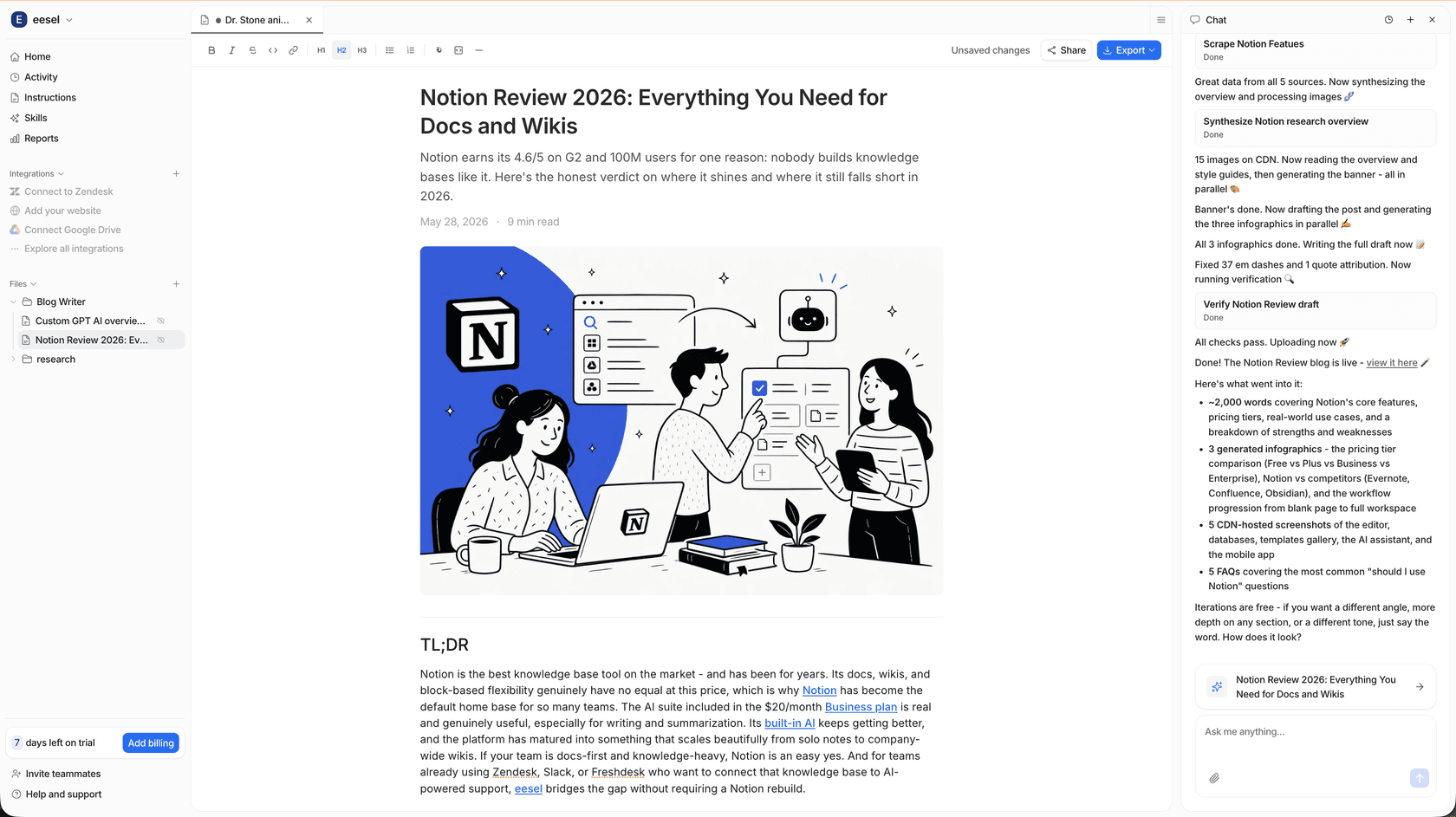
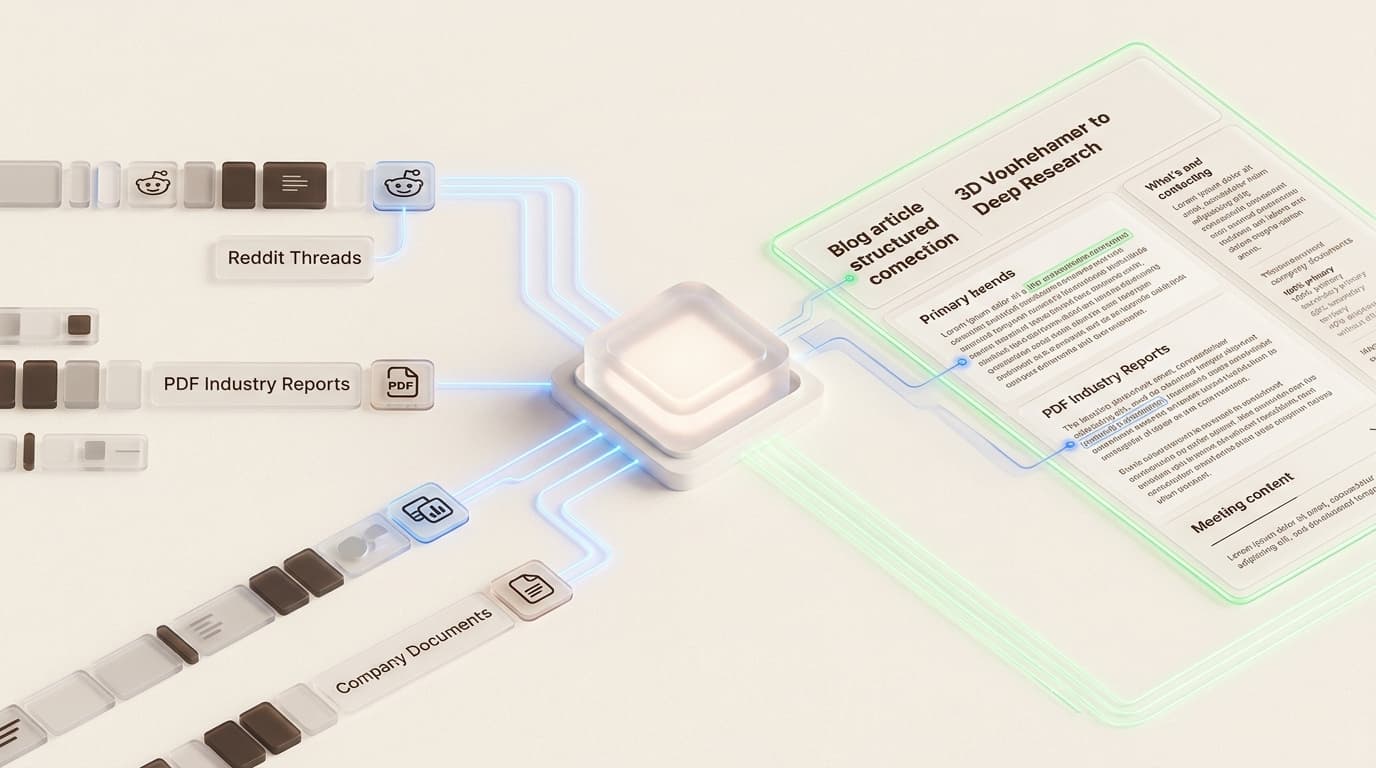
We built eesel AI on a simple premise: you shouldn't have to "configure" your AI, you should hire it. Our AI Content Writer acts as a dedicated teammate that handles everything from keyword research to final publishing. Unlike most tools that just recycle top Google results, we have built eesel to conduct real primary research by reading Reddit threads, industry reports, and your own internal docs.
What makes our approach different is how we handle authenticity. Every draft eesel produces includes transparent citations for every claim. It even automatically generates diagrams, feature graphics, and pulls in social proof from Reddit to ensure the content provides genuine information gain that LLMs love to cite.
| Plan | Price | Key Features |
|---|---|---|
| Free plan | $0 (100 credits) | No card needed |
| Blog post | $4 each | All features unlocked, Reddit integration, asset generation |
| Add-ons | From $199/mo | SSO and MFA from $199/mo, priority support from $299/mo, HIPAA on request |
Pros & Cons:
- Speed: We can generate full, researched drafts from a single keyword in minutes.
- Authenticity: Built-in voice matching achieves a 94% match with your existing content.
- Niche focus: We are primarily focused on long-form content production rather than being an all-in-one SEO suite.
2. Semrush One
Semrush One remains the heavy hitter for teams that need a 360-degree view of their visibility. Their AI Visibility Toolkit is particularly impressive, as it monitors over 239 million LLM prompts globally to track exactly how brands appear in AI search results.
The platform is built for enterprise-scale monitoring. It doesn't just tell you where you rank; it provides sentiment analysis and actionable recommendations to help you bridge visibility gaps where your competitors are being cited instead of you.
| Plan | Price | Included Features |
|---|---|---|
| Standalone Toolkit | $99 / mo | 1 domain, 25 prompt tracking, 100-page site audit |
| Semrush One (Starter) | Contact Sales | 5 websites, 50 prompts, 500 keywords |
Pros & Cons:
- Comprehensive: You get access to the largest dataset of keywords and backlinks in the industry.
- GEO focus: Excellent at tracking mentions specifically in AI Overviews and ChatGPT.
- Complexity: It has a steeper learning curve than most of the newer, nimbler AI tools.
3. Clearscope
If your team prioritizes editorial quality above all else, Clearscope is likely the right choice. It is built for professional content teams who need precise NLP term suggestions and a reliable grading system to ensure every piece covers its topic comprehensively.
One of their standout features for 2026 is Topic Explorations. It provides a holistic view of a subject, helping you identify high-impact gaps in your content clusters before you even start writing.
| Plan | Price | Limits |
|---|---|---|
| Essentials | $129 / mo | 20 tracked topics, 50 pages, 20 drafts |
| Business | $399 / mo | 50 tracked topics, 300 pages, 20 drafts |
Pros & Cons:
- Accuracy: Their semantic suggestions are widely considered some of the most accurate in the industry.
- Workflow: It fits seamlessly into Google Docs with a live sidebar that scores as you write.
- Cost: The high entry price can be a barrier for smaller teams.
4. Surfer SEO
Surfer SEO has become a staple for content teams because of its intuitive "score-as-you-write" experience. Their Topical Map feature is essential for teams trying to build the clusters required to dominate a niche in the current AI-led search environment.
They also offer an AI Tracker that monitors your share of voice specifically across ChatGPT, Perplexity, and Gemini. This allows you to see exactly which content is driving your visibility inside AI answers.
| Plan | Price (Annual) | Features |
|---|---|---|
| Discovery | $49 / mo | 120 documents, AI SEO guidelines |
| Standard | $99 / mo | 360 documents, AI Visibility tracking |
| Pro | $182 / mo | 360 documents, 5 brand workspaces |
Pros & Cons:
- Usability: It offers arguably the best user experience for writers who need to optimize as they go.
- Topical Map: This tool is great for organizing your content strategy into authority clusters.
- Over-optimization: If followed too rigidly, the suggestions can sometimes lead to content that feels a bit mechanical.
5. Rankability
Rankability is designed with agency production in mind. It uses a blend of Watson and Google NLP to build briefs that are grounded in real search intent. Their Knowledge Base Grounding is a standout feature for commercial teams, as it uses your specific service details and USPs to ensure the AI doesn't hallucinate.
The AI brand monitoring feature is incredible. We can now track how ChatGPT and other AI tools mention our brand and adjust our strategy accordingly.

| Plan | Price | Seats | Limits |
|---|---|---|---|
| Core | $199 / mo | 3 | 5 clients, 25k credits |
| Team | $399 / mo | 5 | 15 clients, 75k credits |
Pros & Cons:
- Educational: All plans include coaching calls and training to help your team stay ahead of SEO trends.
- Prevention: Their Content Decay monitoring alerts you exactly when a page starts to slip.
- UI: The interface is much denser than modern SaaS tools, which can take time to master.
6. Indexly
Indexly solves a very specific, critical bottleneck: getting your content discovered. In 2026, waiting weeks for Google to crawl your new pages isn't an option. Indexly automates submissions to Google, Bing, and Yandex via official APIs, often reducing indexing time from weeks to hours.
It also automatically generates an llms.txt file, which is the new standard for guiding AI crawlers on how to properly index and attribute your site's content.
| Plan | Price | Submissions |
|---|---|---|
| Starter | $99 / mo | 200 URLs / day |
| Growth | $299 / mo | 600 URLs / day |
| Scale | $499 / mo | 1,000 URLs / day |
Pros & Cons:
- Time-saver: It completely removes the manual work of Google Search Console submissions.
- Cost: It is very affordable for teams managing high-volume publishers or multiple client sites.
- Niche focus: It is a technical tool, so it won't help you with keyword research or writing.
7. Rankscale.ai
Rankscale.ai is the specialist tool for tracking your brand's presence in the Generative AI ecosystem. It allows you to monitor specific search terms across over 17 different AI models, including DeepSeek, Mistral, and Grok.
What we like about Rankscale is the granularity. You can track your rankings by specific region and AI model version, giving you a level of detail that general SEO suites can't match.
| Plan | Price | Credits |
|---|---|---|
| Pro | $99 / mo | 1,200 |
| Growth | $385 / mo | 5,500 |
Pros & Cons:
- Specificity: It is the most detailed tool for tracking regional GEO performance.
- Flexible: The pay-as-you-go credit model is great for teams that don't need continuous daily monitoring.
- Newness: It doesn't have the massive historical backlink data that you'd find in a tool like Semrush.
Strategic tips for building your AI SEO workflow
Building an AI-driven tech stack isn't about finding one tool that does everything. It is about connecting the right "modular" tools to handle each part of your pipeline.
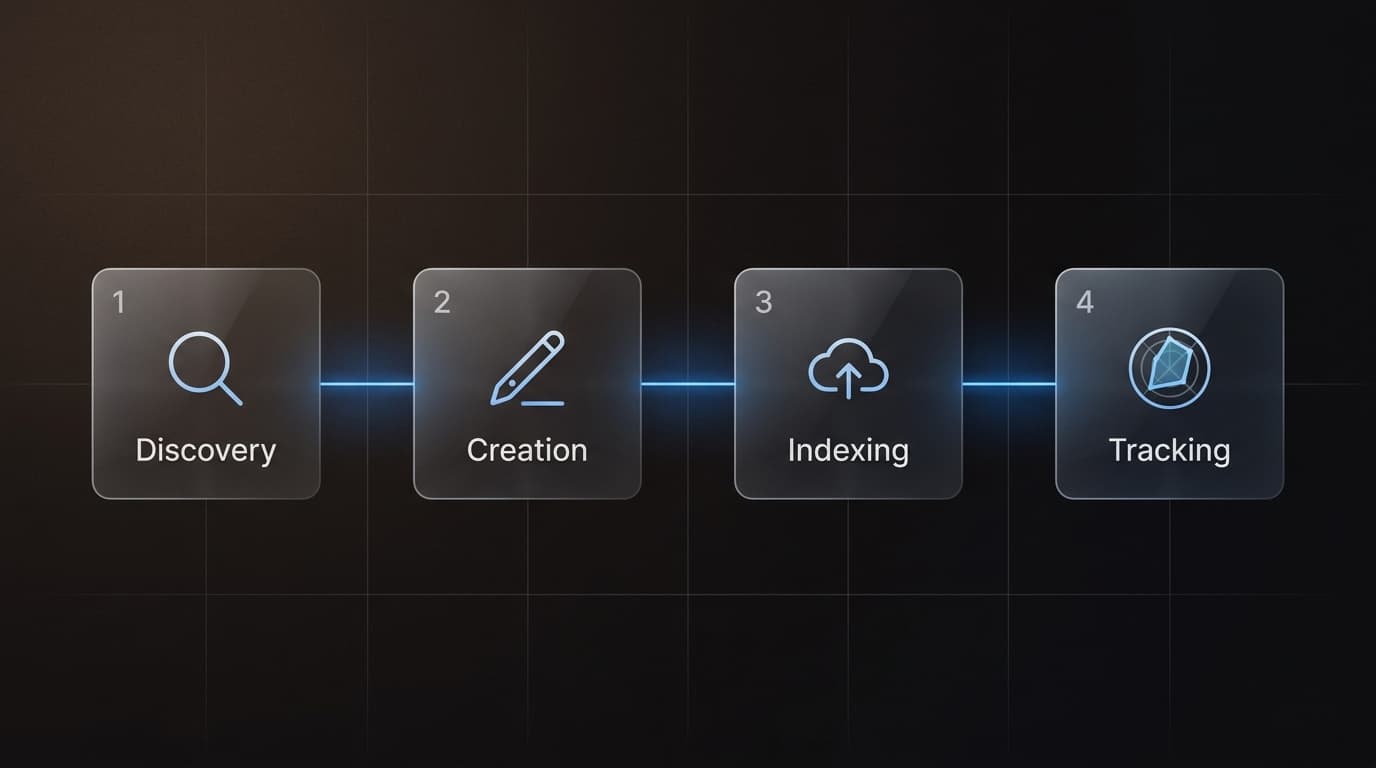
First, identify your biggest bottleneck. If your team is struggling to keep up with content demand, start with a high-quality AI blog generator like eesel AI. If your content is great but not ranking, prioritize optimization tools like Clearscope or Surfer.
Always ensure you have a human editorial layer. Even in 2026, the best performing content is integrated with AI insights but polished by human editors who understand the brand's unique voice. Finally, make sure you're automatically clustering your keywords to build the topical authority that modern search engines demand.
Scale your content production with eesel AI
At eesel AI, we have helped teams scale from zero to 750,000 monthly impressions in just 90 days. We don't believe in more tools; we believe in better teammates.
Our AI Content Writer is ready to onboard in minutes, learning your voice and conducting deep research so your team can focus on strategy instead of drafting. Hire your AI teammate today and start producing the researched, authoritative content that ranks in 2026.