
You've done your keyword research. You're staring at a giant spreadsheet with thousands of rows, and the big question is: What's next? That messy list of keywords is often the biggest hurdle between having a plan and actually publishing content.
Good question. If anyone can share a simple template that works, I’d really appreciate it 🙏🏻 I tried Canva + Google sheet after competitor analysis, own ideas and manual grouping

This is where keyword clustering becomes essential. It is a way to bring order to the chaos by grouping keywords based on user search intent. Instead of creating dozens of thin, repetitive articles, you can build one comprehensive piece that targets multiple related search queries at once. This approach helps you build topical authority, prevents your own pages from competing against each other (keyword cannibalization), and helps you rank higher.
The manual process can be a significant challenge. Thankfully, today's AI tools make it much faster and more accurate. Some platforms, like the eesel AI blog writer, go beyond just grouping keywords. They can take a single keyword from one of your new clusters and generate a full, publish-ready article in minutes.
What is keyword clustering and why is it important
Keyword clustering is the process of grouping search terms that share a similar user intent. The goal is to determine which keywords can be targeted with a single, high-quality page. Think of it like organizing a library. You wouldn't just arrange books alphabetically by title; that would be inefficient. You group them by genre and topic so someone looking for a sci-fi novel can find everything in one place.
That is what you are doing with your keywords. You are organizing them so that a user (and Google) can find a complete answer to their problem on one page.
This is a core part of modern SEO for a few key reasons:
- It builds topical authority. When you cover a topic from multiple angles on one in-depth page, you signal to Google that you're an expert. This makes it easier to rank for every related keyword in that group.
- It prevents keyword cannibalization. If you have five different blog posts all trying to rank for slight variations of the same keyword, they can end up competing with each other and diluting your authority. Clustering helps you create one definitive page for each topic.
- It improves user experience. Users typically prefer to find all the information they need in one place rather than clicking through multiple articles to piece together an answer. Giving readers everything they need on one page can improve their experience on your site.
Different methods for automatic keyword clustering
Before we get into the tools, it's helpful to understand the logic they use. The method an algorithm uses to group your keywords affects how useful those clusters are.
Semantic clustering
This method groups keywords based on their meaning. It uses Natural Language Processing (NLP) to find synonyms and related terms, like grouping "best project management tools" and "top project management software" together.
- Pros: It is a straightforward approach and a good first step beyond matching identical words.
- Cons: It can miss key differences in search intent. For instance, "vaporizer parts" and "vaporizer accessories" are semantically close, but Google's search results may show different pages. This indicates that users are looking for different things, and they probably need separate pages.
SERP-based clustering
This is a widely preferred method in modern SEO. This method only groups keywords if they share a significant number of the same top-ranking URLs on Google. The logic is simple: if Google is already ranking the same pages for "how to bake sourdough bread" and "sourdough bread recipe for beginners," it indicates that a single page can effectively target both queries.
SERP-based. Always. Semantic embeddings look pretty on a graph, but if the actual live SERPs don't share at least 3-4 URLs, grouping them is just asking for cannibalization.
- Pros: It offers high accuracy because it is based on what Google is actually rewarding. It reflects user intent, not just word similarity.
- Cons: It requires more data processing since the tool has to scrape the search engine results pages (SERPs). It can sometimes create fragmented clusters that might need a manual review to merge.
Morphological clustering
This is the most basic method. It groups keywords that share the same root word, like "run," "runner," and "running."
- Pros: It is simple and fast for a very basic analysis of your keywords.
- Cons: It is the least sophisticated method and is not very reliable for SEO because it ignores user intent.
Top tools for automatic keyword clustering
Clustering thousands of keywords by manually checking search results is inefficient and prone to errors. Fortunately, there are some great tools that handle the heavy lifting.
I’ve found tools like SEMrush and Ahrefs really helpful for automating and simplifying keyword clustering. When I do it manually, I list keywords in a spreadsheet and group them by themes and search intent. It’s a bit more hands on, but it works well!
eesel AI blog writer: From cluster to content
Many clustering tools provide a list of grouped keywords but leave the content creation process to the user. The eesel AI blog writer is designed to connect keyword strategy with content execution. It can take you from a cluster idea to a finished piece of content.
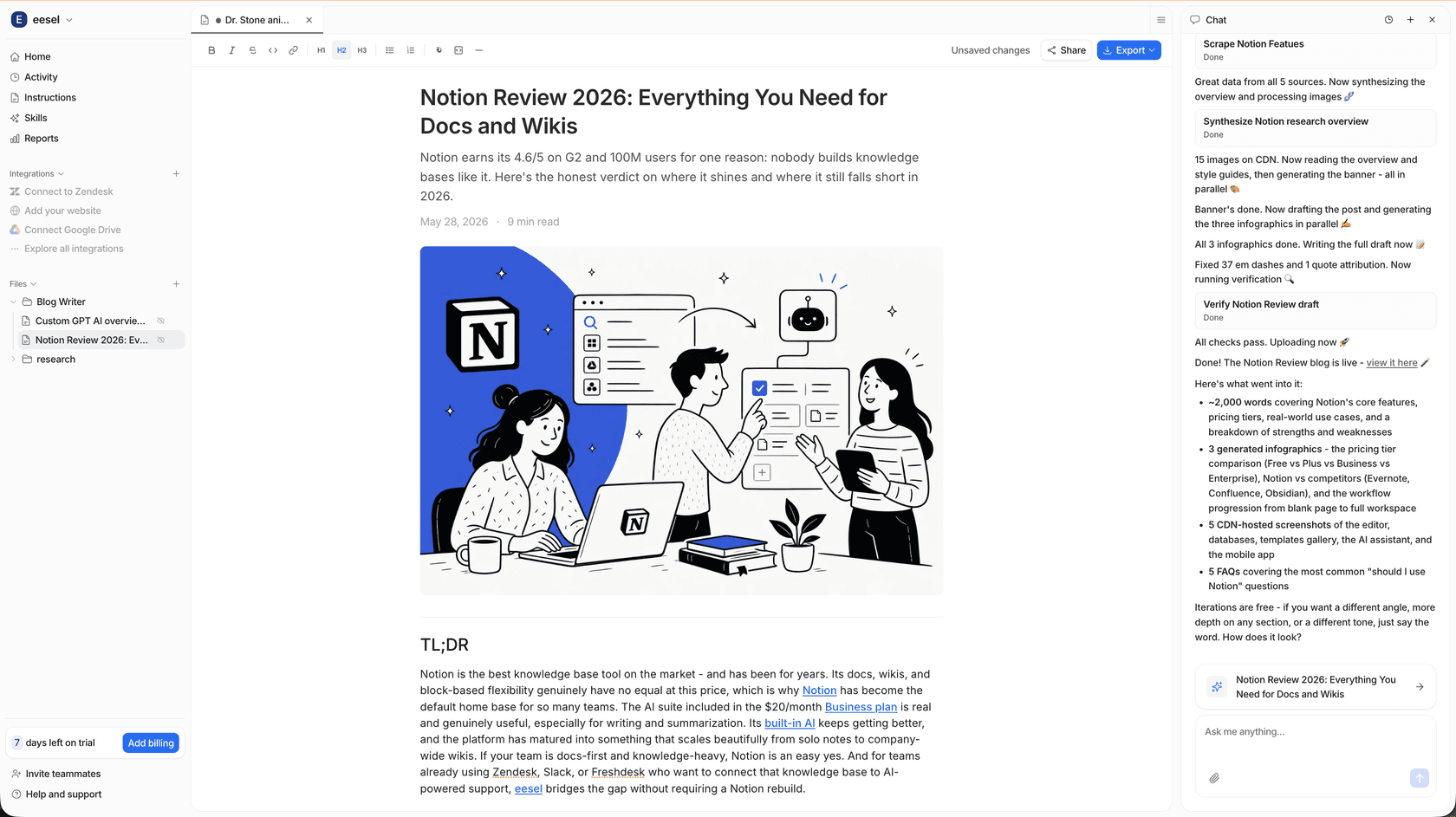
You provide a single keyword from one of your new clusters, and it generates a complete, well-researched, and SEO-optimized blog post.
Key features include:
- Content engine: It automates the writing process. We used this tool to increase daily impressions from 700 to 750,000 in just three months by publishing over 1,000 optimized blogs.
- Automatic assets: The output is not just text. You get a fully-structured article with AI-generated images, infographics, tables, and relevant embeds from YouTube and Reddit to create a rich, engaging post.
- Context-aware and brand-aligned: eesel AI can pull context from your website to include natural mentions of your products. It writes in a human tone, so you do not have to spend hours editing robotic filler text.
Pricing: You can try it for free. Paid plans are $99 for 50 blog generations.
Semrush Keyword Strategy Builder
If you are already using Semrush, their Keyword Strategy Builder (formerly the Keyword Manager) is a useful feature. It is an AI-powered tool that takes your seed keywords and organizes them into topics, pillar pages, and subpages. It uses SERP analysis to help you map out your content hubs.
- Features: It has useful filters that let you find "quick win" opportunities or high-traffic keywords. It also analyzes SERP features like featured snippets and People Also Ask boxes to help set priorities.
- Limitations: The tool is included within Semrush's subscription plans. After clustering, the user is responsible for creating the content brief and writing the article.
- Pricing: The tool is part of Semrush's Pro plans and up, which start at $248.17 per month when billed annually.
Keyword Insights
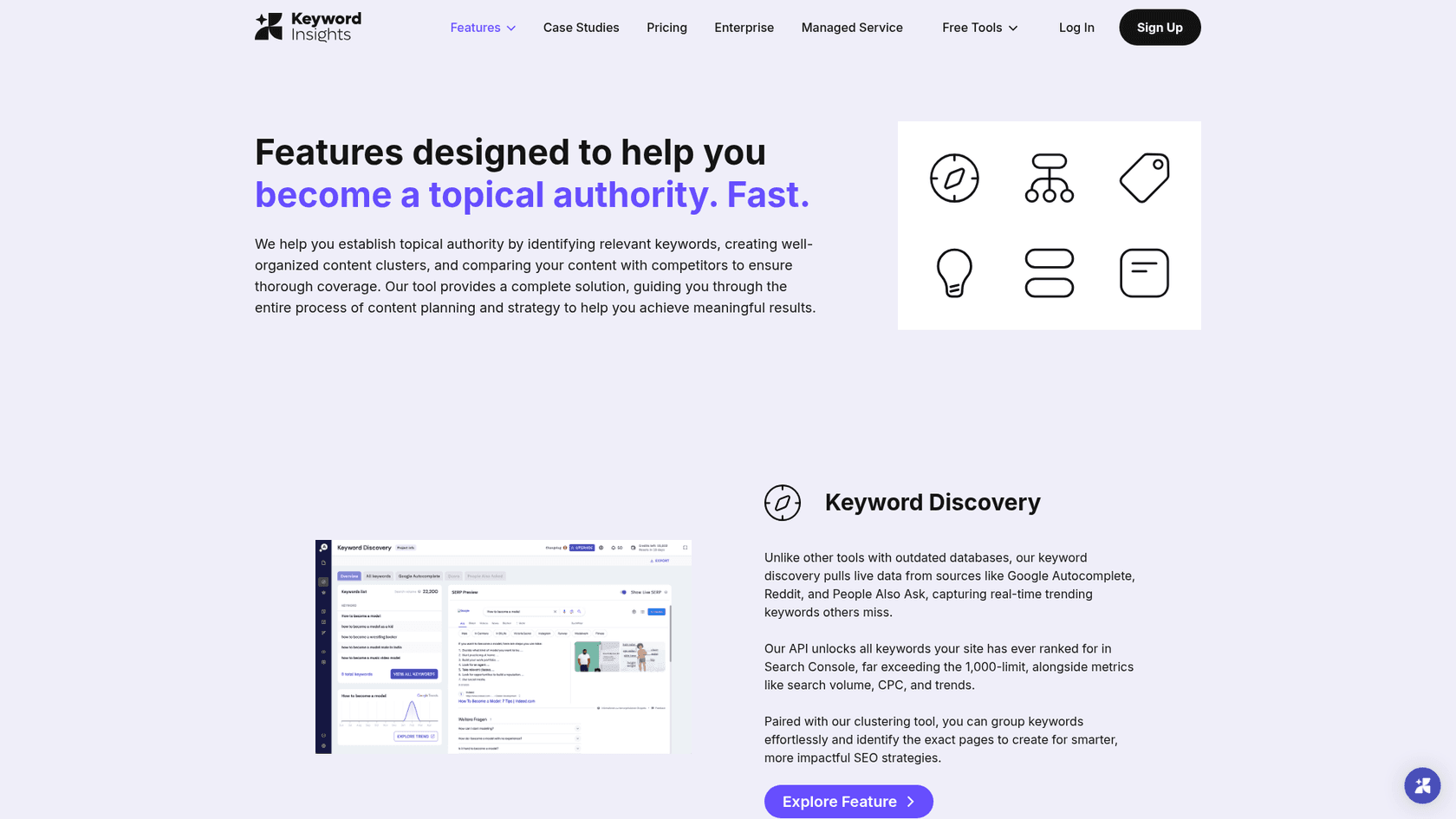
Keyword Insights is a specialized tool focused on SERP-based keyword clustering. It is designed for SEOs who need to process large keyword lists and want control over the clustering logic.
- Features: You can process massive lists of keywords and adjust the clustering settings to fit your needs. It is also useful for finding content gaps by comparing your clusters against what your site already ranks for.
- Limitations: Its advanced settings may present a learning curve for beginners. The output is a list of clusters, which you then manually send to their content brief editor or AI writer.
- Pricing: Keyword Insights uses a credit system. Plans start at $58 per month for 10,000 credits, and they offer a 7-day trial for $1.
SE Ranking Keyword Grouper
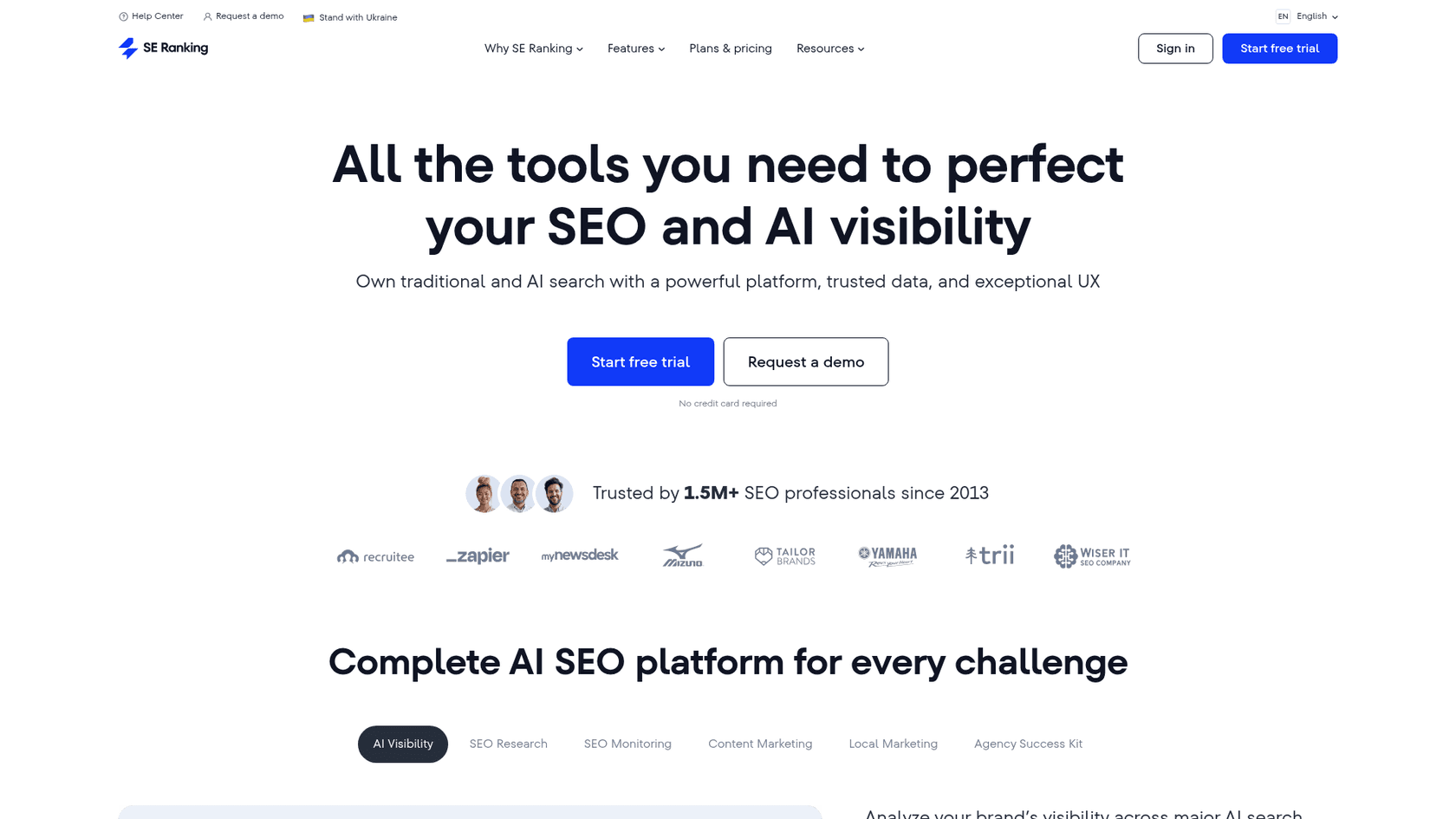
SE Ranking’s Keyword Grouper is another option that uses SERP analysis to cluster keywords. It lets you control the "accuracy," which means you can decide how many URLs need to overlap for keywords to be grouped together.
- Features: According to a recent comparison, it is helpful for planning a new website's structure or for researching a new niche. You can choose between "soft" and "hard" grouping for more flexibility.
- Limitations: Some users find that manual adjustments may be needed after the automated clustering is complete. It provides the keyword clusters, and the user then proceeds with content creation.
- Pricing: The Keyword Grouper is an add-on to their main SEO platform. The main plans start at $52 per month, and the clustering service costs an extra $0.004 per query.
How to turn clusters into a content strategy
Once you have a list of keyword clusters, the next step is to integrate it into your content plan. The real value comes when you turn that list into an actionable content plan.
Step 1: Prioritize your clusters You cannot write about everything at once. Score each cluster based on a mix of total search volume, average keyword difficulty, and its relevance to your business. A good starting point is clusters with good volume, low difficulty, and high business relevance.
Step 2: Map clusters to content types Not every cluster should be a blog post. Look at the intent behind the keywords to decide what kind of content makes sense.
- Informational intent (
how to,what is,guide) is perfect for blog posts or guides. - Commercial intent (
best,review,vs,alternative) is great for comparison pages or product reviews. - Transactional intent (
buy,price,discount) should point directly to your product or service pages.
Step 3: Build a content calendar Once you have prioritized your clusters and matched them to content types, plug them into a content calendar. Assign one target page to each cluster and schedule when you'll create and publish it. This gives your content plan structure and ensures you're consistently building your site's authority.
Step 4: Execute efficiently This is the implementation phase. A content calendar is only effective if the content is produced. This is where tools that speed up content creation, like the eesel AI blog writer, can be beneficial. You can take your prioritized keyword, enter it into the tool, and have a high-quality draft ready in minutes. This can help turn your content calendar into published articles more quickly.
For a more hands-on demonstration, the following video explains how you can use AI to automate the entire keyword clustering process, providing a practical look at turning a raw list of keywords into organized, actionable groups.
From clustering to content creation
Automating keyword clustering can significantly impact your SEO strategy. It turns a messy spreadsheet into a clear, strategic roadmap. By using SERP-based tools, you can group keywords based on user search intent, which is a key factor for Google's algorithm.
The objective extends beyond organization. The goal is to publish high-quality content that serves your audience and drives traffic. Clustering tells you what to write; the next and most important step is the writing itself.
Take the next step from strategy to execution. Try the eesel AI blog writer for free and turn a keyword from your new cluster into a publish-ready blog post in minutes.