

If you’re a marketer or founder, you know the feeling. The pressure to publish high-quality content never lets up. You’ve got to get blog posts out the door to bring in traffic, keep your social media feeds fresh, and write ad copy that actually gets clicks. It's a huge amount of work, and trying to scale it can feel impossible.
AI writing tools popped up as a way to help, but let’s be real for a second, a lot of what they produce is generic "AI slop." The content often feels flat, shallow, and sounds like it was written by a robot, because it was.
This guide will walk you through what’s going on in the world of AI writers, point out the limitations of the usual suspects, and introduce you to a newer breed of AI that’s focused on deep research and writing that actually sounds human.
Understanding how AI writing tools work
At their heart, AI writing tools are just software that uses large language models (LLMs) like GPT to generate text from a prompt you give them. The easiest way to think about it is as a super-advanced predictive text on your phone. These models have been trained on a mind-boggling amount of text and images from the internet, which helps them guess which word should come next to form a coherent sentence.
The technology has come a long way, fast. The first versions were basically just "article spinners" that would take existing content and try to rephrase it, usually with pretty clumsy results. Today’s tools are much more capable. They can act as an assistant to help with brainstorming blog titles, knocking out social media captions, or even drafting entire articles.
But here's the thing you have to remember: the quality of what you get out is entirely dependent on how the tool is built. How well it does its homework, how much context it can grasp, and how polished its writing is makes the difference between a genuinely helpful assistant and just another headache.
A look at common AI writing tools
Most AI writers you’ll bump into today fall into one of two camps. They’re built for speed and can pump out text for different formats, but they all tend to share the same weaknesses that can end up making more work for you.
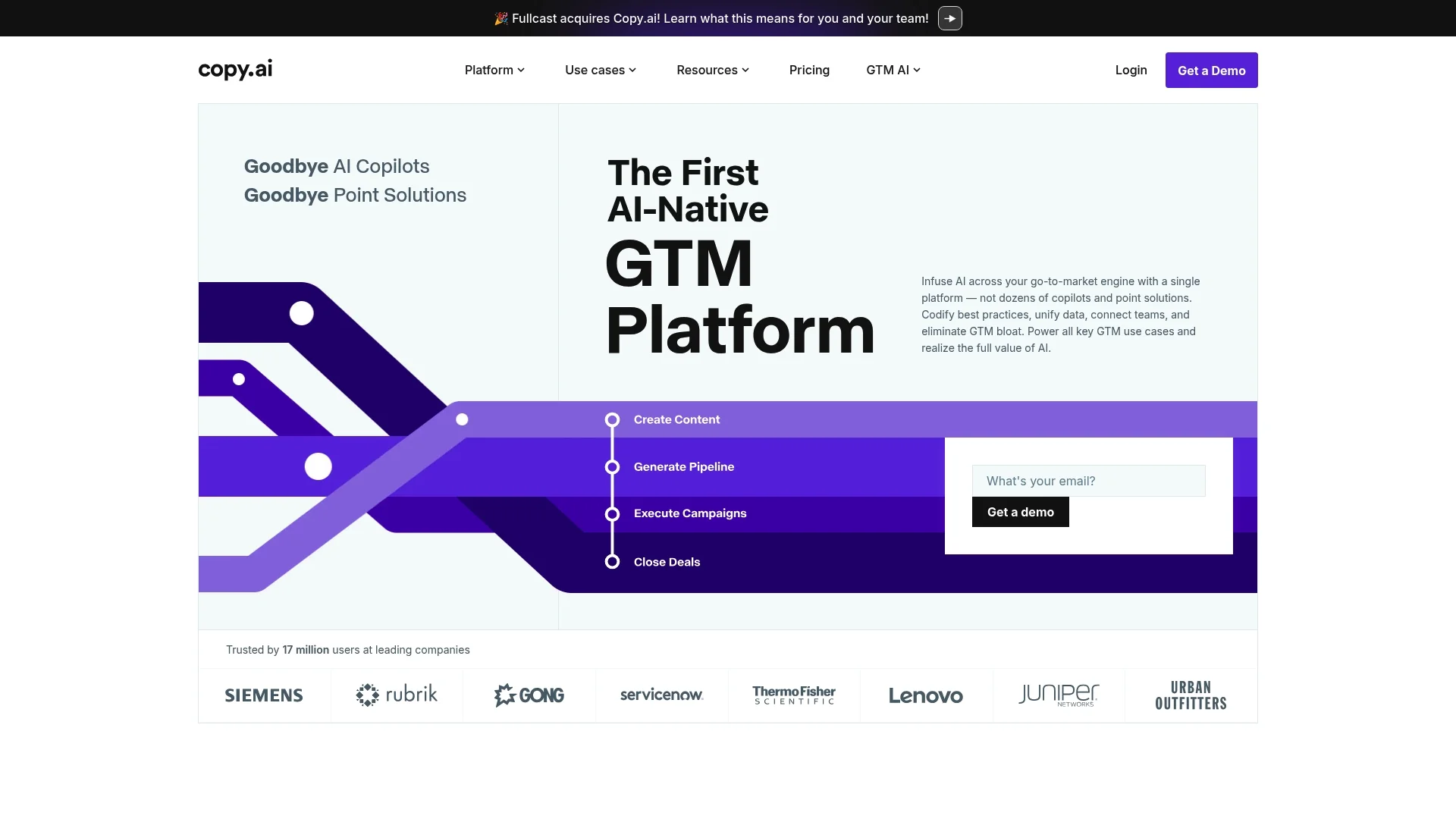
General-purpose AI writing tools like Jasper and Copy.ai
These tools are like the Swiss Army knives of AI writing. They’re packed with a library of templates for just about any marketing task you can imagine, from a blog post intro to a product description or a social media ad.

What they do: You pick a template, give it some basic info like a topic and a few keywords, choose a tone (like "witty" or "professional"), and it spits out the text. They're all about getting words on the page as quickly as possible.
Their limitations: While these tools are certainly fast, they aren’t built for any real depth. Their research is surface-level, which means the content they generate is often generic and doesn't have any unique insights, data, or real personality. They’re mostly just scraping and rewording what’s already out there, not adding anything new to the conversation. You’ll probably spend a ton of time editing, fact-checking, and trying to inject some life into it.
Jasper pricing
Jasper has a few different plans depending on the size of your team and what you need.
| Plan | Price (Monthly) | Key Features |
|---|---|---|
| Creator | $49 | 1 seat, 1 brand voice, SEO mode |
| Pro | $69 | Up to 5 seats, 3 brand voices, 3 campaigns |
| Business | Custom | Unlimited features, custom brand voices, dedicated success manager |
Copy.ai pricing
Copy.ai starts with a free option and scales up from there.
| Plan | Price (Monthly) | Key Features |
|---|---|---|
| Free | $0 | 1 seat, 2,000 words, Chat |
| Pro | $49 | 5 seats, unlimited words, multiple brand voices |
| Enterprise | Custom | Unlimited seats, enterprise-grade security, full workflow automation |
SEO-focused AI writing tools like Surfer SEO and Writesonic
This group of tools is built with one main goal: helping your content rank higher in search results. They look at what’s already ranking for your target keyword and give you a data-backed recipe to follow.
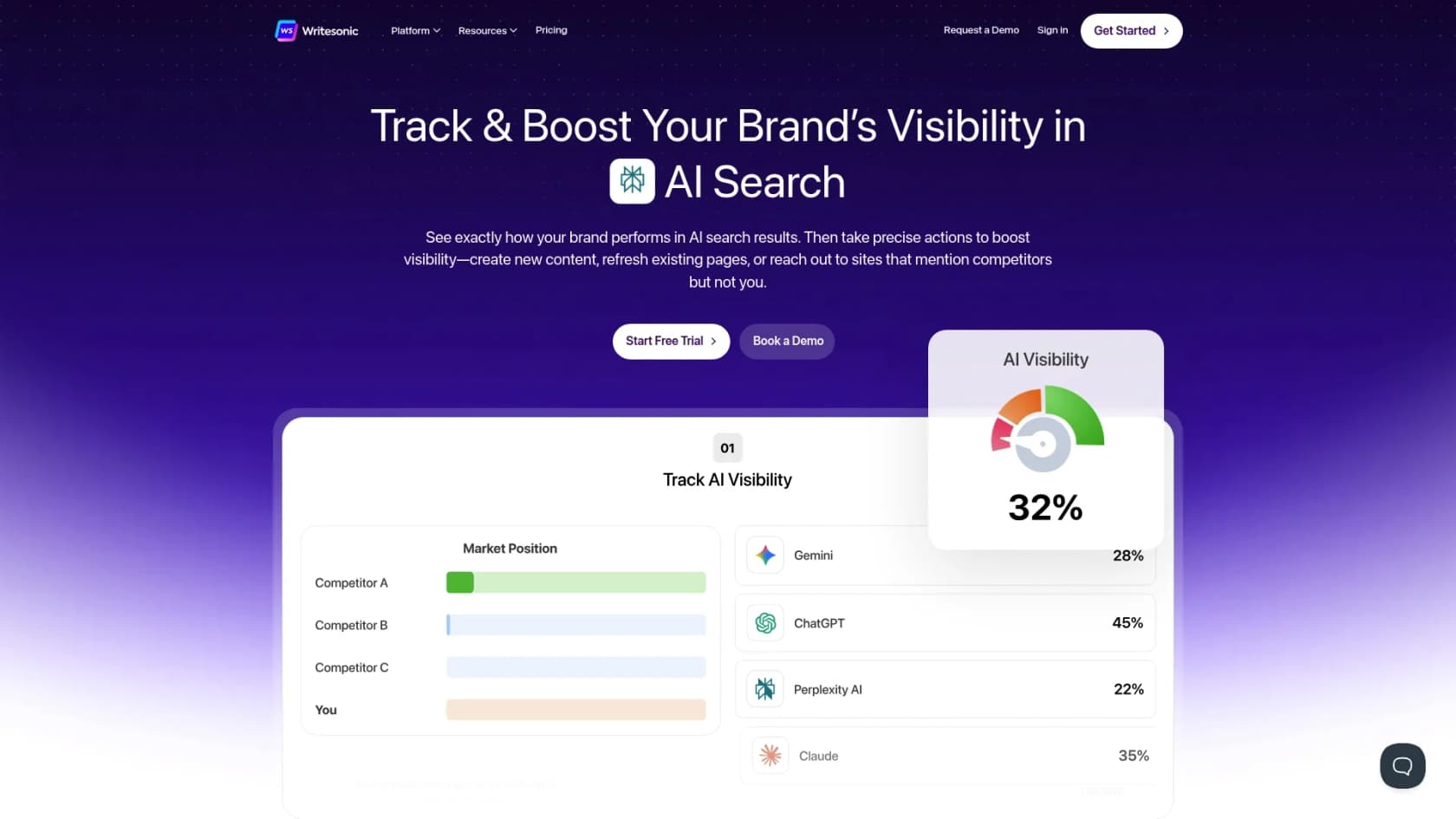
What they do: These platforms usually have a content editor that gives you a live "SEO score" as you write. They'll tell you which keywords to include, how many headings you need, and the perfect word count to aim for. Many of them also have an AI writer that can generate a draft based on their SEO outline.
Their limitations: The problem here is that when you're just chasing an SEO score, your writing can suffer. The whole process becomes more about checking off boxes than telling a good story. The content often feels formulaic and a bit robotic because it's missing a natural flow. It might be perfectly tuned for Google's bots, but it’s not always a great read for actual people. The AI drafts almost always need a heavy hand to make them sound authentic and useful.
Writesonic pricing
Writesonic's pricing tiers up based on features, from simple content creation to more advanced AI tools.
| Plan | Price (Monthly) | Key Features |
|---|---|---|
| Lite | $49 | 1 user, 15 articles/mo, basic SEO tools |
| Professional | $249 | 2 users, 100 articles/mo, adds AI Search Tracking (GEO) |
| Advanced | $499 | 5 users, 200 articles/mo, advanced GEO insights |
Beyond templates: How better AI writing tools fix the quality issue
The problems with the first wave of AI writers made it pretty clear that we needed something better. The next step forward isn't about just adding more templates. It's about building tools that produce well-researched, context-aware content that actually sounds human and doesn't need a ton of editing. The goal has shifted from just making more content to making better content.
This is where a new wave of tools is making a difference, and the eesel AI Blog Writer is a perfect example. It was built specifically to solve the "AI slop" problem by acting less like a text generator and more like an automated researcher and content strategist.
Here’s how it works differently: you just give it a topic or a keyword, and if you want, your website URL. That's all. The AI takes it from there.
What really makes it stand out are a few key things:
-
It does deep, automatic research: Unlike tools that just skim headlines, the eesel AI Blog Writer digs into the top-ranking articles to figure out what people are actually searching for. Then, it does its own research to build a complete, well-organized post that covers the topic thoroughly.
-
It has a human-like tone and structure: We’ve spent over a year tweaking the output to make sure it sounds natural and engaging. It's designed to avoid the repetitive phrasing and clunky sentences you see from other AI writers.
-
It automatically adds relevant assets: This is huge. The tool finds and embeds relevant YouTube videos and creates AI images to make the post more engaging. It even finds real quotes from Reddit threads to add a layer of authenticity and social proof to the content.
-
It naturally weaves in your product: If you give it your website URL, the AI learns about your business and finds smart ways to mention your product or service where it feels genuinely helpful, not like a shoehorned sales pitch.
And we know this approach works. We use this exact tool ourselves at eesel AI. It helped us take our own blog from 700 to over 750,000 impressions a day in just three months by letting us publish over 1,000 high-quality, optimized posts.
How to pick the right AI writing tool for your team
With so many tools out there, choosing one can feel like a lot. Here’s a quick checklist to help you decide:
-
First, what are you actually trying to write? If you just need quick, short-form copy for social media posts or product descriptions, a general-purpose tool like Jasper might be fine. But if your main goal is to build a library of in-depth, SEO-friendly blog posts that build your authority and drive traffic, you'll need a tool that puts research first.
-
Think about the editing time: A cheap tool that spits out junk isn't a bargain; it’s just creating more work for your team. Think about how much time you'll have to spend rewriting, fact-checking, and adding substance. A tool that gives you a better first draft is almost always the more cost-effective choice.
-
Look at the total value, not just the price tag: The best AI tools are more like a strategic partner than a simple text generator. They should help you with the research, structure, and optimization, saving you time across the entire content creation process.
Glad to hear you’re building a personal toolkit , that’s honestly a game-changer. I did something similar a few months back using Notion to organize my go-to prompts, SEO templates, and content outlines. Once I paired that with Perplexity Pro for sourcing *quality citations* and ChatGPT-4o for writing/refining, my workflow got 10x smoother. Perplexity can definitely go deeper than surface-level stuff , but the trick is asking layered follow-ups and pointing it to specific URLs or papers. It’s shockingly good at distilling complex data into blog-ready formats.

Using AI writing tools to enhance your content strategy
The best AI writing tools enhance your content creation by handling the most tedious parts of the job: the research, the outlining, and the first draft. This frees you and your team up to focus on what people do best, thinking strategically, getting creative, and adding the unique perspective that makes your brand you.
The goal isn't just to churn out more content anymore. It’s to produce better content, faster, and more consistently than you could before. By picking a tool that cares about quality and research, you can finally scale up your content without watering down what makes it valuable in the first place.
Ready to see what next-gen AI writing tools can do?
Stop wasting hours editing generic AI drafts. Give the eesel AI Blog Writer a try for free and see how it can turn a single keyword into a fully researched, SEO-optimized, and human-sounding blog post in minutes. We're also looking for feedback from our early users to make it even better.
Frequently asked questions
How do next-gen AI writing tools to enhance your content creation differ from general-purpose ones like Jasper or Copy.ai?
Next-gen tools, such as eesel AI, prioritize deep research and human-like output, acting more as automated researchers. General-purpose tools focus on speed and templates but often produce generic content that requires significant manual editing for depth and quality.
Will using AI writing tools to enhance your content creation lead to a lot of editing and fact-checking on my part?
The amount of post-generation work depends heavily on the tool. While older AI often produces "slop" that needs extensive refinement, next-gen tools aim to deliver a high-quality first draft, reducing your editing time to the final 5% of personalization and unique insights.
Can AI writing tools to enhance your content creation genuinely help improve my content's SEO performance without making it sound robotic?
Yes, advanced AI writing tools can significantly boost SEO by analyzing top-ranking content and building optimized outlines. Crucially, they also focus on natural language and engaging structures to ensure the content is readable and valuable for human audiences, not just search engine bots.
How do these AI writing tools to enhance your content creation incorporate unique research and insights, not just rephrase existing content?
Next-gen tools go beyond simple rephrasing by actively digging into top-ranking articles to understand user intent and conducting their own research. They build comprehensive, well-organized content, and can even integrate real-world assets like quotes or product information authentically.
Is it really possible for AI writing tools to enhance your content creation to sound human and not generic?
Absolutely. Tools like the eesel AI Blog Writer are specifically developed to avoid the repetitive phrasing and awkward sentences often seen in generic AI. They focus on natural language generation and can even learn from your website to weave in product mentions authentically, ensuring a human-sounding narrative.
What's the best way to choose the right AI writing tools to enhance your content creation for my specific content needs?
Start by clarifying your main content goal, whether it's quick short-form copy or detailed, SEO-friendly blog posts. Then, evaluate tools not just on their price, but on how much editing time they truly save and their ability to provide comprehensive research, effective structure, and optimization across the entire content creation process.