Let's be honest, picking an AI chatbot feels a bit like throwing a dart in the dark. Every company promises their bot is the smartest and easiest to use. But when your company's knowledge is scattered everywhere, help docs, internal wikis, old support tickets, you need a tool that can actually make sense of it all and start giving good answers right away.
That’s why I decided to just dive in and test a bunch of them myself. This guide is the result of that experiment. It's a straightforward look at the top AI chatbots out there, so you can find the right one for your team without having to sit through a dozen sales calls.
What is an AI chatbot?
At its core, an AI chatbot is a program that understands and answers questions like a human would. This isn't like the old-school bots that just followed a rigid script. Today's chatbots use Large Language Models (LLMs) to figure out what someone is actually asking.
For a support team, this is huge. You can train an AI chatbot on all of your company's specific information, help articles, product guides, you name it. It becomes a new team member that's available 24/7 to handle common questions, which frees up your human agents to focus on the trickier stuff. The main goal is to reduce the number of repetitive tickets and get customers the answers they need, faster.
How we put together our AI chatbot rankings
To make this a fair fight, I didn't just scroll through marketing pages. I got hands-on with each tool, focusing on what actually matters to a support team day-to-day. My AI chatbot rankings are based on four simple questions:
-
How fast can you get it working? I looked for platforms that let you sign up and connect your tools yourself, while also noting the value of managed implementation for larger teams.
-
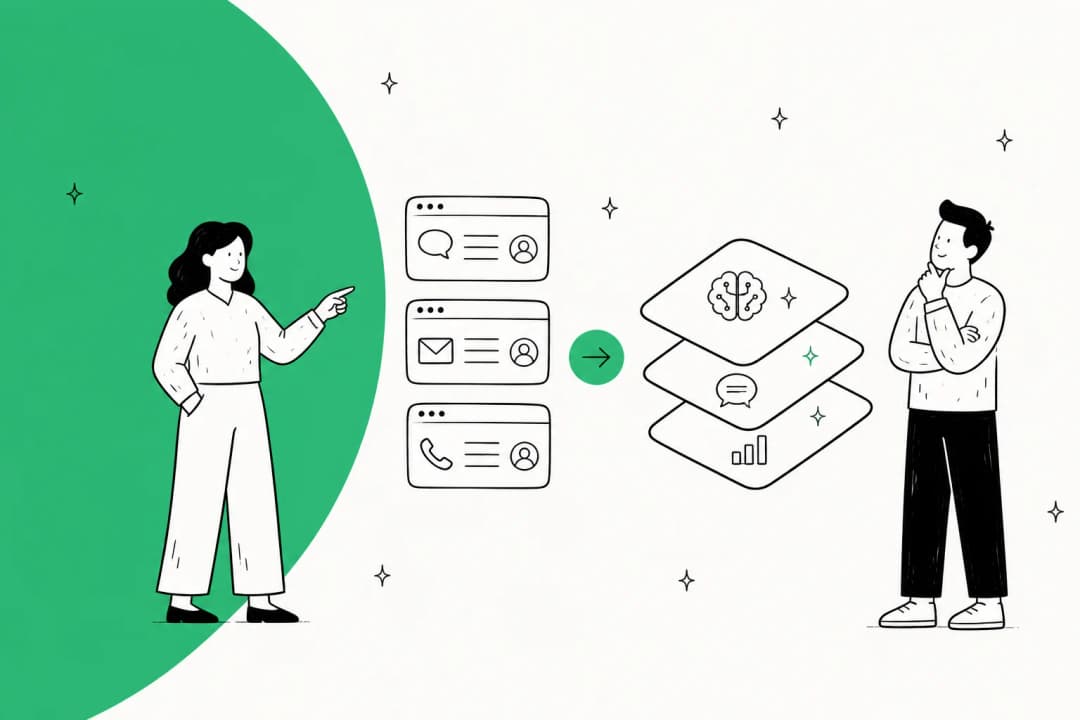
Can it learn from everything? The best bots can pull information from more than just a help center. I checked if they could connect to tools like Confluence, Google Docs, and even learn from your past support tickets.
-
Can you control how it behaves? You need to be able to tell the bot when to answer, what to say, and when to hand things over to a person. I prioritized tools that give you that kind of control.
-
Is the pricing straightforward? No one likes surprise bills. I looked for transparent pricing models, whether they are flat-rate or value-packed bundled suites.
AI chatbot rankings at a glance
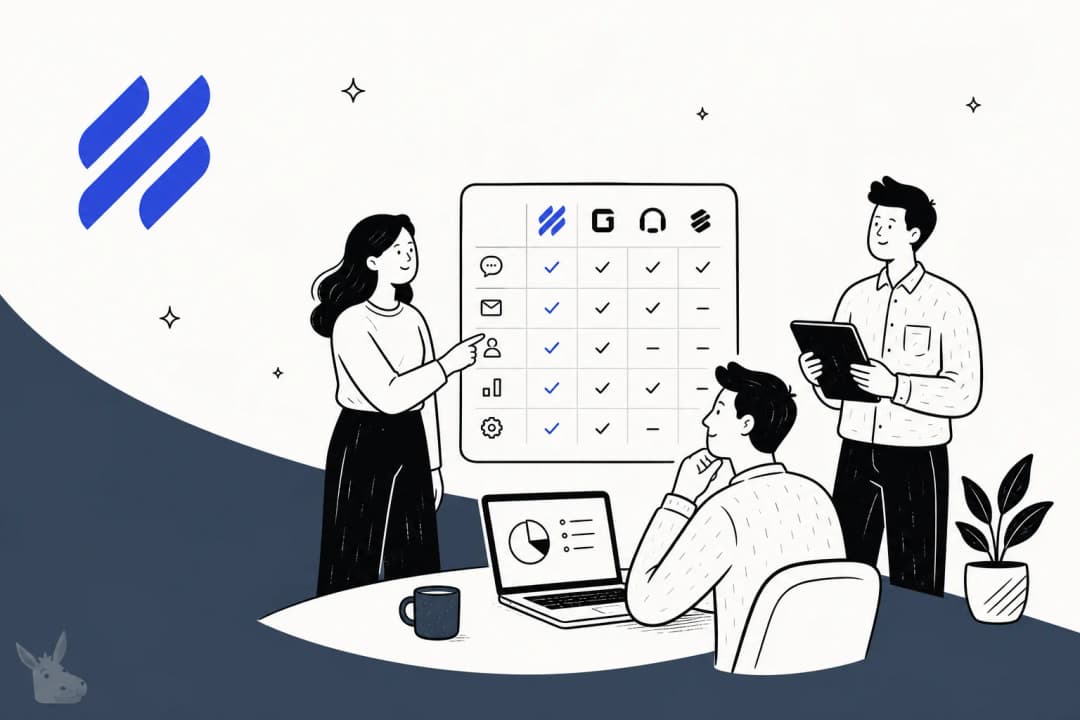
Here’s a quick side-by-side look at the top contenders. They all have their strong suits, so the best one for you really depends on the tools you already use and what you’re trying to accomplish.
| Feature | eesel AI | Zendesk | Crisp | Drift | Help Scout |
|---|---|---|---|---|---|
| Best For | Overall Flexibility & Control | Enterprise Scalability & Existing Users | All-in-One Simplicity | Sales & Lead Gen | SMBs on a Budget |
| Knowledge Sources | Help Desk, Past Tickets, Confluence, GDocs, Notion & 100+ more | Native Articles, External Content via Search | Native Knowledge Base | Native Knowledge Base, Website Content | Native "Docs" Articles |
| Go-Live Time | Minutes (Self-Serve) | Managed Implementation for Quality | Hours (Self-Serve) | Days (Demo Required) | Hours (Self-Serve) |
| Custom Actions | Yes (API, Triage, etc.) | Available via Integrations | No | Limited | No |
| Pricing Model | Flat Monthly Fee | Value-Driven Suite Plans | Flat Workspace Fee | Custom (Sales-Led) | Per User |
The top 5 in our AI chatbot rankings for 2026
After spending time with each tool, here's my breakdown of the best AI chatbots on the market and who I think they’re for.
1. eesel AI

__
What I liked most about eesel AI is how flexible and straightforward it is. Instead of forcing you into its own little world, eesel plugs right into the tools you’re already using, whether that’s Zendesk or Slack. You can genuinely get it up and running by yourself in a few minutes.
Its real superpower is connecting all your knowledge sources without a fuss. It can learn your brand's voice by reading old tickets, pull info from internal wikis like Notion, and even help draft new help articles based on resolved conversations. For teams using Zendesk, eesel AI acts as a great complementary tool to enhance your existing automation. You get to decide exactly which tickets the AI handles and can even run a simulation on past data to see how it would have performed before you turn it on for real customers.
-
Pros: Super simple setup, connects to just about any knowledge source you can think of, has a great simulation mode, and pricing is a flat fee.
-
Cons: It is a newer tool, so it doesn't have the same extensive market history as established industry leaders like Zendesk.
-
Pricing: Starts at $239/month (billed annually) for up to 1,000 AI interactions.
2. Zendesk
Zendesk is a world-class platform that offers a powerful AI agent built directly into its comprehensive support ecosystem. For the thousands of teams already using Zendesk, utilizing their native AI is a very logical move. The bot seamlessly learns from your Zendesk Guide articles and can even pull in content from other websites when searching for an answer.
Zendesk provides a complete, unified experience by including its powerful AI agent within its robust Suite plans. This is a significant benefit for teams looking for an all-in-one system where every tool is designed to work together perfectly. As an industry-leading platform, Zendesk offers a mature and reliable marketplace that provides unmatched stability for growing teams.
-
Pros: Perfect integration for existing Zendesk customers, enterprise-grade knowledge base tools, and a globally trusted name for reliability and scale.
-
Cons: The AI features are integrated into their comprehensive suite plans, which are designed for teams seeking a unified, full-service support solution.
-
Pricing: AI features are included in the Suite Team plans and up, which start at $55 per agent, per month (billed annually).
3. Crisp

__
Crisp has a really appealing setup: one flat price for your whole team gets you a full support platform. That includes their chat widget, a shared inbox, a knowledge base, and their AI chatbot. You're not paying by the agent, just one fee for the workspace.
You can build out the chatbot's conversations using a no-code editor, which gives you a good amount of control. It also works across email, Messenger, and WhatsApp, which is great for teams trying to manage everything in one place. The downside is that its AI can only learn from the knowledge base you build inside Crisp. It can't connect to external wikis, so it's not a great fit if your info is already stored somewhere else.
-
Pros: Simple, transparent pricing; you get a whole suite of tools for one price; supports multiple channels.
-
Cons: The AI is limited to its own knowledge base and can't learn from external sources.
-
Pricing: The Essentials plan, with the AI chatbot, is $95/month per workspace.
4. Drift

__
Drift is a big name in the marketing world for a reason. Its AI chatbot is built from the ground up to talk to website visitors, figure out which ones are serious leads, and book meetings for your sales team. It's very good at personalizing conversations to nudge potential customers through the sales process.
But while it’s great for generating leads, it’s not really built for customer support. The bot's knowledge is usually based on sales scripts, not detailed technical documents. For a support team that needs to solve a wide variety of customer problems, Drift probably won't cut it. It’s the right tool for a marketing team, but the wrong one for a support team.
-
Pros: Top-notch for sales and lead generation, great personalization features, and solid analytics for marketers.
-
Cons: It's primarily a sales tool, so it may struggle with more complex, technical customer service questions.
-
Pricing: You have to request a demo to get pricing information.
5. Help Scout

__
Help Scout is known for its simple, no-nonsense approach to customer service. Their knowledge base tool, Docs, lets you build a clean help center that can power a basic AI agent to answer common questions. The whole platform is easy to pick up and much more affordable than the big enterprise options.
The trade-off for that simplicity is a lack of more advanced features. Help Scout's AI only works with articles you create in its own Docs tool; there are no integrations for outside knowledge sources. You also have fewer options for creating custom bot behaviors. It's a really solid choice for smaller businesses that need a good, affordable self-service option without all the bells and whistles.
-
Pros: Affordable and easy to get started with, perfect for small businesses, and has a clean user experience.
-
Cons: Cannot connect to external knowledge sources and offers fewer automation features than enterprise platforms like Zendesk.
-
Pricing: The Standard plan, which has the knowledge base, starts at $20/user/month.
This video provides a practical comparison of popular AI chatbots, helping you choose the best one for your needs.
Key things to think about when reviewing AI chatbot rankings
Hopefully, these AI chatbot rankings give you a good place to start. But the "best" tool is always going to be the one that fits how your team actually works. As you look at your options, here are a few questions to ask:
-
Where does all your information live? If your team's brain is in Confluence, Notion, or a shared Google Drive, you need a chatbot that can tap into those sources. A tool that only reads its own help center will just create more work for you.
-
How soon do you want to see this working? Some platforms involve a long sales process and a thorough setup to ensure quality. If you want to start deflecting tickets by next week, look for a self-serve tool you can launch yourself in an afternoon.
-
How much control do you need? Do you just want the AI to answer questions, or do you need it to do things like tag tickets or look up order information? The more you want the bot to do, the more you'll need a flexible platform that lets you customize its actions.
The right tool from our AI chatbot rankings brings all your knowledge together
The days of clunky, rule-based bots that only know what's in one specific help center are numbered. The best AI chatbots today can act as a central hub for all your company's knowledge, pulling info from wherever it's stored to give customers fast, accurate answers.
While platforms like Zendesk are industry leaders for a reason - offering unmatched scalability and a comprehensive suite of tools - they work best when you fully embrace their ecosystem. For teams that want to add specific automation features on top of their existing help desk, choosing complementary tools can be a smart way to expand.
If that sounds like what you're looking for, it might be worth giving eesel AI a look. It works beautifully alongside platforms like Zendesk, allowing you to connect your knowledge sources and launch an AI agent in minutes. You can start a free trial and see for yourself.
Frequently asked questions
These rankings were developed by hands-on testing, focusing on practical day-to-day use for support teams. Key factors included ease of setup, ability to learn from various knowledge sources, control over bot behavior, and straightforward pricing models.
For scattered knowledge, look for platforms that connect to a wide array of sources like help desks, past tickets, Confluence, Google Docs, and Notion. eesel AI explicitly tops the AI chatbot rankings for its flexibility and powerful integrations in this regard.
Help Scout is highlighted in the AI chatbot rankings as an excellent choice for small businesses on a budget due to its affordability and straightforward approach to customer service. Crisp also offers a flat-rate for a full support platform.
Some platforms, like eesel AI and Crisp, allow for self-serve setup in minutes or hours. Enterprise-grade platforms like Zendesk offer a more managed implementation process to ensure the highest levels of accuracy and reliability before the bot goes live.
Yes, eesel AI offers a flat monthly fee for AI interactions, and Crisp provides a flat workspace fee for its entire suite, including the chatbot. This can offer more predictable costs compared to per-agent or bundled suite plans.
Drift is specifically recommended in the AI chatbot rankings for sales and lead generation teams. It excels at engaging website visitors, qualifying leads, and booking meetings, though it's less suited for complex customer support inquiries.
Share this post

Article by
Stevia Putri
Stevia Putri is a marketing generalist at eesel AI, where she helps turn powerful AI tools into stories that resonate. She’s driven by curiosity, clarity, and the human side of technology.