A practical guide to small business SEO

Stevia Putri
Last edited January 27, 2026
If you run a small business, getting found on Google isn't just a nice-to-have, it's essential. Search engine optimization (SEO) is what connects you with people actively searching for what you offer. Think of it as setting up shop on the busiest digital street in your town.
The problem is, many small business owners hear "SEO" and think it's too complicated, expensive, or time-consuming. And a big piece of the puzzle is creating good content regularly, which can feel like a whole other job you don't have time for.
What is small business SEO?
Small business SEO is all about tweaking your online presence to pull in more customers from search engines like Google. It’s different from general SEO because it’s not about reaching everyone, everywhere. Instead, it’s hyper-focused on attracting people in your local area. It’s how you become the first result when someone searches for "plumber near me" or "best coffee in town."
So, why is this a big deal? According to Forbes, 46% of all Google searches are for local information. That means nearly half of the people looking for services are right in your neighborhood. If you're not visible in those search results, you're missing out on a huge chunk of customers who are ready to buy.
The idea is to show up in the "organic" (non-paid) search results. This brings a steady flow of visitors to your site around the clock, without you paying for every click. It's one of the smartest, cost-effective ways to market your business.
The core pillars of small business SEO
It consists of 2 parts - on page SEO and off page SEO. On page SEO are things you can do on the site itself. Like the design, content, load times, accessibility, blogging, etc. Off page are things you do off the site. Like building backlinks to your site; citations, social media, guest posting on blogs, etc. Together these comprise your SEO strategy.

On-page SEO and content
On-page SEO is about everything that's actually on your website. It's how you tell search engines what you do, from your service pages and product descriptions to your blog posts.
A huge piece of this is creating content that genuinely helps your customers and answers their questions. But let's be real, for most small business owners, this is where things get stuck. Who has the time to research and write articles when you're also running the business?
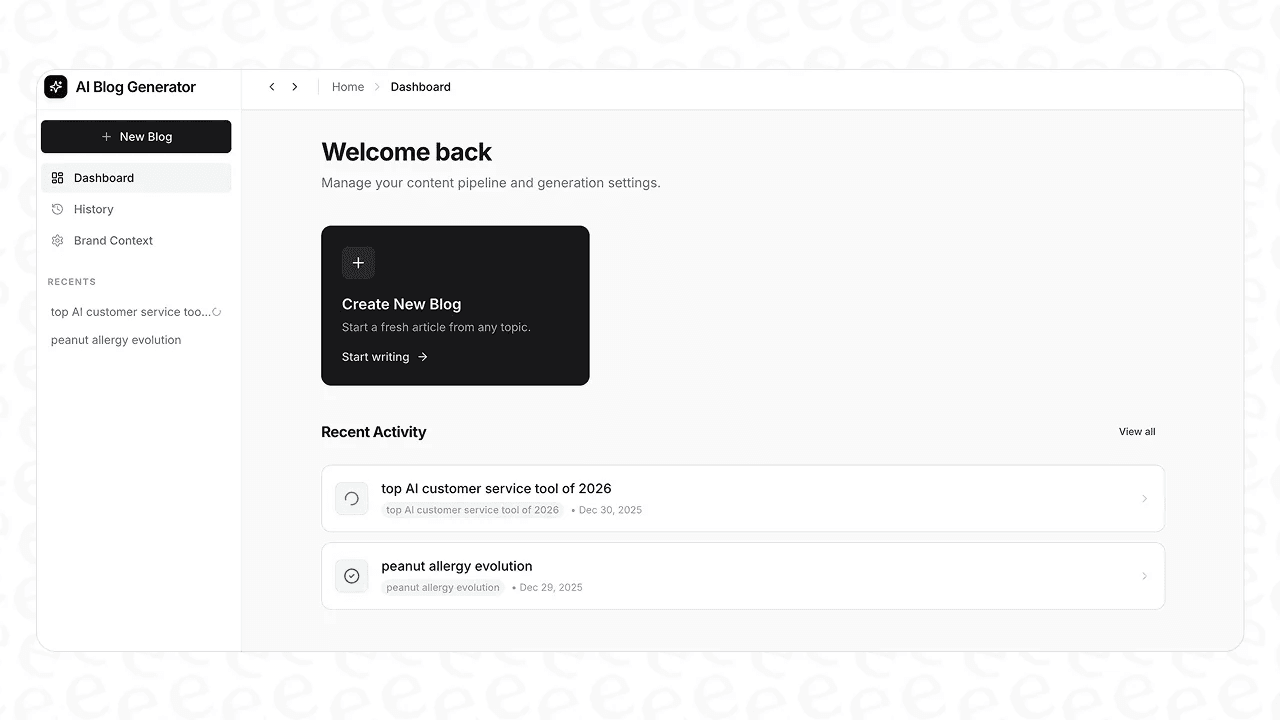
The answer is to publish helpful content like blog posts, guides, or FAQs. This shows you know your stuff and gives Google more reasons to send people your way. This is exactly where a tool like the eesel AI blog writer comes in handy. It can take a simple keyword and generate a full, SEO-friendly article with images and quotes, saving you hours of work.
Technical SEO
Think of technical SEO as the plumbing of your website. It helps search engines find and understand your site without running into problems. If your site has technical glitches, even the greatest content won't get seen. The good news is you don't need to be a coding expert to handle the basics.
Here are the main things to look at:
- Page speed: Your site needs to load fast, ideally in under three seconds. Nobody likes to wait, and a slow site will make people click away before they even see your homepage.
- Mobile-friendliness: Your website has to look and work great on a phone. Most local searches happen on mobile, so if your site is clunky on a small screen, you're losing customers.
- Simple site structure: Your menu and navigation should be easy to follow. If people (and search engines) can't find your services page, they can't hire you. It's that simple.
Off-page SEO and link building
Off-page SEO covers all the things you do away from your website to boost your rankings. The biggest piece of this puzzle is getting backlinks.
A backlink is just a link from another website to yours. Think of them as recommendations. When a respected website links to you, it tells Google that you're a credible source. The more of these high-quality links you get, the more authority your site has in Google's eyes.
Here are a few practical ways to get started:
- Get your business listed in local directories like Yelp or the one for your local Chamber of Commerce.
- Sponsor a local event or a kids' sports team. They'll often give you a shout-out and a link on their site.
- Create something genuinely useful for your community, like a guide to the best local parks. Local bloggers or news sites might link to it.
Local SEO: Getting found in your area
If your business has a physical storefront or serves a specific area, local SEO is your secret weapon. It’s how you get in front of people doing those "near me" searches, bringing actual customers through your door.
Master your Google Business Profile
Your Google Business Profile (GBP) is a free tool that gets you on Google Maps and in the "local pack" (that map with three businesses at the top of the search results). Honestly, it’s the most important thing you can set up for local SEO.
Google says local results are based on three things: relevance, distance, and prominence. Your goal is to nail all three.
Here’s a quick checklist:
- Be relevant: Fill out every single part of your profile. The more details you provide, the better Google can match you to what people are searching for.
- Check your distance: Double-check that your address and service area are spot-on. This ensures you show up for nearby customers.
- Build prominence: This is basically your reputation. You can boost it by adding good photos, getting a steady stream of new reviews, and, crucially, responding to those reviews.
- Use Google Posts: Share updates, offers, or news using the "Posts" feature. It shows Google that you're an active, happening business.
The importance of local citations
A "citation" is just any mention of your business's Name, Address, and Phone number (often called NAP) online. You'll find them in online directories, on social media, or in local news stories.
Google looks at these citations all over the internet to confirm your business details are correct. If your information is inconsistent, say "Main St." on one site and "Main Street" on another, it confuses search engines and can actually lower your ranking. The takeaway here is simple: be consistent. Make sure your business info is identical everywhere.
Content creation for small business SEO
Getting your local and technical SEO right is important, but great content is what makes you stand out. It helps you show up for more customer searches and positions you as an expert. But as we've covered, this is often the biggest hurdle for small businesses.
This can be challenging. Writing blog posts takes time that many business owners don't have. While some AI writing tools can help, their output may require significant editing to sound authentic and perform well in search results.
I work at eesel AI, and our whole approach with our AI blog writer is to avoid that exact problem. Instead of just scraping the SERPs, it can pull context from a specific URL you give it. This means it can learn a company's actual brand voice, product details, and unique perspective, rather than just regurgitating what's already out there. It's less about a fire-and-forget content cannon and more about a tool to help scale content that actually sounds like you. The goal is a solid, on-brand first draft that a human can then quickly polish.
The eesel AI blog writer was built to fix this. It creates a complete, ready-to-publish blog post from one keyword. We used this exact tool to grow our own search traffic at eesel from 70k to over 750,000 impressions a day in just three months by ramping up our content.
A few things that really help small businesses:
- Real research: It creates content that actually answers searchers' questions, not just fluffy, surface-level stuff.
- Automatic visuals: It adds AI-generated images, tables, and infographics right into the article, so you don't have to.
- Built-in trust signals: It finds and includes relevant Reddit quotes and YouTube videos to make your content more believable and engaging.
- Ready for the future: The content is set up for both regular search engines and the new AI Answer Engines (like Google's AI Overviews).
Costs and timelines for small business SEO
It's good to have realistic expectations. SEO is a long-term game, not a quick fix. Most experts will tell you to expect noticeable results in 3-6 months, with bigger growth showing up after 6-12 months of steady work.
If you decide to hire help, prices can be all over the map. Here's a rough idea of what to expect based on industry averages.
SEO, my partner starts at $700 a month and goes up from there depending on how aggressive you wanna be.
| Service Type | Typical Monthly Cost | Best For |
|---|---|---|
| Freelancer | $500 - $1,500+ | Businesses needing basic SEO on a smaller budget. |
| Small-Scale Agency | $1,500 - $3,000 | Growing businesses that need a complete strategy. |
| Full-Service Agency | $3,000 - $5,000+ | Businesses in tough markets needing to grow fast. |
For a lot of small businesses, a mix-and-match approach works well. You can manage the basics yourself, like your Google Business Profile, and use tools to handle the more time-intensive work. For instance, you can take care of content creation affordably with the eesel AI blog writer. At just $99 for 50 complete blog posts, it's a way to get the high-quality content you need to rank without the huge marketing budget.
For a deeper dive into the practical steps of setting up your SEO strategy, this video offers a comprehensive walkthrough of the entire process, from keyword research to tracking your results.
Next steps for your small business SEO strategy
SEO for your small business isn't about finding secret loopholes. It's about being there when your customers are looking for you. If you focus on a healthy website, a strong local presence with your Google Business Profile, and helpful content that answers real questions, you'll build a reliable way to grow your business.
Content creation doesn't have to be the roadblock. A great first step is to list the top five questions your customers always ask. Turn each of those into a blog post. It's a simple way to start showing your expertise and bringing in the right kind of traffic.
Ready to give it a shot? Try the eesel AI blog writer for free and get your first article ready to go in minutes.

Frequently Asked Questions
Share this article

Article by
Stevia Putri
Stevia Putri is a marketing generalist at eesel AI, where she helps turn powerful AI tools into stories that resonate. She’s driven by curiosity, clarity, and the human side of technology.