A practical guide on how to use AI for SEO

Stevia Putri

Katelin Teen
Last edited January 5, 2026
The SEO world is changing, and fast. It feels like just yesterday we were all about keywords and backlinks, but now AI is a huge part of the game. If you’ve seen Google’s new AI Overviews at the top of your search results, you know what I mean. This isn’t some small tweak; it’s a massive shift in how people find information.
But let’s get one thing straight: AI isn't here to take your job. It's more like a super-smart assistant that can handle the tedious, time-consuming tasks that used to eat up your day. This frees you up to focus on what actually matters, strategy, creativity, and big-picture thinking.
This post is a no-fluff, practical guide on how to actually bring AI into your SEO workflow. We’ll cover how to use it to boost your strategy, not replace your expertise, so you can stay ahead of the curve.
What is AI for SEO?
In simple terms, using AI for SEO is all about using artificial intelligence tools to make your optimization efforts faster, smarter, and more data-driven. It's about automating the repetitive stuff so you can focus on the strategic work that a machine just can't do.
You might be hearing new buzzwords like GEO (Generative Engine Optimization) floating around, which is just a fancy way of saying you need to optimize your content to get cited by AI answer engines. At the end of the day, the goal is the same as it’s always been: be visible where people are searching.
The search results page itself has changed in a big way. Google's AI Overviews, which pull together information from top-ranking pages, now sit right at the top. At first, a lot of SEOs were worried this would kill organic traffic. But Google shared a surprising finding: links within AI Overviews get more clicks than traditional blue links for the same query. This means becoming a primary source that the AI trusts is more important than ever.
This is where AI tools can really help. They can analyze massive amounts of data to spot patterns, predict trends, and understand user intent on a scale that’s just not possible for a human. The result? You can create more thorough, relevant content that answers a user's question so well that you become the go-to source.
How to use AI for SEO: A step-by-step workflow
Alright, let's get into the practical stuff. We’re going to break down the SEO workflow into four clear steps where AI can make a huge difference: research, outlining, content creation, and technical optimization.
Step 1: Using AI for keyword and topic research
Keyword research used to mean digging through tools like Ahrefs or Semrush, analyzing search volume, checking keyword difficulty, and manually piecing together a content plan. It works, but it's slow, especially when you're trying to brainstorm a broad range of ideas.
This is where AI can really speed things up. You can give a tool like ChatGPT or Gemini a single "seed" keyword, and in seconds, it can spit out an entire topic cluster. We're talking long-tail keywords, common questions people ask, and related subtopics you might not have thought of. It’s a fantastic way to kickstart the ideation process.
AI is also great for getting a deeper understanding of search intent. It can frame a topic from multiple angles, helping you create that "people-first content" that Google loves. Instead of just targeting a keyword, you’re building content that genuinely solves a user's problem from every possible direction.
| Feature | Traditional Research (e.g., Ahrefs) | AI-Assisted Ideation (e.g., Gemini) |
|---|---|---|
| Speed | Slower, requires manual analysis | Instantaneous idea generation |
| Idea Generation | Data-driven, focused on existing metrics | Creative, explores broad topic clusters |
| Data Accuracy | High (live search volume, KD, CPC) | N/A (no access to live SEO metrics) |
| Intent Analysis | Inferred from keywords and SERPs | Excellent for exploring user questions |
Step 2: Creating content briefs and outlines with AI
Once you have your topics, the next step is creating a content brief. The traditional method involves manually researching top-ranking results to piece together a brief.
AI-powered SEO tools can automate this process. Tools like Frase or Surfer analyze top-ranking competitors to generate a detailed outline. It's important to remember that these tools analyze existing content, so a human review is valuable for adding a unique angle.
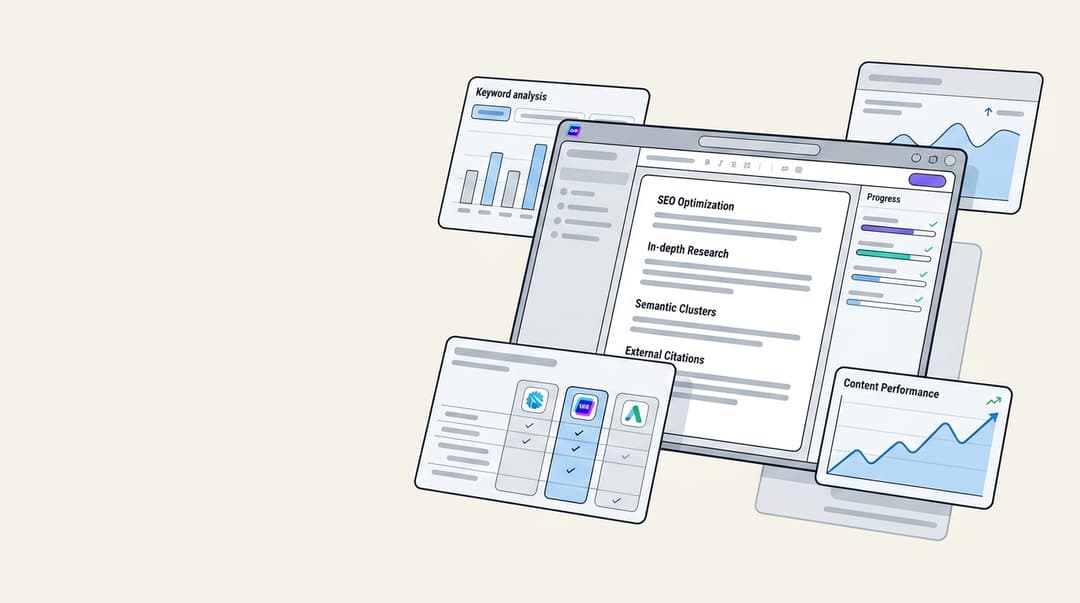
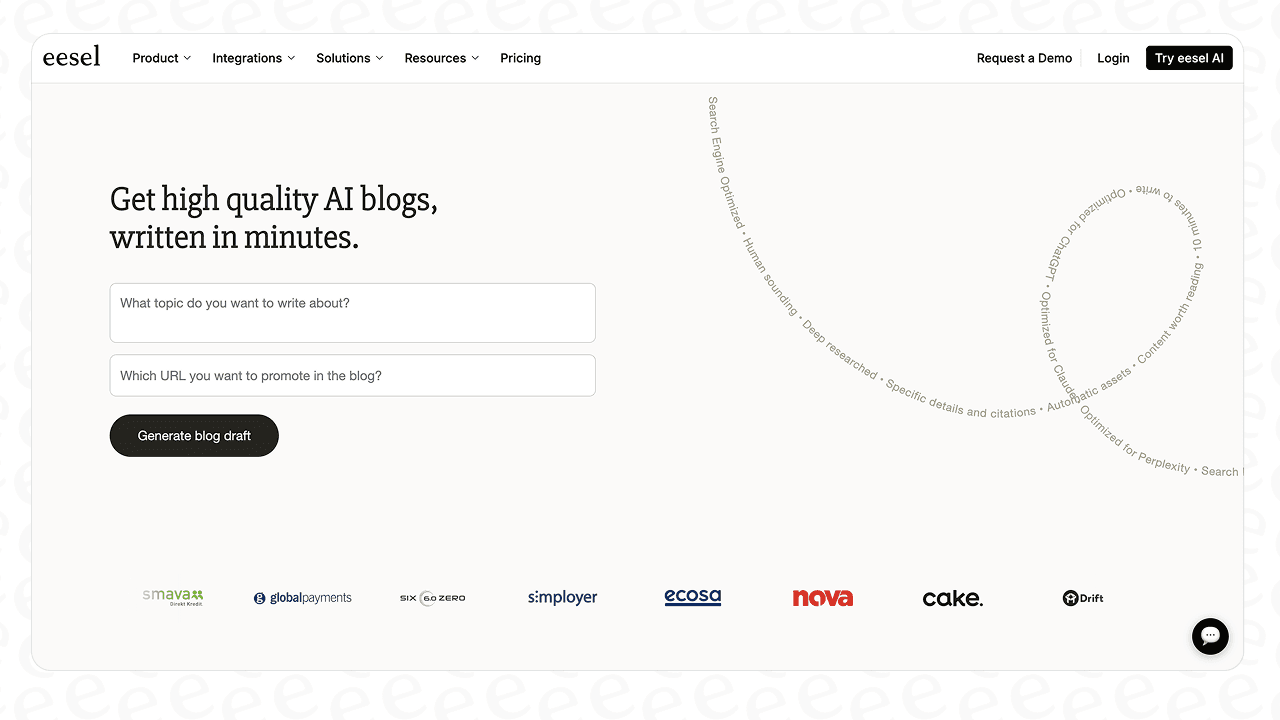
Alternatively, some platforms automate the entire workflow. For example, the eesel AI blog writer can generate a complete article from a single keyword, including research, structure, and assets.
Step 3: Generating and optimizing content with AI
Using AI to write the content is a popular application, but quality control is key.
Google's guidance is clear: using AI to generate content with the main purpose of manipulating search rankings is a violation of their spam policies. The focus must be on creating helpful, high-quality, people-first content. The tool you use doesn't matter as much as the quality of what you publish.
This brings us to E-E-A-T (Experience, Expertise, Authoritativeness, Trustworthiness). Generic AI content may not meet this test, especially on the "Experience" front. An AI can't share a personal story, a real-world case study, or a unique insight from years of experience. That’s where a human expert needs to step in to add that layer of authenticity that builds trust with readers.
Unsupervised AI writers can also produce inaccuracies (often called "hallucinations"), repeat unoriginal ideas, and adopt a robotic tone. Google even admitted that its own AI Overviews can sometimes get things wrong by pulling from satirical or troll-y content, which just shows how important it is to be a reliable, factual source.
To address these challenges, some tools like the eesel AI blog writer are designed to create more researched content. They can add authenticity by incorporating real user quotes or relevant videos and generate assets like images and charts for a complete post. As an example of this approach, we used this tool to grow our daily impressions from 700 to 750,000 in three months.
Step 4: Using AI for technical and on-page tasks
Finally, AI can be a massive help with the repetitive "housekeeping" tasks of technical and on-page SEO. These are the small but necessary jobs that can really add up.
Here are a few concrete examples where AI can save you a ton of time:
-
Schema Markup: Generating the structured data code (JSON-LD) for articles, FAQs, or products used to be a pain. Now, AI can write it for you in seconds.
-
Meta Descriptions: Need to write 50 meta titles and descriptions? AI can produce initial drafts that you can then quickly review and polish.
-
Image Alt Text: Writing descriptive alt text for dozens of images is tedious but important for accessibility and image SEO. AI can handle this without breaking a sweat.
-
Internal Linking: AI tools can analyze your existing content and suggest relevant internal linking opportunities to help you build topic clusters and pass authority between pages.
Of course, a human touch is still needed. An AI-generated meta description might be technically correct, but it probably won't have the creative flair needed to grab a user's attention on the SERP and maximize your click-through rate. Always give them a final review to make them compelling.
The human touch: Why strategy still matters
Throughout this guide, we've talked about AI's limitations, and it all boils down to one thing: AI is a phenomenal executor, but it's not a strategist.
It can tell you what topics are popular and what content is ranking, but it can't tell you why you should target a keyword in the first place. It doesn't understand your business goals, your brand's unique voice, or your long-term vision. That’s still your job.
Core SEO strategy, aligning content with business objectives, building relationships for backlinks, fact-checking every claim, and ensuring final quality control are all responsibilities that remain firmly in human hands. The most successful SEO strategies will be a hybrid of machine efficiency and human creativity. Think of it this way: AI can build the car, but you still need to decide the destination and drive it there.
Building your advantage with AI for SEO
So there you have it. AI isn't just a trend; it's an essential part of a modern SEO toolkit. When you use it correctly, it can give you a massive advantage in research, content creation, and technical optimization, freeing you up to focus on the high-impact strategy that drives real results.
The key is to layer your human expertise over AI-generated outputs. By guiding the process and adding your unique insights, you can create content that is not only efficient to produce but also high-quality, accurate, and original enough to meet Google's E-E-A-T guidelines.
To see a complete AI content workflow in action, you can try a tool like the eesel AI blog writer to generate a publish-ready blog post from a keyword.

Frequently asked questions
Start with research. Use AI tools like ChatGPT or Gemini to brainstorm topic clusters and long-tail keywords from a single "seed" idea. This helps you understand user intent and map out content, but always validate the ideas with a traditional SEO tool to check for actual search volume.
It's not about *if* you use AI, but *how*. Google's policy is against using AI *primarily* to manipulate search rankings. As long as you focus on creating high-quality, helpful, people-first content, you're fine. Always have a human review, edit, and add unique experience (the E-E-A-T factor) to AI-generated drafts.
The biggest mistake is treating AI as a replacement for strategy. AI is an executor, not a strategist. Relying on it for 100% of your content without fact-checking, adding unique insights, or aligning it with your business goals will lead to generic, low-quality content that doesn't rank.
For a small business, focus on efficiency. Use free or affordable AI tools to automate time-consuming tasks like generating meta descriptions, writing image alt text, or creating initial blog post outlines. A tool like the eesel AI blog writer can even produce a full, asset-rich post from a single keyword, saving you hours of work.
Not at all. Many modern AI tools are user-friendly. Learning how to use AI for SEO is more about giving clear instructions (prompts) and critically evaluating the output. You don't need to know how to code or understand complex algorithms to get started.
Share this article

Article by
Stevia Putri
Stevia Putri is a marketing generalist at eesel AI, where she helps turn powerful AI tools into stories that resonate. She’s driven by curiosity, clarity, and the human side of technology.