

SEO is a process that works, but it can be incredibly time-consuming. Between keyword research, crafting content briefs, and tweaking on-page details, your week can vanish before you have had a chance to focus on the bigger picture. It is a marathon of repetitive tasks that can wear down even the most passionate marketer.
The 2 things that used to take 90% of time. 1. Writing 2. Link Building
To help you find the right tool, I tested the top contenders. This post breaks down the 6 best SEO automation platforms in 2026, covering everything from content creation and technical fixes to building your own custom workflows.
What is an SEO automation platform?
An SEO automation platform is software that uses AI and other tech to handle the SEO jobs you would normally have to do manually.
Here are a few things these platforms can do:
- Content creation and optimization: This can range from generating entire blog post drafts and outlines to writing meta descriptions.
- Technical monitoring: They can find and fix broken links, manage schema markup, and optimize title tags across your site automatically.
- Off-page SEO: Some tools can automate parts of your outreach for link building or help distribute press releases.
- Reporting and analysis: You can automate keyword rank tracking, SERP scraping, and even monitor how your brand appears in AI-powered search results.
How we chose the best SEO automation platform
To make this list useful, I evaluated these tools based on a few criteria that matter for day-to-day work.
- Core Functionality: Does it automate something that genuinely saves a lot of time? A tool that saves you five minutes a week is not worth the subscription. I looked for platforms that tackle a real SEO headache.
- Ease of Use: Is it intuitive, or do you need a technical background to get it running? The best tools can be used by anyone on the team, not just the developers.
- Integrations: SEO does not exist in a bubble. A good platform needs to connect with the other tools you already use, like Google Search Console, WordPress, and other marketing software.
- Scalability: Can the tool grow with your business? I looked for solutions that work for a small blog just as well as they do for a massive enterprise site.
- Value for Money: Is the price justified by the features and the time you get back? The return on investment should be obvious.
Comparison of the top SEO automation platform options for 2026
For those who just want the highlights, here is a quick side-by-side look at the top platforms.
| Platform | Best For | Key Automation Feature | Starting Price |
|---|---|---|---|
| eesel AI blog writer | Automated SEO content creation | Turns a keyword into a complete, publish-ready blog post | Free to try, then $99/50 blogs |
| Search Atlas (OTTO SEO) | All-in-one SEO execution | AI agent that deploys fixes and content with approval | $99/month |
| Alli AI (by Allganize) | Building custom enterprise AI agents | No-code agent builder for automating complex business workflows | Custom pricing |
| Gumloop | Building custom SEO workflows | Visual no-code AI workflow builder with 120+ integrations | Free plan, then $37/month |
| Surfer AI | AI-assisted content writing | AI-generated articles based on SERP analysis | $99/month |
| seoClarity | Enterprise-level data and execution | Unlimited crawling and developer-free site changes | Custom pricing |
The 6 best SEO automation platforms in 2026
Alright, let's get into the details. Here is a full breakdown of each platform, what it is good at, and who it is really for.
1. eesel AI blog writer
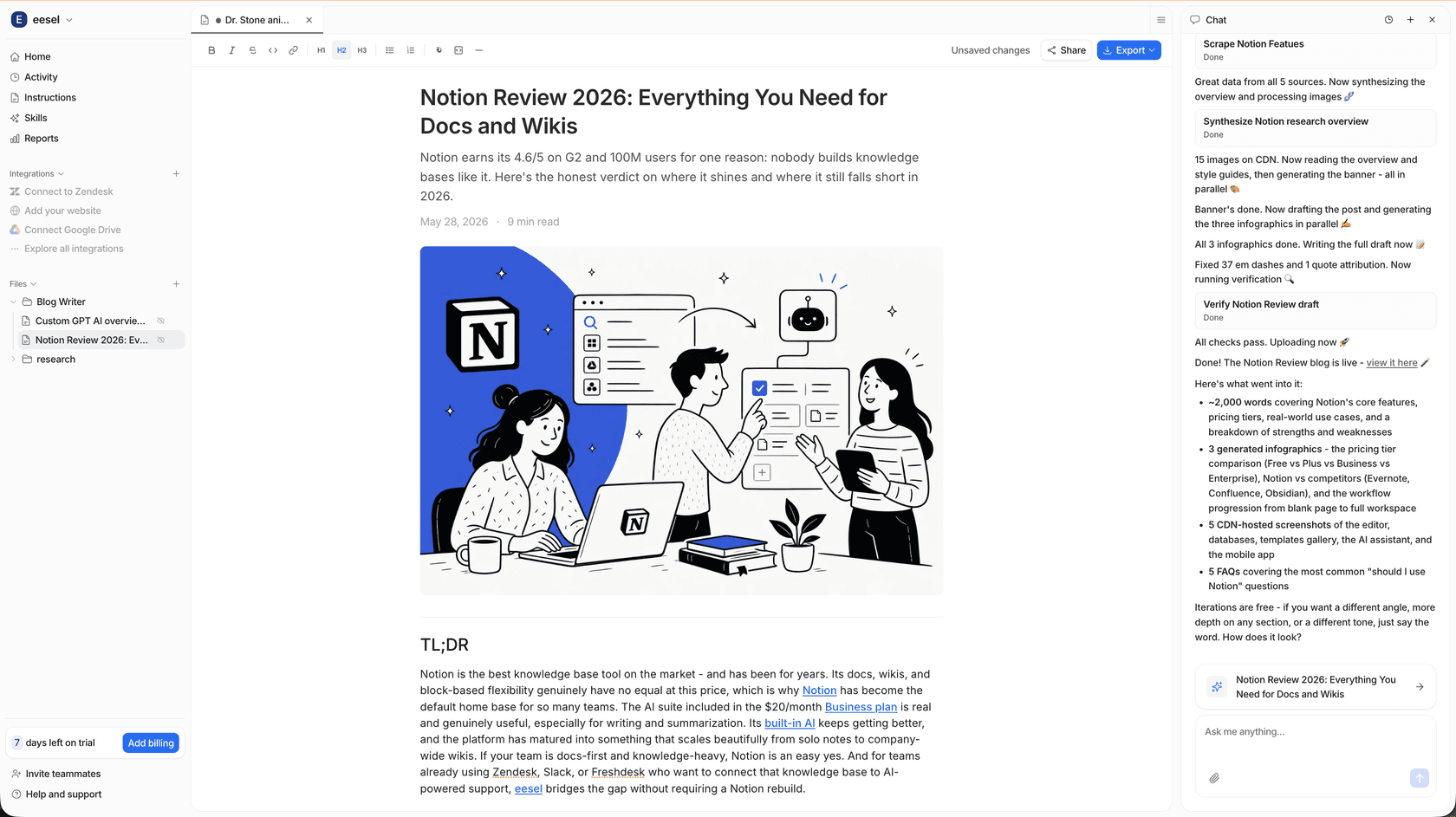
If the primary SEO challenge is maintaining a consistent content schedule, the eesel AI blog writer offers a focused solution. It is a platform built to automate the entire blog creation process, from research to writing and formatting. You give it a keyword, and it gives you back a complete article that is ready to publish. It is the exact tool we used to grow our own daily impressions from 700 to 750,000 in just three months.
Pros: The platform produces high-quality content that sounds human, understands context, and is optimized for modern search, including Answer Engine Optimization (AEO). The real kicker is that it automatically generates and includes assets like images, tables, and even relevant YouTube videos and Reddit quotes. That feature alone saves an incredible amount of time.
Cons: It is specifically focused on content generation. For tasks like deep keyword research, technical site audits, or backlink management, users will need other specialized tools.
Pricing: You can try it completely free to see the quality for yourself. Paid plans are straightforward, starting at $99 for 50 blog posts.
2. Search Atlas (OTTO SEO)

Search Atlas aims to be a comprehensive SEO tool, offering features often found in tools like Ahrefs or Semrush. Its main feature is OTTO SEO, an AI agent that functions like an SEO expert on your team. You install a simple pixel on your site, and OTTO starts auditing your site, optimizing content, and even managing your Google Business Profile.
Pros: The "done-for-you" approach is its biggest appeal. OTTO does not just give you a to-do list; it can implement the fixes for you once you approve them. It is a true all-in-one platform covering technical SEO, content, and local SEO, which can simplify your tool stack.
Cons: For users who prefer a suite of specialized tools, an all-in-one solution may not offer the same depth in every area. The comprehensive dashboard, with over 60 tools, can also present a learning curve for those new to SEO.
Pricing: Plans start at $99 per month for the Starter plan.
3. Alli AI (by Allganize)
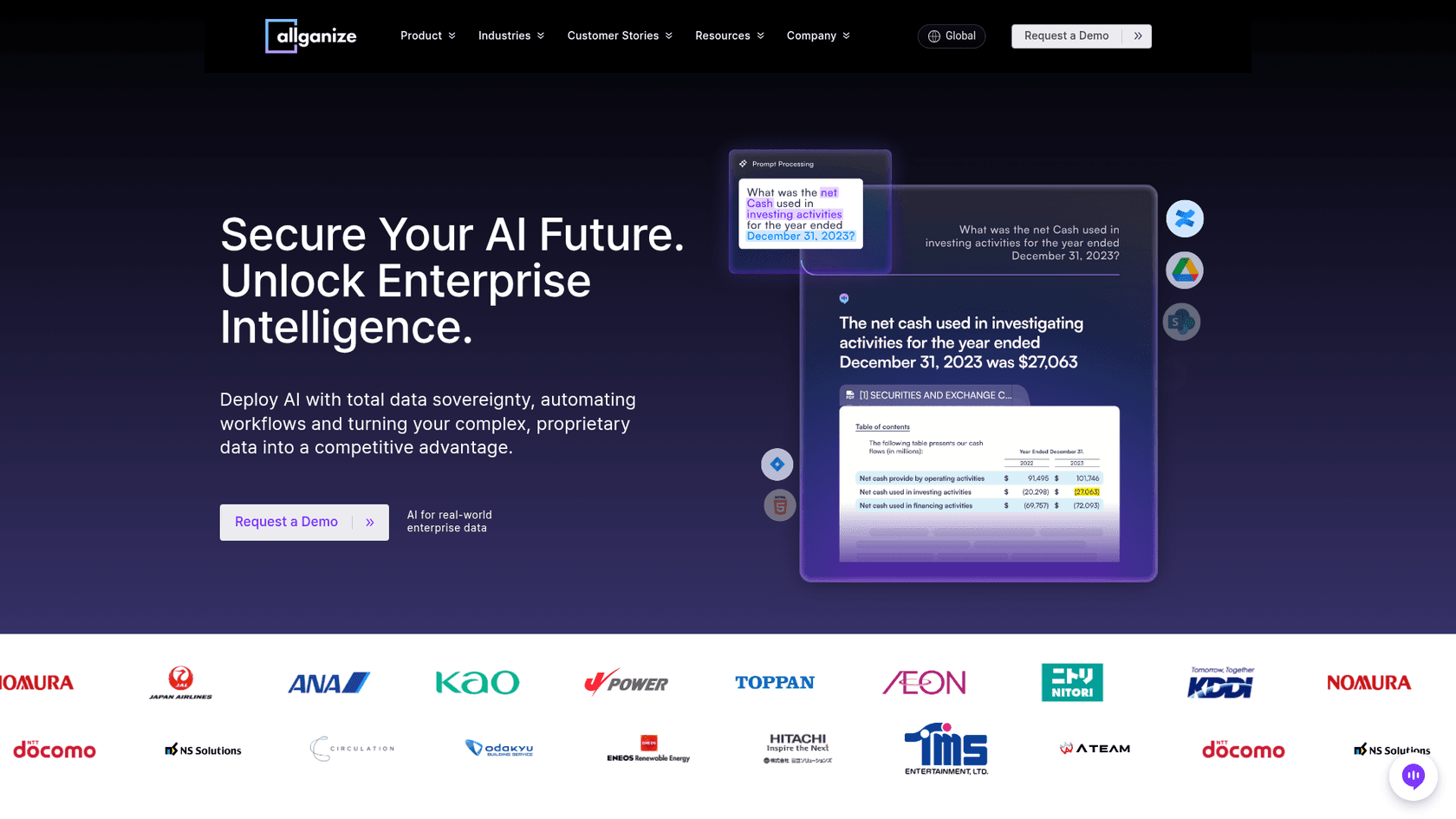
Alli AI by Allganize is a platform for large companies to build their own AI agents to automate complex business tasks. Using its no-code builder, you can create agents that use your company's internal data to power internal search, customer support, and advanced document analysis.
Pros: It's designed to handle the complex data environments of large enterprises, where important data is often scattered across Google Drive, SharePoint, and other systems. It also offers serious security with on-premise or private cloud options, which is a big deal for companies in sensitive industries like finance or healthcare.
Cons: This platform is designed for large-scale enterprise needs and is not intended for small or medium-sized businesses. It is designed for building custom AI solutions from the ground up, a process that requires a lot of planning and a pilot program that can take a couple of months.
Pricing: Pricing is custom and depends on your setup. The SaaS version is token-based, while on-premise plans are based on server capacity.
4. Gumloop
Think of Gumloop as Zapier, but with a heavy dose of AI and built for creating your own automation tools. It is ideal for the SEO pro who wants to build custom solutions. With Gumloop, you can build it yourself using a visual drag-and-drop interface, connecting different "nodes" like web scrapers, AI models, and data sources.
Pros: The platform offers a high degree of flexibility. You could build a workflow that scrapes the top search results for a keyword, uses AI to analyze the content, and then generates a detailed outline, all automatically. A huge plus is its native integration with tools like Semrush, so you can tap into their data without a separate subscription. It even has an AI assistant named Gummie that can build a workflow from a simple text prompt.
Cons: It is designed for users who are comfortable building their own workflows and is not a plug-and-play solution. Those seeking an out-of-the-box tool may find it requires a more technical approach.
Pricing: It has a generous free plan with 2,000 credits per month, and paid plans start at an affordable $37/month.
5. Surfer AI
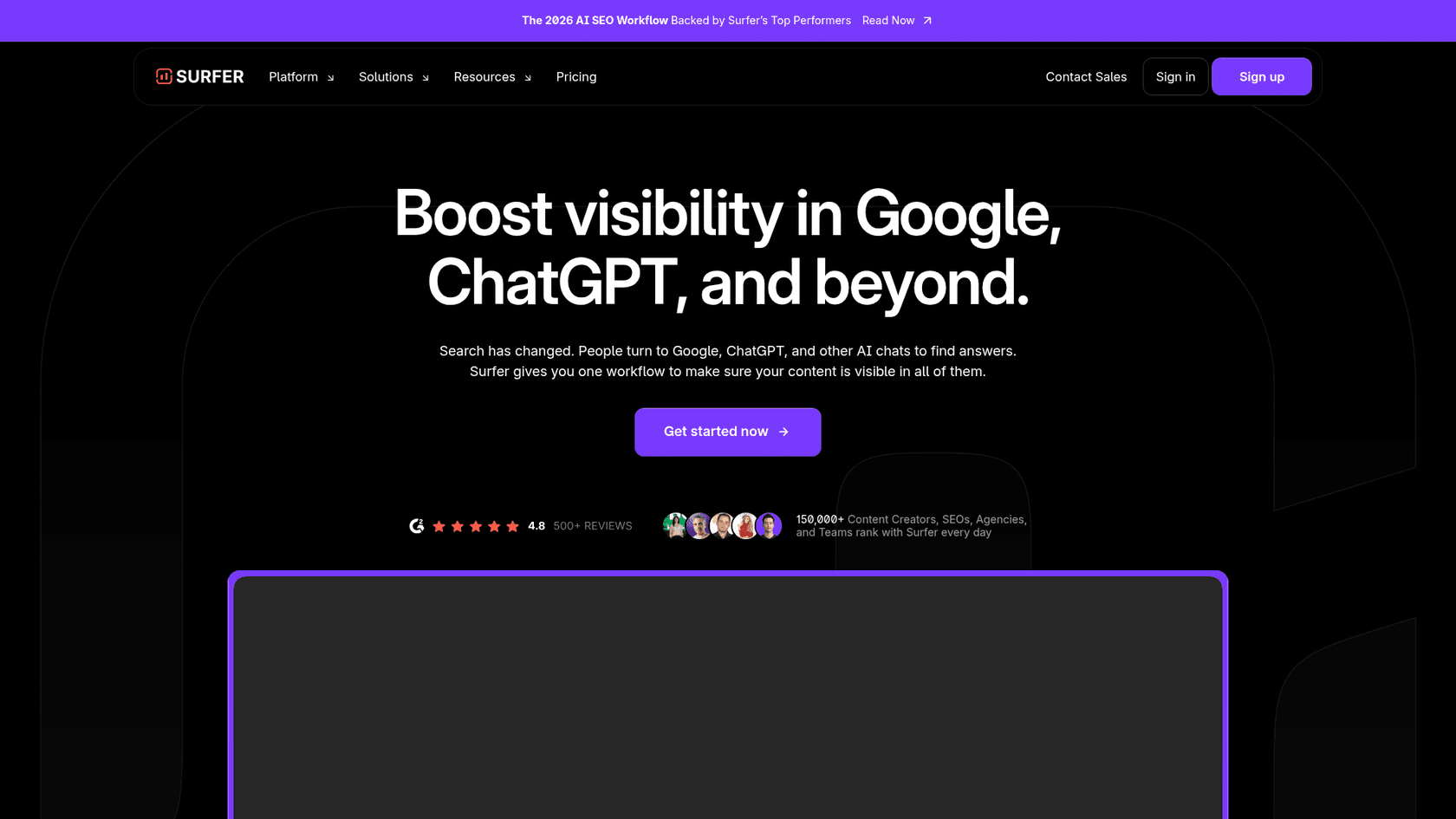
Surfer has been a favorite among content writers for years because it helps take the guesswork out of on-page SEO. You give it a target keyword, and it analyzes the top-ranking pages to give you a data-driven blueprint for your article, complete with a "Content Score" that updates as you write. Its Surfer AI feature takes this further by generating a full article based on that analysis.
Pros: The real-time feedback in its Content Editor is great for guiding writers and making sure every piece of content is optimized before it is published. The advice is clear, actionable, and based on what is already working in the search results. It also integrates well with Google Docs, WordPress, and Jasper.
Cons: The AI-generated articles provide a strong, data-driven foundation based on top search results, which can then be enhanced by a human editor to add unique brand voice. A consideration for some teams is that API access is included in the Enterprise plan.
Pricing: Plans start at $99 per month for the Essential plan.
6. seoClarity
seoClarity is a data powerhouse built for the enterprise market. Its biggest selling point is its "unlimited" promise: unlimited site crawling, unlimited keywords, and unlimited data. Its ClarityAutomate feature is also a huge draw for large companies, as it lets SEO teams implement changes like schema markup or title tag updates across millions of pages without waiting on developers.
Pros: For a massive company, not having to worry about data caps or crawl credits is a huge relief. The platform is incredibly deep, covering everything from technical audits and rank tracking to content optimization. It is a one-stop-shop for SEO data at a massive scale.
Cons: The platform's comprehensive nature comes with a learning curve. As it is an enterprise-grade solution, the pricing structure is aligned with that market and may be outside the budget for small businesses or startups.
Pricing: Pricing is custom, but plans are said to start around $4,500/month.
To see how these concepts come together in a real-world workflow, check out this video on building an automated SEO empire with AI agents.
Tips for choosing the right SEO automation platform
Feeling a bit overwhelmed by the options? Here are a few practical tips to help you pick the right tool.
- Start with your biggest bottleneck. What is the single most time-consuming part of your SEO work? If it is content creation, a tool like the eesel AI blog writer is a great place to start. If it is technical fixes, look at something like Search Atlas. Solve your biggest problem first.
- Balance automation with control. How much control do you want to hand over? Some tools, like OTTO SEO, are designed to make changes for you. Others, like Surfer, give you recommendations that you have to implement yourself. Decide what level of hands-on involvement you are comfortable with.
AI can definitely speed up parts of the workflow like drafting outlines, generating title/meta ideas, or automating site audits, but I don’t think it fully replaces an SEO pro. The human touch is still needed for strategy, nuance, and making sure the content actually connects with people.
 Reddit
 - Do not pay for features you do not need. It is easy to be impressed by a platform with hundreds of features, but if you are only going to use a few of them, you are wasting money. An enterprise suite like seoClarity is amazing, but it is overkill if you are a small business.
- Always use the free trial. This is non-negotiable. Almost every tool on this list has a free trial or a free plan. Use it. Test the platform with a real project to see if you like the workflow and the results before you commit.
Final thoughts on using an SEO automation platform
An SEO automation platform has gone from a "nice-to-have" to a "must-have" for any team serious about scaling organic traffic and staying competitive.
The goal is not to replace smart marketers; it is to free them from the repetitive work that bogs them down. By letting AI handle the heavy lifting, you get to spend your time on what really matters: strategy, creativity, and building a brand that people connect with.
Ready to stop writing and start ranking? Generate your first complete, SEO-optimized blog post for free with the eesel AI blog writer and see how much time you can save.