A practical guide to building your high-impact SEO team

Stevia Putri
Last edited January 27, 2026
It’s a common misconception that a surprise Google update is the biggest threat to an SEO program. More often than not, the real problem is internal chaos. Putting together the right team is the first real step to winning at organic search, but it's a serious investment. With SEO team member salaries ranging from $30K to $60K, you want to get it right from the start.
That's what this guide is for. We'll cover the essential roles you need, the team structures that actually work, and where your SEO crew should live inside your company. We'll also tackle the biggest headache nearly every team faces: creating enough high-quality content to actually make a dent. That’s where tools like the eesel AI blog writer can really help, acting as a force multiplier for your team right from the start.
What is an SEO team?
What exactly is an SEO team? It's a dedicated group of specialists whose whole job is to get your website to show up higher in search results. The end goal is to drive more organic traffic that turns into leads and, ultimately, revenue.
Their daily work is a mix of technical website fixes, smart content strategy, building links, and digging into performance data. Depending on the company, this "team" could be just one person juggling everything or a full-blown department with multiple layers.
The core roles you need on your SEO team
In a small company, it’s common for one person to wear a bunch of these hats at once. But as you get bigger, understanding these different roles is how you scale without things getting messy. And make no mistake, these aren't typically entry-level gigs. An analysis of job listings found that most companies want an SEO manager to have at least five years of experience. Let's look at the foundational roles that make up a solid team.
SEO manager or director
This person is your team's leader and strategist. Their main job is to map out the overall SEO strategy, manage the team, fight for budget, and report back to the higher-ups on how things are going. A great SEO leader isn't just a technical whiz. They need a sharp business sense, the analytical chops to prove ROI, and the people skills to actually lead and invest in their team's growth. They’re the captain of the ship.
Technical SEO specialist
Think of this person as the architect of your website's digital foundation. They focus on all the behind-the-scenes stuff that helps search engines crawl and understand your site properly. Think site architecture, page speed, schema markup, and fixing broken links. They spend their time in tools like Ahrefs’ Site Audit finding and fixing technical problems, and they work hand-in-hand with developers to make sure their recommendations actually get implemented. Without them, even the best content might never get seen.
SEO content strategist or writer
As the name suggests, this role is all about content. They dive deep into keyword research, sniff out content gaps your competitors are missing, and manage content creation, guides, and landing pages. Their goal is to create content that serves the user first and the search engines second. They get the concept of the "online engagement ladder", crafting copy that not only ranks but also turns casual searchers into loyal customers.
SEO analyst
This is the data geek of the team. The analyst is responsible for tracking, measuring, and reporting on all the important SEO metrics—rankings, traffic, conversion rates, you name it. Their findings guide the team's strategy, helping everyone see what's working, what isn't, and what to do next. It’s no surprise that data analysis skills are a requirement in over 84% of SEO manager job postings. They provide the proof that the team's efforts are paying off.
Outreach specialist or link builder
This person is the team's digital PR pro. Their job is to build your website's authority across the web by earning high-quality backlinks from other reputable sites. This isn't about spammy tactics; it's about building genuine relationships with journalists, bloggers, and industry experts to promote the team's amazing content and secure valuable links. This directly boosts metrics like Ahrefs' Domain Rating (DR) and signals to Google that your site is a trustworthy source of information.
How to structure your SEO team based on company size
There’s no one-size-fits-all answer here. The right structure for your SEO team really depends on your company's size, goals, and culture. Most teams evolve over time, starting with a single SEO generalist and growing into more specialized groups. Here are three common ways to organize your team.
The specialist structure (for small to medium businesses)
This is the classic, top-down approach. You have an SEO Manager at the top, with individual specialists handling technical SEO, content, and outreach. It’s straightforward, the reporting lines are crystal clear, and it allows each team member to become a true expert in their specific area. It's a great model for companies that are building their SEO program from the ground up and need to establish strong functional expertise.
The pod or vertical structure (for large enterprises)
In this model, you create small, cross-functional teams (or "pods") that are dedicated to a specific part of the business, like a product line, a brand, or a geographic region. Each pod has its own mix of SEO skills. It's a structure used by agencies like Bubblegum Search to give each client a dedicated, well-rounded team. This setup works well for big companies that need agile, focused teams that are deeply embedded in the goals of a specific business unit.
The flat structure
This is a more collaborative and less hierarchical way of working. Instead of rigid roles, team members have a broad range of SEO skills and share responsibilities. The whole team works together to hit a quarterly target, focusing on delivery and results above all else. This structure works best in startups and other fast-moving companies where flexibility and speed are the top priorities.
SEO team structure comparison
| Structure | Best For | Pros | Cons |
|---|---|---|---|
| Specialist | Small to Medium Businesses | Develops deep functional expertise; clear reporting lines. | Can create silos; less flexible. |
| Pod/Vertical | Large Enterprises | Agile and focused on business goals; better cross-functional collaboration. | Can be more expensive; requires strong coordination. |
| Flat | Startups & Agile Companies | Highly flexible and collaborative; promotes shared ownership. | Can lack clear leadership; may not scale easily. |
Where should your SEO team sit in the organization?
Deciding where your SEO team lives on the company org chart is a bigger deal than you might think. Put them in the right place, and you can break down silos and get things done. Put them in the wrong place, and you’ll create constant friction. The truth is, no matter where they officially report, a great SEO team has to work closely with tons of other departments. As one expert put it, when it comes to enterprise SEO, communication is imperative to success.
In the marketing department
This is the most common home for an SEO team, and for good reason. It aligns SEO with broader marketing campaigns, demand generation, and company messaging. It also gives the team direct access to the content, PR, and social media folks, which makes running integrated campaigns so much easier. The downside? They can feel disconnected from the technical side of the house, which can make it a slow, painful process to get website changes pushed live.
In the product or web team
Putting the SEO team here places them right next to the developers. The big advantage here is that technical SEO recommendations can get implemented a lot faster. SEO becomes part of the product development process from the very beginning, which helps prevent major technical headaches down the road. The risk is that the team might get too focused on the technical details and lose touch with the overall marketing message, creating content that's perfectly optimized but totally off-brand.
Building a fully remote SEO team
With remote work being the new normal, many companies are building fully remote SEO teams. This opens up a global talent pool, which is amazing, but it also brings its own set of challenges.
As a manager, you have to navigate different tax laws, public holidays, and employment rules if you hire internationally. One of the biggest decisions is how you handle pay. Do you offer location-based or location-agnostic pay? Location-based pay adjusts salaries based on the local cost of living, but it can sometimes create feelings of inequality. Location-agnostic pay (everyone gets paid the same for the same role) promotes fairness but might not be financially viable if you’re hiring in a super high-cost area. There's no single right answer, but it's something you need to figure out upfront.
How to empower your SEO team with AI
One of the biggest struggles for any SEO team, big or small, is scaling content creation. Producing high-quality, well-researched, and fully optimized content takes a massive amount of time. It's often the single biggest bottleneck that slows down growth and keeps your content strategist buried in outlines and drafts.
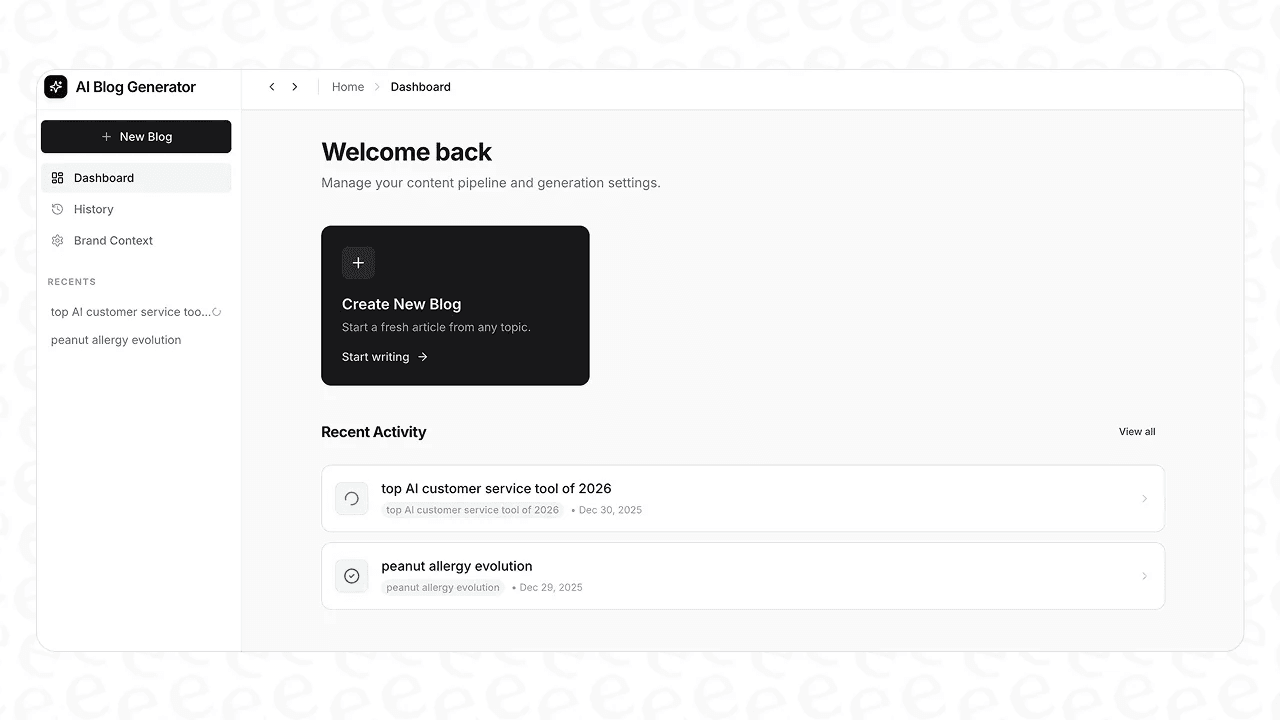
This is exactly the problem the eesel AI blog writer was built to solve. It is designed to handle the entire blog creation process.
We used it ourselves at eesel AI and saw our daily impressions jump from 700 to 750,000 in just three months by publishing over 1,000 optimized blogs. You give it a keyword, and it generates a complete, publish-ready post. We're talking a full structure, AI-generated images, relevant quotes pulled from Reddit, and a tone that actually sounds human. It frees up your team to focus on strategy instead of getting stuck in the content creation weeds.
For a deeper dive into the strategic thinking behind building an effective in-house team, the following video offers valuable insights on why bringing SEO expertise internally can be a game-changer for your business.
Building your SEO team: Putting it all together
A great SEO program is built on three things: the right people in the right roles, a team structure that fits your business, and a culture of collaboration. Giving that team the right tools and technology is the final piece that makes it all work.
Building an amazing SEO team is a serious investment, but it's one that pays off for years in the form of sustainable, long-term organic growth. By getting the foundation right and using tech to get past the usual bottlenecks, you can set your brand up for success.
Ready to boost your team's content engine? Try the eesel AI blog writer for free and generate your first publish-ready article in minutes.

Frequently Asked Questions
Share this article

Article by
Stevia Putri
Stevia Putri is a marketing generalist at eesel AI, where she helps turn powerful AI tools into stories that resonate. She’s driven by curiosity, clarity, and the human side of technology.
