The top PR writing tips I used to get results

Stevia Putri
Last edited February 1, 2026
Trying to get noticed in today's media can feel like shouting into a hurricane. Everyone's fighting for the same slice of attention, and your brand's reputation is on the line every day. This is why the ability to write clearly and persuasively isn't just a valuable skill for a PR pro, it's a core competency. It’s what you lean on for great media coverage, getting through a crisis, or just building a brand that people trust.
But the rules have definitely changed. While the core ideas of good public relations haven't gone anywhere, the tools we use have evolved. It’s not just about who you know anymore; it’s about how quickly and effectively you can tell your story.
What is PR writing?
Simply put, PR writing is the craft of strategic content to shape how the public views a brand. It's all about building a positive reputation through earned media, which is another way of saying you get people to talk about you without paying for ads.
- Marketing Copy is all about making a sale. It’s direct, punchy, and its main job is to get someone to click "buy now." Think of website landing pages or email campaigns.
- Journalism is about reporting facts as objectively as possible. A journalist’s role is to inform the public, not to persuade them to think a certain way.
- PR Writing lands somewhere in the middle. It uses storytelling and data to persuade and influence, building relationships with the media to get your story told.
PR pros have to be versatile, and their writing shows it. You might be drafting a formal press release for a new product, a sharp and personal media pitch to grab a journalist's attention, some clever social media copy, or a full strategic communication plan for a company merger. Each piece does a different job, but they all work toward the same goal: building and protecting the brand's reputation.
Criteria for impactful PR writing tips
The internet is flooded with advice, but not all of it is useful. The PR writing tips on this list are here for one simple reason: they actually work. They're actionable, relevant for 2026, and they’re proven to get results in the chaotic media world we're all navigating.
Here’s what we looked for when putting this list together:
- Clarity and Conciseness: Can you get your point across without the fluff? In PR, every word counts, so the advice has to help you be direct.
- Audience-Centric: Good PR isn't about shouting what you want to say; it's about connecting with your audience. Every tip here is about understanding who you're trying to reach, whether that’s a busy journalist, a skeptical editor, or the public.
- Credibility: Trust is the currency of public relations. The advice on this list is all about building that trust through facts, authenticity, and transparent communication.
- Adaptability: A great PR tip shouldn't just work for a press release. It needs to be flexible enough to apply to everything from a formal announcement to a quick tweet.
A comparison of modern PR writing approaches
These days, PR pros have more options than ever for creating content. You can stick to the old-school manual approach, get a little help from basic AI, or lean on more advanced, context-aware AI platforms. Here’s a quick look at how they compare.
| Feature | Manual Writing | Basic AI Assistance (e.g., ChatGPT) | Context-Aware AI (eesel AI) |
|---|---|---|---|
| Research Time | High (Hours of manual work) | Medium (Requires significant fact-checking; can provide fake references) | Low (Automated, context-aware research) |
| Tone Consistency | Varies by writer | Difficult (Often produces "generic and descriptive" content requiring refinement for brand voice) | High (Learns from your website for consistent brand voice) |
| SEO & AEO Integration | Manual effort | Basic keyword insertion only | Advanced (SEO structure, keywords, and AEO optimization) |
| Asset Creation | Separate, manual process | Text-only output | Integrated (automatic assets like images, tables, media embeds) |
| Editing & Fact-Checking | Depends on writer skill | High (Output requires careful review for factual accuracy) | Low (Generates drafts with citations, though final review is recommended) |
| Data Privacy | N/A | User data may be used for training unless you opt out | High (Contractually guaranteed no training on your data) |
7 actionable PR writing tips to master
Alright, let's get practical. Here are seven PR writing tips you can start using today to get your message heard and drive real results for your brand.
1. Perfect the art of storytelling
Facts and figures are important, but they don't stick with people. Stories do. The best PR writing doesn't just list information; it connects with the audience on an emotional level. People remember how you made them feel long after they've forgotten the specific data points you shared.
To do this well, you need to find the core story in whatever you're announcing. Is it a story about overcoming a challenge? A story of innovation that will change lives? Once you have your narrative, build an emotional arc around it. Use relatable examples that put a human face on your news.
Actionable Advice: Don't just write an announcement; frame it as a story. Every good story has a beginning (the problem you're solving), a middle (your news or solution), and an end (the positive impact it will have).
2. Aim for brevity and clarity
This means cutting the fluff. Use short sentences and simple words. Go for strong verbs that show action and get rid of filler words that don't add anything. Your goal is to make your writing so easy to scan that a busy reporter can get the gist in seconds.
Actionable Advice: Outlets like Muck Rack suggest keeping press releases between 300 and 500 words. Stick to that. Also, use the active voice. Instead of saying, "A new product was launched by our company," just say, "Our company launched a new product." It's stronger and faster.
3. Know your audience
Sending the same generic message to everyone is a surefire way to be ignored. A pitch that would excite a tech journalist at a niche publication is all wrong for a lifestyle blogger with a million followers. One-size-fits-all just doesn't work in PR.
Before you write anything, do your homework. Who are you trying to reach? Research their demographics, interests, and how much they already know about your topic. This will help you tailor everything: your message, tone, and style, to connect with them.
Actionable Advice: Create a quick profile of your ideal reader before you start. Ask yourself: What do they care about? What do they read or who do they follow? What do they already know about this topic? Answering these questions will help you write something that feels like it was meant just for them.
4. Back up claims with data
In a world full of marketing hype, data is your best friend. Hard numbers and verifiable stats build credibility and give your story some weight. For a journalist, data is gold: it gives them concrete facts to use in their article and makes your pitch much more newsworthy.
You don't always need to commission a huge study. You can find data in internal reports, customer surveys, or even by analyzing public information to create your own research. The key is to find interesting data points that support your main claims.
Actionable Advice: Anytime you make a big claim, back it up with a number. Don't just say, "Our product is the fastest on the market." Say, "Our product processes data 50% faster than the industry average, according to our latest benchmark tests." The second version is way more powerful and believable.
5. Think like a journalist
To do well in PR, you need to stop thinking like a marketer and start thinking like a journalist. Reporters don't care about promoting your product. They're looking for compelling, newsworthy stories that will be interesting to their audience.
This means you need a strong "hook" or "lede" (the first sentence of your pitch). It has to get straight to the point and answer the question in every journalist's mind: "So what? Why should my readers care?" If you can't answer that in your first paragraph, your pitch is probably going in the trash.
Actionable Advice: Ditch the corporate jargon. Words like "synergy," "paradigm shift," and "cutting-edge" are meaningless buzzwords that make journalists' eyes glaze over. Use clear, simple language that explains the real-world impact of your news.
6. Master the editing and proofreading process
You could have the most amazing news in the world, but a single typo can kill your credibility. It looks careless and unprofessional. Polished, error-free writing shows you pay attention to detail and respect the reader's time.
Actionable Advice: The best editing tip is simple: get a second pair of eyes on your work. A colleague who isn't deep in the project can often spot confusing sentences or typos that you've read a dozen times and completely missed.
7. Integrate SEO and AEO
Modern PR is digital PR. When your news goes live, you want people to find it on search engines. That’s where search engine optimization (SEO) comes in. By including relevant keywords in your press releases and online content, you have a better chance of ranking on Google and driving traffic long after the announcement. Earning backlinks from media outlets that cover your story also gives your website a nice boost.
But there's a new player in town: Answer Engine Optimization (AEO), also called Generative Engine Optimization (GEO). This is about structuring your content so it gets picked up by AI-driven search results, like Google's AI Overviews. These AI summaries are becoming the new front page of search, so you need to be optimized for them.
Actionable Advice: For every piece of PR content, pick one main keyword. Weave it naturally into your headline, a few subheadings, and the body text. To make your content AEO-friendly, think about the questions people might ask about your news and include clear Q&A sections.
Streamlining your process with the eesel AI blog writer
Mastering all these tips takes time. But what if you could nail them on every piece of content, letting you focus more on strategy and less on the tedious parts of writing? That's where technology can be a huge help.
My two cents is yes. I use Active Inspiration (A.I.) software to 'break me out' of the blank page freeze. The issue is when the content is 70% AI or more. AI should really be used as an Assistive Interface for writing great content, not producing mechanical bastardized word slop by running and rerunning paragraphs through GPT-3.

The eesel AI blog writer is designed to handle the heavy lifting of content creation, from research to a publish-ready draft. It’s not about replacing PR pros; it’s about augmenting their capabilities.
Here’s how it helps you with the tips we just covered:
- Storytelling & Data (Tips 1 & 4): The AI does deep, context-aware research to find the data you need. It can even pull in authentic social proof from places like Reddit to build a more human story.
- Clarity & SEO/AEO (Tips 2 & 7): It automatically generates content that is well-structured, easy to read, and optimized for both SEO and new AEO standards. It also includes assets like images and tables to break up the text.
- Audience Focus (Tip 3): You can give it your company’s website URL, and the AI will analyze your existing content to generate new, context-aware articles that match your brand's voice.
- Editing (Tip 6): It produces a high-quality first draft that is often ready to publish with just a few tweaks, cutting your editing time from hours to minutes.
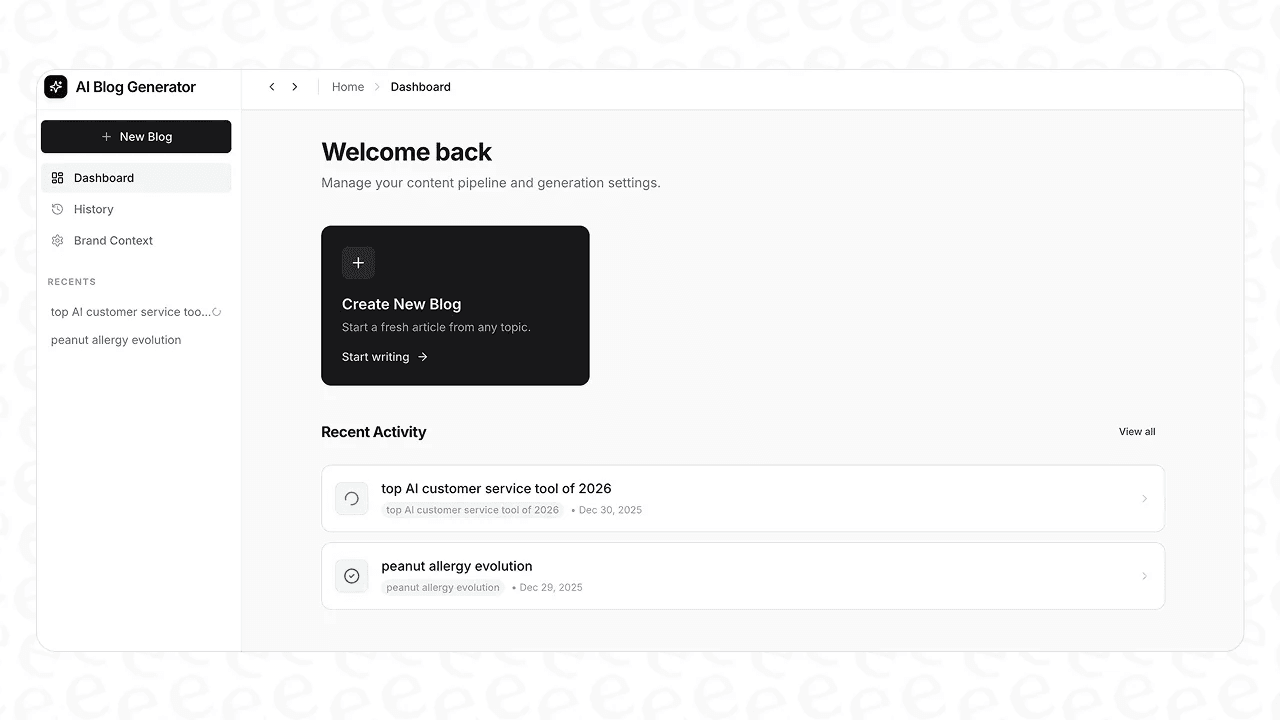
A screenshot of the eesel AI blog writer dashboard, a tool for applying PR writing tips to generate content.
We built this tool for ourselves and used it to grow our own organic traffic from 700 to 750,000 impressions in just three months. It works.
Reading about PR writing is one thing, but seeing the principles in action can make all the difference. For those looking for a deeper dive into the practical application of these techniques, the following video offers a comprehensive guide, breaking down the most common types of PR writing and showing you how to master each one.
Putting these tips into practice
Great PR writing in 2026 is a mix of timeless skills and modern tools. It’s about blending classic storytelling with the technical know-how of SEO and AEO. Mastering these principles isn't just an advantage anymore; it’s necessary for building a brand’s reputation and getting the kind of media attention that makes a difference.
While the skill itself will always be human, the right tools can change everything. They can save you hours, improve the quality of your work, and free you up to focus on the high-level strategy that really matters.
Ready to put these tips into action? Generate your first article for free with the eesel AI blog writer and see for yourself.

Frequently Asked Questions
Share this article

Article by
Stevia Putri
Stevia Putri is a marketing generalist at eesel AI, where she helps turn powerful AI tools into stories that resonate. She’s driven by curiosity, clarity, and the human side of technology.