How to get backlinks: A guide to building your site's authority

Stevia Putri
Last edited February 1, 2026
Think of backlinks as a vote of confidence for your website. When another site links to yours, it tells search engines like Google, "Hey, this content is legit and worth checking out." They're a massive part of the whole SEO game.
The goal sounds simple enough: get other sites to link to you. But actually doing it? That's not a quick fix. It takes a steady, smart effort to build a backlink profile that makes a real difference. And honestly, it all starts with your content. If what you've written is thin or unhelpful, no amount of asking for links will ever work.
What are backlinks and why do they matter?
Let's get into it. A backlink is just a link from one website to another. Picture the internet as a giant web of connected pages. Each link is a a thread, and the more threads you have pointing to your site from good places, the more important you appear to search engines.
But not all backlinks are the same. You'll hear terms like "Domain Rating" (DR) or "Domain Authority" (DA), which are just scores from 1-100 that measure a site's authority. A single link from a high-DR site like a major news outlet is worth way more than a pile of links from spammy, low-quality sites.
For a backlink to actually help your SEO, it should be:
- From a website with high authority.
- A "dofollow" link, which is the type that passes SEO value.
- Placed naturally within the content, not stuffed in a footer or sidebar.
So, why are they such a big deal for SEO? The visual below breaks down why backlinks are a cornerstone of any successful SEO strategy.
- Better search engine rankings: Backlinks are one of the biggest factors Google uses for ranking. A study of nearly one billion pages showed a direct connection between the number of backlinks a page has and how much organic traffic it gets. More quality links generally mean higher rankings.
- More referral traffic: When a popular site links to you, its readers might click over to see what you're about. This sends interested people straight to your page, which can lead to new customers.
- Quicker Indexing: Search engines find new stuff by following links. If you get a link from a site that Google crawls often, your new pages will get found and indexed much faster.
An infographic explaining how to get backlinks and their importance for SEO, covering rankings, traffic, and indexing.
Content-led strategies: Earning backlinks
The best and most sustainable way to get backlinks is to create content that's so good, it attracts them on its own. This "earn, don't ask" mindset is all about creating real value first, which makes any outreach you do later much more successful.
Develop unique data
One of the strongest ways to earn links is to become a primary source of information. When you publish content with original data, surveys, or studies, you create an asset that other blogs and journalists will want to cite.
Every time they mention your findings, they’ll link back to your page as the source. This gets you high-quality, relevant backlinks without even asking. You don't need a massive budget for this, either. You can gather data by polling your email list, looking at your own business data, or running a small industry survey on a platform like SurveyMonkey.
Publish long-form guides
Another solid strategy is to create the ultimate resource on a specific topic. This is sometimes called "skyscraper" content. The idea is to find what's already ranking for your keywords and then create something that is ten times more detailed, helpful, and current.
When you create the definitive guide on a subject, other writers are happy to link to it. It gives their audience a ton of value and strengthens their own content by referencing a complete resource. It becomes a cornerstone piece that people will refer to for years.
Use the eesel AI blog writer for shareable assets
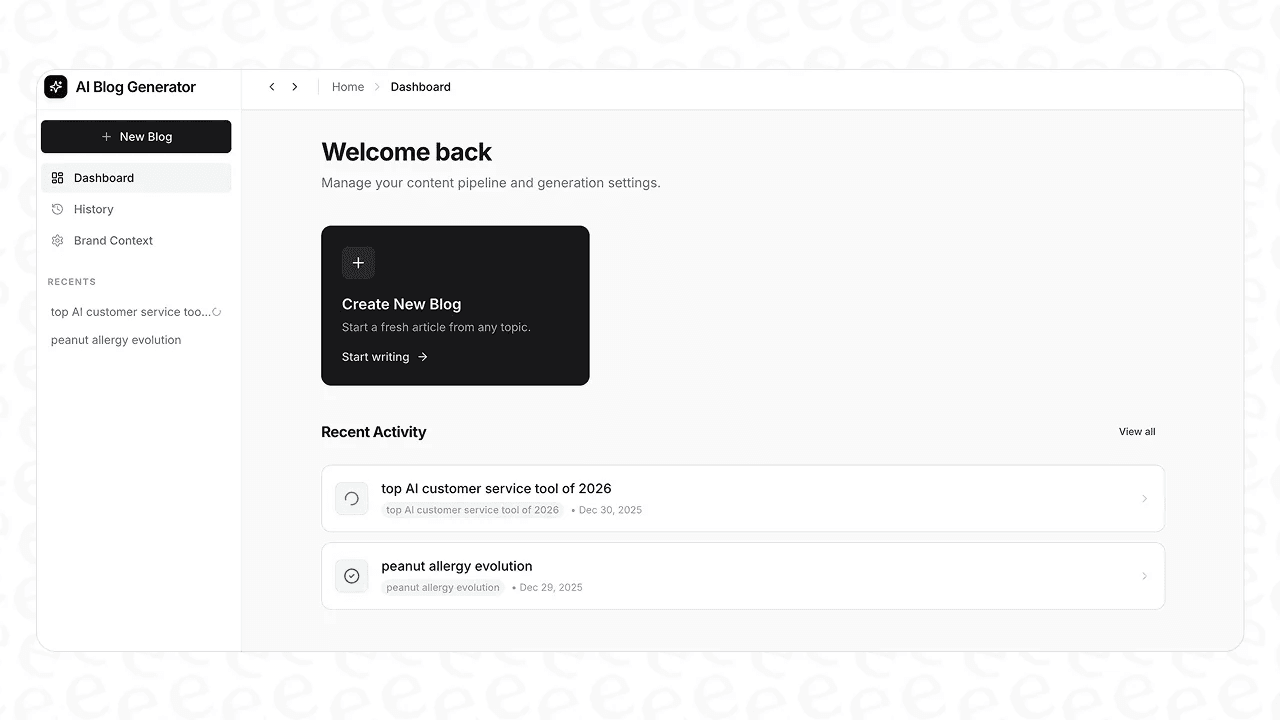
Let's be honest, creating deeply researched, link-worthy content takes a lot of time and is often the biggest bottleneck. This is where the eesel AI blog writer really shines. It focuses on turning a single keyword into a complete, publish-ready post that's designed to rank and earn links.
Our own team used it to scale up our content, and the results were significant. We went from 70k to over 750k impressions in just a few months by consistently publishing optimized content.
Here’s how it helps you create linkable assets:
- Automatic Assets: It doesn't just write text. It creates infographics, charts, and tables that are perfect for other sites to embed. When they do, they’ll naturally credit your site with a link.
- Deep Research with Citations: The content it creates is well-researched and doesn't have that shallow AI feel. It automatically includes links to external sources and relevant internal pages, which immediately makes your content more credible.
- Authentic Social Proof: For a human touch, it finds and weaves in real quotes and insights from Reddit threads. This adds a layer of authenticity that makes your content more trustworthy and much more likely to be shared and linked to.
Outreach-based strategies
Once you have some great content, you can get more proactive and start building relationships with other site owners to secure links.
Reclaim unlinked brand mentions
An unlinked brand mention is when another website talks about your company or product but doesn't actually link to your site. This is some of the easiest link-building you can do.
The author already knows your brand, so they’re often happy to add a link if you just ask. You can use tools like the Semrush Brand Monitoring tool or free options like Google Alerts to find these mentions.
Pro tip
When you reach out, thank them for the mention first. Then, politely suggest that adding a link would be helpful for their readers. It's a simple, friendly request that has a high success rate.
Write valuable guest posts
Guest posting is a classic method where you write an article for another website in your niche. The trick is to focus on providing real value to that site's audience, not just dropping a link for SEO points.
If you write an informative, well-researched post, you build authority for yourself and the publisher. In return, you usually get a backlink in your author bio or within the content. Plus, it gets your brand in front of a new, relevant audience.
Respond to media requests with HARO
HARO (Help a Reporter Out) is a free service that connects journalists with sources. It’s a great way to get backlinks from high-authority news sites and blogs.
You sign up as a source in your field of expertise and get three emails a day with requests from reporters. When you see one that fits, you send back a concise, helpful quote. If the journalist uses it, they'll almost always include a backlink to your site.
Pro tip
Reporters are on tight deadlines. Make your pitch easy to copy and paste.
You’re more likely to get a backlink if you have a professional background/degrees/Certifications in THAT area. Ex. I’m a CFP and founder of my own company. They want more reputable sounding people.

Technical methods
These strategies are a bit more analytical and involve digging into data to find link opportunities that already exist on the web.
Use the broken link building method
Broken link building is a very effective tactic, though it can be a bit time-consuming. The process is simple:
- Find a broken link (one that goes to a 404 error page) on a relevant website. A tool like Ahrefs' Site Explorer has a "Broken Links" report that makes this easy.
- See what content the dead link used to point to.
- Create a similar, but better, piece of content on your own site.
- Email the website owner, let them know about the broken link, and gently suggest your content as a replacement.
A 4-step workflow explaining how to get backlinks through broken link building, from finding the link to outreach.
It’s a win-win. You help them fix their site, and you get a quality backlink in return.
Get featured on resource pages
Resource pages are just curated lists of helpful links and tools on a certain topic. They are literally designed to link out to valuable content.
You can find these pages with a few Google searches. For example, try searching for things like [your topic] + "helpful resources" or [your topic] + inurl:resources.
If you have a guide, tool, or study that would be a genuinely useful addition to their list, send a friendly email to the page owner and pitch it. Just make sure your resource truly adds value.
Replicate your competitors’ links
One of the smartest ways to find link opportunities is to see where competitors get links. If a site is willing to link to them, there’s a good chance they’ll link to you, too, especially if your content is even better.
SEO tools like Ahrefs' Site Explorer or Semrush show you every backlink a competitor has. Just enter their domain and check out their Backlinks report. You'll start to notice patterns. Are they getting links from guest posts? Industry directories? This gives you a ready-made roadmap for your own outreach.
Why quality over quantity is the golden rule
It’s tempting to chase as many backlinks as you can, but that's the wrong way to think about it. One high-quality backlink from a relevant, authoritative site is worth more than hundreds of spammy, low-quality links.
Whatever you do, stay away from "black hat" SEO tactics that go against Google's guidelines. This means no buying links or getting involved in private blog networks (PBNs) or other shady link schemes. These shortcuts might give you a temporary bump, but they'll eventually get your site penalized.
Google's Penguin update was specifically created to find and punish sites with unnatural backlink profiles. The only way to build long-term authority is to stick to ethical, value-first strategies.
For a deeper dive into actionable link-building strategies, check out this video from Brian Dean, who breaks down how to systematically acquire high-quality backlinks every month.
Start building backlinks that last
Building a strong backlink profile is a marathon, not a sprint. It requires patience, persistence, and a smart approach that mixes creating great content, building real relationships, and finding technical opportunities.
At the end of the day, the best links are the ones you earn by providing real value. The first and most important step is always creating content that's actually worth linking to in the first place.
With the right strategy and tools, you can build a solid foundation for your site's authority and watch your organic traffic grow. Ready to get started? Create your first piece of link-worthy content with the eesel AI blog writer.

Frequently Asked Questions
Share this article

Article by
Stevia Putri
Stevia Putri is a marketing generalist at eesel AI, where she helps turn powerful AI tools into stories that resonate. She’s driven by curiosity, clarity, and the human side of technology.