A practical guide to blog writing for backlinks

Katelin Teen
Last edited October 21, 2026
Building backlinks can feel like a slow, frustrating grind of outreach and unanswered emails. What if you could get websites to want to link to you instead? Good news, you can.
The best way to build your site's authority is to stop chasing links and start earning them with high-quality content. When you create something genuinely useful, people will naturally want to share it.
What exactly is blog writing for backlinks?
Blog writing for backlinks is a content strategy where you create top-notch articles, guides, and resources with the main goal of getting other websites to link to them. People often call these "linkable assets" because they're designed to be so valuable that other sites reference them.
This organic approach is all about earning your credibility, which is much more sustainable than risky tactics like buying links or using private blog networks (PBNs). Those methods can get you in trouble with Google and might even get your site penalized. Earning links, on the other hand, builds a solid foundation for growth that lasts.
How to find content opportunities
Before you type a single word, you need a plan. Diving in without research can lead to wasted effort. This section covers the prep work you need to do to make sure your content has a purpose from day one.
Use competitor analysis
One of the smartest shortcuts to finding great content ideas is to see what's already working for others in your space. A competitor backlink analysis shows you which articles are performing well for your competitors, giving you a proven blueprint.
I have always found Ahrefs data to be more accurate... so as long as you know what to do with it... thats your winner. Don't use hrefs to crawl sites and don't listen to their rubbish around 'link quality' etc. Get the data, use it to do your work.

Here’s how you can do it:
- Figure out your competitors: If you're not sure who you're up against, just type some of your target keywords into a tool like Semrush or Ahrefs. They'll show you which websites are consistently ranking for the terms you want.
- Analyze their best pages: Put a competitor's domain into a backlink tool and look for a report like "Best by links" (Ahrefs) or "Indexed Pages" (Semrush). This information shows you exactly which of their pages have attracted the most links.
- Find the backlink gap: Most SEO tools have a "link intersect" or "backlink gap" feature. This helps you find websites that link to several of your competitors but not to you. These sites are already interested in your topic, which makes them perfect targets for outreach later.
A 3-step workflow for competitor analysis, a core strategy in blog writing for backlinks.
Your goal here is to build a list of proven topics and the domains linking to them. Then, your job is to create something on those topics that's more thorough, current, or just plain better.
Focus on linkable assets
A "linkable asset" is any piece of content so useful or unique that other writers naturally want to link to it. You're not just making another blog post; you're creating a go-to resource.
Here are a few types of linkable assets that are magnets for links:
- Original research & data: If you can, run your own surveys or analyze internal data to come up with unique stats. When you're the original source of a cool statistic, others will cite your work and link back. HubSpot is a pro at this with its annual "State of Marketing Report."
- Comprehensive "ultimate" guides: Try to create the definitive guide on a topic. Cover it so well that it becomes the only resource anyone needs. When other bloggers write about the same subject, they'll often link to your guide as the best place for their readers to get more info.
- Free tools & calculators: A simple, useful tool can be a link-building powerhouse. Think of things like mortgage calculators or headline analyzers. They offer instant value, which makes them super easy to link to.
- Infographics & visuals: People love visuals that break down complex information. A well-designed infographic is easy to share and embed, and when other sites use it, they'll almost always include a link back to you as the source.
- Case studies: Detailed case studies provide real-world proof and concrete results. They're very credible and offer specific data that other writers can use to support their own points.
An infographic displaying five types of linkable assets that are crucial for successful blog writing for backlinks, including original data and ultimate guides.
How to create content that earns links naturally
Once you've picked your topic, it's time to get to work. Writing a link-worthy article is about more than just putting words on a page; it's about crafting a resource that's a valuable and comprehensive resource. Here's how.
Improve on competitor content
Don't just write another article on a topic. Your goal is to create a better one. Look at your competitor's top-linked articles and identify areas for improvement. This strategy is effective because you're basically creating an improved version of content that already attracts links.
Look for ways you can improve on what they've done:
- Is their data old? Find the latest statistics for 2026 and make your article the most current resource out there.
- Do they lack real-world examples? Add your own unique stories or mini case studies to make the advice more practical.
- Is their advice too vague? Break down big ideas into a clear, step-by-step process that readers can actually use.
The idea is to make your content a more comprehensive and updated resource that anyone who finds it will want to link to over the old one.
Use visuals and data
Large blocks of text can be difficult to read. Visuals like infographics, charts, and custom diagrams make your content more engaging, easier to understand, and way more shareable. The same goes for data presented in clean tables.
But here's the link-building angle: other sites love embedding useful visuals into their own posts. It improves their content without them having to do any design work. When they do, they often provide a link back to the original source. This creates a passive link-building engine that works for you long after you've published the post.
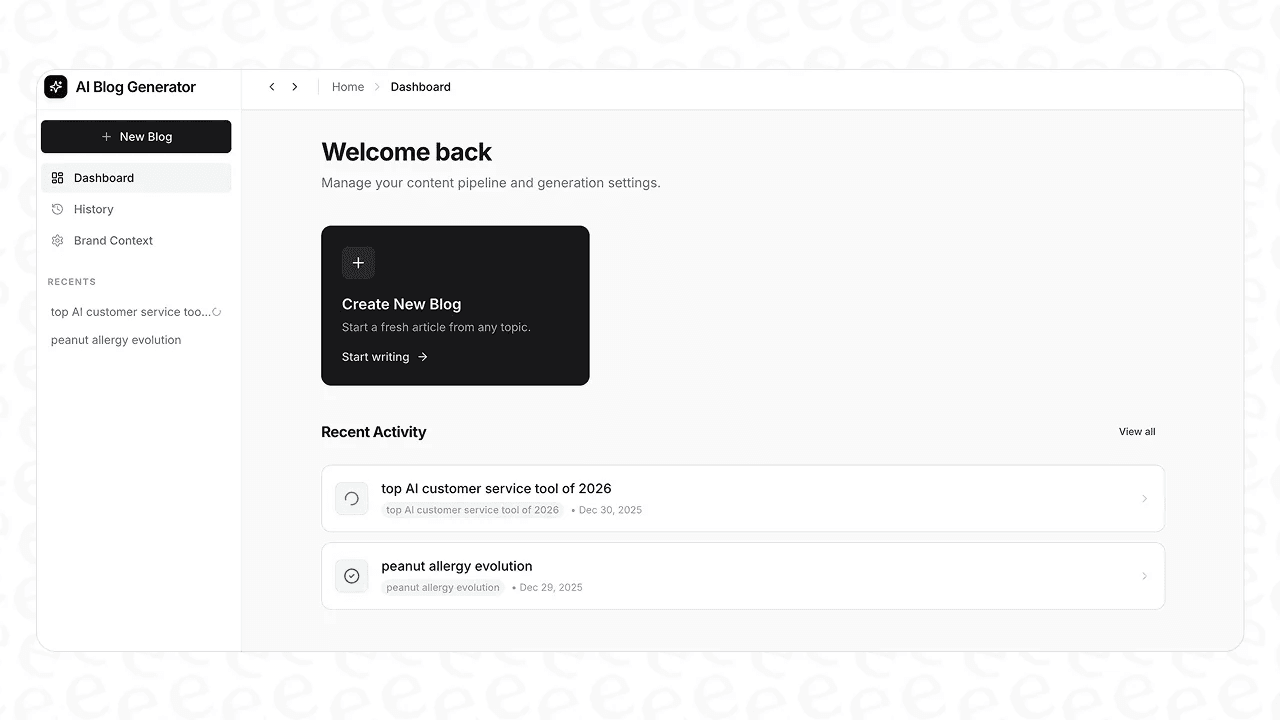
Scale content creation with the eesel AI blog writer
Let's be realistic. Consistently creating deeply researched, top-tier articles with custom graphics takes a ton of time. It's usually the biggest bottleneck for any content team.
Here are a few features that help build linkable assets automatically:
- Automatic asset generation: It creates the infographics, tables, and charts we just discussed. This turns a standard article into a rich, visual resource without you needing to touch a design tool.
- Authentic social proof: It can pull in real Reddit quotes and relevant YouTube videos. This adds unique perspectives to your content.
- Deep research with citations: It produces well-researched content that's genuinely valuable, making it a credible source that other experts will feel good about citing.
This is the exact tool we used at eesel to scale our content and grow from 700 to 750,000 daily impressions. We published over 1,000 optimized blogs in just three months, which would have been impossible to do by hand.
Promoting your content to build backlinks
Creating a great piece of content is only half the job. If you don't promote it, no one will see it. Here are a few solid tactics to get your content in front of the right people, specifically those who can provide a backlink.
Strategic outreach
Effective outreach is more targeted than sending generic mass emails. The right way to do strategic outreach is to simply let relevant website owners know you've created a resource that could be genuinely helpful to their audience.
Here’s a simple template you can tweak:
"Hey [Name],
I saw your article on [Topic]. I recently published a guide that includes some unique [Data/Infographic] on the subject, which I thought might be a useful addition for your readers.
Here's the link if you want to check it out: [Your Link]
Either way, keep up the great work!"
The key is to lead with value, keep it short, and don't be pushy. You're not asking for a favor; you're offering them a way to make their own content better.
Using HARO for your backlinking plan
HARO (Help a Reporter Out) is a free service by Cision that connects journalists with expert sources. It's a great way to get backlinks from news sites and high-authority publications.
Here’s how it works: You sign up for daily emails with queries from journalists looking for quotes on various topics. When you see a request that fits your expertise, you send a quick, helpful response. If a journalist uses your quote, they'll often include a backlink to your site.
Pro tip
Journalists are always on tight deadlines. To boost your chances, try to respond within 30 minutes of getting a query. The success rate isn't super high (5-10% is common), but the quality of the links makes it worth the effort.
Reclaim broken links
This is a classic tactic for a reason. Broken link building is all about finding pages on other websites that are linking to a competitor's page that no longer exists (a 404 error).
Here's the simple process:
- Use a tool like Ahrefs or Semrush to find your competitors' broken pages that still have backlinks.
- Create a similar (or better) piece of content on your own site.
- Reach out to the websites with the broken link, let them know about it, and suggest they replace it with a link to your working resource.
A 3-step workflow explaining the broken link building process, an effective tactic for blog writing for backlinks.
Site owners are usually glad to fix broken links because it improves their site's user experience. This makes it a highly effective tactic with a pretty good success rate.
Link building tactics to avoid
While we're on the topic of what to do, it's worth quickly covering what not to do. Some tactics can cause more harm than good.
- Buying backlinks: This violates Google's guidelines. If you get caught, your site could face serious penalties.
- Spam blog commenting: Leaving irrelevant comments on blogs with a link to your site is ineffective and can be perceived as unprofessional.
- Private blog networks (PBNs): Using a network of low-quality sites to link to your main site is a risky, black-hat strategy that Google actively penalizes.
An infographic comparing effective strategies like quality content with risky tactics to avoid in blog writing for backlinks.
For a more in-depth look at how to create content that naturally attracts links, check out this case study from Ahrefs. It provides actionable insights into writing blog posts that people want to cite.
Earn links with strategic content
At the end of the day, the most reliable SEO strategy is to consistently publish high-quality content that helps your audience. Backlinks shouldn't be something you have to chase; they should be the natural result of becoming a trusted resource in your field.
While it takes more effort up front, this approach of blog writing for backlinks builds a strong SEO foundation that will pay dividends for years.
Start building backlinks with your blog
Ready to stop chasing links and start earning them? The eesel AI blog writer can help you generate your first complete, asset-rich, and link-worthy blog post in minutes. Try it completely free and see the quality for yourself.