How to build a knowledge base: a complete guide for 2026

Stevia Putri
Written by

Stevia Putri

Katelin Teen
Reviewed by

Katelin Teen

Last edited May 15, 2026

Expert Verified
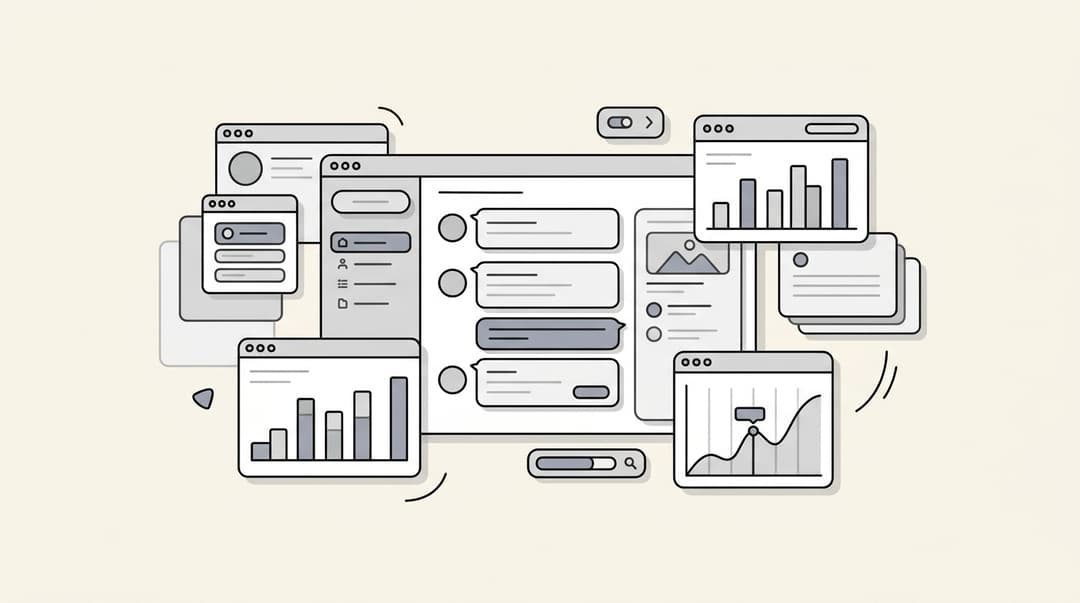
Structured hierarchy of floating document cards representing a knowledge base architecture

A good knowledge base doesn't just answer questions - it prevents them. When a customer hits a snag at 11pm on a Sunday and finds a clear, searchable help center that walks them through the fix in three steps, they close the tab satisfied without ever opening a ticket. That's the goal: content organized well enough that customers reach for it first, agents lean on it constantly, and AI tools like eesel AI can use it to handle frontline support autonomously.

The problem is that most teams approach knowledge base creation backward. They dump articles into Notion or Google Docs, hit publish, and then watch in dismay as content goes ignored, gets stale, or becomes impossible to navigate. One r/msp commenter put it bluntly: "We let each tech come up with their own system and then we never use it" - and the comment got upvoted heavily because it was instantly recognizable.

Building a knowledge base that gets used takes a bit more discipline. This guide covers the full process in eight steps, from defining your goals to keeping content current a year after launch.

What is a knowledge base?

A knowledge base is a centralized, searchable repository of information - FAQs, step-by-step guides, troubleshooting articles, policies, and product documentation - that lets customers (and employees) find answers without contacting support. Most companies run two kinds: a customer-facing one on their website or inside an in-app help widget, and an internal one for their support team. The two often share content. A troubleshooting guide useful to a customer is equally useful to a new agent learning the product.

If you're specifically thinking about an internal knowledge base for your team, the structure decisions are similar but the audience needs are different - agents need faster lookup than customers do, and they need policy details customers never see.

Why build one? The numbers make the case

81% of customers say they will try to resolve issues themselves before contacting a human. 59% actively prefer self-service over calling support. And support teams typically spend roughly 40% of their time answering the same questions repeatedly - the kind a knowledge base would handle in 30 seconds.

A well-built knowledge base shifts that equation on both sides. Companies with strong knowledge management practices see a 15-30% improvement in agent productivity (Aberdeen Group), and self-service can increase customer satisfaction by at least 15% (Gartner). The KB also serves as the data layer that powers AI support agents - without accurate, organized content behind them, AI tools cannot deliver reliable answers.

Step 1: Define your goals and audience

Before writing a single article, get specific about two things: what you want the knowledge base to accomplish, and who will read it.

On goals, pick one or two concrete metrics to improve: reduce ticket volume by 20%, cut time-to-resolution on common billing questions, get new users through onboarding without agent involvement. Vague goals produce vague content. If you can say "our top five support categories by ticket volume are X, Y, Z, and we want the KB to handle the first three," you have a content roadmap.

On audience, the support team that writes the KB is rarely the customer who will read it. Help Scout's guide recommends writing to roughly the eighth-grade reading level for most consumer products. The language should match how customers describe their problems, not how your product team describes your features.

"I would recommend talking to some of the customers who call the most and ask them what it is that's missing in the knowledge base." -- u/MrDreamWorks, r/CustomerSuccess

Customers who contact support most often are the best source of content priorities. Interview a handful before you start writing.

Step 2: Audit your support data

Your support queue already contains the content roadmap. Pull your last 90 days of tickets and tag them by topic. Look for the questions that appear more than three or four times - each one is a candidate for an article.

Go further: check your live chat transcripts for repeated questions, scan your email inbox, look at what your agents have in their saved replies and macros. Those macros are often the fastest starting point for KB articles because someone already wrote a polished answer to a common question.

Sprinklr's approach adds one more layer: map the customer journey from first contact through resolution and identify where confusion consistently surfaces. A returning customer hitting the same roadblock twice is a clearer signal than any analytics dashboard.

"Your KB platform should have lists of terms that folks search for and which articles deflect tickets and which ones do not." -- u/dollface867, r/CustomerSuccess

If you are already running eesel AI on your support channels, it does this step automatically - its Insights feature identifies recurring ticket themes weekly and flags which topics have no existing KB article, so you never have to manually audit the queue to find gaps.

Step 3: Design your information architecture

Information architecture is the step most teams skip, and skipping it is why knowledge bases become impossible to navigate six months later.

Knowledge base information architecture: top category branching into subcategories and articles

The key decision is how to organize your categories. Most teams default to organizing by product area or by internal team structure - "Billing," "Account Settings," "API," "Integrations" - which seems logical until you realize customers don't think in those terms. A customer trying to cancel a subscription does not know if that lives under "Billing" or "Account Settings." They know what they are trying to do.

The better approach is to organize by task. Multiple practitioners in r/msp and r/CustomerSuccess recommend grouping by jobs-to-be-done: "Get started," "Manage your account," "Troubleshoot an issue," "Connect your tools." One r/msp user reported that switching from category-based to workflow-based structure reduced duplicate documents by 40%.

Practical structure rules from the research:

  • Five to eight top-level categories is usually the right range. More than ten and users get lost; fewer than four and categories become catchalls.
  • No more than two to three levels deep. If you need a fourth level, the section probably needs to be split into its own category.
  • Use tags for cross-referencing, not for primary navigation. An article lives in one canonical location, but tags let it surface in multiple search contexts.
  • Run every structure decision past the three-click rule: can a user find any answer in three clicks or fewer from the home page?

Contentful's guide adds a useful check for composability: design your categories so content can be reused across multiple surfaces - in-app tooltips, chatbot answers, email responses - without rewriting each time.

Step 4: Choose the right software

The right knowledge base tool depends on what you already use for support and how technical your team is. Here is a practical breakdown of the major categories:

Tool typeBest forExamples
Help desk with built-in KBTeams who want everything in one systemZendesk Guide, Freshdesk Knowledge Base, Help Scout Docs
Standalone KB platformTeams who need advanced search, analytics, and versioningDocument360, HelpDocs, Gleap
Wiki and collaboration toolsInternal teams, smaller volumes, technical usersConfluence, Notion, Bookstack
In-app KB widgetSaaS products that want self-service inside the product itselfGleap, Stonly
AI-powered KB layerTeams that want to automate gap detection and article drafting on top of any KBeesel AI

The five criteria worth weighing when comparing options:

  1. Search quality. Can users find articles through typos, synonyms, and natural language? Poor search is the single most common reason customers give up and call support instead.
  2. Analytics. Does the tool report what people search for, which articles get rated poorly, and which ones deflect tickets? Without this, you are maintaining blind.
  3. Integration with your ticketing system. Can agents link articles from inside a ticket? Can the tool trigger article suggestions based on the ticket content?
  4. Publishing and editing experience. Your support team writes the articles. If the editor is painful to use, content will not get written or updated.
  5. AI features. AI-powered knowledge base software can surface search failures, suggest missing articles, and draft content from ticket history - features that matter more as volume grows.

eesel AI works as an AI layer on top of whichever platform you choose. It connects to Confluence, Google Drive, Notion, SharePoint, Zendesk, Freshdesk, and more - treating your existing knowledge base as its source of truth, while automatically identifying what the KB is missing based on real ticket patterns. See the full integrations list for compatibility details.

If you're weighing Confluence vs. Notion for your internal knowledge base, we've covered that comparison in detail separately.

Step 5: Write your core articles

Start with your top 10-20 highest-volume questions. Get those right before expanding. The biggest mistake is trying to cover everything before launch - a sparse knowledge base with 15 well-written articles is more useful than 80 thin ones.

Anatomy of a knowledge base article: title, intro, prerequisites, numbered steps, screenshot placeholder, related articles

Every article should follow the same template. Consistent structure means readers always know where to look for the step they need, and new contributors can produce usable content without extensive guidance. A solid template includes:

  • Title phrased as a question from the user's perspective. "How do I reset my password?" over "Password reset."
  • Short intro (one to two sentences) that confirms the reader is in the right place and states what the article will help them accomplish.
  • Prerequisites if any - what the reader needs before starting (account admin access, specific browser, etc.).
  • Numbered steps with one action per step. Long paragraphs are skipped.
  • Screenshots for any step involving a UI interaction. r/CustomerSuccess users note that screenshots are faster to update than video when the UI changes - keep screenshots current.
  • Troubleshooting section for the two or three most common failure points.
  • Related articles at the bottom to keep users navigating within the KB rather than bouncing back to the search results page.

"I started out just dumping everything into Google Docs/Notion, but it became a nightmare to navigate once we had more than a few articles." -- u/Classic-Sherbert3244, r/growmybusiness

Before publishing any article, have a subject-matter expert (or the support agent who handles that question most often) review it for accuracy. A wrong article is worse than no article - it erodes trust in everything else in the KB.

One often-overlooked point from r/CustomerSuccess:

"Remember that your KB articles aren't just for your customers. They are also a quick reference for your team. Instead of typing the response EVERY TIME they get asked the same question, they can link to the article or copy and paste the article." -- u/Idontcare0983, r/CustomerSuccess

Design articles with both audiences in mind. An agent reading under time pressure needs the same clarity as a customer reading from home.

Step 6: Publish and promote

Content that no one can find does not deflect tickets. Zendesk's guide identifies placement and promotion as one of the most underinvested steps in knowledge base launches.

At minimum, surface the knowledge base in these locations:

  • In-product help widget. The moment a user is stuck inside your app is the moment they most need KB access. An in-context search widget that surfaces relevant articles without leaving the current page is more effective than a separate help center link.
  • In your chatbot or live chat flow. Before routing to a human, suggest KB articles that match the customer's stated question.
  • In your onboarding emails. Link directly to specific articles, not the KB home page.
  • In error messages. If a user hits an error state, link to the article that explains it.
  • In your email signature and agent macros. Every support interaction is an opportunity to redirect future questions.

"The other thing I'd be curious about is the current messaging being used with clients about what the KB is, the value of self serve and how to use the KB. That could be part of your issue too." -- u/DNicholson182, r/CustomerSuccess

Visibility is a separate problem from content quality. A team can write excellent articles and still see no deflection because customers don't know the KB exists or don't trust it yet. Treat the launch as a marketing campaign: communicate its existence, explain why it's useful, and measure discovery separately from usage.

Step 7: Measure what's working

Most knowledge bases launch with no analytics wired up. Six months later, the team has no idea which articles are helping, which are failing, or what to write next.

Four key knowledge base metrics: deflection rate, search success, article ratings, time saved

The four metrics that matter most, from Gleap's KB analytics framework:

MetricWhat it tells youTarget
Deflection rate% of sessions that end without opening a ticket20%+ is a healthy starting point
Search success rate% of searches that result in a click (not a dead end)Aim for 60%+
Article ratingsUser thumbs up/down per articleAny article consistently rated poorly needs rewriting
Time to resolutionHow long it takes agents to close tickets when articles are linked vs. notShould decrease meaningfully

Beyond these four, track your failed search queries - the terms people type that return no results. That list is your most direct content roadmap. Every failed search is a question your KB cannot answer yet.

Sprinklr's guide adds one more useful check: compare ticket volume on topics covered by KB articles against topics not covered. If a topic with strong KB coverage still generates high ticket volume, the articles may be unclear, hard to find, or inaccurate.

Step 8: Maintain and improve

A knowledge base is not a one-time project. Products change, policies update, and edge cases accumulate. The teams with the best-performing knowledge bases treat maintenance as ongoing work, not a quarterly panic.

The minimum maintenance cadence from Help Scout's guide:

  • Review every article at least quarterly. Check for outdated screenshots, changed pricing, deprecated features.
  • Update immediately after any product release that touches existing KB topics.
  • Archive articles that cover features you no longer support. Stale articles erode trust in current ones.
  • Assign named ownership. Shared responsibility without a named owner means nothing gets updated. Each category or cluster of articles should have one person accountable for keeping it current.

The best long-term practice is closing the ticket loop automatically: when an agent resolves a question that has no KB article, that resolution should become the draft for one. Most teams know this in principle but rarely do it consistently, because writing the article on top of a full ticket queue is friction nobody wants.

This is where eesel AI changes the math. Instead of relying on agents to remember to write articles, eesel's KB Auto-updater identifies which ticket topics lack KB coverage and automatically drafts articles from resolved conversations for your team to review and publish. The result: your knowledge base grows with your support volume rather than falling behind it.

eesel AI for knowledge base management

eesel AI agent product page showing knowledge base integration and auto-article generation

eesel AI is an AI support teammate that treats the knowledge base as both an input and an output.

As an input, eesel ingests your existing help center, past resolved tickets, macros, and any connected docs - Confluence, Google Drive, Notion, SharePoint - and learns from all of it on day one. It learns continuously: every time a human agent edits a draft reply, eesel updates its understanding of your tone, policies, and edge cases. This makes eesel's knowledge richer over time than systems that only read static KB articles.

As an output, eesel automatically surfaces gaps and generates draft KB articles. Its Insights feature groups recent tickets into recurring themes and flags topics your KB doesn't cover yet - for example, surfacing "Based on last week's tickets, I drafted 2 new KB articles: 'How to cancel or pause your subscription' and 'Refund policy after cancellation.'" Agents review and publish; they don't start from a blank page.

Teams using eesel alongside their knowledge base have seen significant results. Gridwise saw 73% of tier-1 requests resolved autonomously in month one. Design.com handles 50,000+ tickets per month with 1,000+ help articles powering instant answers. Mature deployments reach up to 81% autonomous resolution.

eesel runs on usage-based pricing with no per-seat fees: regular support tasks (tickets, chat sessions) are $0.40 each, and there's a free trial with $50 in credits to get started. Details on the pricing page.

If you want a closer look at how AI fits into a knowledge base workflow, the guides on training AI on your knowledge base and AI-powered knowledge base benefits cover the full picture. And if you're specifically working in Zendesk, there's a dedicated walkthrough for creating an AI knowledge base in Zendesk.

Frequently Asked Questions

A basic knowledge base covering your top 10-20 questions can go live in one to two weeks. A more complete one - with 50+ articles, category structure, and analytics wired up - typically takes four to six weeks of focused effort. Tools like eesel AI can speed up the ongoing maintenance side by automatically drafting new articles from resolved tickets.
Notion and Google Docs work fine when you have fewer than 20-30 articles and only internal readers. Once you add external customers, need search analytics, or want your content to power an AI support agent, you will need a dedicated platform. Purpose-built tools give you deflection metrics, search failure reports, and integrations your help desk actually uses. Check out our guide to the best AI knowledge base tools for a comparison.
Organize by what customers are trying to do, not by your product's internal architecture. Aim for five to eight top-level categories, two to three levels of depth maximum, and use tags for cross-referencing. Titles should be phrased as questions from the user's perspective - 'How do I reset my password?' outperforms 'Password reset.' See our guide on how to build an internal knowledge base for more structure advice.
Track four numbers: deflection rate (tickets avoided because customers found the answer themselves), search success rate (searches that end in a click, not a dead end), article ratings, and time to resolution for tickets that did come in. If your deflection rate is under 15%, the KB is not being found or trusted. If search failure is high, your titles or search tool need work. AI-powered knowledge bases can surface these gaps automatically.
Set a quarterly review calendar, assign ownership to named individuals (not teams), and trigger an immediate update whenever a product change lands. The best long-term practice is closing the ticket loop automatically: when an agent resolves a question that has no KB article, that resolution becomes the draft for one. eesel AI does this automatically - its KB Auto-updater identifies gaps from ticket patterns and drafts articles for review.

Share this article

Stevia Putri

Article by

Stevia Putri

Stevia Putri is a marketing generalist at eesel AI, where she helps turn powerful AI tools into stories that resonate. She’s driven by curiosity, clarity, and the human side of technology.

Ready to hire your AI teammate?

Set up in minutes. No credit card required.

Get started free