


If you're on a support team, you know the pressure is on. You're juggling demands to make customers happier, answer them faster, and somehow keep costs from ballooning. It's a lot. Naturally, everyone's turning to AI, and platforms like Front look pretty appealing with their promise of a sleek, all-in-one help desk packed with automation.
But is bundling everything together really the magic bullet for better Front AI customer satisfaction? Let's take an honest look. We'll get into what Front AI does, how it's supposed to help your customers, and some of the real-world challenges you might not see in the sales pitch.
What is Front AI?
First off, Front isn't just an AI add-on. It's a full-blown "customer operations platform." The idea is that you replace your current help desk entirely and use Front as the single place for your team to handle everything, emails, chats, social media, with its own AI tools built right in.
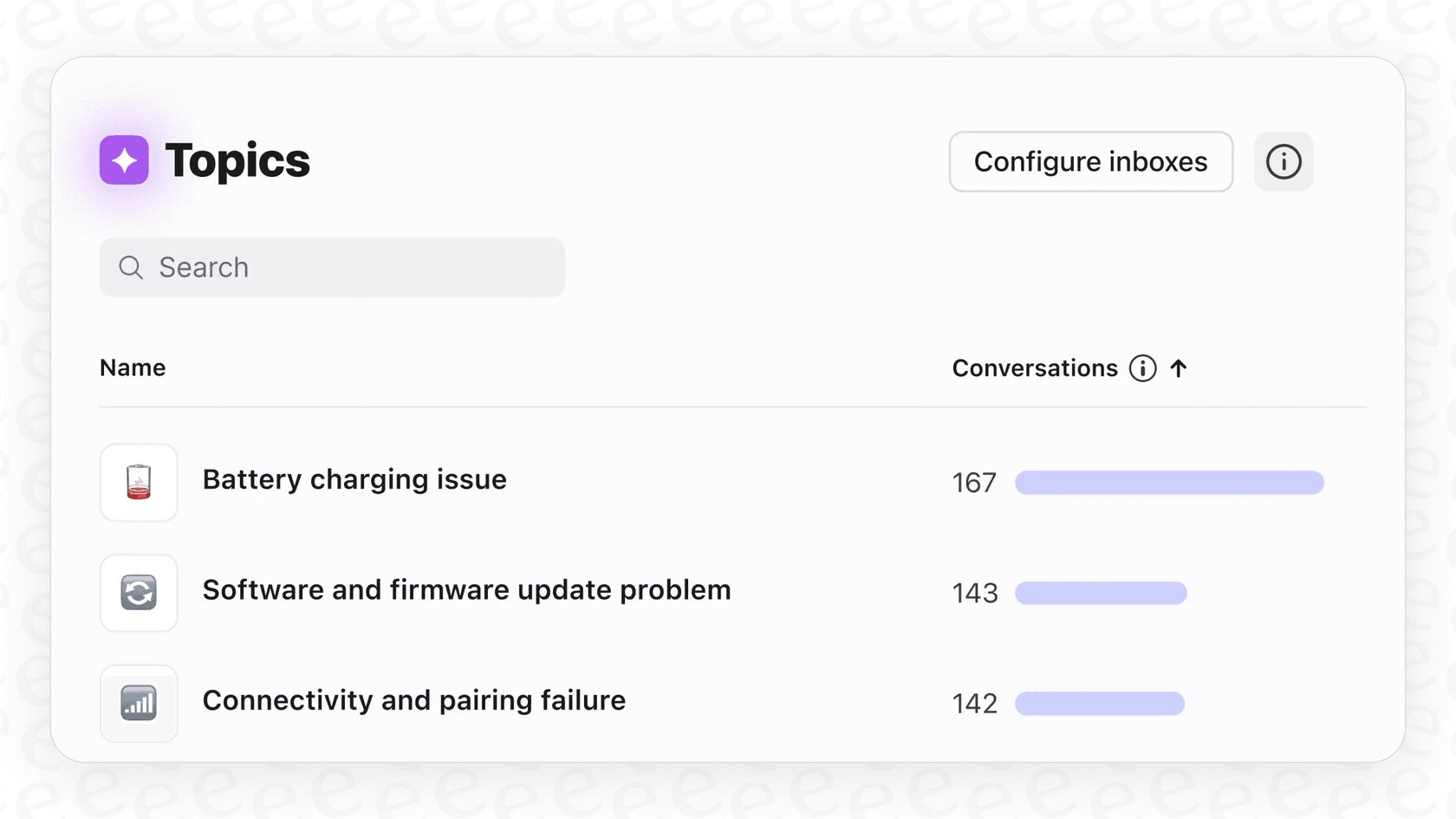
It has a few key AI features baked in:
Topics: This one automatically scans and sorts your customer conversations. It helps you see why people are getting in touch without someone having to manually tag every single ticket.
Copilot: This is basically an assistant for your agents. It suggests replies based on your past conversations and help articles, giving your team a head start so they can respond quicker.
Autopilot: This is the fully automated AI agent. The goal here is for it to handle common questions all by itself, giving customers instant answers without a human ever getting involved.
Smart CSAT & Smart QA: These tools dig into the text of conversations to figure out if a customer is happy and how well an agent performed, so you can get feedback without sending out a ton of surveys.
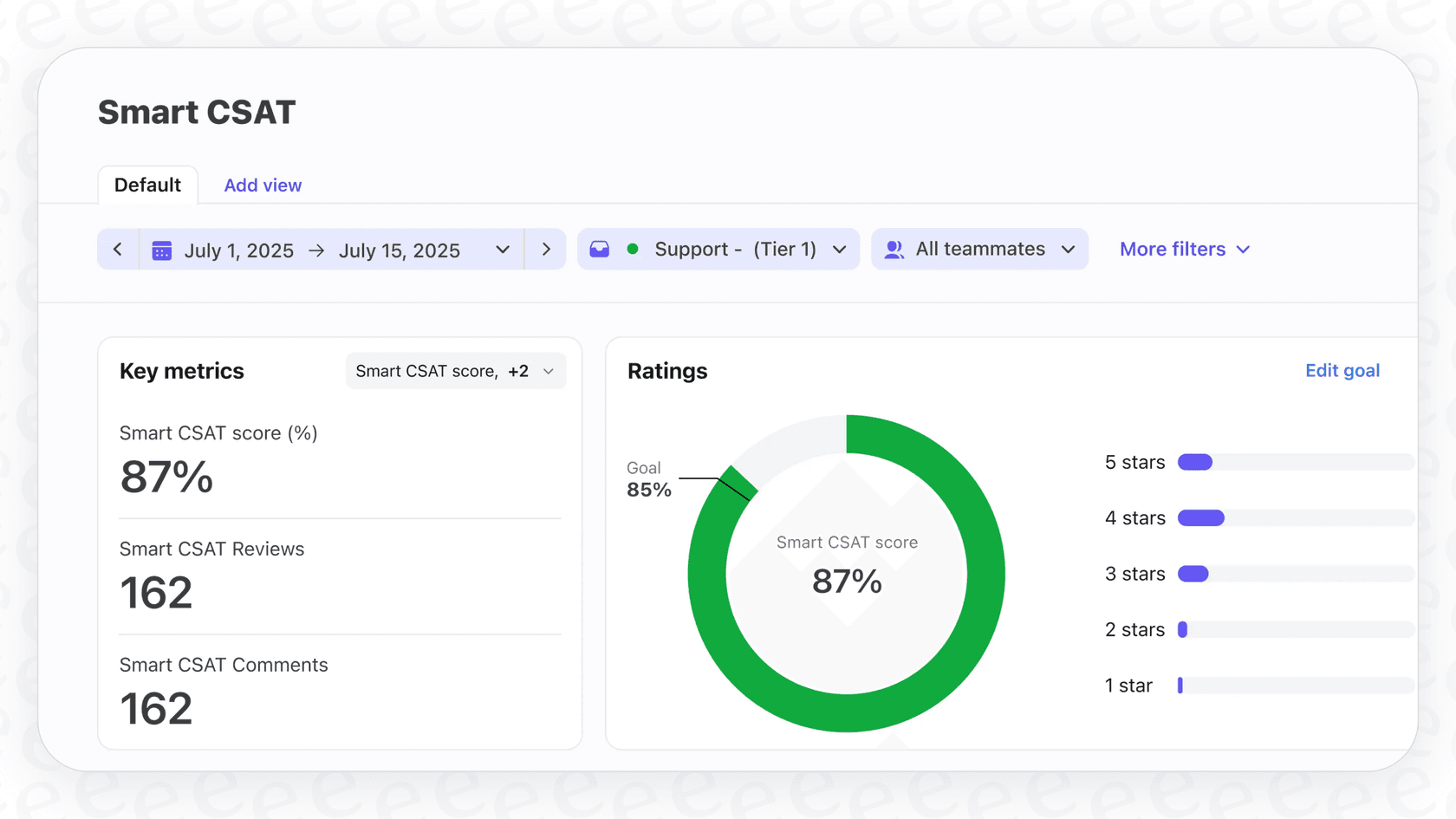
All these features work together inside Front to manage the entire support process, from when a customer first reaches out to when their issue is resolved by AI.
How Front AI aims to boost customer satisfaction
In theory, Front's all-in-one approach to making customers happy sounds great. When you build the AI directly into the help desk, everything should feel smooth for your team and your customers, right?
The whole point is to fix the most annoying parts of getting customer support. Sick of waiting forever for a response? Autopilot is designed to jump on simple questions instantly, any time of day. This should cut down wait times and let your human agents concentrate on the trickier stuff that needs a real conversation. And when a person does step in, Copilot is there to suggest accurate, on-brand replies to help them move faster and stay consistent. It takes some of the mental load off your team and helps make sure every customer gets a solid answer.
Beyond just answering tickets, Front uses AI to give you a read on what’s happening with your customers. Tools like Topics and Smart CSAT are meant to act like a constant feedback loop, flagging common problems and checking customer sentiment automatically. The thinking is that if you can spot issues early, you can fix them before they become bigger problems, making for a much better customer experience overall.
The hidden challenges
While the vision is slick, the reality of going all-in on a single platform has some serious downsides. These aren't just small hiccups; they can directly affect your team's workflow and, ultimately, your customers' happiness.
The 'rip and replace' dilemma
Moving to Front isn't like installing a new app. It's a "rip and replace" job. You have to move your entire support world, help desk, workflows, all your old customer conversations, over to their platform. That's a huge project that can easily eat up months in planning, data migration, and retraining your team.
While you're in the middle of that transition, things can get messy. You could run into data migration bugs, break workflows your team has relied on for years, or just deal with the general slowdown as everyone learns a new system. Any of these can lead to slower replies and clunky service, causing a dip in customer satisfaction at the very moment you’re trying to raise it.
The thing is, modern AI doesn't have to force you to tear down your house and rebuild it. An AI layer like eesel AI is designed to plug right into the tools you already have. It connects with major help desks like Zendesk, Freshdesk, and Intercom in minutes, giving you powerful automation without the migration nightmare.
The risk of 'mistakes-first' automation
You've probably seen the stories about AI chatbots going completely off the rails, making up policies or getting a simple question hilariously wrong. When an AI like Front's Autopilot is fully autonomous from day one, you're introducing that risk to your customers. One bad AI interaction can undo years of trust you've worked hard to build.
Even if Front gives you some controls, launching automation without a safe way to test it is like flying blind. You're effectively experimenting on your live customers, and that's a gamble most teams can't afford.
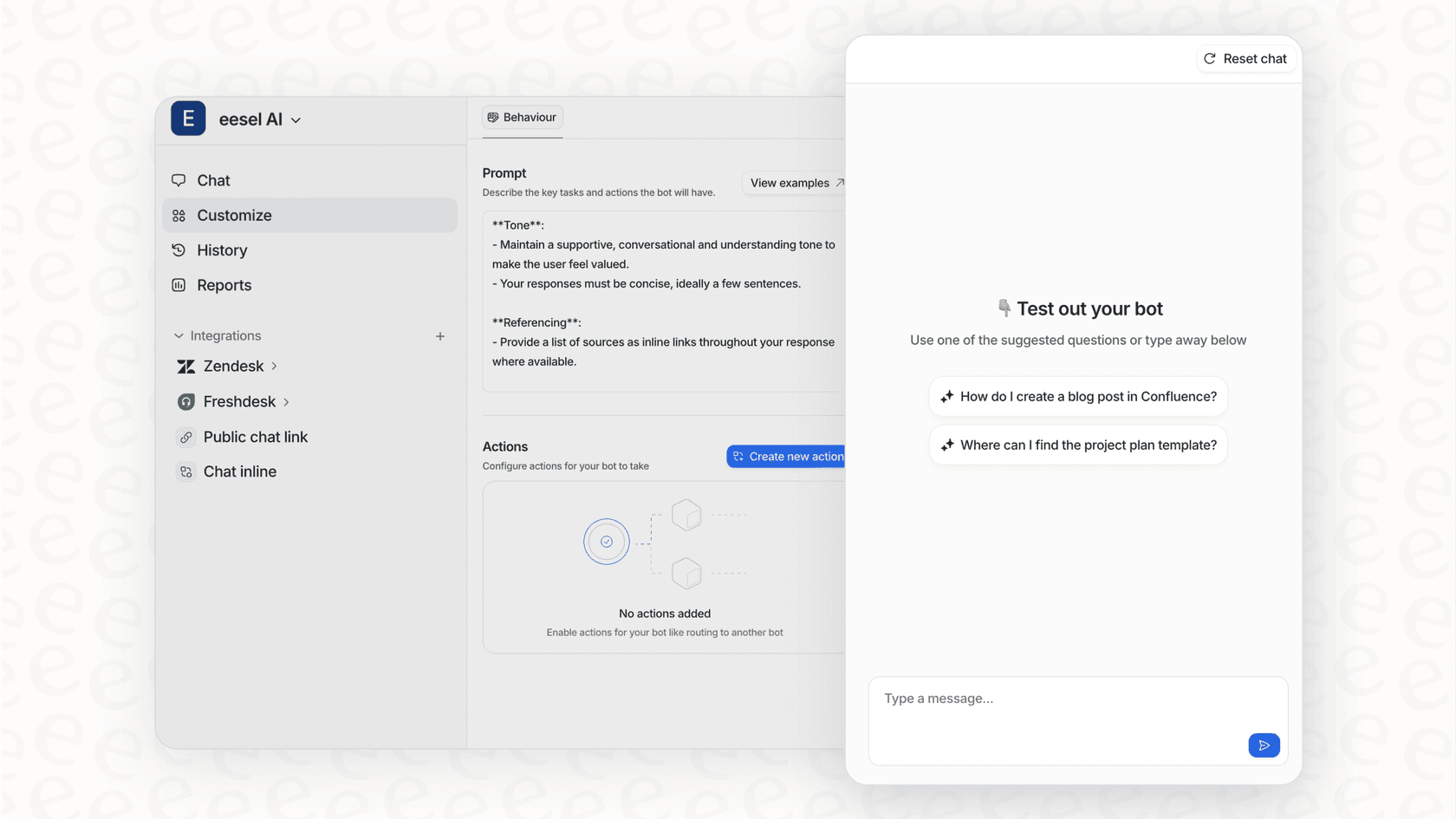
This is why a quality-first approach is so important. Platforms like eesel AI come with a simulation mode that lets you test the AI on thousands of your own past tickets. You can see exactly how it would have replied and get a real forecast of how well it will do before you let it talk to a single customer. It’s about building confidence, not just crossing your fingers.
Unpredictable costs: A threat to customer satisfaction
Front's pricing can lead to some unpleasant surprises for your finance team. The fully automated feature, Autopilot, is an add-on that costs $0.89 every time it successfully resolves an issue.
Let that sink in for a minute. The better you get at automating support, the more your bill goes up. This creates a cost that's tough to forecast and basically charges you for being more efficient. A win for your support team can quickly become a budget headache.
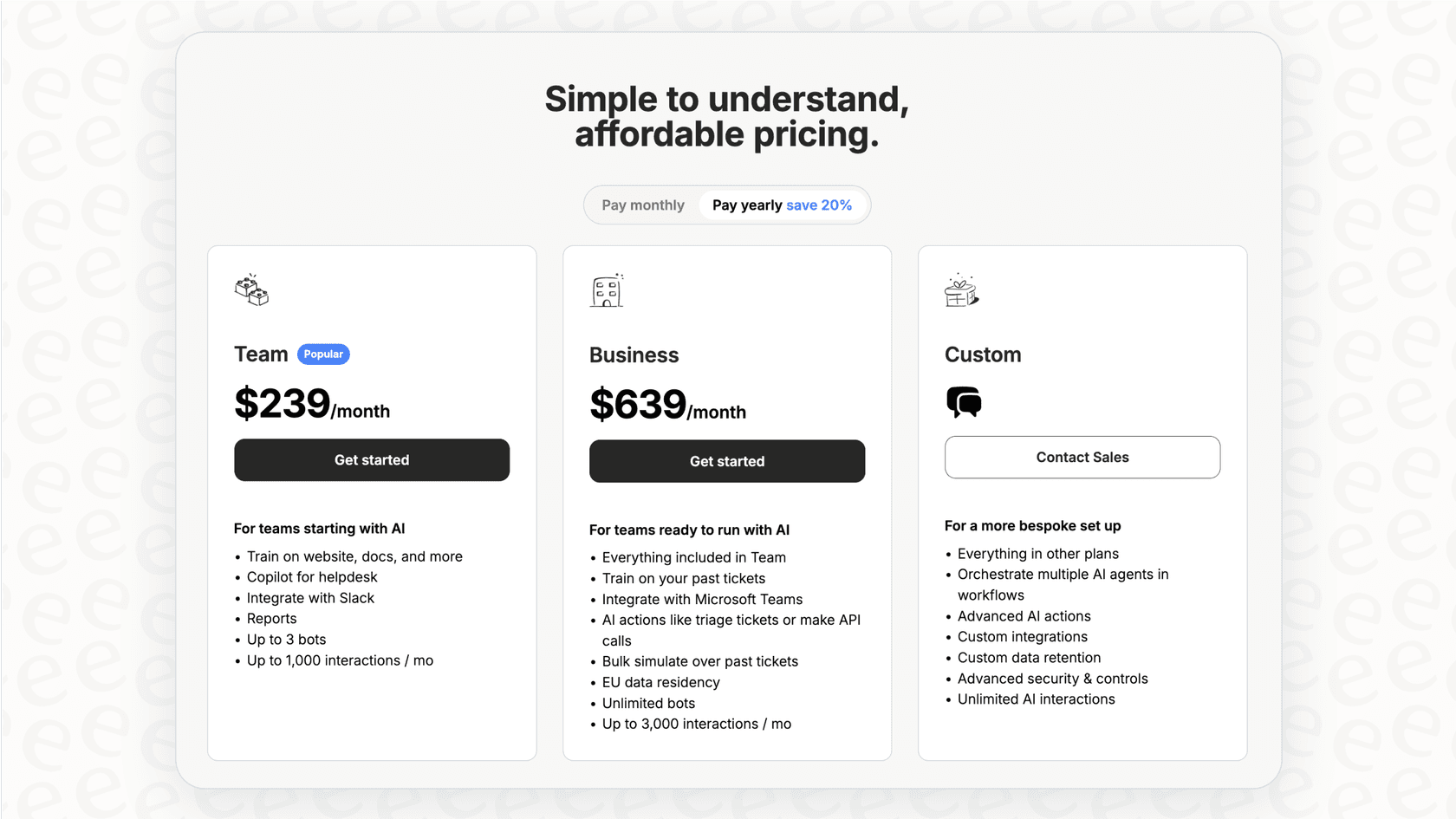
A much saner approach is pricing that's predictable. eesel AI, for example, offers plans based on a flat number of monthly AI interactions, with no fees per resolution. You know exactly what you’re paying each month, so you can scale up your automation without worrying that your bill will scale with it.
The knowledge silo problem
An AI is only as smart as the information it can access. Front's AI learns from what's inside Front, like your help articles and past conversations. But let's be honest, where does your company's real knowledge live?
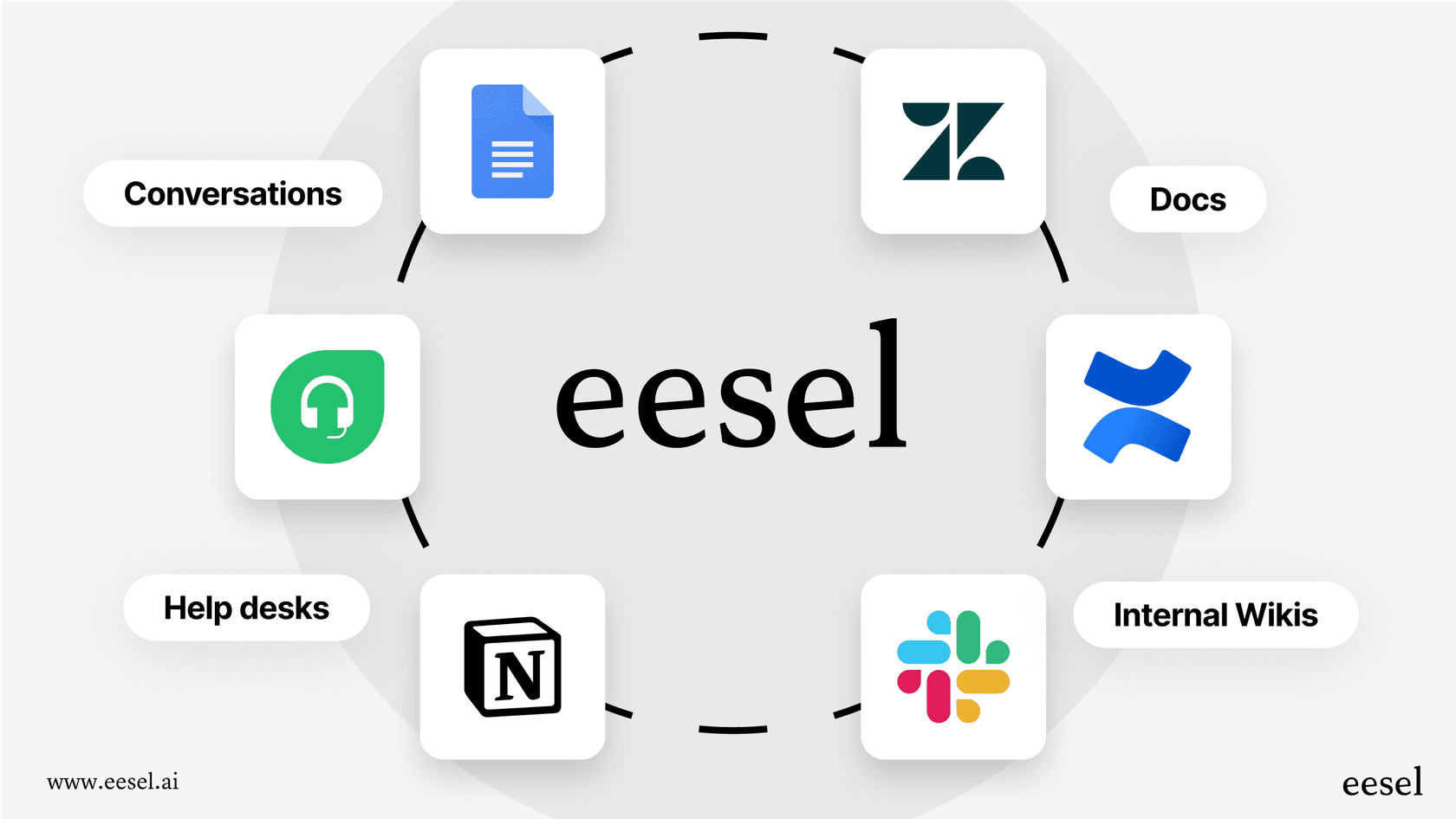
It's probably all over the place. You've got internal guides in Confluence, project specs in Notion, and technical docs in Google Docs. If your AI can't read any of that, its answers will be incomplete. Your agents will end up having to hunt for the info themselves, which means longer waits and frustrated customers who get escalated unnecessarily.
A good AI needs to see everything. eesel AI was built from the ground up to connect all your knowledge sources. It integrates with over 100 different platforms, pulling all that scattered information into one brain. This gives your AI the full context it needs to give accurate, complete answers, which leads to more issues solved on the first try and happier customers.
Front AI pricing explained
To get the full picture, you have to look past the base price and at the add-ons. Here’s how Front's pricing plans and AI features really stack up.
| Feature | Starter ($25/seat/mo) | Professional ($65/seat/mo) | Enterprise ($105/seat/mo) |
|---|---|---|---|
| Seats | Up to 10 | Up to 50 | Unlimited |
| Channels | Single channel type | Omnichannel | Omnichannel |
| AI Topics | Yes | Yes | Yes |
| AI Copilot | Add-on ($20/seat/mo) | Add-on ($20/seat/mo) | Included |
| AI Autopilot | Not Available | Add-on ($0.89/resolution) | Add-on ($0.89/resolution) |
| Smart QA | Add-on ($20/seat/mo) | Add-on ($20/seat/mo) | Included |
| Smart CSAT | Add-on ($10/seat/mo) | Add-on ($10/seat/mo) | Included |
| Automation Rules | Up to 10 rules | Up to 20 rules | Unlimited |
As you can see, the most impactful AI tools for customer satisfaction, like "Copilot" and "Autopilot", are paid extras unless you're on the most expensive plan. That $0.89 per resolution charge for Autopilot is the real kicker, as it can make your total cost much higher than the per-seat price lets on.
Choosing the right AI for sustainable customer satisfaction
Look, Front has a beautifully designed platform, and the idea of an all-in-one tool is tempting. But that simplicity comes with some serious strings attached: a risky and complicated migration, automation that you can't test safely, unpredictable costs, and an AI that's cut off from most of your company's knowledge.
A better AI strategy for improving customer satisfaction is one that's flexible and safe. It should enhance the tools and workflows you've already built, not make you start from scratch.
This is the more modern way of thinking. Instead of swapping out your core systems, you add an intelligent AI layer on top. This gives you full control over automation, a risk-free way to test, and the power to tap into knowledge from every part of your company, all while your team keeps working in the help desk they already know.
Take the next step with eesel AI
If you're looking for an AI that gives you control, safety, and real results, check out eesel AI. It plugs into your current helpdesk in minutes, not months.
You can simulate eesel AI on your historical tickets for free to get an instant forecast of how many tickets you could be automating, or start a free trial to see how it works for your team.

Frequently asked questions
Migrating to Front involves a "rip and replace" of your existing support system, which can be a lengthy and complex project. This transition may cause temporary disruptions, data migration issues, or require extensive retraining, potentially affecting customer service quality during the process.
Deploying autonomous AI like Autopilot without thorough pre-testing carries the risk of inaccurate or "off-the-rails" responses. A single poor AI interaction can erode customer trust and directly undermine the goal of improving satisfaction.
Yes, the $0.89 per-resolution fee for Autopilot means that the more efficiently your AI resolves issues, the higher your bill becomes. This unpredictable cost can make budgeting difficult and may lead to unexpected financial pressures.
Front's AI primarily learns from information within Front. If your critical company knowledge is scattered across other platforms like Confluence or Notion, the AI may provide incomplete or incorrect answers, leading to customer frustration and more escalations.
Autopilot is designed to provide instant answers to common questions, reducing customer wait times. Copilot assists human agents by suggesting accurate and consistent responses, helping them resolve issues faster and more effectively, ultimately boosting satisfaction.
Absolutely. Some modern AI solutions act as an intelligent layer that integrates with your existing help desk and knowledge base. This allows you to leverage powerful AI features, including automation and advanced insights, without the disruptive "rip and replace" process.
Share this article

Article by
Kenneth Pangan
Writer and marketer for over ten years, Kenneth Pangan splits his time between history, politics, and art with plenty of interruptions from his dogs demanding attention.