

Customers expect fast answers. The standard 9-to-5 support window is becoming less common; people want help around the clock, and they want it quickly. This pressure has pushed many companies to look at AI for a solution.
AI chatbots are often the first consideration, but not all AI is built the same. Some models are not designed to replace human agents, they're designed to work with them. The industry is moving past rule-based bots that can feel like a dead-end phone menu. The new generation of AI can be like a new teammate. It learns from your company's data, picks up on your brand voice, and works alongside your team.
This post will break down how some of the largest companies that use AI chatbots for customer service are handling it. We'll get into what’s working, what isn’t, and the common problems they face, and then explore a collaborative, team-based approach to implementation.
Understanding AI chatbots for customer service
An AI chatbot for customer service is a program that mimics human conversation. The goal is to answer customer questions and resolve problems on different channels, like your website, inside your help desk, or on internal tools like Slack.
They run on technology like Natural Language Processing (NLP), which helps the AI understand what a person is asking, not just the keywords they type. It helps the bot figure out the intent and context behind a message.
Modern AI doesn't just stick to a script. Many platforms learn from your company's own knowledge base, your old support tickets, help center articles, and internal docs. This helps ensure the AI only gives out information you've approved, so it sounds like your team and provides accurate answers.
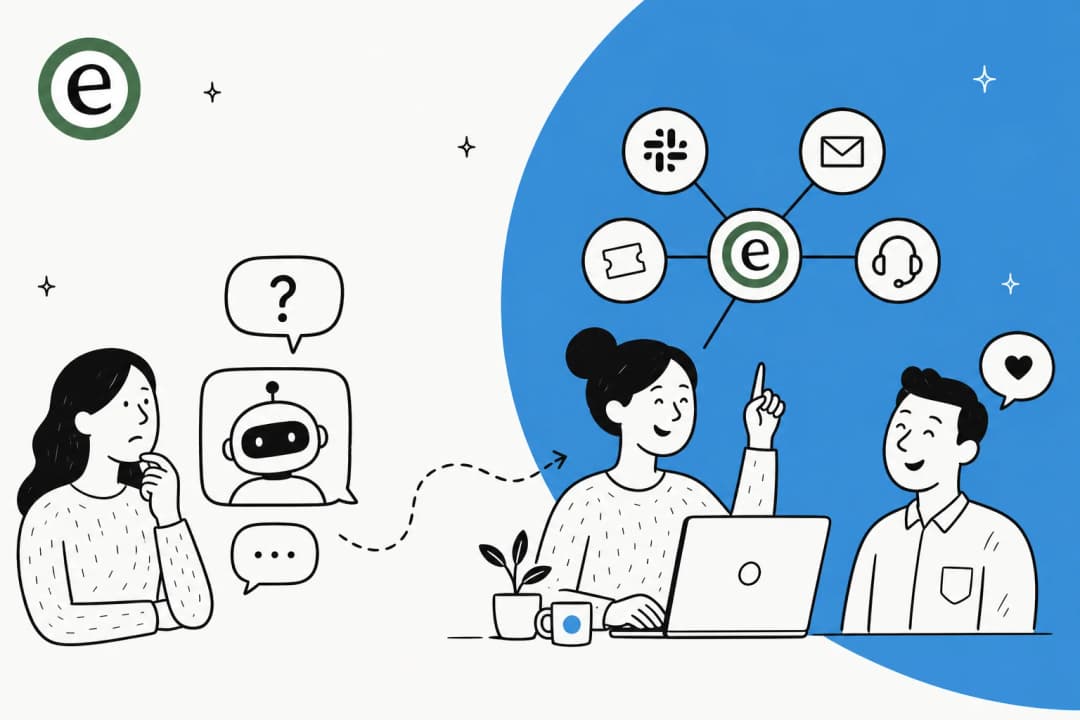
Instead of a standalone bot, it can be useful to think of it as an "AI Teammate." A well-integrated AI can do more than just chat; it can take action. It can look up an order, update a ticket in your help desk, or process a return. It can become a partner in your workflow, not just a tool for conversation.
Examples of companies using AI chatbots
To see how this works in the real world, let's look at some examples. We'll check out how a few big brands are using AI, what they’re doing well, and the common hurdles they've hit.
Klarna: Automating support at a massive scale
Use Case: Klarna, the buy-now-pay-later service, received attention when it announced it was using a custom AI assistant to handle a large number of customer service chats. The plan was to manage common questions about refunds, payments, and orders without needing a human every time.
Reported Success: The initial results were significant. In its first month, Klarna's AI assistant managed 2.3 million conversations, which they stated was the equivalent of 700 agents. They also reported that customer resolution times fell from an average of 11 minutes to just under two.
The Limitation: A year after the announcement, Klarna revealed it was hiring human agents again. Their CEO admitted that focusing too much on AI for cost-cutting resulted in lower quality service. This illustrates a potential challenge when trying to replace human agents entirely instead of providing them with better tools.
I’ve had the 'pleasure' of dealing with the Klarna AI this past week. It kept misunderstanding my question and did not help me at all. Eventually I reached out to the store I had originally bought from, which used a translating program that made it really hard to communicate with the representative. I’m still not sure my dispute with Klarna will ever be solved. I hate it.

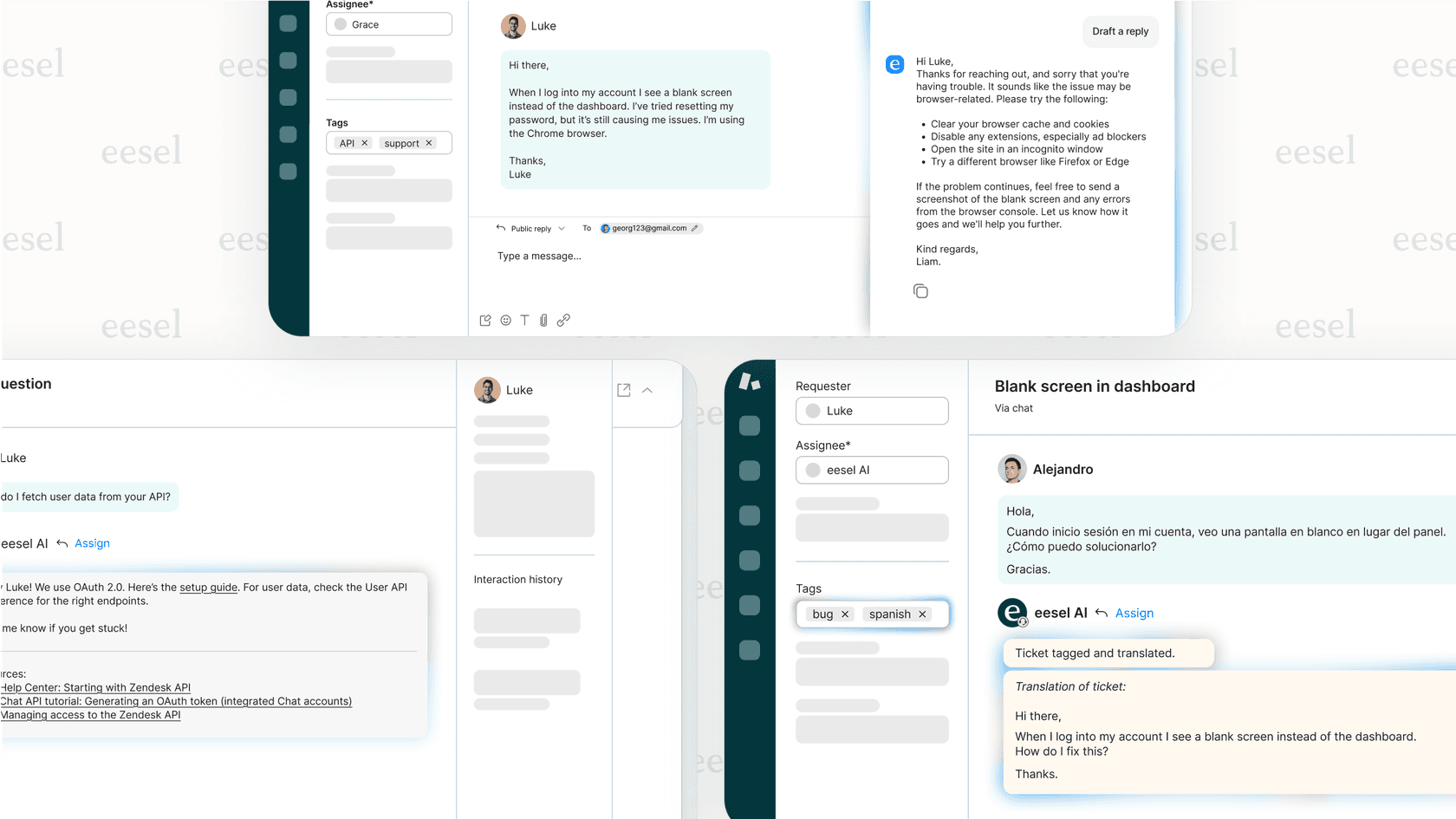
A different approach: An alternative approach is the AI teammate model. Instead of an all-or-nothing strategy, a platform like eesel AI can automate repetitive tasks while keeping a human team in control for quality checks and complex problems. This model aims to gain efficiency while maintaining the customer experience.
Delta Airlines: Creating a personalized travel concierge
Use Case: Delta is developing its Delta Concierge, an AI-powered assistant built into the Fly Delta app. The goal is to give travelers a proactive, personal assistant that helps with their whole trip.
Reported Success: During its beta test, the assistant has been able to give real-time flight updates, send reminders about expiring passports, and help people find their way through the airport.
The Limitation: This type of AI is a large, custom-built project tied to a single, proprietary app. For most companies, building something similar from scratch may not be realistic. It also contains the AI's knowledge within one platform where it can't be used elsewhere.
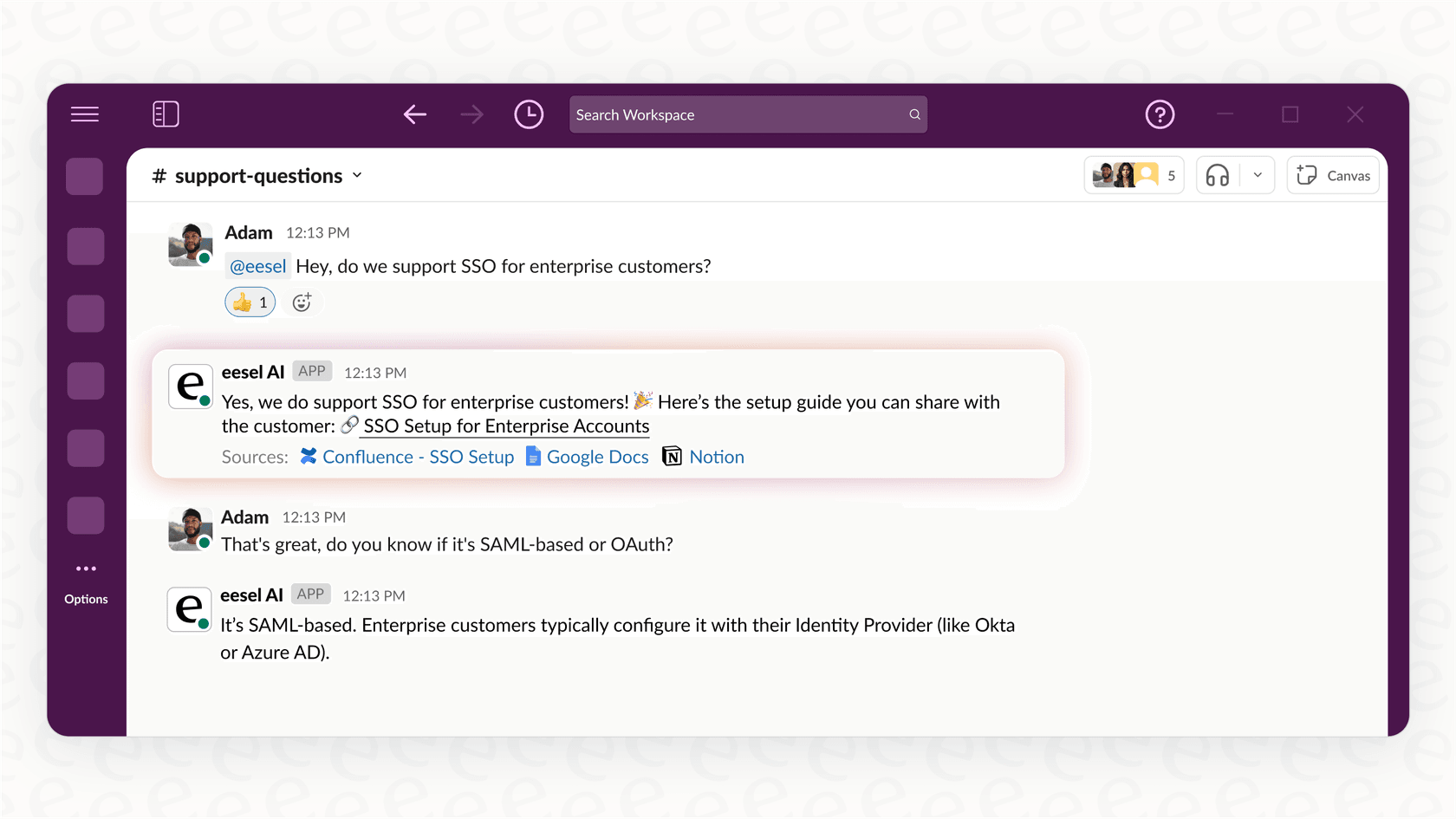
A different approach: For companies that require a solution that is faster to implement, an Internal Chat agent from eesel AI can connect to various knowledge sources (like Confluence, Google Docs, or Notion) and works inside tools like Slack or Microsoft Teams. This provides an internal knowledge resource for staff that can be deployed quickly.
H&M: Streamlining the e-commerce experience
Use Case: H&M used an AI chatbot on messaging platforms like Kik to serve as a "digital stylist." The bot asks shoppers about their style preferences to help them find new products and put together outfits.
Reported Success: The bot helps users sort through H&M's large catalog. Instead of extensive scrolling, customers get an interactive experience that points them to clothes they might be interested in. It’s an example of using AI to make online shopping more personal.
The Limitation: While useful for finding products, many e-commerce bots like this specialize in one area and may not be able to take further action. They might not be able to check an order status, process a return, or look into a shipping delay. This means that if a customer has a support problem, the conversation may need to be handed off to a human.
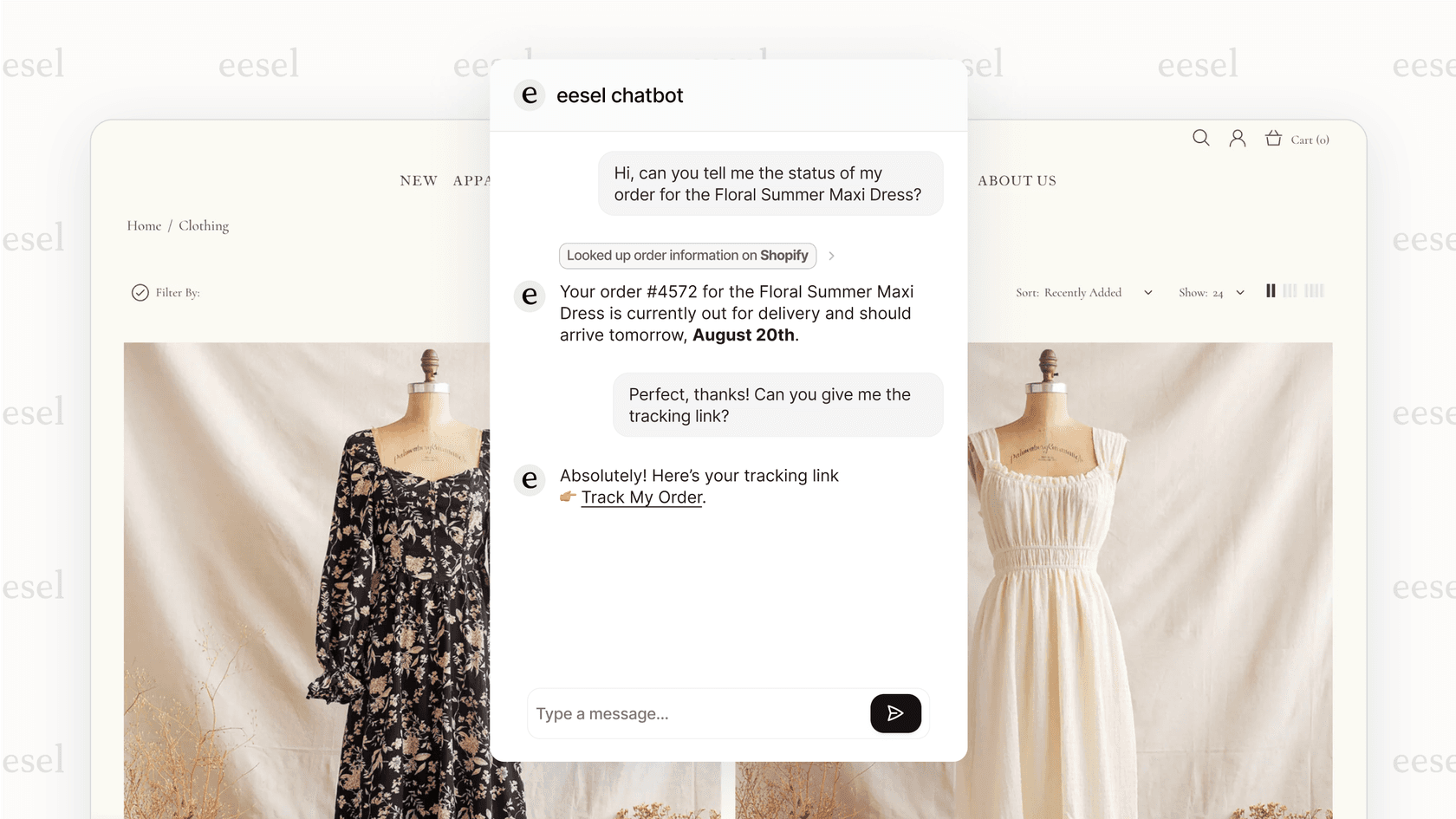
A different approach: For expanded functionality, some chatbots can integrate directly with other platforms. For instance, eesel AI's chatbot for e-commerce connects with platforms like Shopify to take actions. These can include handling order lookups, processing returns, or providing sales features like product carseousels and "add to cart" buttons in the chat.
Bank of America: Providing personalized financial guidance at scale
Use Case: Bank of America’s "Erica" is a virtual financial assistant that helps millions of customers with everyday banking. It can track spending, help cancel subscriptions, check balances, and help users make trades on their Merrill investment accounts.
Reported Success: Erica is a widely used banking assistant. It has handled over 1.5 billion client interactions and serves more than 37 million clients, showing that AI can deliver personal financial advice on a massive scale.
The Limitation: The resources needed to build a system like Erica are substantial. The development time, security setup, and ongoing maintenance costs place it in the enterprise category. It is a powerful tool, but not a model that most businesses can replicate.
A different approach: Alternative solutions are available that offer enterprise-grade security features. eesel AI provides data encryption and uses SOC 2 Type II-certified subprocessors, and is designed for a quick setup. This approach aims to make secure AI accessible to businesses that may not have the resources of a global bank.
Common challenges with AI chatbots for customer service
Looking at the examples above, a few patterns emerge. While large-scale AI is impressive, its typical rollout can present challenges that make it difficult for many teams to adopt.
Long and complicated setup
Many platforms require extended onboarding, complex settings, and developer time. The custom solutions used by companies like Delta and Bank of America took years to build, meaning it was a long time before they saw any results.
Inflexible, hard-to-manage workflows
Older AI systems often rely on complex, rigid logic trees that can be difficult to update. When business policies change, you may have to manually redo everything. A rigid mindset can sometimes negatively impact the customer experience, requiring a change in strategy.
The risk of a "big bang" rollout
With many AI tools, there may not be a safe way to test them before they go live with customers. This can lead to turning it on and hoping for the best, which is a significant risk. This is why many support managers are cautious about giving AI full control over customer chats.
High costs and confusing pricing
Custom builds are expensive, but even standard SaaS platforms can have confusing and unpredictable pricing. Many charge per resolution or have expensive per-agent licenses that make it hard to budget.
A collaborative AI model for customer service
An alternative approach focuses on viewing AI as a teammate. This model is built to address the challenges that can affect traditional AI projects.
Go live in minutes with a human in the loop
eesel uses an "invite, don't configure" method. You connect it to your help desk, like Zendesk or Freshdesk, and it immediately starts learning from your past tickets, macros, and help center articles. It's ready to go in minutes.
It also starts with a human in the loop by default. eesel's AI Copilot suggests replies for your human agents to approve, edit, or ignore. This can help improve team productivity while minimizing the risk of the AI providing an incorrect response.

Control and customize with plain English
You don't need to be a developer to instruct eesel. You can set its tone of voice, the actions it can perform, and its escalation rules using simple, natural language. For example, you can tell it: "If a refund is requested after 30 days, politely decline and offer store credit."
eesel also has a simulation mode that lets you test your setup on thousands of your past tickets. This allows you to see how it would have performed and get a forecast on resolution rates before it interacts with a live customer. This helps to mitigate the risk of a "big bang" rollout.
A clear path from trainee to frontline agent
eesel is designed for a gradual, controlled rollout. It starts as a "trainee," drafting replies for your team. As it learns from their feedback, you can "promote" it to handle certain types of questions or even take over frontline support on its own. This process builds trust and ensures you remain in control of the quality.
Transparent pricing models
Some platforms offer different pricing models. For example, eesel's pricing is built on pay-per-interaction plans. There are no per-agent seats, so your costs are predictable and can scale with your growth.
| Feature | Team Plan | Business Plan |
|---|---|---|
| Price (Annual) | $239 /month | $639 /month |
| AI Interactions | 1,000 /month | 3,000 /month |
| AI Copilot | Included | Included |
| Train on Past Tickets | No | Included |
| AI Actions | No | Included |
The case of Klarna, in particular, has sparked widespread discussion about the future of AI in customer service. It serves as a powerful example of both the immense potential and the significant risks involved in large-scale automation. The video below explores the initial announcement and its implications for the industry.
Augmenting teams instead of replacing them
The examples from large companies highlight both the potential of AI and its common challenges. A key takeaway is that one approach is to augment agents rather than replace them.
This approach focuses on providing teams with a capable AI teammate that can handle repetitive tasks, freeing up human agents for high-value conversations that require empathy and creative thinking.
The "AI teammate" model, focusing on collaboration, safety, and ease of use, is one way for businesses to begin using AI in their customer service.
To learn more about this model, you can invite eesel to your help desk to see how it performs on your past tickets.
Frequently asked questions
What is the biggest mistake companies that use AI chatbots for customer service make?
A common mistake is trying to completely replace human agents instead of augmenting them. As seen with Klarna, this can lead to a drop in service quality. A balanced strategy is to use AI as a teammate to handle repetitive tasks, freeing up humans for more complex issues.
How can small companies that use AI chatbots for customer service compete with larger enterprises?
Small companies can compete by adopting an "AI teammate" model with accessible platforms like eesel AI. Instead of spending millions on a custom build, they can use a plug-and-play solution that offers powerful features, quick setup, and a human-in-the-loop approach without the enterprise-level cost.
What should companies that use AI chatbots for customer service look for in a platform?
Look for a platform that is easy to set up, learns from your existing data, allows for human supervision, and can be customized with plain English. A simulation mode to test the AI before it goes live is also a key feature to reduce risk.
Is it expensive for companies that use AI chatbots for customer service to get started?
It doesn't have to be. While custom enterprise solutions are incredibly expensive, modern platforms often have transparent, pay-per-interaction pricing without per-agent seat licenses. This makes it affordable for businesses of all sizes to get started and scale predictably.
How do companies that use AI chatbots for customer service ensure the AI gives accurate answers?
Accuracy comes from training the AI on your company's specific knowledge base, like past tickets and help center articles. A human-in-the-loop model, where agents approve or edit the AI's suggested replies, is also critical for maintaining quality control and building trust in the system.
Can companies that use AI chatbots for customer service handle more than just simple questions?
Yes, if the chatbot can take action. Many simple bots can only provide information. A more advanced AI teammate can integrate with other platforms (like Shopify) to perform tasks like checking order status, processing returns, or updating customer information directly.