
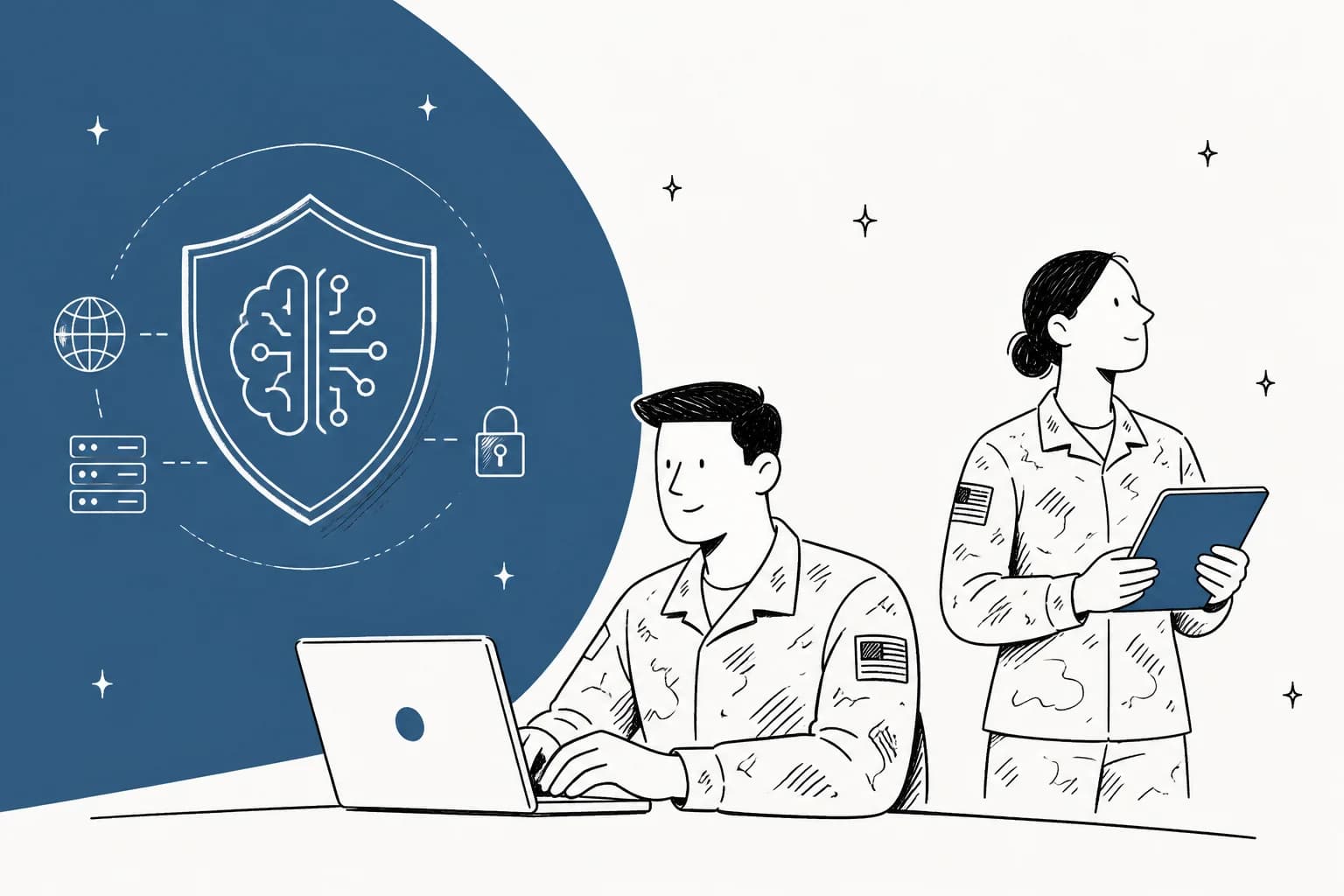
ChatGPT Mil is a custom, locked-down version of ChatGPT that OpenAI put on GenAI.mil, the U.S. Department of War's secure AI platform. It went live on August 31, 2026 and is built to reach more than 3 million military and civilian staff. It is not the consumer app with a camo skin.
It handles unclassified, document-heavy work: summarizing policy, drafting procurement paperwork, building compliance checklists, and general planning and admin. It is accredited at IL5 for Controlled Unclassified Information, runs in a government cloud, and OpenAI says the data never trains its public models. It joins Google's Gemini and xAI's Grok on the same platform.
The interesting part is not the war framing. It is the deployment recipe: an AI that runs on your own data, stays out of model training, is scoped to a defined job, and is proven before anyone relies on it. That is the exact checklist any team should run before trusting an AI with real work, and it is the checklist we build eesel around.
What ChatGPT Mil actually is
I build AI agents for a living, so when the Pentagon put a version of ChatGPT in front of 3 million people, the marketing language was not what caught my eye. The security architecture was.
Here is the plain version. ChatGPT Mil is a custom build of ChatGPT that OpenAI deployed on GenAI.mil, the U.S. Department of War's own generative-AI platform (the "Department of War" is the 2026 branding for the institution most people still call the Department of Defense). It launched on August 31, 2026, announced through a set of official releases dated September 1.
The key word is custom. This is not 3 million logins to chatgpt.com. It is a separate deployment that runs inside authorized government cloud infrastructure, with the model and the data walled off from OpenAI's public systems. Secretary of War Pete Hegseth framed it bluntly in his rollout message: "AI should be in your battle rhythm every single day; it should be your teammate." The teammate framing is worth holding onto, because it is exactly how the rest of the industry has started to think about AI at work.
What you can and can't do with it
The scope is narrower than the headlines suggest, and that is by design. ChatGPT Mil is approved for the Department's unclassified work only. The core experience is the same four building blocks you would recognize from ChatGPT Enterprise: chat, files, projects, and custom GPTs, with more features promised over time.
OpenAI lists the day-to-day jobs it is meant for:
- Summarizing and analyzing policy and guidance documents
- Drafting and reviewing procurement and contracting materials
- Generating internal reports and compliance checklists
- Supporting research, planning, mission support, and administrative workflows
Notice what that list is: paperwork. This is a knowledge-work assistant pointed at the mountain of documents every large organization drowns in, not a targeting system. The value proposition is the same one that makes AI useful in a support queue or a knowledge base: it reads the boring stuff fast and drafts the first version so a human can edit instead of start from a blank page. OpenAI points to a Pennsylvania state pilot where employees using ChatGPT cut time on routine tasks by about 105 minutes a day.
The numbers behind the rollout
The scale is the story here, so it is worth putting the figures in one place.
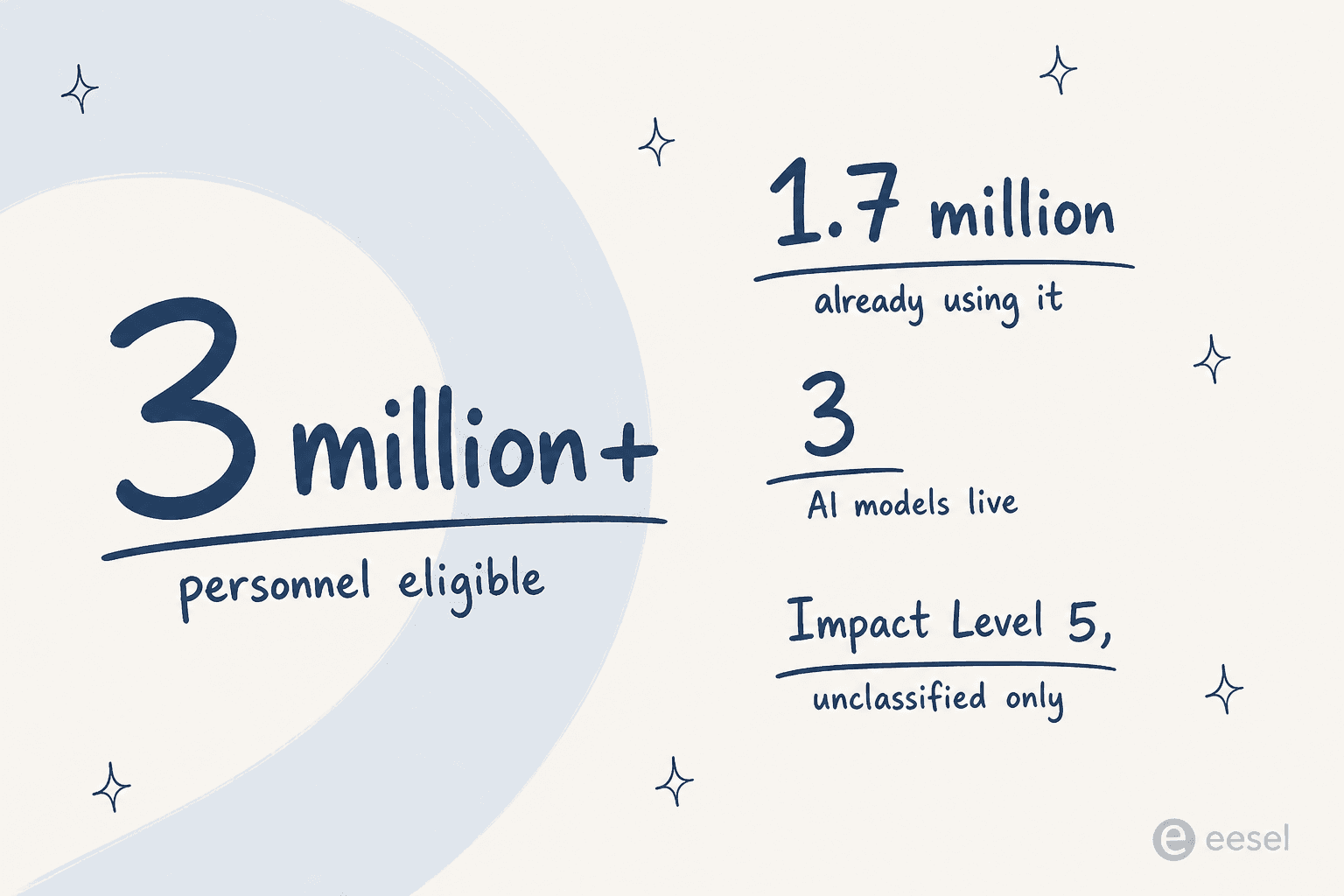
The platform is built to scale to more than 3 million Department personnel. It is not a pilot that might roll out someday. In the roughly nine months since GenAI.mil first launched with Gemini, it has already onboarded over 1.7 million unique users, which is a genuinely fast adoption curve for enterprise software of any kind.
On cost, there is no per-seat sticker. ChatGPT Mil is described as the "adoption phase" of the enterprise partnership OpenAI and the Department set up in 2025, a CDAO contract with a $200 million ceiling. That is the government end of the spectrum. The reassuring news for everyone else is that the pattern here (secure, scoped AI on your own data) does not require a nine-figure contract to copy.
How GenAI.mil works: three models, no vendor lock-in
ChatGPT Mil did not arrive alone. It launched the same day as Grok for Government from Starshield AI (xAI), and both joined Google's Gemini, which had been on the platform since December 2025.
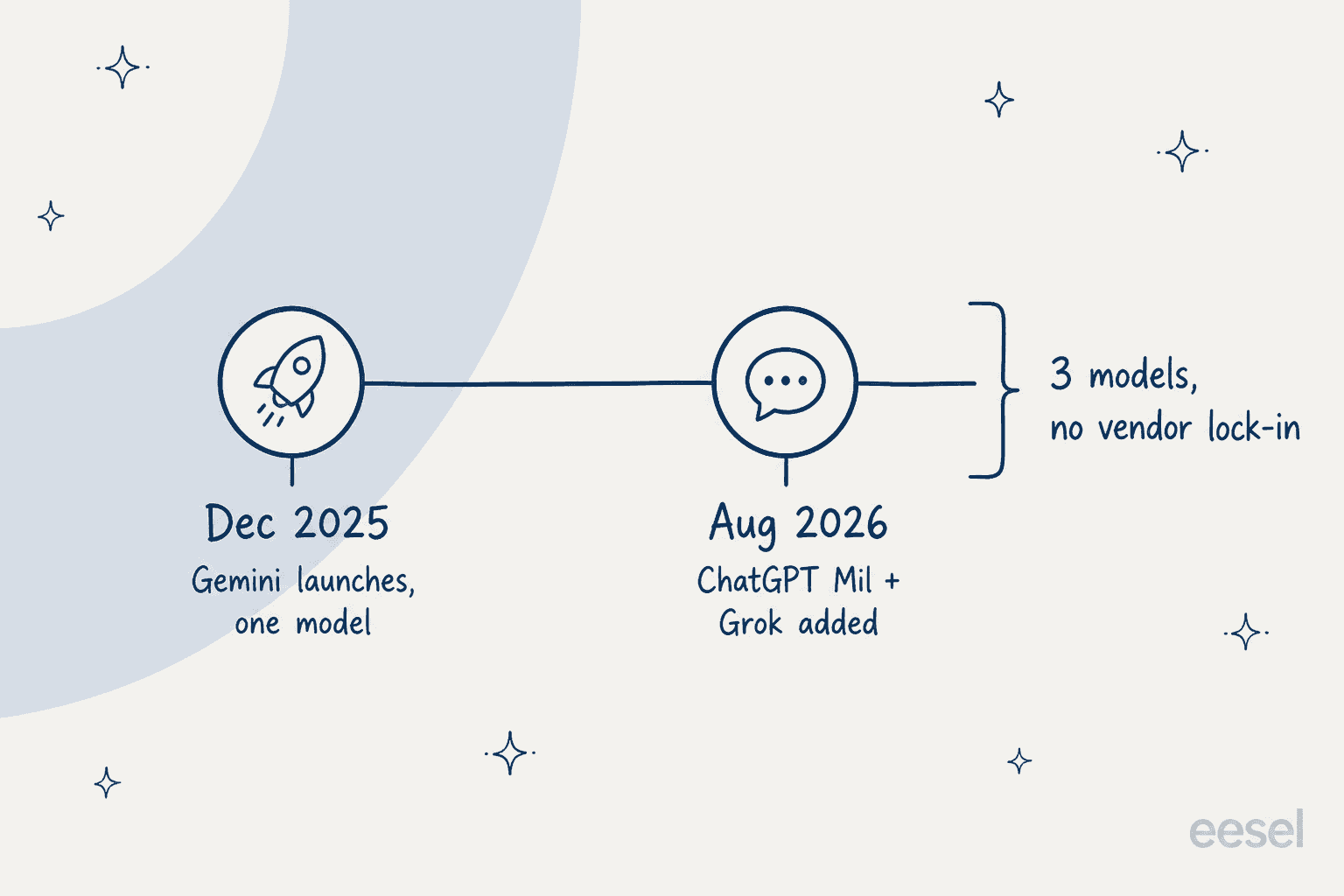
That gives users what the Department calls a "first, second and third opinion," and the multi-vendor design is deliberate. The official framing is about eliminating vendor lock and keeping a competitive American AI ecosystem. This tracks a pattern we see in every serious buyer conversation: nobody wants to bet a whole workflow on a single model they cannot swap out later.
It is the same logic behind building support automation on a model-flexible platform rather than whatever one vendor hard-codes. Models change fast, and the best one for a job in September is rarely the best one six months later. One footnote worth flagging for accuracy: some viral posts claimed Grok got access to classified systems. The day-to-day rollout across all three models is unclassified, at IL5.
The real question: can a chatbot be trusted with defense work?
This is where I get skeptical, and where I think most of the coverage skips the interesting part. Putting a large language model in front of 3 million people who make consequential decisions is only a good idea if two problems are solved: keeping the data safe, and stopping the model from being confidently wrong.
On data, OpenAI is specific. Its own words: "Data processed on GenAI.mil remains isolated to the government environment and is not used to train or improve OpenAI's public or commercial models." The deployment is accredited at Impact Level 5 for Controlled Unclassified Information, which is the technical unlock that makes this possible at all. As AI commentator Rohan Paul put it:
"Before this, most commercial LLM tools could not be used for day-to-day Pentagon work that touches Controlled Unclassified Information, so people either stayed manual or used locked-down niche systems that did not scale well. IL5 is a DoD cloud security tier meant for handling CUI, which is why 'works at IL5' is the key technical claim."
The second problem, confident wrongness, is the harder one, and the announcements say much less about it. Not everyone is sold on outsourcing judgment to a model:
"you can't outsource all cognitive tasks to LLMs and then expect human cognitive performance to not atrophy."
That is a fair worry, and it is one I feel every day building these systems. We have watched an AI agent cheerfully tell a customer "yes, we support your model" for a product that was never in the knowledge base, simply because the docs said the company "supports all models." A confidently wrong answer is worse than "I don't know," because a human acts on it. The fix is not more model horsepower; it is discipline about scope and proof, which brings us to the part every team can actually use.
What every team can steal from this playbook
Strip away the flags and the $200 million contract, and GenAI.mil is a textbook of how to deploy AI responsibly. There are four moves worth copying.
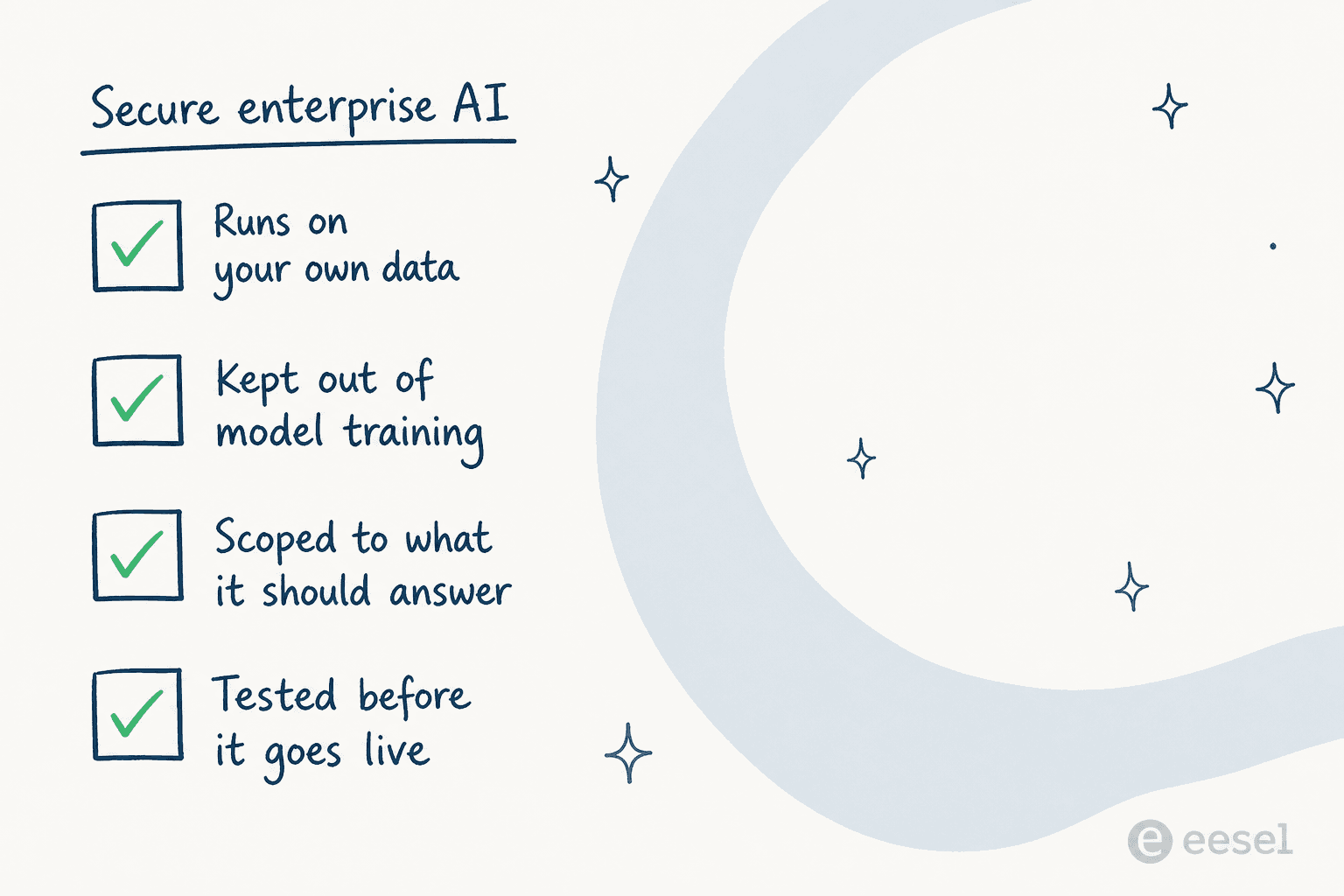
- Run it on your own data, isolated. The whole point of a custom deployment is that the AI answers from your knowledge, in your environment, not the open internet. For a support team, that means training on your own help center, past tickets, and internal docs, the way an AI customer service tool should.
- Keep it out of model training. "Your data does not train the vendor's public model" should be a line item, not a hope. It is the same question a business should ask before connecting an AI to its knowledge base.
- Scope it to a defined job. ChatGPT Mil is pointed at unclassified paperwork, full stop. Narrow scope is a feature. The AI that only answers what it should is far more trustworthy than one told to answer everything.
- Prove it before you trust it. This is the one the announcements gloss over, and it is the one I care about most. You do not hand a new system to 3 million people, or 3 million customers, without testing it against real history first.
That last point is the core of how we build AI agents for support. It is why we do not ask anyone to flip a switch and hope.
Bringing that same idea to your own team
You do not need a defense contract to get a secure, scoped AI teammate. That is basically eesel's whole reason to exist. Hegseth called ChatGPT Mil a "teammate"; eesel takes that literally and gives you ready-to-work AI teammates for specific jobs, starting with an AI helpdesk teammate that joins your support queue and an AI writer for your blog.

The support teammate runs the same playbook the Pentagon just standardized, minus the paperwork. It answers from your own knowledge, your data stays yours, and before it replies to a single customer you can simulate it on thousands of your past tickets to see exactly what it would have said and what it would have resolved. You control what it is allowed to handle and what it escalates to a human, so it only answers the tickets it is confident about. It plugs into the helpdesk you already run in a few minutes, and it is free to try. That is the whole "secure AI on your own data" idea, sized for a normal team.
For a deeper look at where this is all heading, our roundups of AI customer service software and AI agent examples go further than any single news story can.