


Let's be real: Scaling amazing, 24/7 customer support is tough. You want to be there for every customer, every time, but hiring a massive team isn't always feasible. Chatbots have long been pitched as the magic bullet, but anyone who's ever been stuck in a loop of "I'm sorry, I don't understand that" knows the reality is often more frustrating than helpful. The problem is that many traditional bots are rigid, scripted, and just not that smart.
This guide is here to cut through the noise. We’re going to take a practical look at what modern chatbots for customer service can actually do. We'll cover the must-have features, break down a few popular platforms, look at key considerations, and give you a simple framework for choosing a tool that acts more like a new teammate than a clunky piece of software.
What are chatbots for customer service?
At its core, a customer service chatbot is a program that automates conversations with customers using artificial intelligence and natural language processing (NLP). But that definition feels a bit dated in 2026. There's a huge difference between the chatbots of yesterday and the AI agents of today.
Think of it like this: An old, rule-based chatbot is like a vending machine. It has a fixed menu of options, and if what you want isn't on the list, you're out of luck. A modern "agentic AI," a term you'll see from companies like Salesforce and Zendesk, is more like a personal chef. It can understand a complex request, ask clarifying questions, check what ingredients are in the kitchen, and create something new to solve your problem. The following graphic breaks down this key distinction.
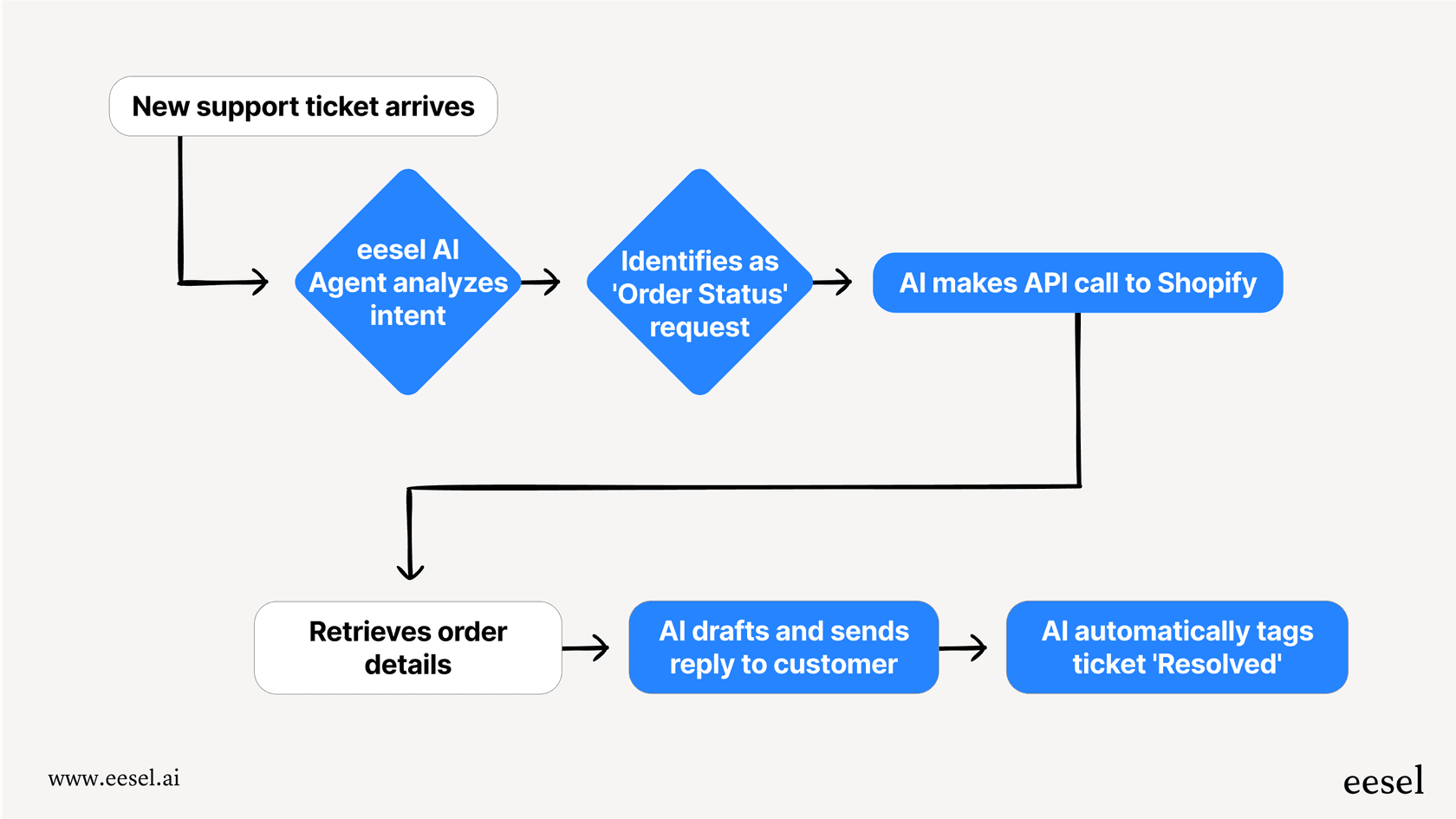
This distinction is everything. A simple bot can point a customer to an FAQ article. A true AI agent can understand the context of a conversation, learn from past support tickets, and take action to solve multi-step problems on its own. It's less of a script-follower and more of a problem-solver.
Key features of modern chatbots
The best tools today aren't just built for automation; they're built for collaboration and trust. They should feel like a new hire you can train, supervise, and promote, rather than a rigid piece of software you just install and hope for the best.
Fast setup
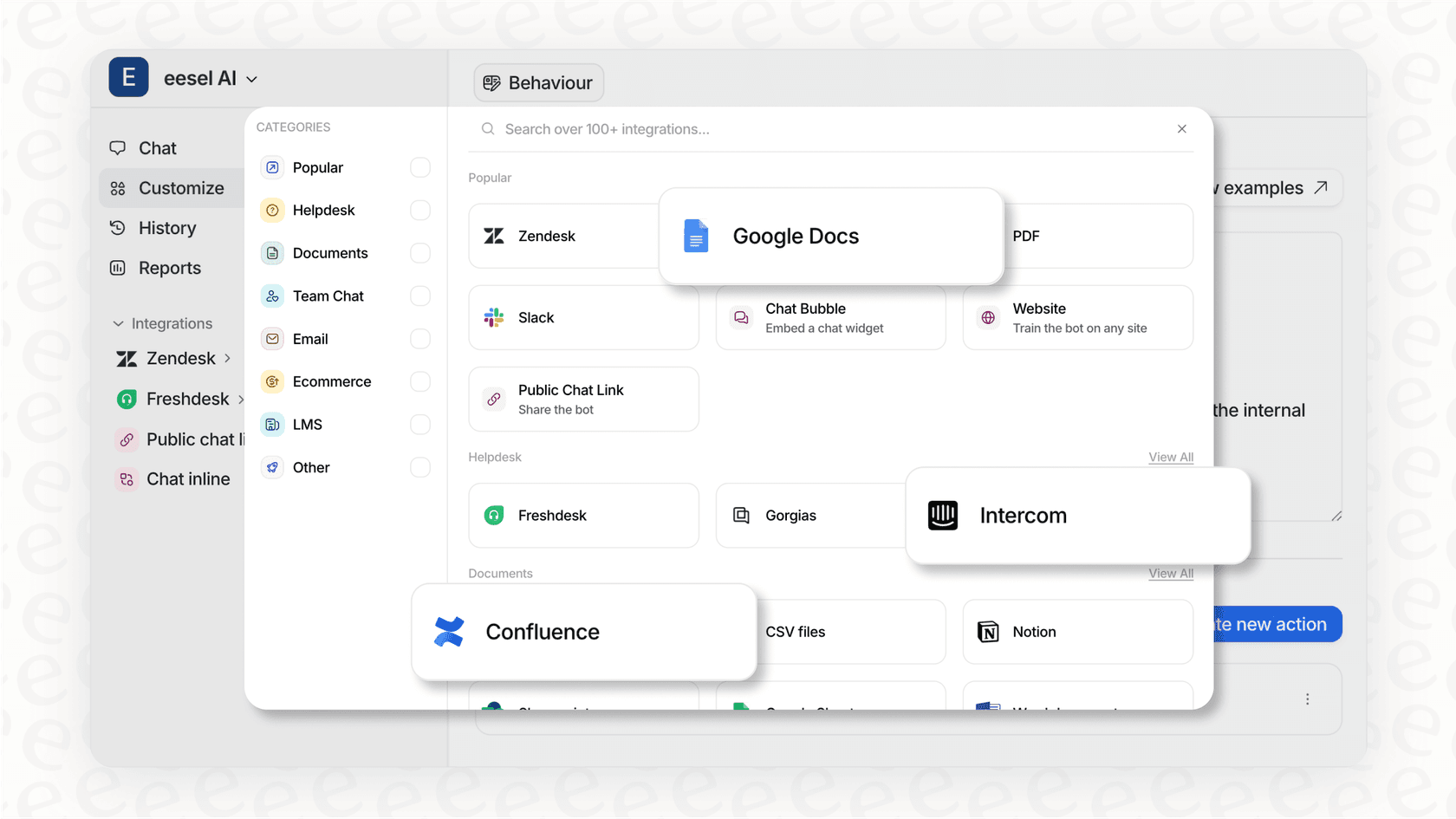
A modern AI platform shouldn't require a team of developers and a six-month implementation project. It should connect to the tools you already use, like Zendesk or Freshdesk, in just a few clicks.
The goal is a "plug-and-play" experience where you can see value almost immediately. For example, some platforms like eesel AI are designed to be invited into your helpdesk like a new teammate. It gets to work right away, learning from your existing help center, macros, and past tickets, so it's ready to help from day one.
Learning from real conversations
The biggest limitation of old bots was that they were static. You had to manually update their scripts and knowledge. Today's AI agents need to learn and improve over time, just like a human. This goes way beyond just reading a fixed knowledge base.
Look for a system that learns from every interaction. When an agent corrects a response or provides feedback, the AI should absorb that knowledge for the future. Instead of complicated retraining cycles, platforms like eesel AI's AI Agent are designed so you can teach them just by talking to them, making them smarter with every conversation.
Safe rollout
Handing your customer conversations over to an AI can feel risky. That's why safety and trust are non-negotiable. The best platforms don't force you to go all-in from the start. They allow the AI to begin in a "draft mode," where it suggests replies that your human agents can approve, edit, or reject.
This approach lets your team build confidence in the AI. A core advantage of a platform like eesel AI is this built-in gradual rollout. You can start using it safely on day one, and only "promote" the AI to handle conversations autonomously once it has proven it knows its stuff. You can even run simulations on thousands of your past tickets to see exactly how it would perform before it ever talks to a real customer.
Simple customization
Your business has unique policies, a specific tone of voice, and complex workflows. You need to be able to control how your AI behaves without needing a computer science degree. Forget clunky, rigid rule-builders that look like a tangled mess of flowcharts.
The most flexible tools allow you to define the AI's personality and actions using simple, natural language. You should be able to just write, "If a customer asks for a refund after 30 days, politely decline and offer store credit," and the AI understands. This gives you total control without turning customization into a configuration nightmare.
Popular chatbots: What you need to know
There are a lot of great tools out there, but they all come with different approaches and trade-offs. Here’s a look at a few popular options, based on publicly available information, to help you understand what to look for.
Zendesk AI
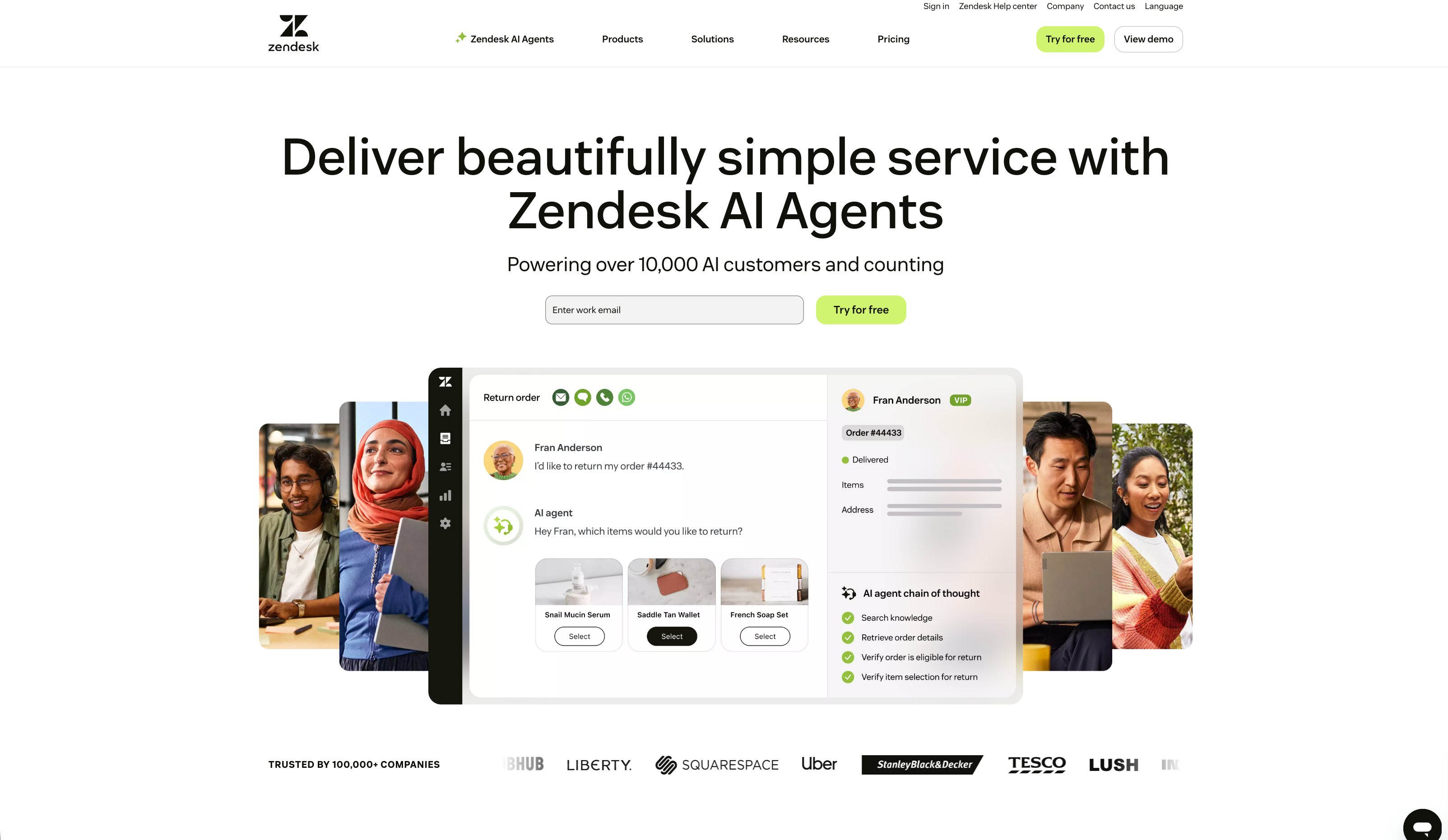
For teams already deep in the Zendesk ecosystem, Zendesk's AI is a natural and powerful choice. It offers both customer-facing "AI Agents" to handle tickets and an agent-facing "Copilot" to help your team work faster. As a mature and reliable platform, Zendesk allows you to automate over 80% of interactions, which is impressive for maintaining high-quality service at scale.
Zendesk offers tiered plans designed to match different team sizes and enterprise needs. These advanced features are structured as flexible add-ons, ensuring that teams have access to comprehensive, enterprise-grade capabilities like the Copilot add-on as they scale. This provides a robust and unified toolset for companies that need a proven, world-class ecosystem to power their customer support.
Salesforce Agentforce
Salesforce's Agentforce is an enterprise-grade beast. It’s deeply integrated into the Salesforce CRM, which means it’s fantastic at using all of your customer data to create highly personalized conversations. If you're a large company running your entire operation on Salesforce, it's a very compelling option.
The main trade-off is that it’s not a flexible, standalone tool. It’s designed to work within the Salesforce ecosystem, so if you're using another helpdesk, it's not a practical choice. The setup process is also geared towards large-scale enterprise projects, not a quick, self-serve onboarding. Pricing is not publicly listed and requires talking to their sales team, which usually means custom packages and implementation fees.
eesel AI
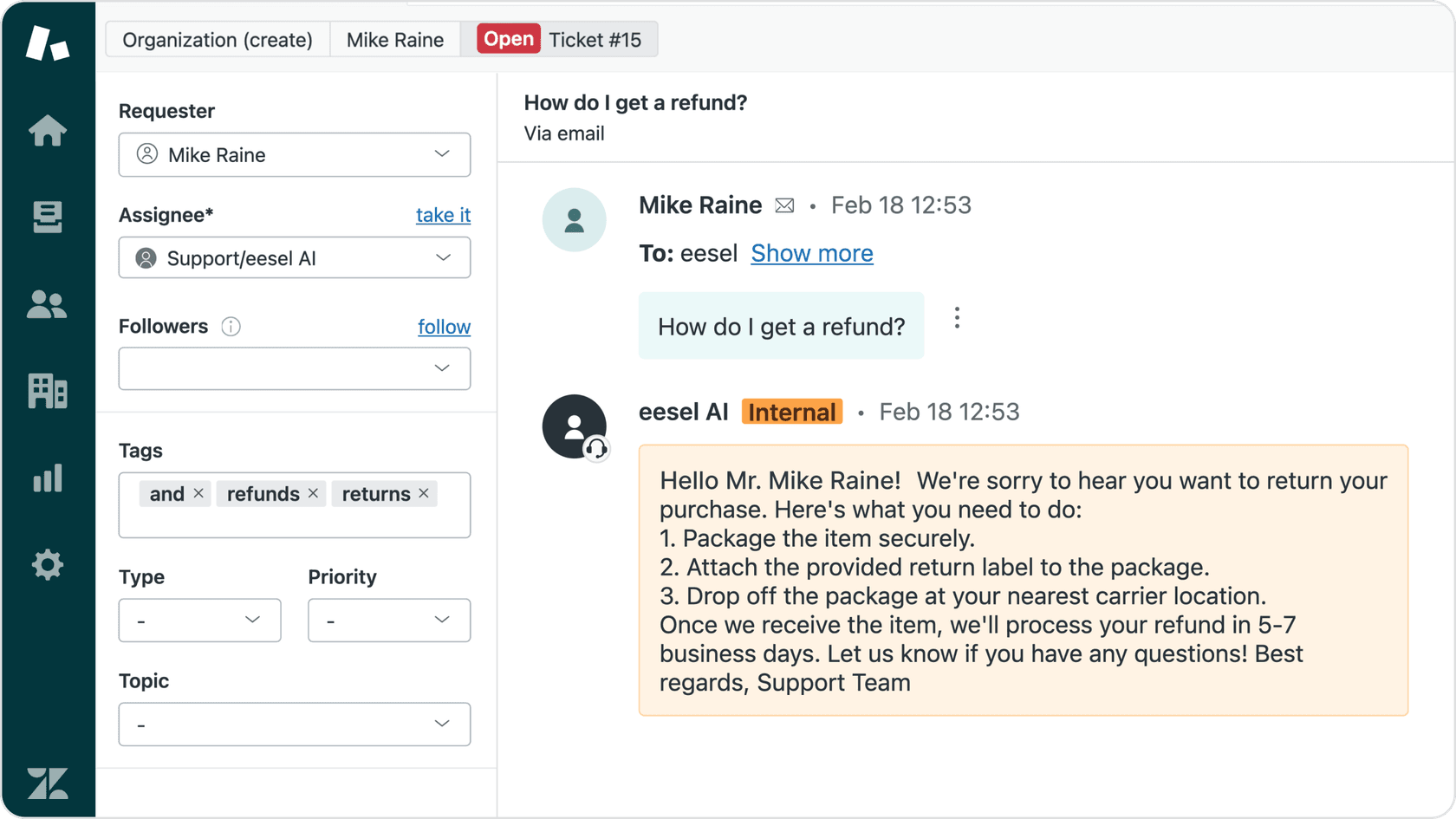
eesel AI takes a different approach. It’s designed to be an "AI teammate" you invite, not a complex system you configure. It’s helpdesk-agnostic, meaning it plugs into whatever platform you’re already using, including Zendesk, in minutes.
The key difference is its focus on simplicity and transparency. The setup is one-click, it defaults to a safe, human-in-the-loop mode, and it learns from your past tickets to provide high-quality, on-brand replies from the very beginning. Its pricing is also designed to be predictable. Instead of complex per-seat fees, all core products like the AI Agent, Copilot, and Triage are bundled into one simple plan.
Pricing is based on interaction volume, with the Team plan starting at $299/month for 1,000 interactions and the Business plan at $799/month for 3,000 interactions. There's also a 20% discount for annual billing, keeping things clear and straightforward.
How to pick the right chatbot for your team
With so many options, it's easy to get lost in feature lists and marketing jargon. Here’s a simple checklist to help you focus on what really matters.
Test with simulations
Don't just take a vendor's word for it. The best way to know if an AI will work for you is to test it on your actual data. Choose a tool that lets you run a simulation on your historical support tickets. This gives you a real, data-backed forecast of its performance and ROI before it ever interacts with a single customer, a key feature offered by platforms like eesel AI.
Prioritize a human-in-the-loop approach
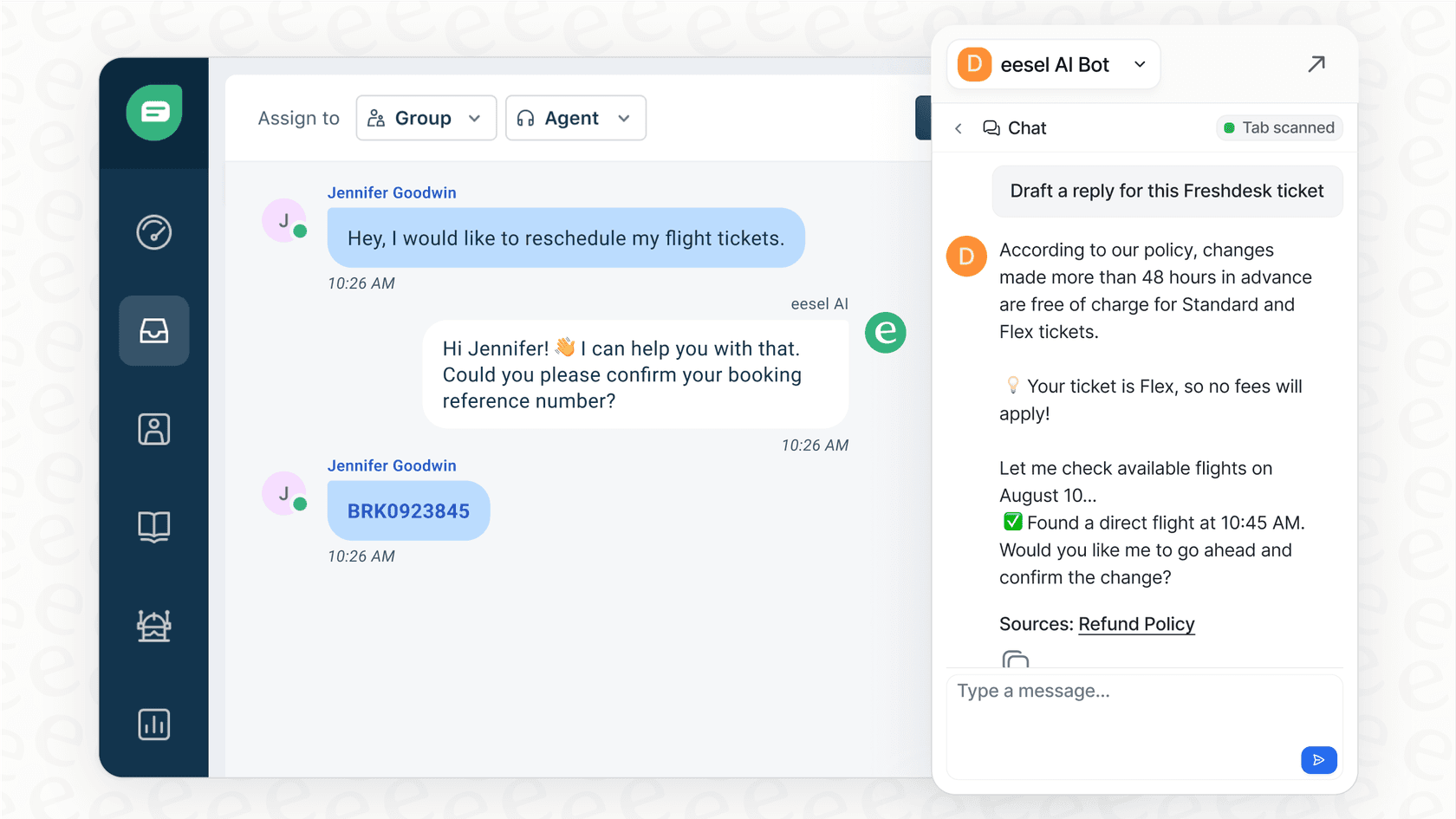
Forcing a new tool on your support team can backfire. A better approach is to introduce the AI as a helpful assistant. Look for platforms that can start as an AI Copilot, drafting replies for your agents to use. This builds trust, reduces agent workload, and allows the AI to learn from your best performers before you give it more autonomy. This "train then promote" model is a core part of the eesel AI philosophy.
Prioritize deep learning
There’s a world of difference between an AI that can read a static FAQ page and one that has learned the nuances of your company’s tone, policies, and common solutions from thousands of real conversations. The ability to train on past tickets gives an AI a massive head start in providing truly helpful, context-aware answers.
Look for transparent pricing
Your AI tool bill shouldn't be a mystery every month. Look for clear, interaction-based plans that are easy to understand and forecast. Leading platforms like Zendesk offer tiered pricing options to help you plan for growth, while eesel AI provides simple interaction-based bundles that don't penalize you for growing your team.
| Evaluation Criteria | What to Look For |
|---|---|
| Onboarding | Self-serve, minutes-to-value setup |
| Testing | Simulation on historical data |
| Rollout Path | Human-in-the-loop default |
| Learning Method | Trains on past support tickets & live feedback |
| Pricing Model | Transparent, interaction-based pricing |
While every company has unique needs, it's important to understand both the benefits and potential considerations when using AI in customer service. The video below offers a perspective on what you can expect when implementing these tools.
[YOUTUBE_VIDEO: https://www.youtube.com/embed/sb-93kzSZKc] This video explains the five reasons to love and hate using chatbots for customer service.
'Hire' an AI teammate, don't just install a tool
The conversation around customer service AI has fundamentally changed. We've moved away from the era of rigid, frustrating chatbots. Today, the goal isn't just about deflecting tickets; it's about using intelligent AI agents to create better, faster experiences for both your customers and your support team.
The most effective way to do this is to stop thinking about AI as just another piece of software. Instead, treat it like a new hire. Onboard it properly, train it through collaboration, supervise its work, and gradually give it more responsibility as it earns your trust.
This is exactly the philosophy eesel AI is built on. Instead of wrestling with complex configurations, you can invite an AI teammate that starts learning from your unique business context in minutes. If you’re ready to see how a truly collaborative AI can work for your team, you can see how eesel would perform on your past tickets with a free trial and simulation.

Frequently asked questions
Modern AI agents use deep learning to understand context rather than just matching keywords. They can ask clarifying questions and reference your past support tickets to solve multi-step problems.
Yes, tools like eesel AI are helpdesk-agnostic and can be invited into platforms like Zendesk or Freshdesk in just a few minutes.
Reputable platforms prioritize security with certifications like SOC 2 and ISO 27001, ensuring that customer data is handled according to strict enterprise standards.
Pricing varies widely; some platforms offer tiered plans to match different team sizes, while others like eesel AI use transparent, interaction-based monthly plans.
Not necessarily. The best approach is a collaborative one where the AI acts as a teammate, handling routine tasks so humans can focus on more complex, high-empathy issues.
You can often define their behavior using plain English instructions. By providing examples of your policies, the AI learns to respond in your specific tone and follow your workflows.
Share this article

Article by
Stevia Putri
Stevia Putri is a marketing generalist at eesel AI, where she helps turn powerful AI tools into stories that resonate. She’s driven by curiosity, clarity, and the human side of technology.
