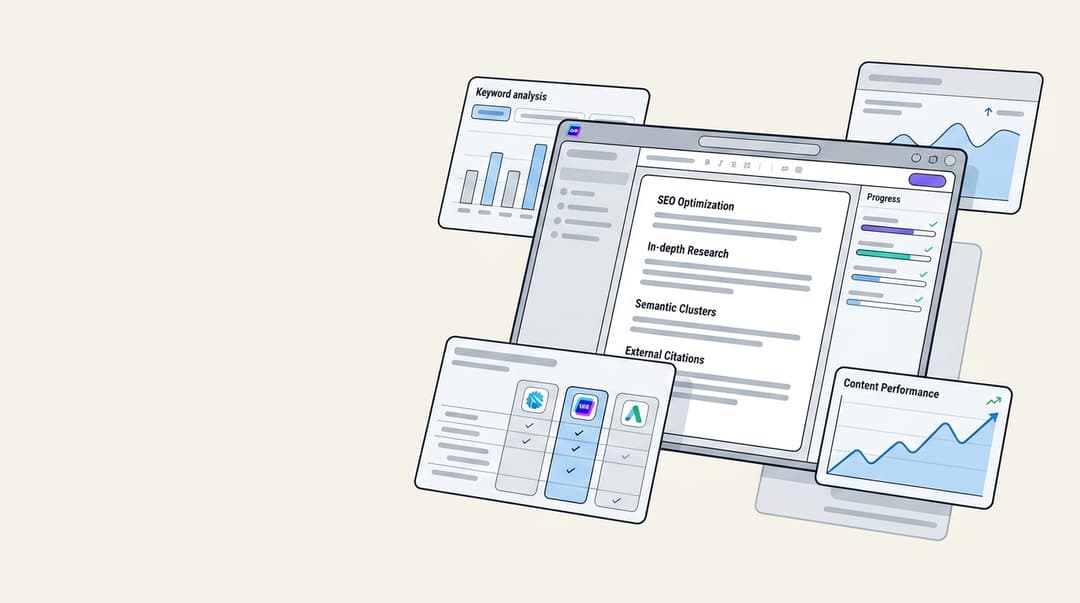
A practical guide to blog writing basics

Amogh Sarda

Katelin Teen
Last edited January 20, 2026
Blogging has changed a ton since the days of simple online diaries. Now, it's a huge part of content marketing, helping businesses build trust, connect with customers, and get a lot more traffic. But figuring out how to do it right can feel overwhelming.
What are the basics of blog writing?
Let's get on the same page. When we talk about "blog writing" in 2026, it’s not just about typing words. It's a whole process that starts with an idea and ends with a piece of content designed to attract and help a specific group of people.
The "basics" cover this entire journey, which we can split into three pillars:
- Strategy & Planning: This is all the homework you do before you write anything. It means researching topics, figuring out who your audience is, and putting together a solid outline.
- Creation & Crafting: This is the fun part: the actual writing. We'll get into how to write something engaging, structure it so it’s easy to read, and add visuals to make it more interesting.
- Post-Publish Optimization: Hitting "publish" isn't the end. This part covers the important final steps like editing, on-page SEO, and actually getting your post in front of people.
Pillar 1: Planning your blog post
The best blog posts don't just appear out of thin air. They're built on a solid plan. The prep work you do here saves a lot of time and headaches later and pretty much decides if your post will be a hit or a miss.
That was really helpful and is a an eye opener for how much I have to improve my practice.

Choosing a niche and topic
It’s easy to get lost in keywords, but the real trick is to focus on topics. The goal is to create genuinely helpful content that people are looking for. As many content experts will tell you, topic research is what truly matters.
Here are a few tips for finding great topics:
- Solve a problem: What are your audience's biggest struggles and questions? Write content that answers them.
- Find the gaps: See what your competitors are writing about. What aren't they covering? That's your chance to stand out.
- Stay in your lane: Write about what you know well. Your content will feel much more authentic and be more valuable if it comes from real expertise.
Understanding your target audience
You can't write for everyone. If you try, you'll probably end up connecting with no one. That's why it's so important to have a clear idea of who you're writing for. Sketching out a simple reader persona can be a huge help.
Knowing your audience helps you decide on your tone of voice, what topics to cover, and how detailed you need to be. To get inside their heads, check out forums like Reddit and Quora to see what they're asking, read comments on competitor blogs, and look at your own analytics to see which of your posts are already doing well.
Conducting keyword research
Keyword research isn't about finding words to cram into your article. It’s about understanding the language your audience uses and what they're typing into search engines.
A free tool like Google Keyword Planner is a good place to start. You can use it to Discover new keywords and Get search volume and forecasts. This helps you check if people are actually searching for the topic you have in mind. Even better, it helps you understand why they're searching (their intent) and find related sub-topics to include.
Creating a solid outline
Ever stared at a blank screen with no idea where to begin? A good outline is the best cure for writer's block. It gives your post structure, keeps you on topic, and makes sure your ideas flow logically.
A simple but effective outline should include:
- A working title that has your main topic.
- H2 and H3 headings for your main sections and subsections.
- A few bullet points under each heading with the key ideas you want to hit.
Pillar 2: Crafting your blog post
Alright, you've got your plan. Now for the fun part: the actual writing. This is where you turn that outline into a piece of content that is not just informative, but also enjoyable and easy to get through.
Writing an engaging introduction
You’ve got about three seconds to grab a reader's attention. Your intro has to work hard to convince them to keep reading. A great introduction does three things:
- It introduces the topic and explains why it matters.
- It shows your unique perspective or why you're qualified to talk about it.
- It promises a clear benefit or takeaway for the reader.
Try starting with a relatable story, a surprising fact, or a direct question to pull them in from the very first sentence.
Structuring the body for readability
People don't read online; they skim. Your job is to make your content as easy to skim as possible without watering it down. If a reader can't quickly figure out what your post is about, they're gone.
Here are a few tips to make your content easy on the eyes:
- Short paragraphs: Keep them to 3-4 sentences, max. Giant walls of text are a no-go.
- Headings and subheadings: Use H2s and H3s to break up your content and create a clear hierarchy. They act like signposts for the reader.
- Lists: Use bullet points or numbered lists for tips, steps, or examples. They're super easy to scan.
- Bold and italics: Use them sparingly to highlight key terms or important ideas.
An infographic with four key tips for readable content, a core component of blog writing basics.
Finding your authentic voice
Your brand's "voice" is its personality, and "tone" is the attitude you use in a specific article. Finding an authentic voice is what makes your content stand out from all the generic, robotic stuff out there.
For most blogs, a conversational and friendly voice is the way to go. Write like you're talking to a friend. Ditch the corporate jargon or overly academic language unless that's what your audience expects. An authentic voice builds trust and makes people want to come back.
Adding visuals and media
Content is more than just words these days. Visuals break up the text, make complicated ideas easier to grasp, and keep readers from getting bored. The good news is you don't need to be a graphic designer to create them, especially with modern tools that can generate them for you.
Think about adding these to your posts:
- Images and screenshots: To illustrate your points and add a bit of color.
- Infographics and charts: To present data or processes in a way that's easy to digest.
- Videos: To offer more detailed tutorials or explanations.
- Social proof: To build credibility by embedding things like real Reddit quotes from relevant discussions.
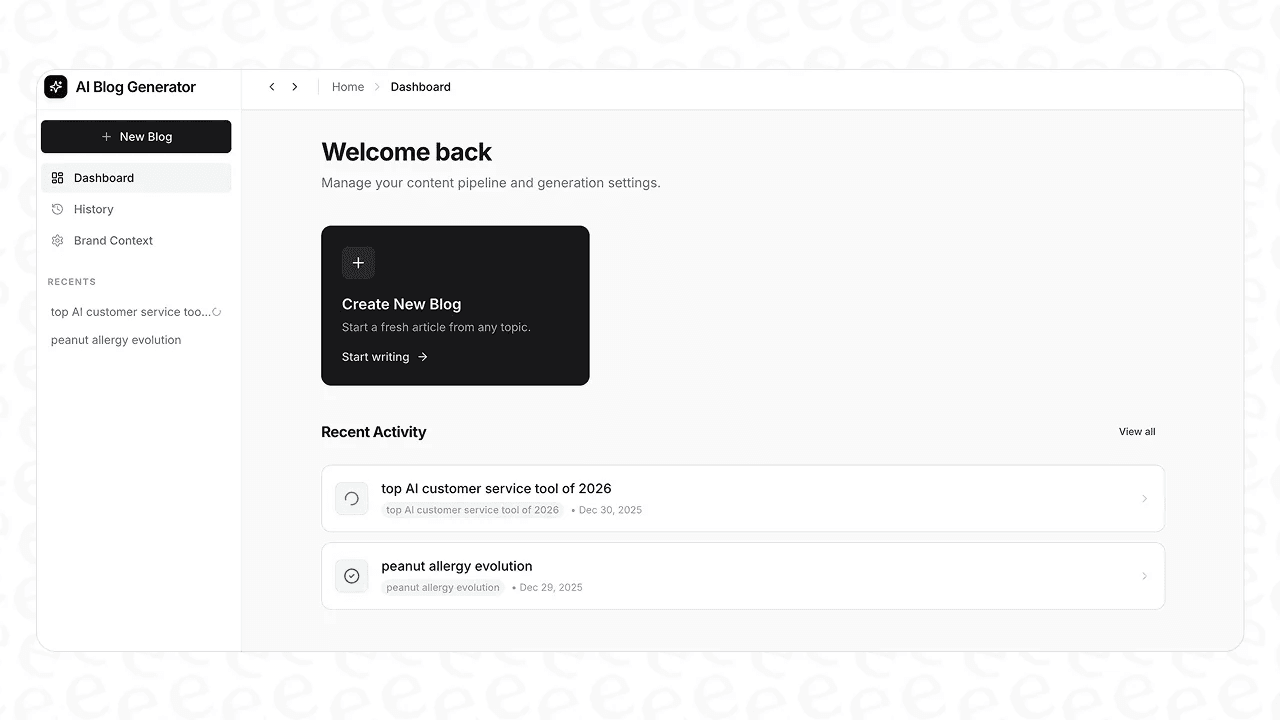
Streamlining the process with eesel AI
Here’s what makes it different from other writing tools:
- From Keyword to Complete Post: This isn't just a tool that spits out a rough draft. You give it a topic, and it creates a fully structured, SEO-optimized post. It produces a fully structured post, which helps save time compared to starting with a basic draft.
- Automatic Asset Generation: Remember all those visuals we just talked about? The eesel AI blog writer can generate them for you. It automatically generates relevant AI images, infographics, and tables to bring your content to life.
- Context-Aware Research & Social Proof: The tool performs deep research and can embed relevant YouTube videos and Reddit quotes to add depth and authenticity to your content.
- Answer Engine Optimization (AEO): The content is structured with clear, direct answers, which helps it get featured in new AI-powered search results like Google AI Overviews.
This is the exact tool we used to grow our own site traffic from 700 to 750,000 daily impressions in just three months. Ready to see what it can do for you? Generate your first blog for free.
Pillar 3: Post-publication optimization
Don't hit 'publish' just yet. The job isn't done when the draft is finished. These final steps are what take a good post and make it great, ensuring it actually gets seen by the right people.
Polishing your post in three stages
Polishing your draft isn't one step; it's a process. As writing resources like Grammarly point out, it's best to handle it in three separate phases. If you try to do it all at once, you're bound to miss things.
- Revising: This is the "big picture" edit. Read through your draft and ask: Are my ideas clear? Does the structure make sense? Does this post do what I wanted it to do? Don't stress about typos yet; focus on the overall flow and argument.
- Editing: Now you can zoom in on the words. This is where you clean up sentences, check for a consistent tone, and make sure everything reads smoothly. Can you say something more clearly or concisely?
- Proofreading: This is the final check. You're hunting for surface-level errors: typos, grammar mistakes, and punctuation problems.
An infographic showing the three stages of polishing a post—revising, editing, and proofreading—a crucial part of blog writing basics.
Pro tip
Always proofread last. Your brain is wired to see what it *expects* to see, which makes it awful at catching typos when you're still thinking about bigger edits.
Performing a final on-page SEO check
Before you publish, run through a quick on-page SEO checklist. This helps search engines understand what your post is about and who it’s for.
- Meta Title & Description: Write compelling text that shows up in search results and makes people want to click.
- URL Slug: Keep your URL short, simple, and descriptive. It should include your main keyword.
- Internal & External Links: Add links to other relevant posts on your site and to credible external sources to provide more context and value.
- Image Alt Text: Write a short description for each image. This helps with accessibility and gives search engines more information.
For a more in-depth look at how to get your blog posts seen, this video offers a great start-to-finish walkthrough of the writing and optimization process.
Putting it all together
And there you have it: the blog writing basics broken down into three straightforward pillars: strategic planning, quality content creation, and post-publish optimization. It might seem like a lot, but mastering these fundamentals and being consistent is the real secret to growing your blog.
The best way to learn is by doing, so take these ideas and start using them. And if you want to speed up the whole process and create great content at scale, remember that tools like the eesel AI blog writer are out there to help you execute every step, from research to a publish-ready post, more efficiently than ever.

Frequently Asked Questions
Share this article

Article by
Amogh Sarda
CEO of eesel AI. Amogh Sarda is obsessed with making the ultimate AI for customer service teams. He lives in Sydney, Australia and has previously worked at Atlassian and Intercom. Outside of work he’s usually surfing or on stage doing improv.