
Let's be honest, conversational AI platforms like Moveo AI sound great on paper. They promise to automate your support and create happy customers. But when you start digging in, you often hit a wall. Big promises often come with big complexity, hidden fees, and sales calls that drag on forever.
I've been through that process, and frankly, I was tired of it. So, I decided to cut through the noise and personally test the top Moveo AI alternatives out there. This isn't going to be a simple rundown of features copied from a pricing page. This is a real, hands-on review about what it’s like to actually use these tools. We’ll look at how fast you can get up and running, how much you can actually tweak things yourself, and if you can find the price without booking three meetings. Let's dig in.
What is Moveo AI and why look for alternatives?
Before we jump into the alternatives, let's quickly get on the same page about Moveo AI. It’s a serious, enterprise-level platform that uses its own language models to automate customer service. It’s built to tackle complicated conversations in different languages and is big on generative AI.
It's a capable tool, no doubt. But, people often start looking for Moveo AI alternatives for a few common, and very understandable, reasons:
-
You can’t find the price. Ever seen that "Contact Sales" button where a price should be? That’s the standard here. It makes it impossible to figure out your budget without getting pulled into a long sales cycle.
-
The setup process is a marathon. You can't just sign up and start. Getting going typically means a series of demos, calls, and a formal onboarding that can push your launch date back by weeks, if not months.
-
It can feel like a “black box.” Sometimes you want to get under the hood and have precise control over what the AI does and says. With some big platforms, it can feel like you're handing over the keys without really knowing how the engine works.
-
It only learns from the official stuff. Great support answers aren't just in your public help center. They're buried in past support tickets, internal wikis, and team chats. If your AI can't learn from those, it’s missing the real gold.
My criteria for choosing the best alternatives
To keep this comparison fair and grounded in reality, I judged every platform on a few key things that actually matter to a support team day-to-day. Here’s my checklist:
-
Speed to launch. How quickly can you go from creating an account to having a bot that actually works? I gave extra points to tools you can set up yourself, no sales call required.
-
Real control. Can you easily decide what gets automated? Can you change the AI's tone of voice? Can you connect it to your other apps without needing to hire a developer? I wanted to see how much power I really had.
-
Learning from everything. Can the AI tap into all your team's knowledge, past tickets, Google Docs, Confluence, the works? Or is it limited to just one help center? The more it can learn from, the smarter it is.
-
A safety net for testing. Is there a way to test-drive the AI on your past support tickets before it talks to a single live customer? This is huge for building confidence and seeing what will happen.
-
Clear, simple pricing. Is the price listed clearly on the website? Is it a flat subscription? I actively avoided tools with weird "per-resolution" fees that basically charge you more for being successful.
A quick comparison of the top alternatives
Here’s a high-level look at how the top contenders stack up.
| Tool | Best For | Ease of Setup | Pricing Model | Key Feature |
|---|---|---|---|---|
| eesel AI | Teams wanting fast, self-serve setup and total control | Minutes (Self-serve) | Flat-rate subscription | Powerful simulation & training on past tickets |
| Tidio | Small businesses and startups looking for a free entry point | Easy | Freemium + per seat | Live chat and simple chatbot builder |
| Ada | Large enterprises with complex needs and dedicated budgets | Complex (Sales-led) | Custom (Annual contract) | Advanced no-code conversation design |
| Leena AI | Companies focused on automating internal HR & IT support | Moderate (Sales-led) | Custom | Pre-built modules for employee workflows |
| IBM Watsonx | Global enterprises needing high security and brand trust | Very Complex | Usage-based | Enterprise-grade NLP and data privacy |
The 5 best alternatives for customer support in 2025
Alright, let's get into the details. Here's my breakdown of each platform after spending time with them.
1. eesel AI
Right off the bat, eesel AI felt different. It’s built for teams that want to move fast and have full control, without the enterprise-level drama. The biggest thing is that it doesn’t make you switch help desks. It just plugs into the tools you already use, like Zendesk, Freshdesk, or Intercom, and starts learning from all your existing knowledge.
Why it's a top alternative:
-
You can be live in minutes. I’m not exaggerating. It's completely self-serve. I signed up, connected our help desk with a single click, and had a basic AI agent running without a single sales demo.
-
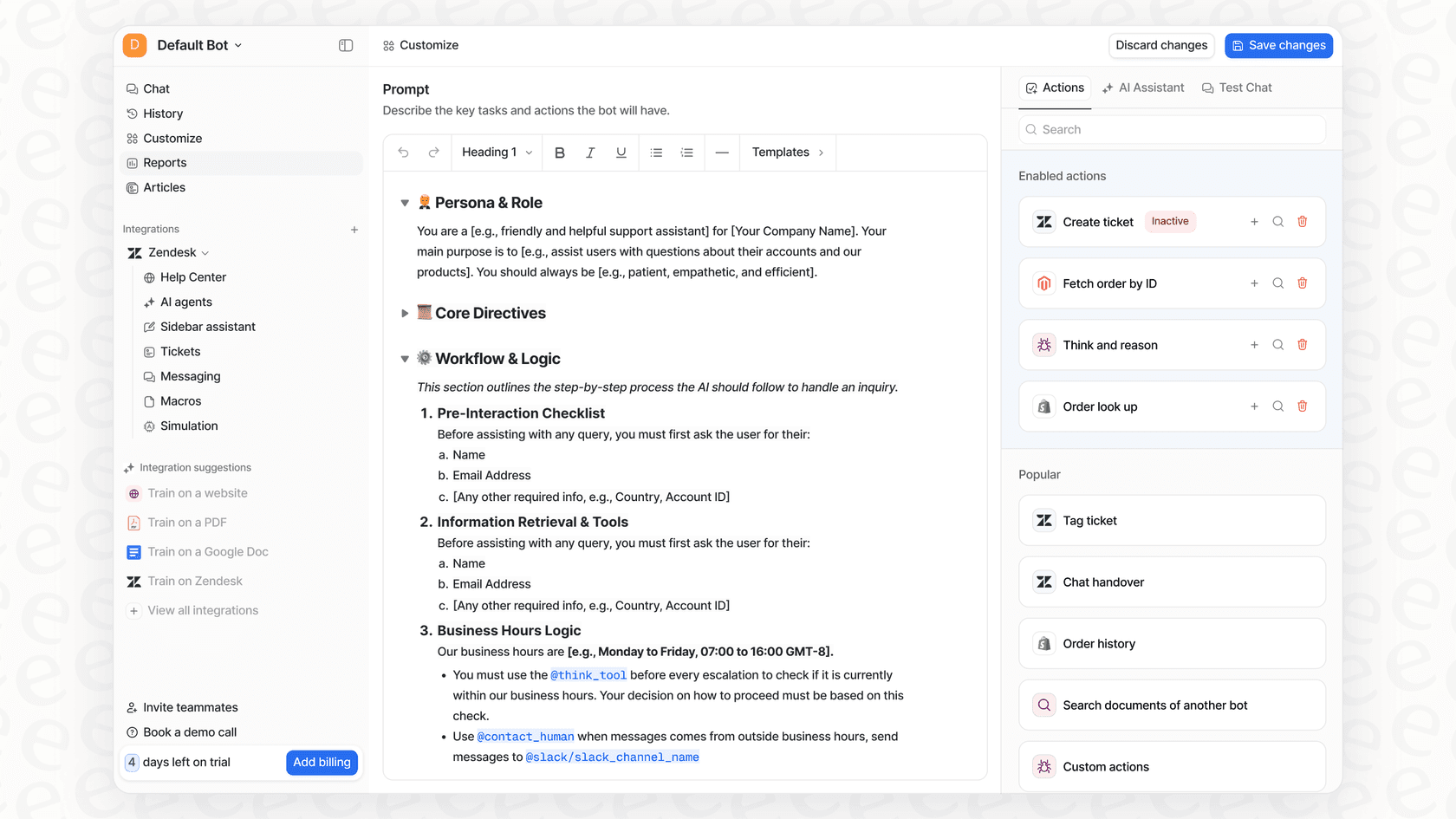
You're in the driver's seat. The workflow builder is straightforward but powerful. You get to decide exactly which tickets get automated, what the AI's personality sounds like, and even set up custom steps like looking up an order status.
-
It learns from everything, not just a knowledge base. This was the standout feature for me. eesel AI doesn't just read your help center. It learns from your team's past resolved tickets and internal docs in places like Confluence or Google Docs. This means its answers are based on how you actually solve problems.
-
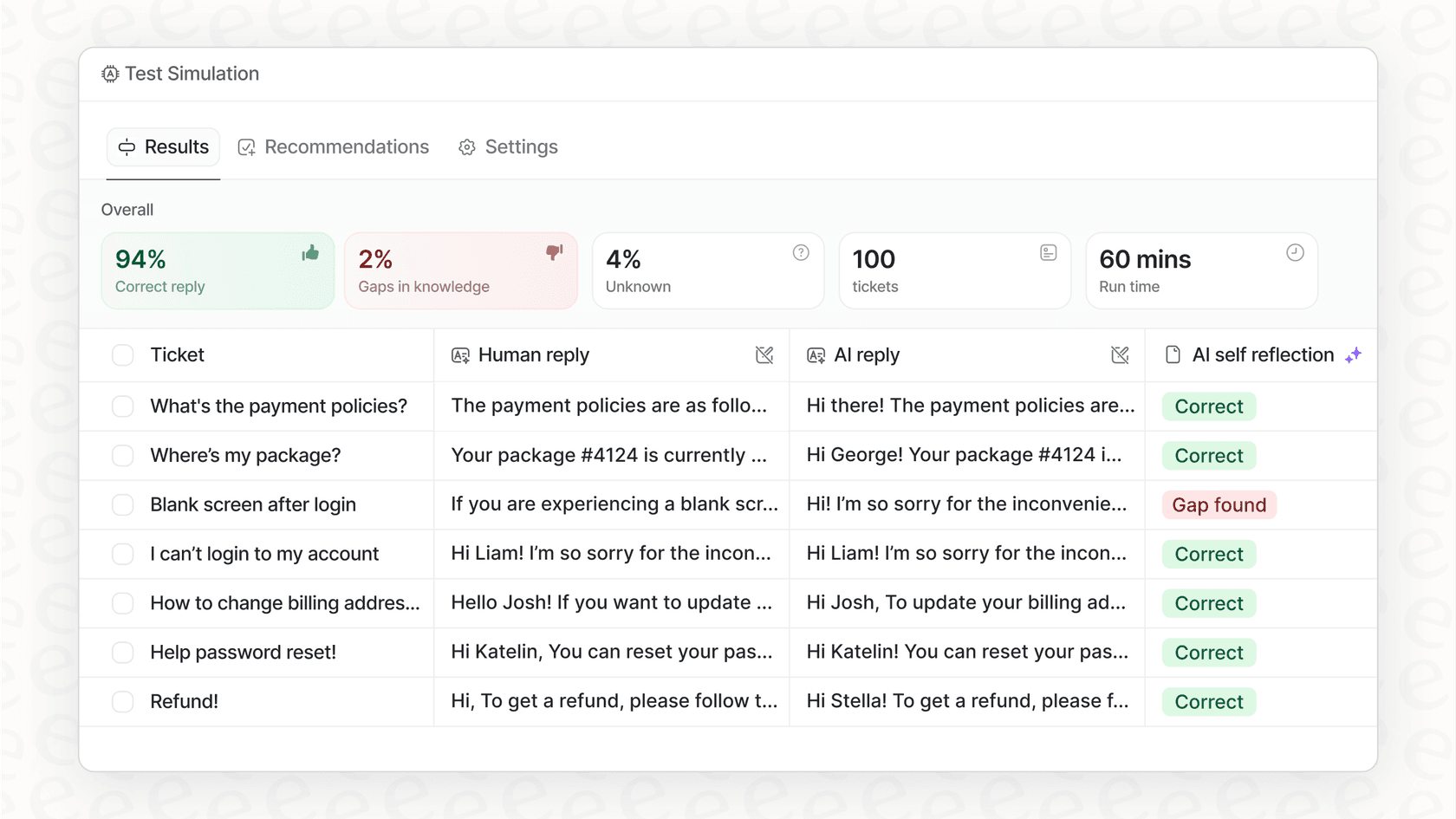
Test it on your real data. Before you flip the switch, you can run a simulation on your past tickets. This shows you exactly how the AI would have responded and gives you a solid estimate of your automation rate. It’s a great way to get comfortable before it ever talks to a customer.
Pricing:
The pricing is clear and simple: flat-rate subscription plans. No confusing fees for every ticket it resolves. You can even start with a monthly plan and cancel if it's not a fit.
2. Tidio
Tidio is a super popular choice, especially for small businesses and e-commerce shops. It bundles live chat, some help desk features, and their AI chatbot, Lyro, into one package.
Why it's on the list:
The best thing about Tidio is how easy it is to get started. They have a really solid free plan, so small teams can dip their toes into live chat and simple automation without spending a dime. I also found their visual chatbot builder to be very user-friendly.
Limitations to consider:
The trade-off for that simplicity is that its AI isn't as powerful as the more expensive tools. It's great for answering common questions, but you might find it hits a ceiling when you try to build out more complex support flows.
Pricing:
They have a free plan to get you going. Paid plans with more features start around $29 a month.
3. Ada
Ada is a heavy-hitter in this space. It's a no-code platform built specifically for large companies that need to automate really intricate customer conversations across different channels.
Why it's on the list:
Ada's strength is in its no-code conversation builder. You can map out very detailed customer journeys without writing any code. It’s built to handle a ton of volume and gives you some pretty deep analytics to look at.
Limitations to consider:
All that power comes with a hefty price tag and a big-time commitment. Getting set up is a formal, sales-led process, and you won't find pricing on their website, expect a significant annual contract. This isn't a tool you can just sign up for and test over a weekend.
Pricing:
You’ll have to talk to their sales team to get a quote.
4. Leena AI
Leena AI carves out a specific niche: it’s fantastic at automating internal support for HR and IT teams. Think of it for answering questions about benefits or helping with password resets. They do have customer-facing tools, but their sweet spot is really internal, employee-facing support.
Why it's on the list:
It's a great option if your main headache right now is internal support, but you want a tool that could potentially expand to handle customer support down the road.
Limitations to consider:
Since it’s so focused on employee support, its customer-facing features aren't as fleshed out as the other tools on this list. And just like the other enterprise options, you'll have to go through a sales process to get set up and find out the price.
Pricing:
Pricing is custom, so you'll need to get in touch with them.
5. IBM watsonx Assistant
Coming from a tech giant like IBM, watsonx Assistant is all about power, security, and scale. It has some serious natural language processing tech under the hood.
Why it's on the list:
This is the one you look at if you're a massive company in a field like finance or healthcare where security and compliance are everything. If you can't afford to take any risks, IBM is a very safe choice.
Limitations to consider:
The flip side is that it's known for being very complex. You'll likely need developers or consultants to get it running and keep it maintained. The pricing is also usage-based, which can make your monthly bill a bit of a guessing game.
Pricing:
There's a free 'lite' plan so you can poke around. Paid plans start at $140 a month, but that’s before you add on the usage fees, which can add up.
How to choose the right alternative for your business
Okay, that's a lot of information. If your head is spinning a bit, don't worry. The best way to pick the right tool is to just answer a few straightforward questions about your team's needs.
-
What tools are you using now? Think about your current help desk. Are you happy with it? If so, you probably want an AI tool that plugs into it, not one that forces you to move everything over to a whole new system. Getting value from something that works with your current setup is always faster.
-
How much time and tech help do you have? Be honest. Do you have developers and months to spare for a big implementation project? Or do you need something your support manager can set up this week without any help from engineering?
-
How do you want to pay? Are you comfortable with a bill that changes every month based on how many questions your AI answers? Or would you rather have a simple, flat subscription fee that you can actually budget for?
-
Where is your knowledge hiding? Your best support answers probably aren't just in your official help docs. They're in old tickets, internal wikis, maybe even in Slack threads. If that's the case, you need a tool that can actually connect to those places and learn from them.
The best alternatives are the ones you can start using today
At the end of the day, the conversational AI world is packed with impressive-sounding tools. But a tool's power doesn't matter if it takes half a year to get it running or if the pricing is a total mystery. From my experience testing these platforms, the best Moveo AI alternatives focus on being accessible, transparent, and giving you real control.
You shouldn't have to deal with endless sales cycles and confusing contracts to get good automation. A new crop of tools is showing that you can have something powerful without all the traditional enterprise baggage. They let you start fast, test without risk, and get results without the headache.
If you want to see for yourself how simple this can be, give eesel AI a try. You can sign up for free and get an AI agent running in about five minutes. Seriously. No sales call, no credit card, just a chance to see it work.
Frequently asked questions
What are the main reasons companies start looking for Moveo AI alternatives?
Many companies seek alternatives due to opaque pricing, lengthy setup processes, a perceived lack of direct control over the AI's behavior, and limitations on where the AI can learn its knowledge. They often desire more transparency and agility from their conversational AI platform.
How quickly can I expect to launch an AI agent using various Moveo AI alternatives?
Launch times vary significantly depending on the platform's complexity. Some Moveo AI alternatives, particularly self-serve options like eesel AI, can be live in minutes, while enterprise-grade solutions often require weeks or months of formal onboarding and configuration.
Can Moveo AI alternatives integrate with my current help desk and internal tools?
Yes, many effective Moveo AI alternatives are designed to integrate seamlessly with popular help desks such as Zendesk and Freshdesk. Some also offer connections to internal knowledge sources like Google Docs, Confluence, or Slack for comprehensive learning.
What kind of pricing models should I expect when researching Moveo AI alternatives?
You'll encounter a range of pricing models, from transparent flat-rate subscriptions (like eesel AI or Tidio's paid plans) to custom quotes with significant annual contracts (Ada, Leena AI). Be aware that some providers also use usage-based pricing or charge per agent seat and contact volume, which can lead to unpredictable monthly costs.
How can I ensure I choose the best fit among the different Moveo AI alternatives for my business?
To find the best fit, consider your existing technology stack, the time and technical resources you have available for setup, your preferred pricing model, and all the places your team's valuable knowledge is stored. Prioritizing these practical needs will help you select a tool that delivers value quickly.
Is it possible for Moveo AI alternatives to learn from private company data like past tickets or internal wikis?
Absolutely. Many advanced Moveo AI alternatives are capable of learning from a wide array of sources beyond public help centers, including your past resolved support tickets, internal documentation, and even team communication platforms. This enables them to provide more accurate and context-rich answers.
Are there self-serve Moveo AI alternatives that don't require lengthy sales processes?
Yes, several Moveo AI alternatives prioritize a self-serve model. These platforms allow you to sign up, connect your existing tools, and begin automating without the need for extensive sales calls or drawn-out demos, making them ideal for teams seeking speed and autonomy.