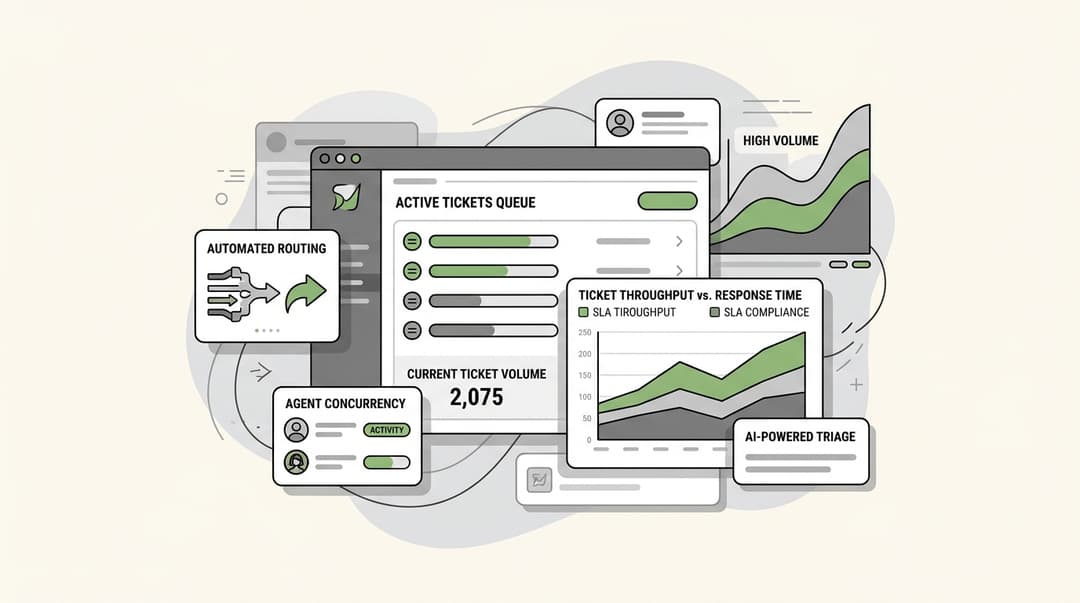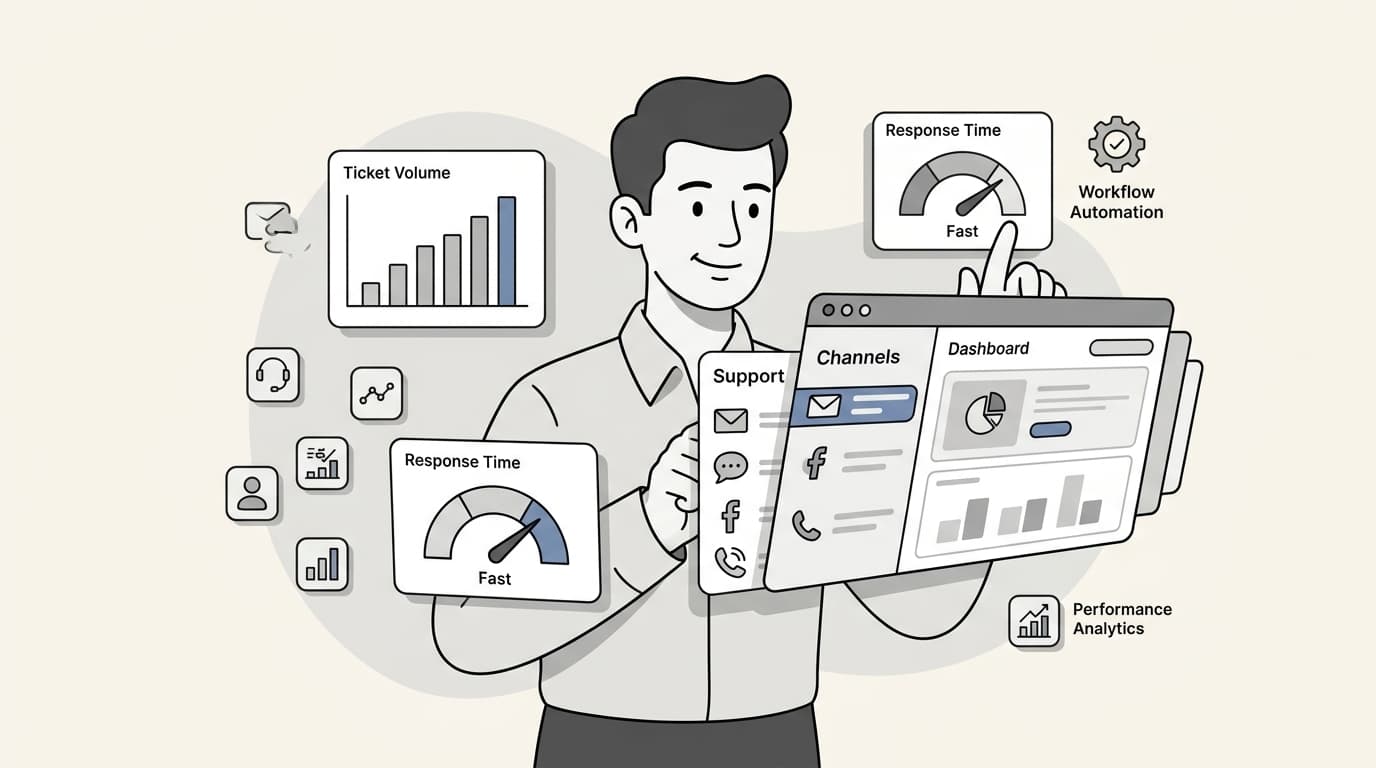
Most helpdesk tools for small businesses focus on ticket management, but 70% of business owners find them too complex to manage daily. We tested 14 platforms through a live ticket backlog; five proved simple enough for small teams. The differentiator that separated winners from losers, and our top picks for 2026, below.
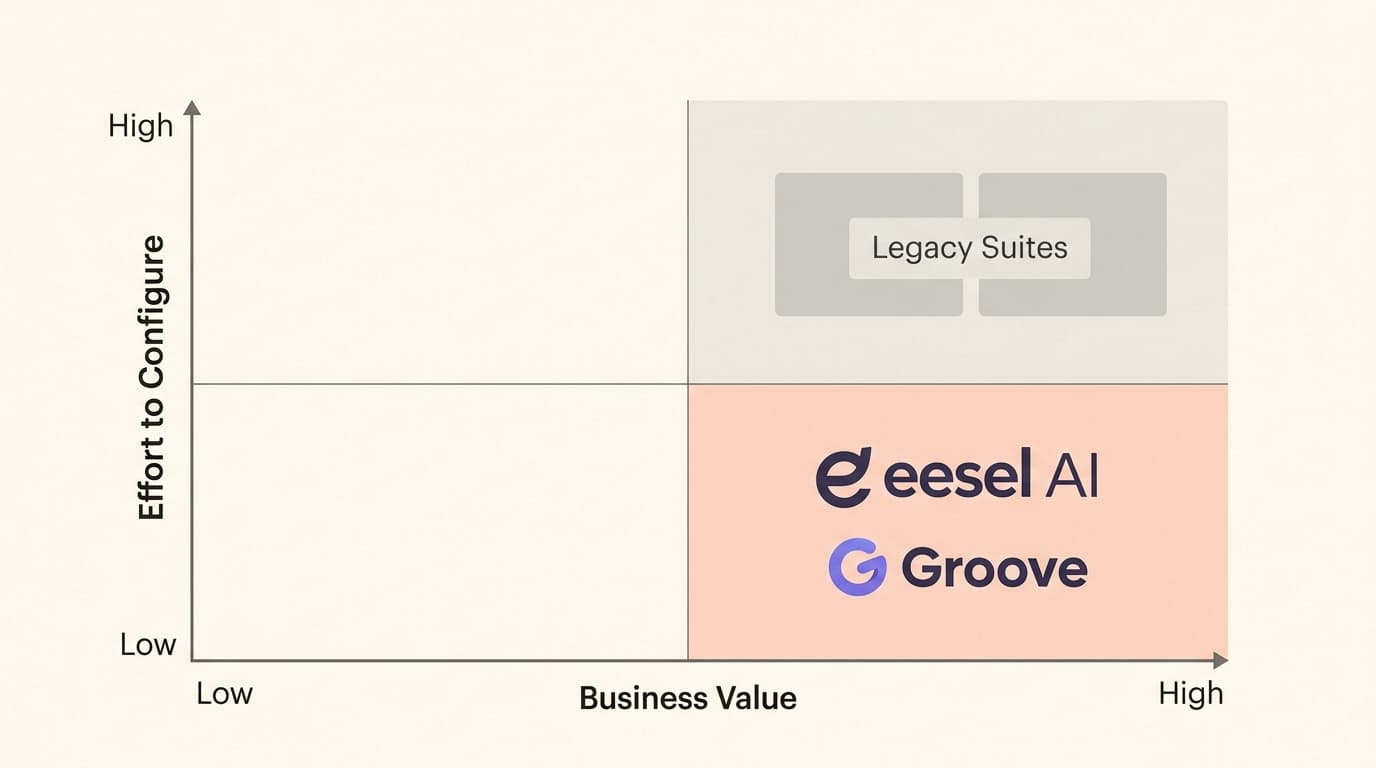
Finding the best helpdesk software for small business is about balancing power with simplicity. You don't need an enterprise-grade suite that requires a full-time administrator to maintain. Instead, you need a solution that fits your current workflow while providing enough automation to keep your team from drowning in repetitive queries.
Let's break it down.
What is helpdesk software for small business?
Helpdesk software is a centralized system designed to track, manage, and resolve customer requests. For a small business, it acts as a much-needed upgrade from a basic shared inbox. While a shared inbox lets multiple people read the same emails, a true helpdesk introduces tracking, automation, and a knowledge base that prevents tickets from falling through the cracks.
The landscape has changed in 2026. We are seeing a shift from traditional "tools you configure" to "teammates you hire." For small teams with limited headcount, a teammate model beats a tool model every time because it focuses on getting the work done rather than giving you more software to manage.
Criteria for the best helpdesk software for small business
To find the top contenders for 2026, we evaluated each platform against the specific needs of growing teams. Here is what we looked for:
- Ease of setup: How quickly can you go from signup to resolving your first ticket? We prioritized tools with onboarding speeds measured in minutes, not weeks.
- Pricing transparency: We looked for clear, predictable costs. This includes AI cost models that don't surprise you with hidden fees.
- Multichannel support: A modern helpdesk must handle email, chat, and social media in one unified view.
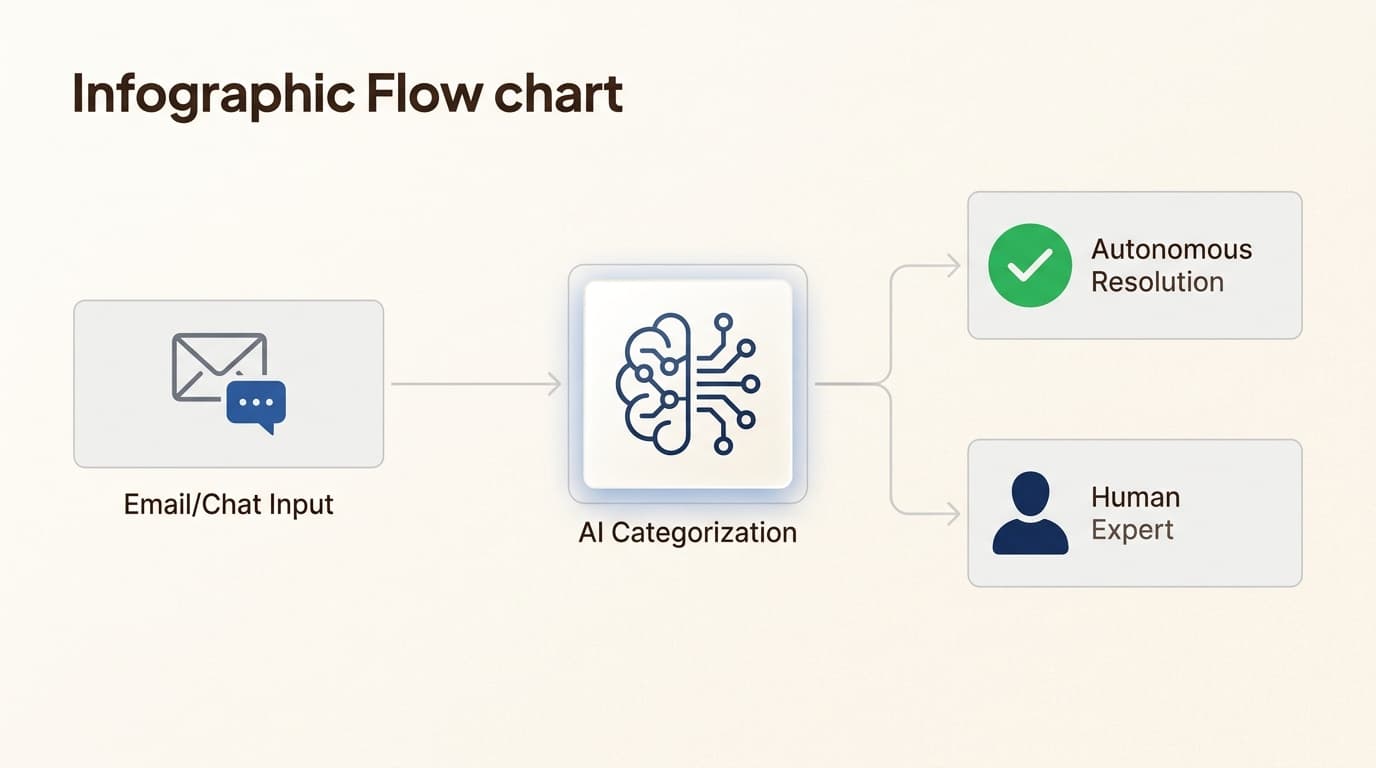
- Autonomous resolution: We checked if the AI can actually resolve tickets autonomously or if it only drafts simple replies for a human to finish.
Comparison of top helpdesk software for small business in 2026
Before we dive into the details, here is a quick overview of how the top picks stack up against each other.
| Tool | Key Strength | AI Pricing | Best For |
|---|---|---|---|
| eesel AI | Autonomous resolutions | $0.40/ticket | Teams wanting zero-config support |
| Groove | Simple interface | $0.75/resolution | Teams needing AI-native tools |
| Help Scout | Email-first workflow | $0.75/resolution | Human-centric support teams |
| Freshdesk | Robust free tier | $49 per 100 sessions | New teams starting for free |
| Zoho Desk | Budget-friendly | Tier-dependent | Existing Zoho ecosystem users |
| Salesforce Starter | Unified CRM/Service | Included | Startups wanting all-in-one growth |
| Zendesk | Scalability | $1.50 - $2.00 | Teams needing industry standards |
7 best helpdesk software for small business in 2026
1. eesel AI
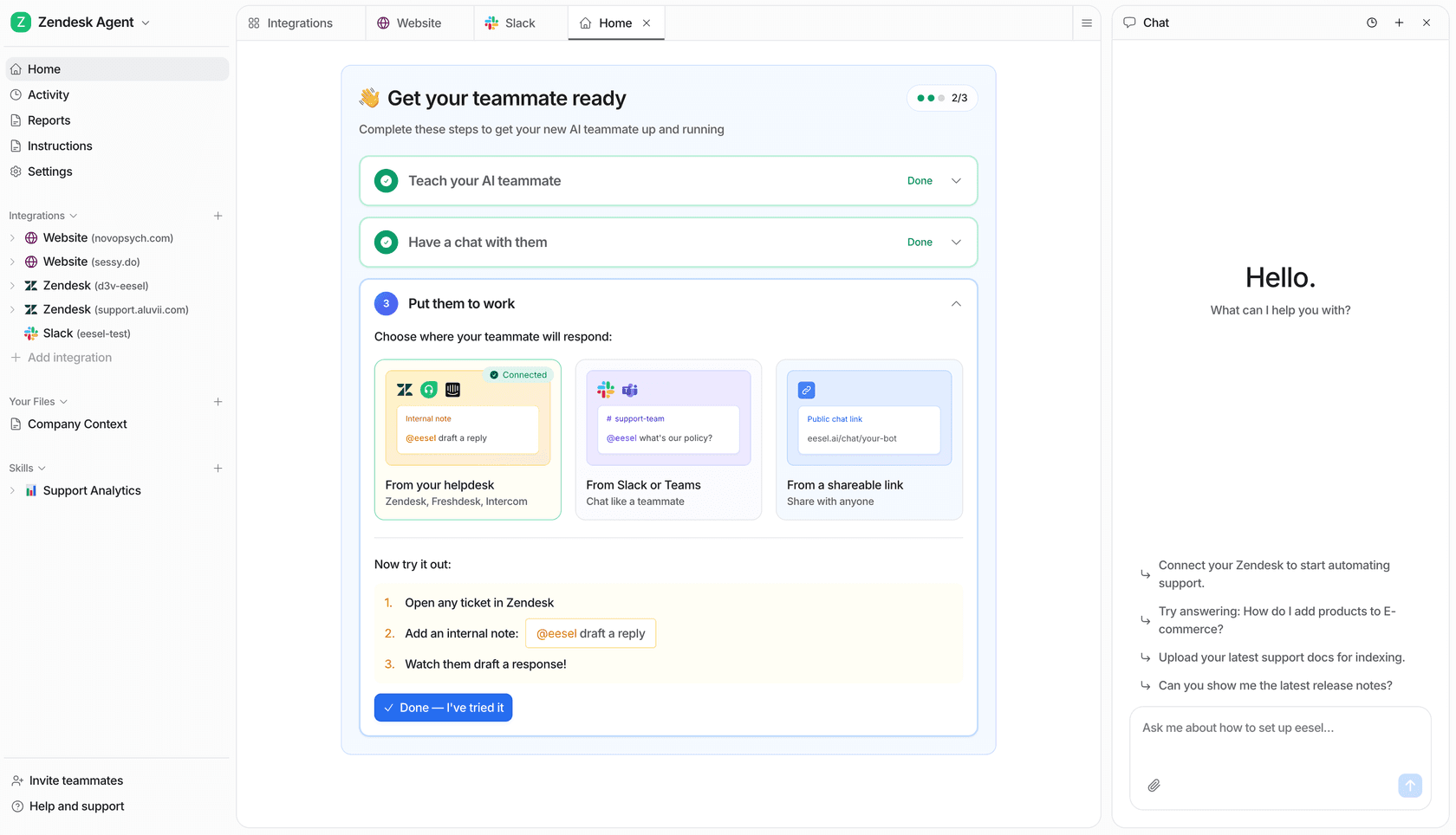
eesel AI is the modern choice for teams that don't want to spend weeks configuring software. Instead of a tool you set up, we position eesel AI as the AI teammate you hire and level up. It joins your existing workspace and starts learning from your documentation, past tickets, and Slack messages in minutes.
The primary advantage is its ability to handle full frontline support. In mature deployments, our AI Helpdesk Agent resolves up to 81% of tickets autonomously. This isn't just about drafting a reply (though it can do that too); it's about actually closing the loop for your customers while you focus on higher-level work.
| Plan | Price | Trial | Key Features |
|---|---|---|---|
| Task-based | $0.40 per ticket | $50 free trial | No platform fees, no seat minimums, 24/7 autonomous support |
Pros:
- No configuration wizards or complex setup
- Works 24/7 with consistent quality
- Learns your specific business context in minutes
Cons:
- Focused heavily on autonomous support, which might be overkill for teams that want 100% manual control over every reply.
2. Groove
Groove has carved out a niche as the AI-native support suite for businesses that find enterprise tools too bloated. It offers a clean, shared inbox that feels familiar to anyone who has used a standard email client, but with powerful automation and reporting built in.
Their "Helply" AI agent is designed for fast setup, allowing small teams to deploy an AI knowledge base and assistant without a technical background. It's a solid middle ground between a simple inbox and a complex ticketing system.
| Plan | Price (Annual) | AI Cost | Key Features |
|---|---|---|---|
| Standard | $24/user/month | $0.75/resolution | 2 shared inboxes, unlimited help widgets |
| Plus | $36/user/month | $0.75/resolution | 5 shared inboxes, SLA management |
Pros:
- Transparent pricing for both seats and AI resolutions
- Very fast setup with a minimal learning curve
- Modern, uncluttered user interface
Cons:
- The integration marketplace is smaller than what you'll find with legacy enterprise players.
3. Help Scout
Help Scout is widely regarded as one of the best helpdesk software for small business options for teams that prioritize an email-like experience. It purposefully avoids the "ticket number" feel, ensuring that your responses look like personal emails to your customers.
Their AI Answers add-on provides a way to scale capacity without adding more human agents. It scans your documentation to resolve common queries instantly, and like eesel AI, it can be configured in minutes by pointing it to your existing website or help articles.
| Plan | Price | AI Cost | Key Features |
|---|---|---|---|
| Standard | $25/user/month | $0.75/resolution | Multiple inboxes, basic workflows, AI Inbox assistant |
| Plus | $45/user/month | Included (unlimited drafts) | Salesforce/Jira integrations, advanced workflows |
Pros:
- Exceptionally clean UI that requires almost zero training
- Strong focus on human-centric communication
- Generous 3-month free trial for AI features
Cons:
- Automation and routing capabilities are somewhat limited on the entry-level plans compared to competitors.
4. Freshdesk
Freshdesk is a heavy hitter in the support space, known for having one of the most robust free plans available. This makes it an ideal starting point for micro-businesses that need to organize their support but aren't ready for a paid subscription.
As you grow, Freshdesk offers a clear path to scale with its "Freddy AI" suite. While the seat pricing is competitive, the AI pricing model is based on "sessions," which can be more complex to track than the per-resolution or per-task models used by eesel AI and Groove.
| Plan | Price (Annual) | AI Cost (Freddy) | Key Features |
|---|---|---|---|
| Free | $0 (1-2 agents) | Not included | Ticketing, knowledge base, basic reports |
| Growth | $19/agent/month | $49 per 100 sessions | Automation, custom fields, 500 AI sessions included |
Pros:
- Industry-leading free tier for very small teams
- Comprehensive omnichannel capabilities (Email, Chat, Social)
- Large ecosystem of apps and integrations
Cons:
- AI pricing can become expensive and difficult to predict as your ticket volume increases.
5. Zoho Desk
Zoho Desk is often the best budget-friendly choice, especially if your business is already using other tools in the Zoho ecosystem like their CRM or Mail. It provides a massive amount of features at a lower price point than almost any other paid competitor.
Their AI assistant, Zia, helps with sentiment analysis and reply suggestions. While the interface can feel a bit more dated and cluttered than modern tools like Help Scout, the depth of customization is impressive for the price.
| Plan | Price (Annual) | AI Cost | Key Features |
|---|---|---|---|
| Express | $7/user/month | Not included | Multichannel support, workflows, custom domain |
| Standard | $14/user/month | Included (basic) | Business messaging, custom reports, Generative AI |
Pros:
- Extremely affordable for small teams on a tight budget
- Deep integration with the broader Zoho suite
- Supports multi-department helpdesk management
Cons:
- The setup process can be complex and overwhelming for users who aren't familiar with the Zoho ecosystem.
6. Salesforce Starter Suite
Salesforce Starter Suite is a relatively new offering designed to bring the power of Salesforce to startups without the typical enterprise complexity. It combines CRM and service tools into a single, unified interface.
This is a great option if you want your support team to have a 360-degree view of the customer, including sales history and marketing engagement. It includes "Assistive AI" that helps automate lead routing and basic ticketing workflows out of the box.
| Plan | Price | AI Cost | Key Features |
|---|---|---|---|
| Starter | $25/user/month | Included | Integrated sales/service, Slack integration, lead routing |
Pros:
- All-in-one solution that scales with your business
- Native Slack integration for team collaboration
- Built-in AI features included in the base price
Cons:
- Despite the "Starter" branding, there is still a steeper learning curve than with dedicated helpdesk tools like Groove or eesel AI.
7. Zendesk
Zendesk is the industry standard for a reason. It is incredibly powerful and offers nearly infinite customization for teams that need to build specific, complex support workflows. For small businesses that expect rapid growth, starting on Zendesk prevents the need for a platform migration later.
However, the power comes with a price. Zendesk's Suite plans are significantly more expensive than other SMB-focused options. Their AI resolution model is also at the higher end of the market, which is something to consider if you plan to rely heavily on automation.
| Plan | Price (Annual) | AI Cost | Key Features |
|---|---|---|---|
| Support Team | $19/agent/month | Add-on | Basic email and social ticketing |
| Suite Team | $55/agent/month | $1.50 - $2.00 | Full omnichannel suite, AI agents included (5 per agent) |
Pros:
- Unmatched integration marketplace and customization options
- Advanced reporting that provides deep business insights
- Highly reliable and used by the world's largest companies
Cons:
- Often considered "overkill" for micro-teams that only need basic ticketing and automation.
Tips for choosing the right helpdesk for your small team
Selecting the right platform depends on your primary communication channel and how much automation you want to manage. If your customers primarily reach out via email, a tool like Help Scout or Hiver might be all you need. However, if you are seeing high volume across chat and social, you'll want an omnichannel suite like Freshdesk or Zendesk.
Bottom line? Don't look for just another tool to manage. The real value for small businesses in 2026 is looking beyond the "bot" and finding an autonomous teammate that can actually do the work for you. Always calculate the total cost of ownership, including the cost per AI resolution, before committing to a long-term contract.

Start using eesel AI for your small business support
If you're tired of configuration screens and complex workflows, we invite you to hire eesel AI as your new support teammate. We designed our AI Helpdesk Agent to learn your business in minutes and start resolving tickets immediately.
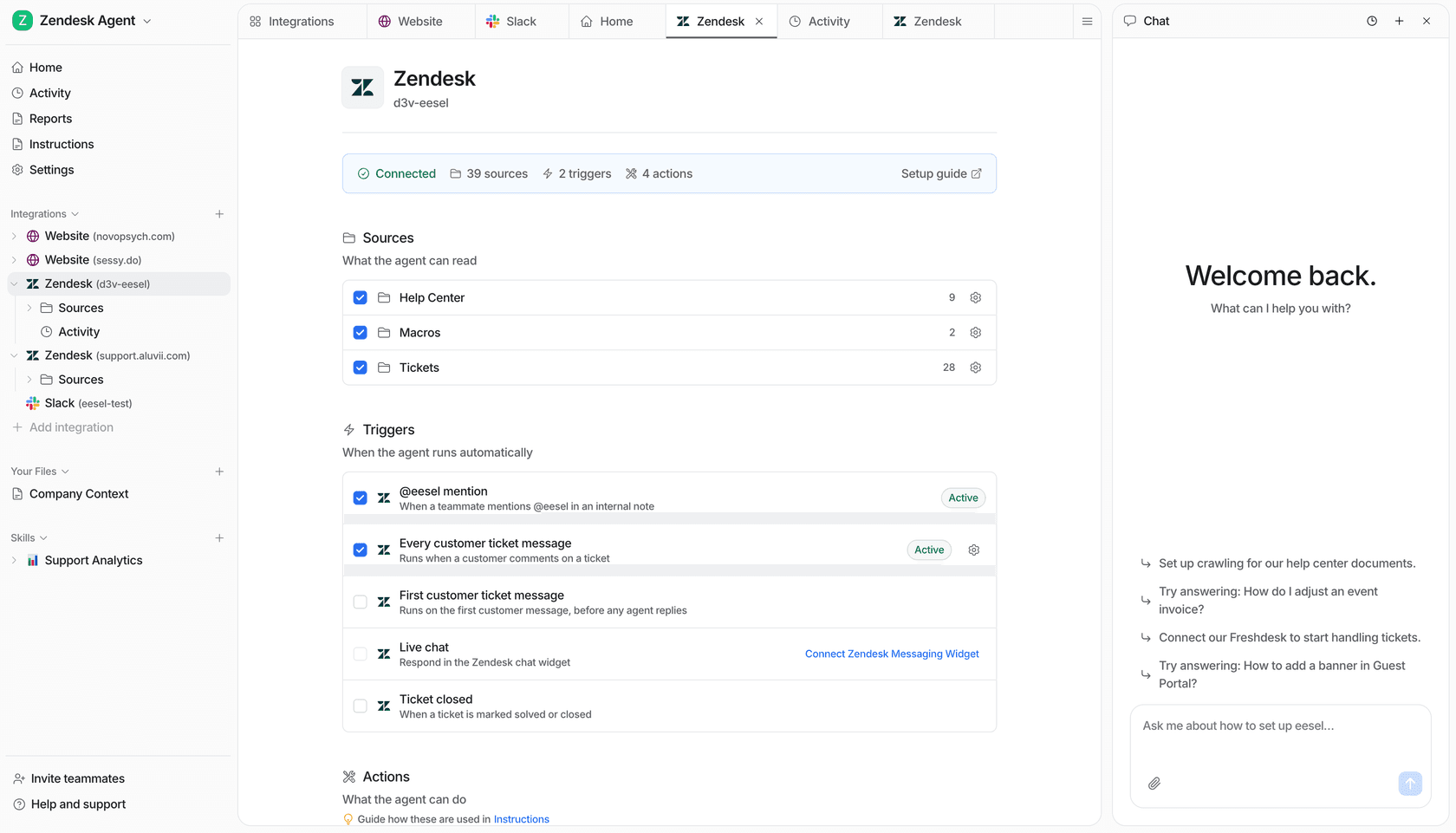
You can try it out today with our $50 free trial. There are no monthly minimums and no platform fees. You only pay for what eesel actually resolves, making it the most transparent and scalable choice for growing businesses.